Newsletters


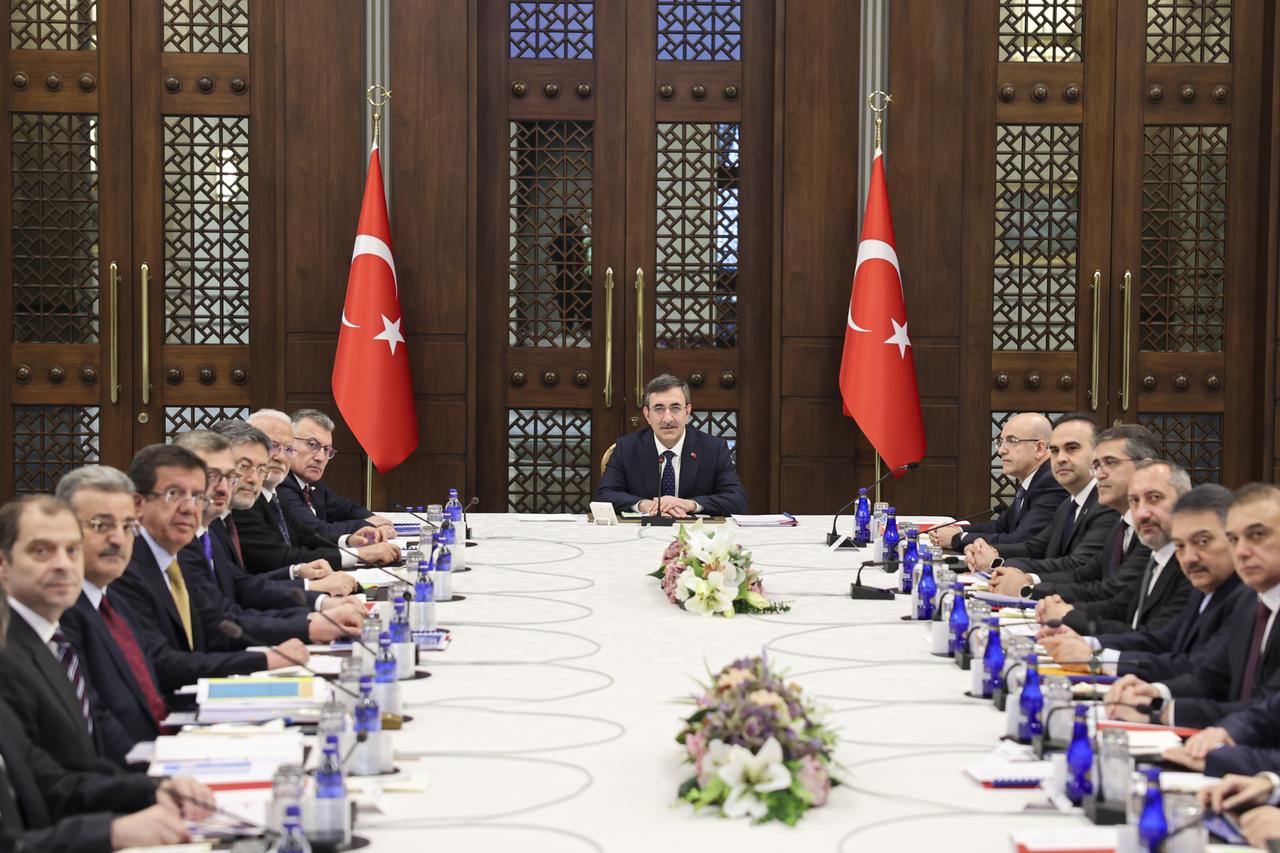


Türkiye’s Economic Coordination Board (EKK) agreed on Tuesday to accelerate a broad set of investment and industry policies following a high-level meeting chaired by Vice President Cevdet Yilmaz, outlining steps to strengthen production, exports and financial stability.
According to the board’s statement, officials confirmed that the "Strong Center Program for Investments in the Century of Türkiye," first announced by President Recep Tayyip Erdogan last week to position Türkiye as an alternative safe-haven investment hub with extensive tax breaks, will be rolled out quickly, with legal, administrative, and financial measures in place to support investors and streamline processes.
The board flagged rising geopolitical tensions and global uncertainty, noting that recent policies have strengthened macro-financial stability and reduced economic vulnerabilities.
Board members assessed recent financial trends and discussed the potential impact of the U.S./Israel–Iran conflict on financial markets and the banking sector.
Steps aimed at increasing the share of Türkiye’s financial system in global markets were reviewed, with particular focus on the Istanbul Financial Center (IFC). Plans for public banks to expand abroad through new branches were also examined, according to the statement.


Türkiye is reshaping its investment framework through a broad tax overhaul designed to pull in foreign capital and encourage companies to base regional operations in the country.
The approach centers on a mix of long-term fiscal advantages and structural incentives, aiming to make Türkiye more competitive against alternative hubs in Europe, the Gulf, and Asia, particularly amid rising regional tensions following the Iran conflict, which has highlighted vulnerabilities and prompted a search for alternative investment locations.
Key measures include up to 95% corporate tax deductions on transit trade income, zero-tax regimes for selected activities at the Istanbul Finance Center, and a 20-year exemption on foreign-sourced income for eligible new residents. Lower tax rates for exporters and additional incentives for multinational firms setting up regional headquarters are also part of the framework.
The legislation to introduce the new investment incentive framework is expected to be voted on in parliament this week and has yet to be published, as final details are still being worked out.


 Set as preferred source
 Set as preferred source


 1 min read

 1 min read