Newsletters





Türkiye needs approximately $300 billion to decarbonize its industry and expand clean energy investments, Finance Minister Mehmet Simsek said, calling for international financial institutions to help mobilize private capital.
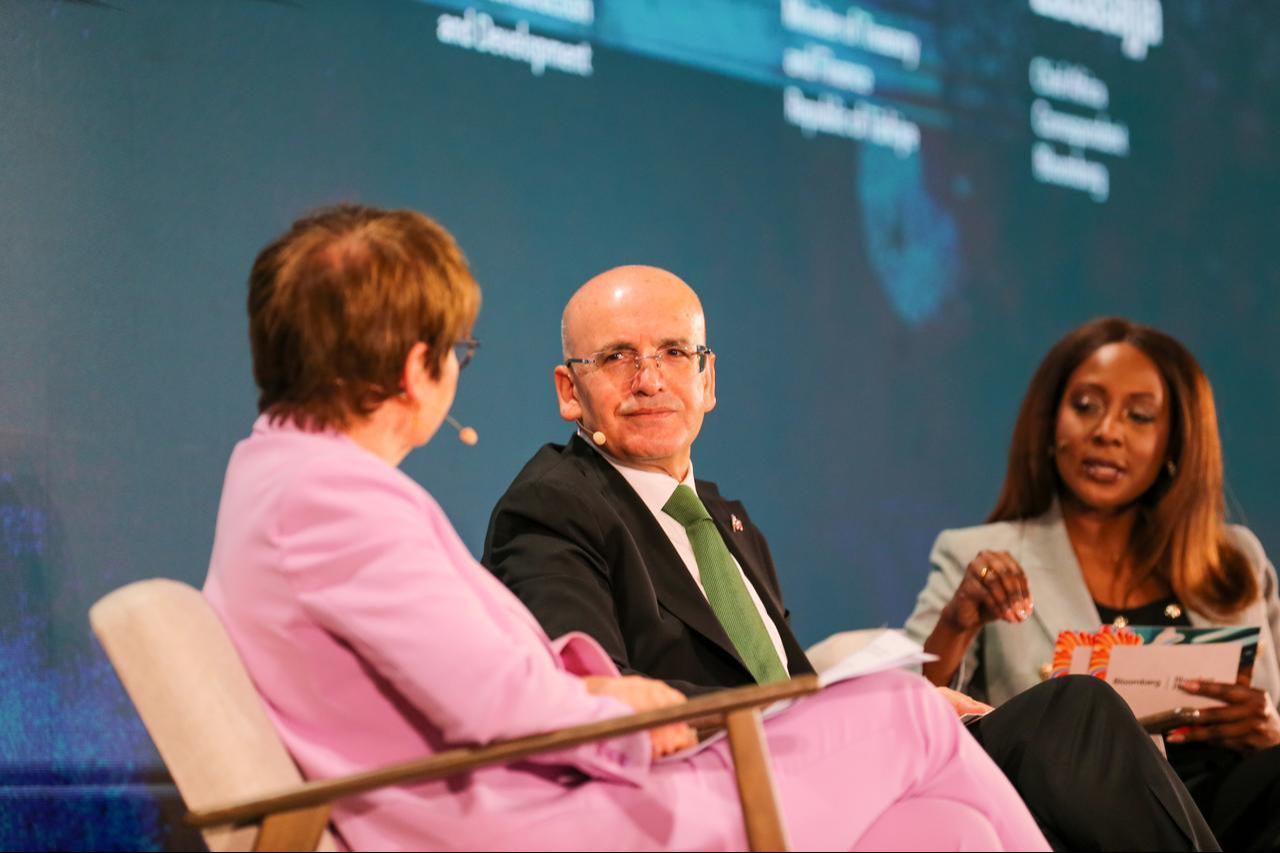
Speaking at the Global Finance Summit during COP31, Simsek outlined the country's financing needs as it pursues its 2053 net-zero emissions target while sustaining economic growth.
He stressed that securing funding remained one of the biggest challenges facing countries pursuing ambitious climate goals, particularly amid a major global energy supply shock and its macroeconomic consequences.
Simsek said Türkiye aims to install 175 gigawatts of solar and wind capacity by 2040, describing the shift to low-carbon energy as a necessity.
The transition also carries significant trade implications, as more than half of Türkiye's exports go to Europe. Cutting industrial emissions is therefore essential to maintaining competitiveness in European markets.
Despite a relatively strong fiscal position, Simsek argued that government resources alone cannot finance the transformation.
The finance minister highlighted that Türkiye's budget deficit stands at approximately 3% of gross domestic product, despite more than $100 billion in post-earthquake reconstruction spending, while public debt amounts to approximately 22% of GDP.
He called for the World Bank, the European Bank for Reconstruction and Development (EBRD) and the International Finance Corp. (IFC) to help attract private investors through guarantees and risk-sharing mechanisms.
"The aim here is not simply to obtain loans from these institutions, but to mobilize private capital from different sources and reduce investment risks," he said.

Simsek also emphasized Türkiye's heavy reliance on imported energy, noting that more than 70% of the country's primary energy resources come from abroad.
Türkiye has spent approximately $600 billion importing oil and natural gas over the past 10 years, an amount that exceeds its gross external debt, according to the minister.
He argued that expanding renewable energy capacity would reduce the country's dependence on energy imports while strengthening economic resilience and limiting macro-financial risks.
Türkiye's installed renewable capacity reached 80,315 megawatts by the end of September 2026, accounting for 63.1% of total electricity capacity of 127,355 megawatts. Solar and wind installations together reached 43,762 megawatts, or 34.4% of the total.
The government will continue investing in renewable energy and expanding electrification as part of its broader effort to decarbonize the energy system, Simsek said.
The transition would also allow industries to access more affordable and competitive energy, although he acknowledged that further steps remained necessary.


 Set as preferred source
 Set as preferred source


 1 min read
 1 min read