Newsletters


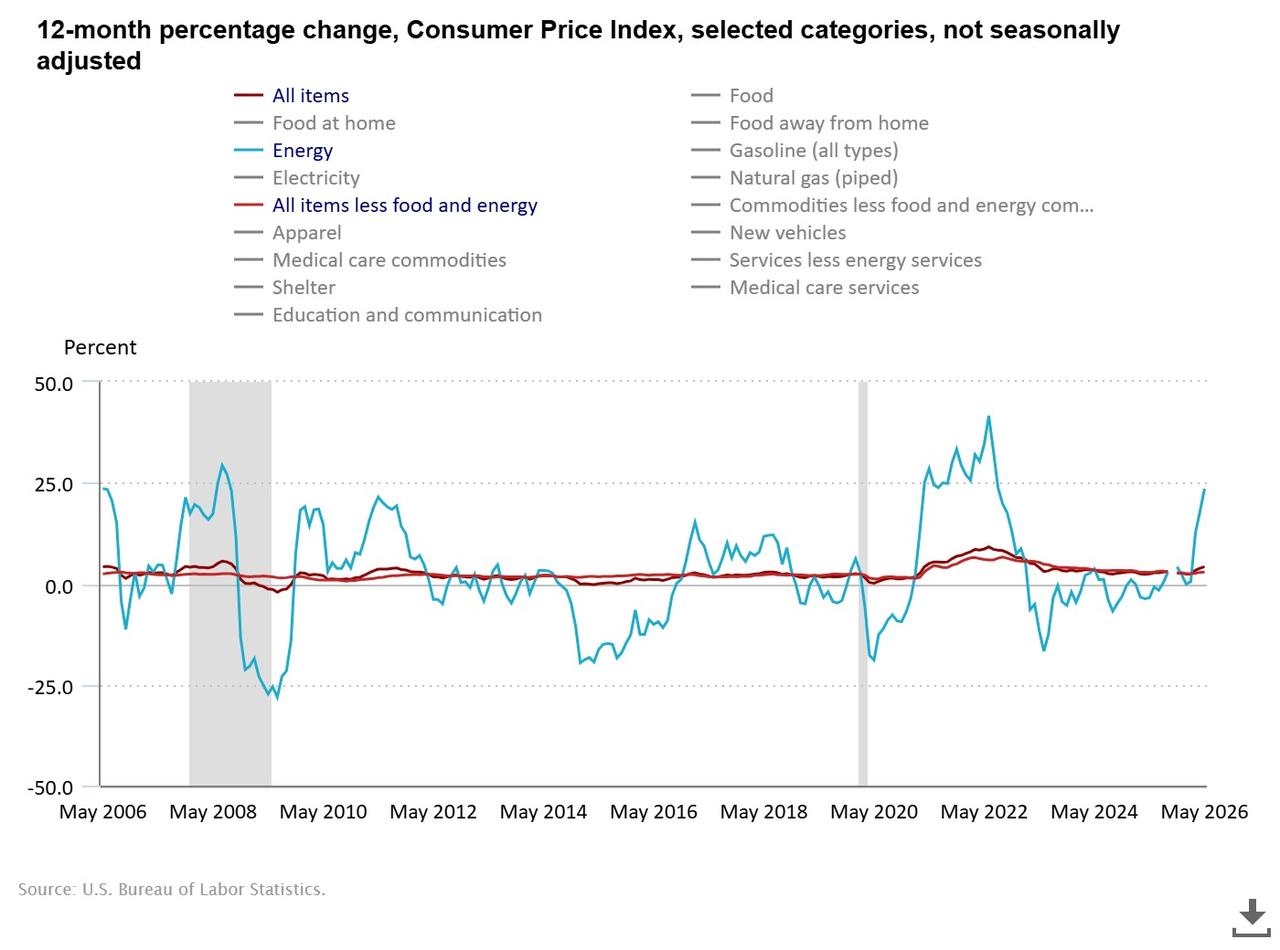
Annual U.S. inflation accelerated to 4.2% in May, with consumer prices rising 0.5% from the previous month, led by higher energy costs as the Iran war continued to disrupt global oil markets, data released Wednesday by the U.S. Bureau of Labor Statistics showed.
The figures matched market forecasts but strengthened the case for the Federal Reserve to keep interest rates higher for longer, making near-term rate cuts less likely as the annual inflation rate reached a three-year high after rising for three consecutive months.
A sharp increase in energy costs accounted for more than 60% of the overall rise in consumer prices during May. The energy index climbed 3.9% during the month after increasing 3.8% in April, driven in part by a 7% monthly jump in gasoline prices. Over the past 12 months, energy prices surged 23.5%, while gasoline prices soared 40%, far outpacing broader consumer price growth.
Food prices rose 0.2% in May, with grocery costs edging up 0.1% and food away from home increasing 0.3%, bringing annual food inflation to 3.1%. Excluding food and energy, prices rose 0.2% from the previous month. Annual core inflation reached 2.9%, in line with expectations and slightly above April's 2.8% reading.
Shelter, communication services, airline fares, medical care, personal care, and recreation were among the categories posting increases. Meanwhile, motor vehicle insurance, household furnishings and operations, and new vehicle prices recorded declines.

The rise in inflation coincided with elevated oil prices, as international benchmark Brent crude hovered around $92.4 per barrel, about 28% higher than before the outbreak of the war.
Attention now turns to the Federal Reserve's June 16-17 policy meeting, the first under Chair Kevin Warsh, where policymakers are widely expected to leave interest rates unchanged at 3.50%-3.75%.
The U.S. labor market has remained resilient despite rising borrowing costs, with employers adding 172,000 jobs in May, well above market expectations, while the unemployment rate held steady at 4.3%.
The combination of robust hiring and accelerating inflation is likely to strengthen the Fed's cautious stance, with policymakers expected to seek clearer signs that price pressures are easing before considering interest-rate cuts, as inflation remains well above the central bank's 2% target.


 Set as preferred source
 Set as preferred source


 1 min read

 1 min read