Newsletters


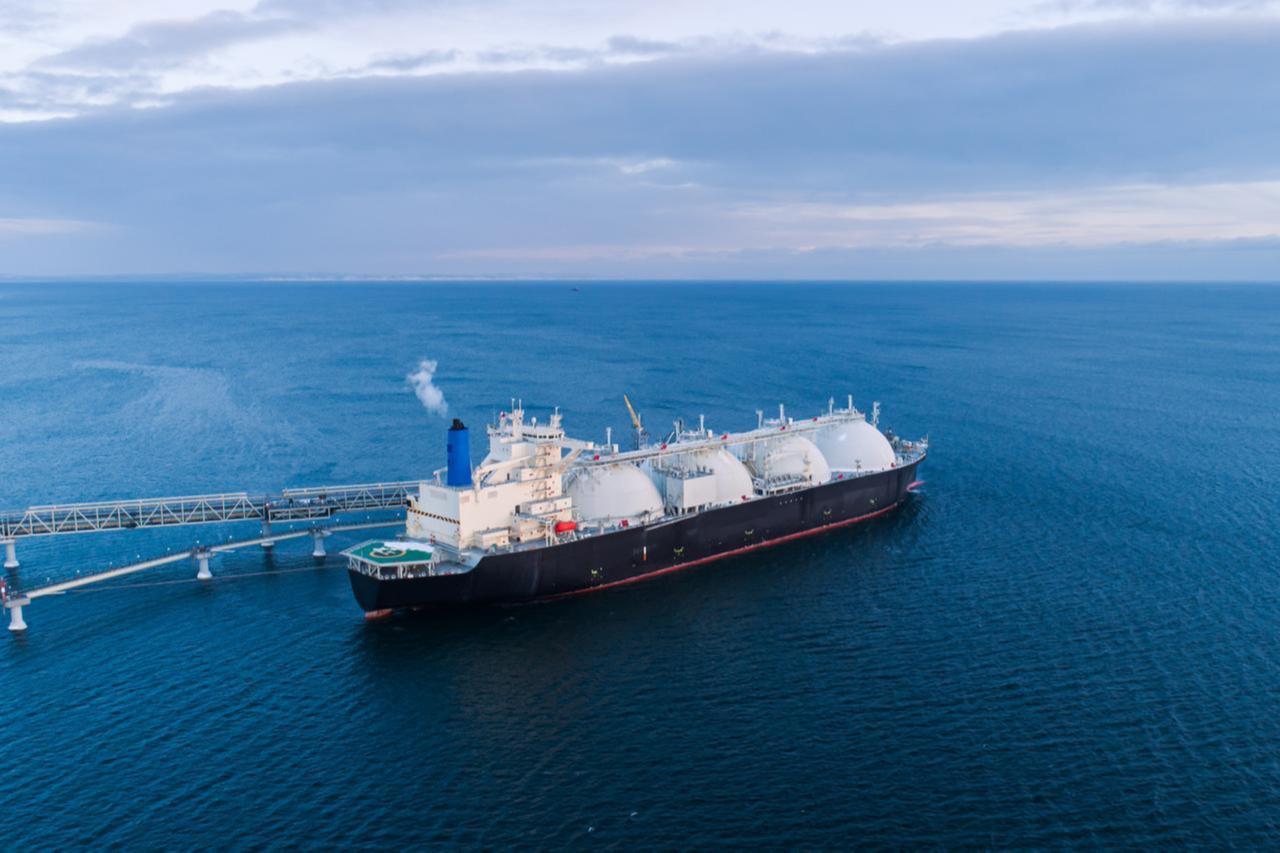


Türkiye’s rapid expansion in liquefied natural gas (LNG) infrastructure and new contracts is slowly reshaping the country’s role in the global energy system. It positions Ankara as a potential LNG and pipeline exporter to Europe, with a focus on eastern Europe and the Balkans.
Historically dependent on a narrow group of pipeline suppliers such as Russia and Iran, Türkiye now stands at the forefront of the LNG trade with new and renewed LNG contracts, emerging export potential, strategic development in line with the country’s decadelong energy strategy, and new energy regulation that could prove vital for Western energy security in the decades ahead.
In less than a decade, Türkiye has transformed its LNG capabilities at an unprecedented scale. Although Türkiye’s LNG imports began in 1994 with a contract with Algeria, Türkiye has been increasing its imports exponentially, especially with more supplies from U.S. spot markets since 2016. U.S. share in Türkiye’s total gas imports stands at 10.7% in 2024, up from just 0.52% in 2016. U.S. LNG imports will now not only be spot market purchases, but also based on long-term contracts. Whereas Russia’s share in Türkiye’s gas imports was 37% in the first months of 2025, down from 60% 20 years ago.
Energy Minister Alparslan Bayraktar recently announced that the country’s LNG re-gasification capacity has risen from 34 million cubic meters per day in 2016 to approximately 161 million cubic meters in 2025, marking a near fivefold increase. Türkiye currently operates five LNG terminals, two land-based and three floating storage re-gasification units (FSRUs), which enable the country to process liquefied gas directly from vessels without relying solely on fixed infrastructure. These FSRUs allow rapid and flexible sourcing from global suppliers. Türkiye now has the capacity to import around 58 billion cubic meters (bcm) of natural gas in liquefied form, exceeding its annual average consumption.
According to a recent analysis by the Oxford Institute for Energy Studies, Türkiye’s gas import needs are expected to decline between 2025 and 2030 as domestic production grows faster than demand. The Sakarya gas field in the Black Sea will play a pivotal role in this shift, with output projected to climb from 1.8 billion bcm in 2024 to 14.6 bcm by 2028, which may account for 20%-25% of Türkiye’s domestic consumption needs, considering the country’s expanding domestic usage by that year.
Consequently, Türkiye’s dependency on traditional pipeline suppliers, notably Russia and Iran, will decrease, forcing both countries to compete for a shrinking share of Turkish gas imports. However, Türkiye is expected to maintain contracts with both suppliers, as its position has strengthened against Russia and Iran due to rising domestic production and new LNG sources. While Türkiye is likely to use Russian and Iranian gas for domestic use under the new contracts, the country may have the leverage to export gas from domestic fields and new LNG contracts.
Türkiye is diversifying its supply through a series of new LNG agreements. In September 2025, state-owned energy firm BOTAS signed nine new sale and purchase agreements (SPAs) in what analysts described as an LNG “shopping spree.” Of these, one is a long-term contract running from 2026 to 2045, six are short-term (two to three years) beginning January 2026, and two are shorter (one to two years) with unspecified start dates. The Oxford Energy report notes that between 13 bcm and 19 bcm per annum of LNG is now contracted for 2026-2030, volumes comparable to Türkiye’s peak LNG imports in recent years. The expected surplus after Türkiye’s domestic consumption is considered part of Türkiye’s grand energy strategy to become a sustainable energy exporter to Europe in the next decade.


A key element of Türkiye’s energy diversification came with the long-term LNG deal signed in 2025 with U.S. trading giant Mercuria, valued at $4.3 billion over 20 years. This agreement marked the first direct, structured LNG contract between the two countries, strengthening energy ties between Türkiye and the United States.
Energy expert Sohbet Karbuz, director of Hydrocarbons and Energy Security at the Paris-based Mediterranean Energy Observatory (OME), explained that the new contract establishes a long-term and reliable framework for bilateral LNG trade between the countries.
He emphasized that the deal not only secures supply but could also enable Türkiye to resell surplus LNG to other markets, enhancing its role as an intermediary hub. “Türkiye has strengthened its hand for renegotiations of expiring contracts with other suppliers in the coming years,” Karbuz observed, adding that the establishment of a joint LNG export facility with an international partner could soon be on the agenda. According to Türkiye’s energy strategy, the country also aims to be a gas hub where the gas can be priced and sold.
Beyond its import infrastructure, Türkiye has taken crucial legal steps to prepare for LNG exports. In May 2025, the Turkish Parliament passed a law amending the Natural Gas Market Law (No. 4646), adding a definition for “liquefaction” and authorizing the country to export LNG. Deputy Energy Minister Ziya Arslan highlighted that the amendment allows Türkiye to liquefy either imported or domestically produced gas and export it primarily to neighboring and European countries.
The reform effectively removes a major legal barrier, creating the foundation for Türkiye to become an LNG supplier to Europe in addition to being a transit corridor for vital pipelines. It aligns with Europe’s own ambition to expand LNG infrastructure, as the continent aims to add 250 bcm of LNG import capacity and 50 bcm of pipeline capacity in the coming years. Together, these volumes represent over half of Europe’s average annual gas demand.
As the fourth-largest gas consumer in Europe after Germany, the U.K., and Italy, Türkiye’s infrastructure is capable of serving regional demand in addition to domestic consumption. In recent years, Türkiye has signed gas export agreements with Hungary, Bulgaria, Romania, and Moldova, slowly positioning the country as an active regional supplier. These deals signal the early stages of Türkiye’s emergence as a balancing hub for energy flows between continents. Similar arrangements could soon extend to other Balkan countries.
Europe’s dependence on seaborne LNG has surged since 2022, and the continent continues to face logistical, price, and security vulnerabilities in its energy supply chains. In this context, Türkiye’s integrated LNG infrastructure, combining regasification, storage, and now liquefaction, offers a safer and more diversified route for energy flows into the European market.
By building infrastructure capable of importing, storing, and soon exporting LNG, Türkiye has positioned itself as an indispensable node in Europe’s energy architecture. The combination of domestic production growth, diversified LNG sourcing, and new legal export rights gives Ankara a dual advantage: energy security at home and strategic leverage abroad. This year, the World LNG Summit was held in Türkiye on Dec. 2-5, a factor indicating Türkiye’s importance to global LNG markets.
However, uncertainties surrounding the new contracts with Russia and Iran leave Türkiye’s path toward becoming a natural gas exporter unclear. Despite the country’s ambitions, the nature and volume of the new contracts will be decisive in determining whether this goal can be achieved.


 Set as preferred source
 Set as preferred source



 2 min read