Newsletters




Türkiye's economy is expected to grow 2.8% in 2026, down from 3.6% in 2025, as the World Bank warns that developing economies face the risk of a "lost decade" marked by sluggish growth, weak income gains and mounting economic challenges.
In its June 2026 Global Economic Prospects report, the World Bank downgraded growth forecasts for much of the world, citing the fallout from the conflict in the Middle East, rising energy prices, tighter financial conditions and elevated uncertainty.
The institution expects Türkiye's growth to pick up in the coming years, with the economy projected to expand 3.7% in 2027 and 4.3% in 2028 after a weaker 2026 shaped by broader pressures weighing on emerging economies.
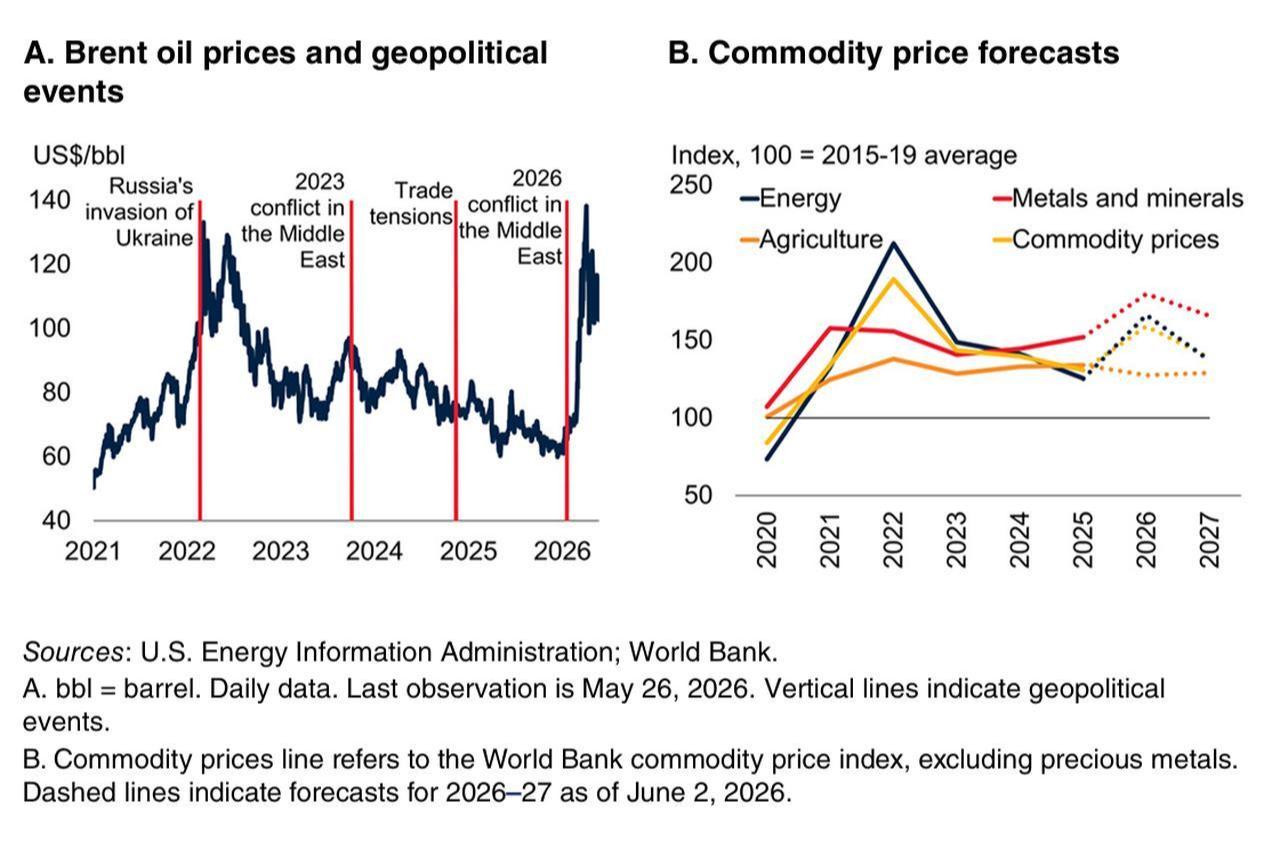
The report projected Brent crude oil prices would average $94 per barrel in 2026, up 36% from 2025 levels, while overall commodity prices were expected to climb 22%, reversing earlier forecasts for a decline.
It also estimated that European natural gas prices would rise about 30%, with fertilizer costs increasing as supply disruptions continued to ripple through global markets.
As a major energy importer, Türkiye faces additional pressure from higher oil and natural gas costs, which could complicate efforts to sustain growth while keeping inflation under control.
More broadly, the World Bank warned that developing economies risked losing years of economic progress as growth slowed and income convergence with advanced economies stalled.

Growth across emerging markets and developing economies was forecast to ease to 3.6% in 2026 from 4.4% in 2025, while per capita income growth was expected to weaken to its slowest pace since the COVID-19 pandemic.
For developing economies excluding China and India, the institution estimated that the process of catching up with wealthier nations would not return to pre-pandemic trends until after 2028, raising fears that developing economies could face a prolonged period of stagnation.
"Barring a miracle, the 2020s will prove to be what their ominous opening foreshadowed: a lost decade—not just for a couple of outliers, but for dozens of developing economies," World Bank Chief Economist Indermit Gill wrote in the report's foreword.
Gill added that the decade's outcome was not yet set in stone despite the setbacks already experienced. "The first half of the 2020s are now behind us, and it is possible that this decade might already be lost. But the 2030s are not," he wrote.
The World Bank forecasts global economic growth of 2.5% in 2026, down from 2.9% in 2025 and the weakest pace recorded since the pandemic.
Before the outbreak of the Middle East conflict, the global economy had shown signs of stabilizing, supported by stronger trade activity and rising investment linked to artificial intelligence. The escalation in regional tensions, however, reshaped the outlook, prompting growth downgrades for roughly two-thirds of economies worldwide.
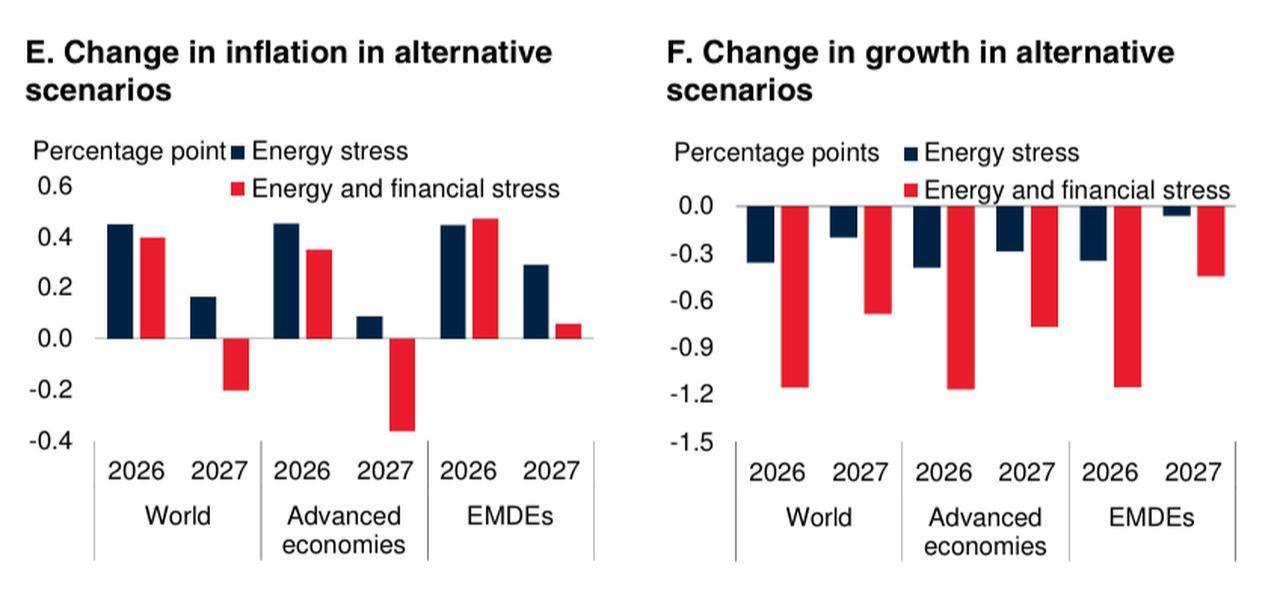
The World Bank warned that a deeper disruption to energy supplies could significantly worsen the outlook. Under a scenario combining more severe energy shortages and financial market stress, global growth could slow to just 1.3% in 2026.
At the same time, the institution identified artificial intelligence as a potential long-term source of stronger growth, arguing that wider adoption of AI technologies could boost productivity and help offset part of the slowdown expected across developing economies.
"The economic forces now gathering—AI, energy transformation, and deeper regional integration—are powerful enough to unlock transformative progress in the next decade," Gill wrote.
The report calls for stronger international cooperation on energy security, trade and investment while urging governments to pursue reforms that improve productivity, attract private capital and strengthen long-term growth prospects.


 Set as preferred source
 Set as preferred source


 1 min read

 1 min read