Newsletters


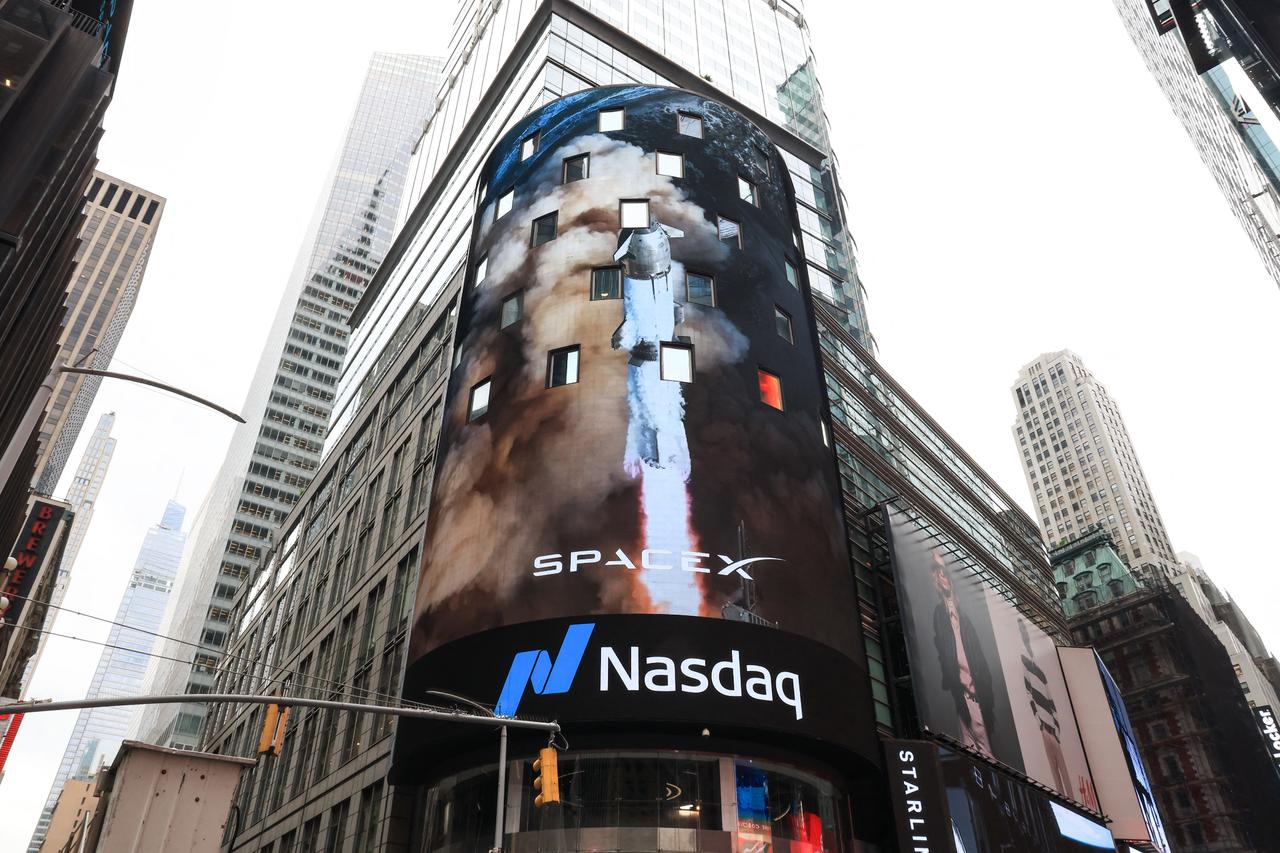


Shares of Elon Musk's SpaceX jumped 11% to $150 in their Nasdaq debut Friday following the largest initial public offering in history, pushing the company's market capitalization above $2 trillion and making Musk the world's first trillionaire on paper.
The blockbuster offering raised more than $75 billion after weeks of strong investor demand for the aerospace, satellite and artificial intelligence conglomerate. SpaceX debuted with a valuation of nearly $1.8 trillion and extended gains to more than 20%, lifting its market capitalization to around $2.2 trillion.
The record-breaking IPO added to a broader rally on Wall Street, with optimism over a potential U.S.-Iran agreement helping lift all three major U.S. stock indexes, including a 0.6% gain in the industrial Dow Jones.
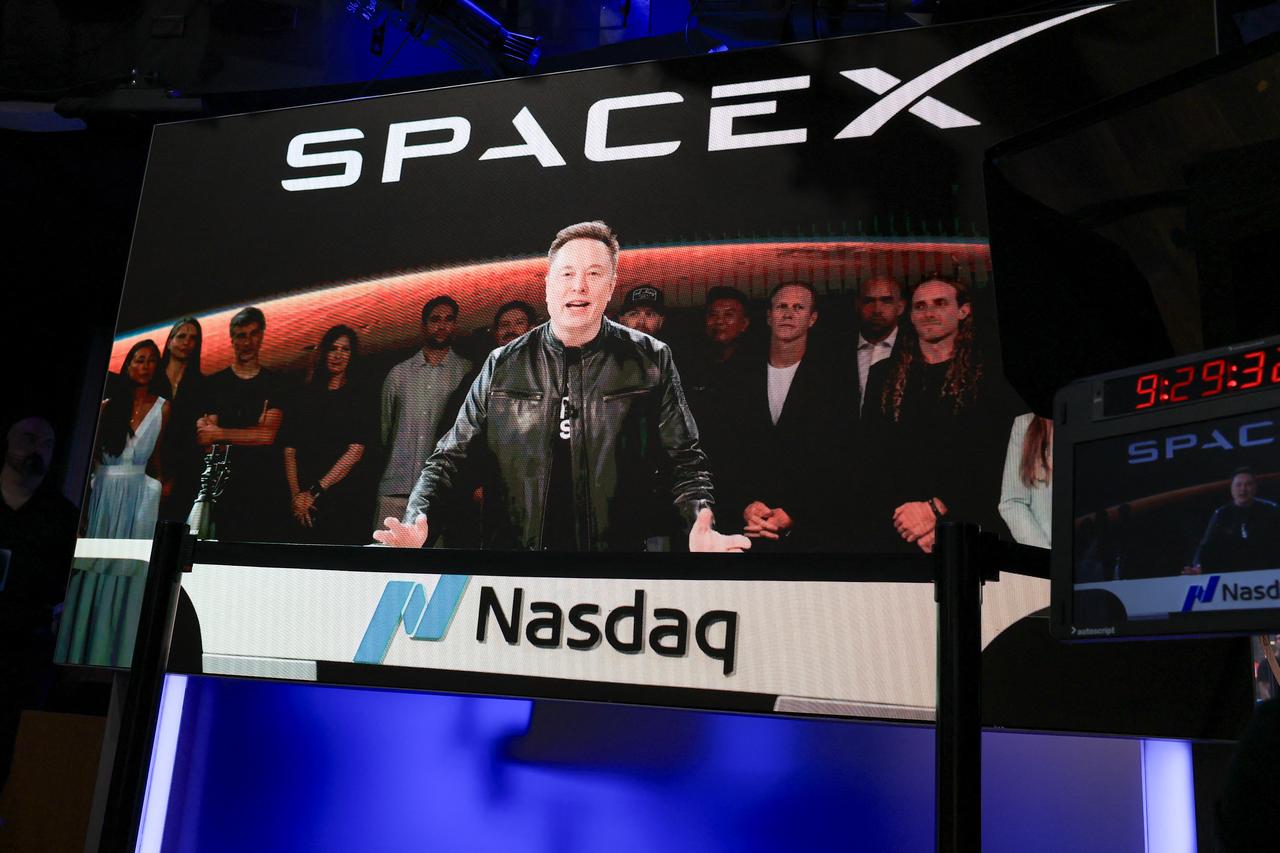
Speaking at a launch event in Starbase, Texas, Musk highlighted the company's long-term ambitions beyond Earth. "SpaceX wants to be able to take you to the moon, take you to Mars, and ultimately beyond," Musk said. "I'm confident at this point that with the incredible team that we have here at SpaceX, that we will do that for you."
SpaceX sold more than 555 million shares at $135 each, according to regulatory filings. Additional share options could lift total proceeds above $86 billion. Following the first-day rally, the company joined the ranks of the 10 most valuable U.S. corporations, overtaking firms including Tesla, Meta and Walmart in stock market value.
Calculations following the IPO put Musk's stake in SpaceX at approximately $950 billion, pushing his estimated net worth above $1.2 trillion when combined with his holdings in Tesla and other ventures, making him the first person to surpass the trillion-dollar threshold on paper.
Regulatory filings indicate Musk will retain about 82.4% of the company's voting power after the offering, leaving him firmly in control of major corporate decisions requiring shareholder approval.

Founded in 2002, SpaceX has evolved from a rocket startup into a diversified technology company spanning launch services, satellite communications and artificial intelligence. The company plans to direct IPO proceeds toward expanding its space transportation operations, satellite internet services, AI infrastructure and data center investments.
Its Falcon 9 rockets regularly transport satellites, cargo and astronauts into orbit, while the Dragon spacecraft remains central to NASA's commercial missions to the International Space Station. Starlink, the company's satellite broadband network, has expanded into business, aviation, maritime and government markets, emerging as a key driver of future revenue expectations.
SpaceX broadened its technology portfolio in 2025 through a merger with Musk's AI startup xAI, which also includes social media platform X. The move combined satellite communications, data infrastructure and artificial intelligence capabilities under a single corporate structure.
Despite reporting a $4.9 billion loss in 2025 and a $4.3 billion loss in the first quarter of 2026, investors continue to focus on the company's long-term prospects, including Starlink's growth, government contracts, commercial launch services and the development of the Starship program.


 Set as preferred source
 Set as preferred source


 1 min read
 1 min read