Newsletters


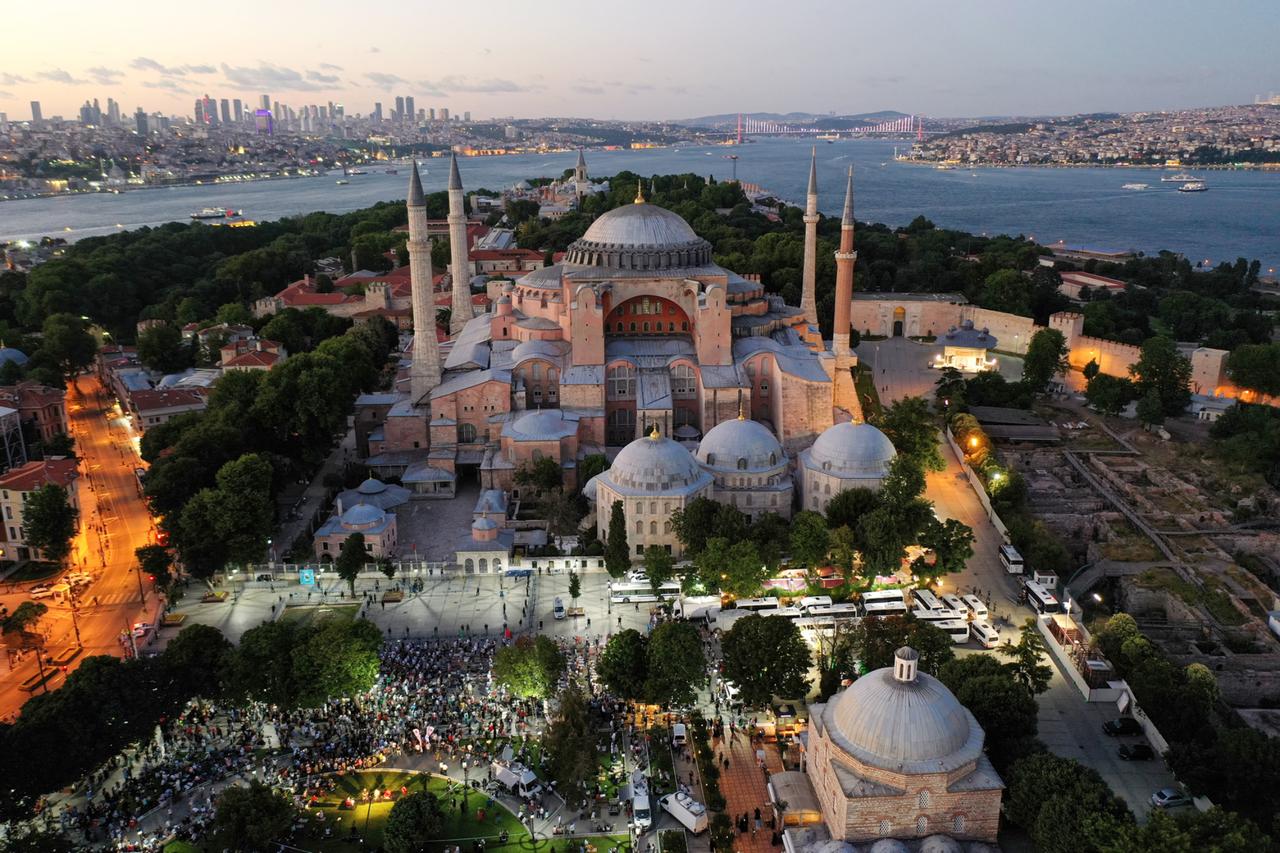
Seven underground tunnels dating back around 1,600 years have been uncovered beneath Hagia Sophia during ongoing restoration works, offering a rare glimpse into the monument’s early Byzantine-era infrastructure, as Türkiye’s Culture and Tourism Minister Mehmet Nuri Ersoy confirmed that conservation efforts at both Hagia Sophia and the Blue Mosque are progressing under strict scientific oversight.
Speaking at Hagia Sophia Grand Mosque, Ersoy said restoration at the Blue Mosque has been completed, while the complex, multi-layered conservation process at Hagia Sophia continues according to schedule. The discovery and documentation of the underground tunnels emerged as one of the most striking outcomes of the ongoing works.
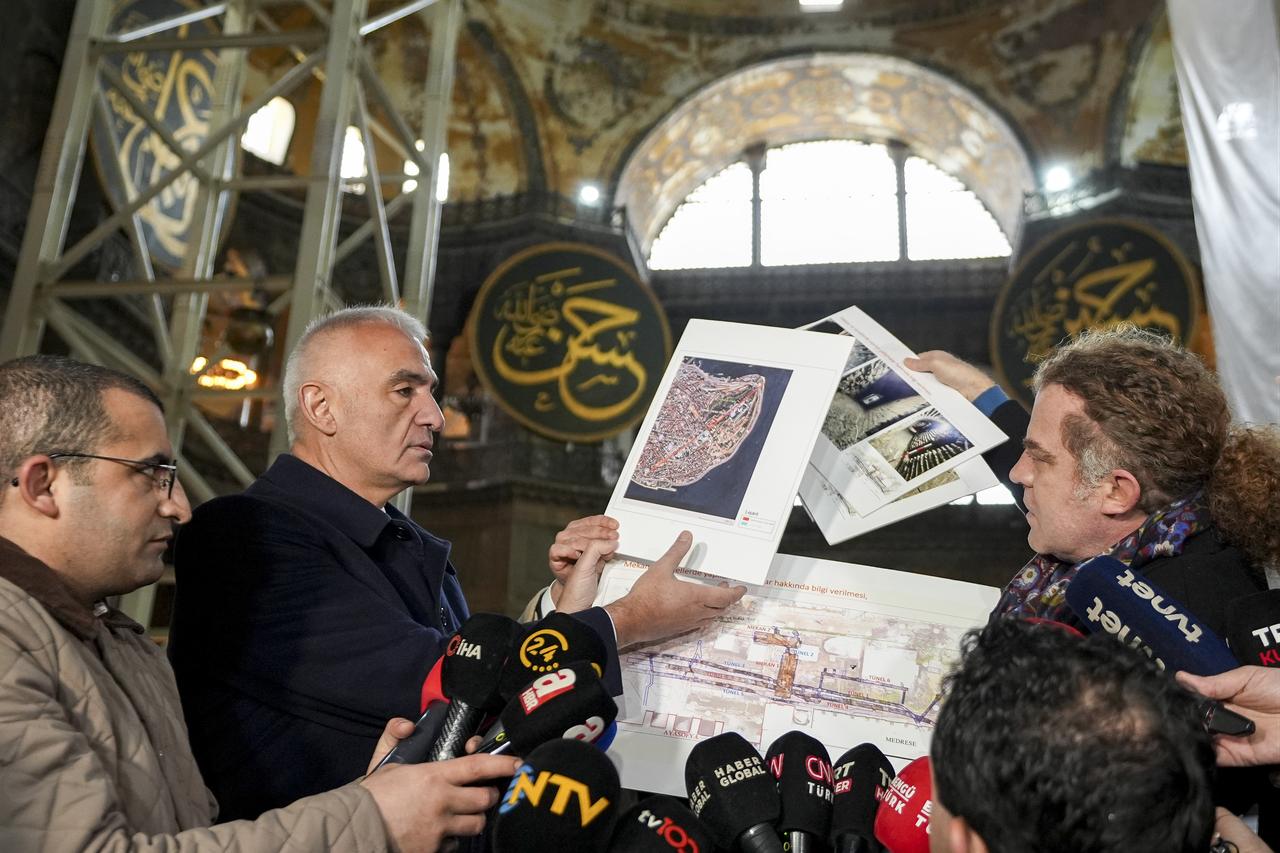

Ersoy stressed that restoration activities are being carried out transparently and under the supervision of academic advisory boards and specialist teams. At Hagia Sophia, scaffolding covering roughly 11,000 square meters has been installed along the northern, eastern and southern facades, as well as around one minaret, while a steel platform system has been set up near the gallery entrance beneath the minaret.
Material analyses identified cement-based plasters added during earlier interventions, which were later removed across nearly 2,800 square meters after careful examination. Conservation teams followed up with biological cleaning and desalination treatments to protect marble surfaces, while mechanical cleaning continues.
Laboratory studies detected construction materials belonging to Early Byzantine, Middle-Byzantine and Ottoman phases. In response, handmade bricks produced in line with historical techniques were commissioned and are now being used in repair works. Ground-penetrating radar surveys and digital modeling were also carried out across 5,200 square meters to assess structural stability and guide reinforcement plans.
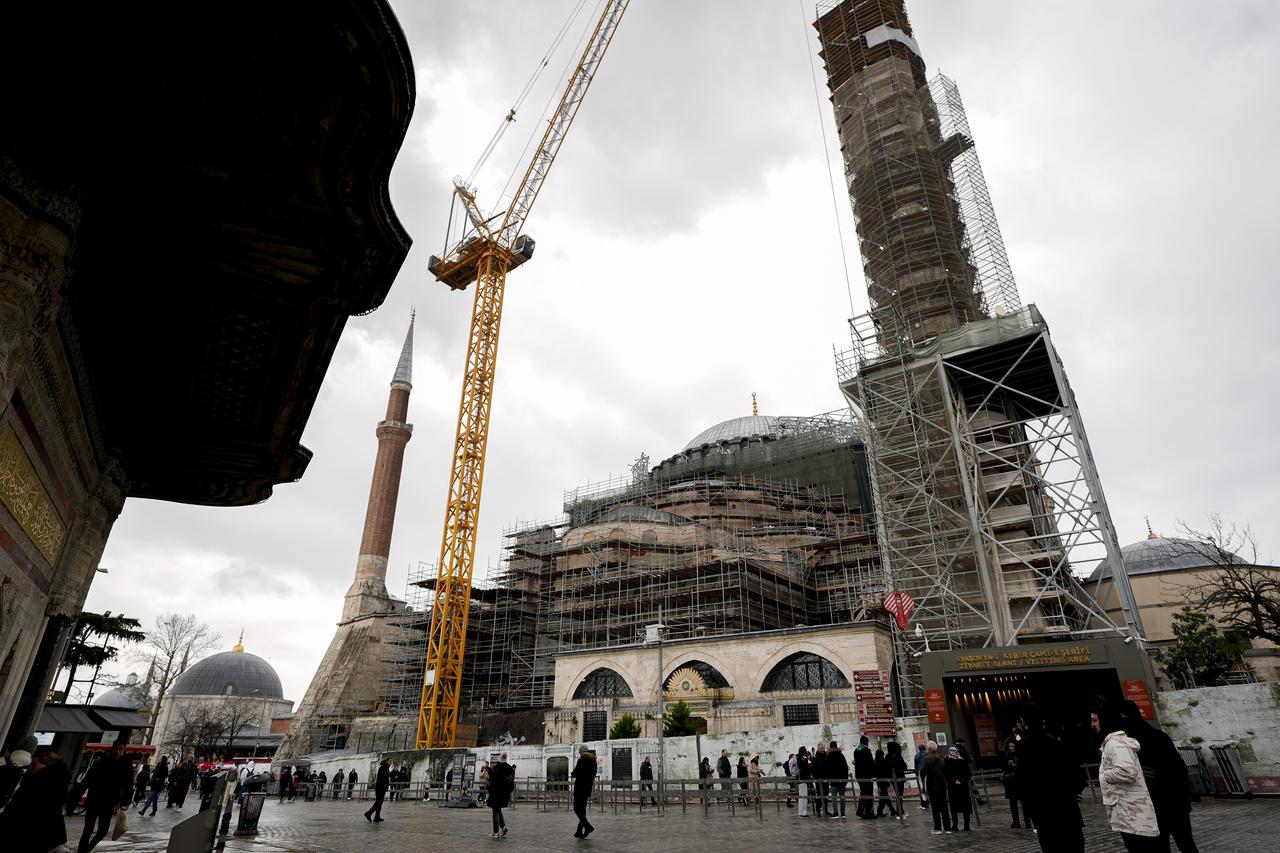
Work has intensified on Hagia Sophia’s dome and minarets, widely considered among history’s most remarkable engineering achievements. Structural analyses led to controlled dismantling below the balcony level of the northeastern minaret. Each stone was documented individually, restored where possible and returned to its original position.
Reconstruction has been completed on multiple structural elements, including decorative sections and internal stair components. Balcony floors, railings and ornamental features were renewed, while the copper finial underwent repair and gold-leaf coating. Lead cladding and finishing works remain ongoing, alongside reinforcement using stainless steel plates and rods aligned with approved engineering projects.
Inside the monument, a 43.5-meter-high scaffolding system was installed to reach the dome after extensive ground testing, load analysis and vibration monitoring. Temporary steel roofing systems were also designed to shield interior mosaics from weather exposure while the lead roof covering is removed.
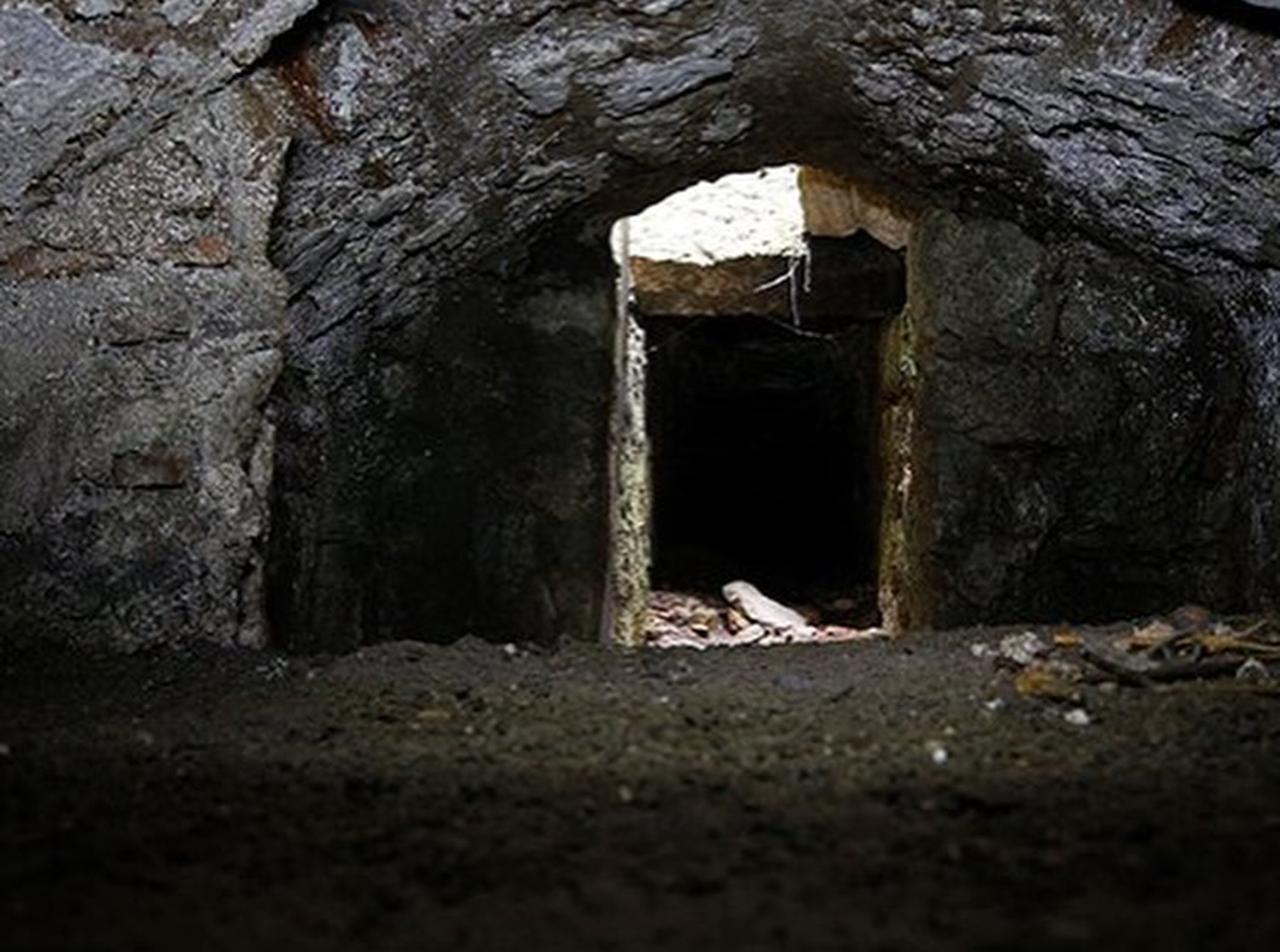
Officials also addressed growing public interest in Hagia Sophia’s underground spaces, including tunnels and a hypogeum — an underground burial structure commonly used in antiquity.
In the western garden and northern facade areas, scientific teams carried out cleaning and documentation work across three underground chambers connected to a network of tunnels extending hundreds of meters. Over several months in 2025, more than 1,000 tons of soil fill were removed from the tunnels during excavation and cleaning operations.
In a separate underground burial complex located in the Vezir garden area, an additional 102 tons of soil were cleared. The structure includes a central corridor flanked by symmetrical burial chambers.
Professor Hasan Firat Diker, a member of the scientific advisory board, said the seven documented tunnel lines date back approximately 1,600 years, placing them within the early Byzantine period. Visual documentation of the tunnels was presented to the minister and members of the press.
Ersoy also announced that restoration at the Blue Mosque, officially known as Sultanahmet Camii, has been completed. He described the project as the most comprehensive conservation effort in the mosque’s more than 400-year history, noting that earlier interventions had largely focused on emergency repairs or partial restorations.
The mosque remained open to worship and visitors throughout the works. Inside the main prayer hall, a steel platform covering about 1,200 square meters and rising eight meters high was installed alongside scaffolding reaching 35 meters to access the central dome. Structural repairs were carried out on all six minarets, while their conical caps and balcony railings were restored.
Approximately 400 tons of lead roofing were renewed across domes, arcades and minarets, and gold-plated finials were refurbished. Cleaning and consolidation works were also completed on stone and marble surfaces throughout the structure.
Following the briefing, Ersoy received technical updates from advisory board members, who emphasized that interior platform systems were essential to protect mosaics and allow immediate intervention during structural reinforcement works.


 Set as preferred source
 Set as preferred source


 2 min read
 1 min read