Newsletters


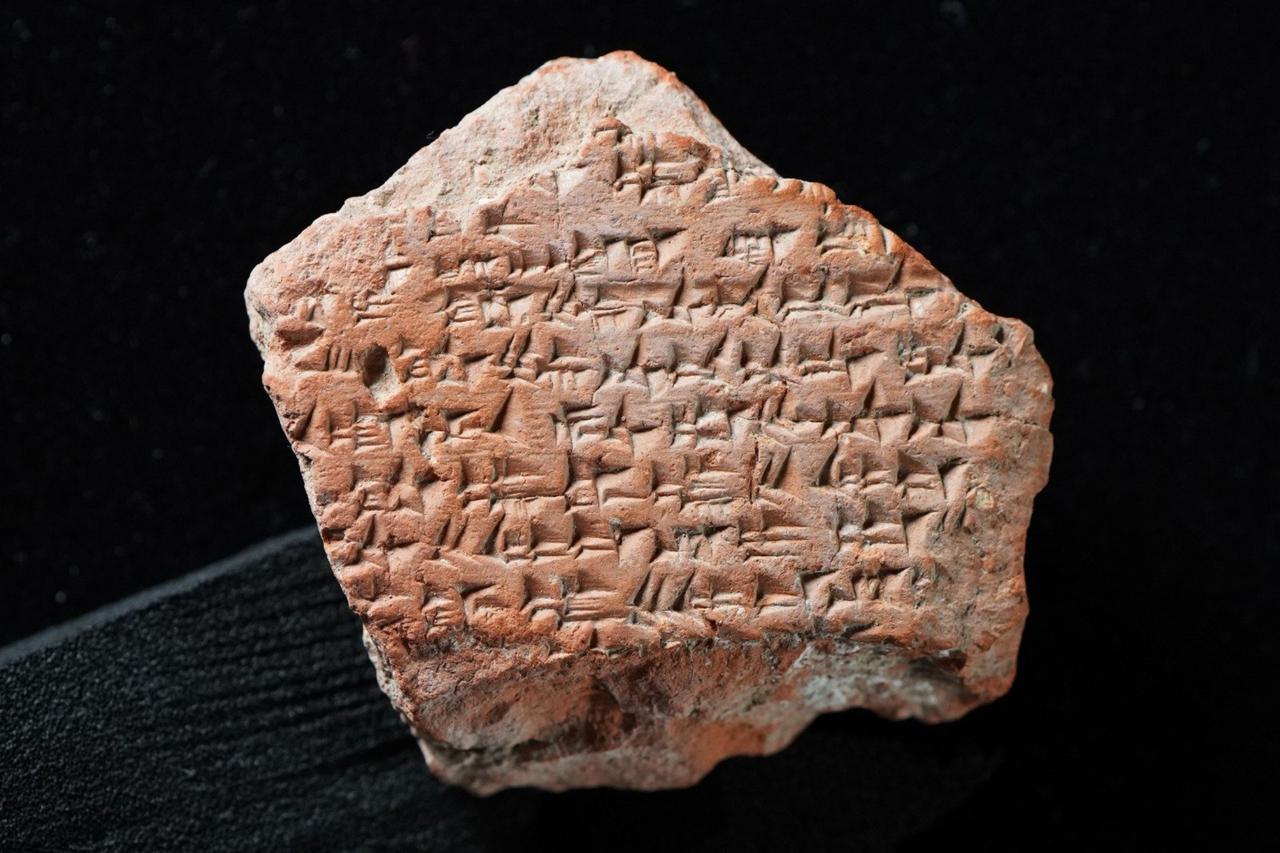


A cuneiform tablet fragment uncovered at Hattusa, the ancient Hittite capital in central Türkiye, has been identified as belonging to one of the surviving copies of the Kadesh Peace Treaty, Culture and Tourism Minister Mehmet Nuri Ersoy announced on Monday.
The fragment was found near the "E" building at Buyukkale, the fortified royal area of Hattusa in Corum, and was examined by researchers for about a year before its connection to the treaty was confirmed.
According to the Culture and Tourism Ministry, the newly identified section contains lines dealing with the treatment of people who fled from one kingdom and sought refuge in the other.
“We found the millennia-old traces of peace in the soil of Anatolia,” Ersoy said, adding that scientific examinations had confirmed the fragment belonged to a copy of the Kadesh Peace Treaty.
He said the surviving lines include provisions concerning people who crossed from one country into the other, as well as references to their homes not being destroyed.
The Kadesh Peace Treaty was concluded between Hittite King Hattusili III and Egyptian Pharaoh Ramses II.
The newly found fragment corresponds to provisions covered in Articles 12-20 of the treaty, which set out how the two sides would deal with people who fled their respective territories and took refuge across the border.
Although parts of the tablet are broken or missing, the readable sections refer to people fleeing Egypt and Hatti, while also including wording related to preventing the destruction of their homes.
Ersoy announced the finding on Sept. 21, World Peace Day, saying the discovery once again underlined Anatolia's long history of peace and diplomacy.
He also referred to developments in Palestine in his statement, saying the ancient text served as a reminder of the responsibility to protect human life and dignity, while expressing hope for a future in which people could live in safety and peace.


The Egyptian version of the Kadesh Peace Treaty was carved in hieroglyphs on temple walls in Egypt, while fragments of its Akkadian-language clay tablet version were uncovered at Hattusa during the first period of excavations between 1906 and 1912.
Previously discovered fragments are now held in the Istanbul Archaeology Museums, the Museum of Anatolian Civilizations, the Vorderasiatisches Museum in Berlin and the Hermitage Museum in St. Petersburg.
The latest discovery adds another piece to efforts to reconstruct the Hattusa copies of the treaty. Excavations at Buyukkale are continuing, with researchers hoping to uncover further missing fragments.


 Set as preferred source
 Set as preferred source


 2 min read
 1 min read