Newsletters





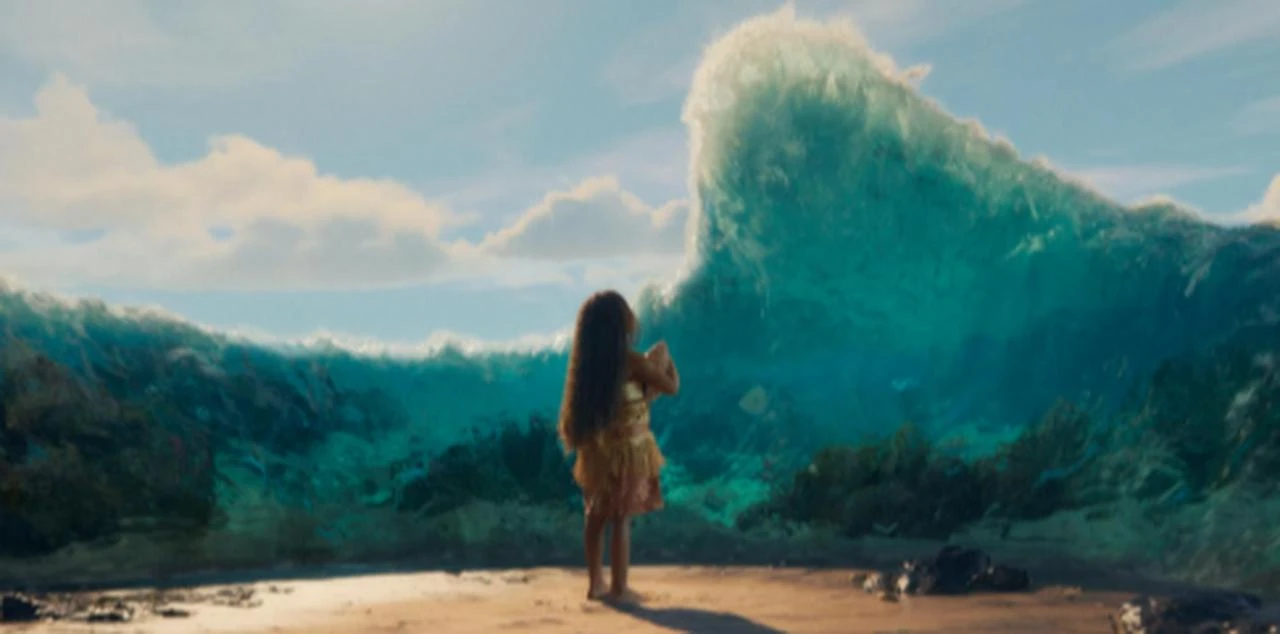
Disney will release a live-action version of 'Moana' worldwide from Wednesday, a remake of the 2016 Polynesian-themed animated hit that is only a decade old.
The original follows a young Polynesian girl who sets off on an ocean voyage with the demigod Maui to save her people and their atoll.
A sequel followed in 2024, and a third animated installment is already in development.
The new version stars Dwayne 'The Rock' Johnson and is directed by Thomas Kail, known for 'Hamilton.' It is described as a shot-for-shot recreation of the original, retaining the same songs and much of the dialogue.
The production carries an estimated budget of $200 million to $250 million and is banking on visual effects to draw audiences, arriving as animated sequels 'Toy Story 5' and 'Minions & Monsters' perform strongly at the box office.
Kail told the Agence France-Presse (AFP) that live-action offers a different way to connect with audiences than animation, saying, 'the way that the movie breathes is so different than animation; the way that you fill a frame is quite different.'

Remakes and franchise films have become central to major studio output in recent years, a trend often criticized as a sign of reduced creative risk-taking by leading studios.
Familiar characters and concepts are viewed by studios as reliable revenue sources, offering built-in audience recognition and opportunities for merchandising, video games, and other spin-off products.
Disney's push into live-action remakes accelerated after the 2010 release of 'Alice in Wonderland,' directed by Tim Burton, which grossed more than $1 billion worldwide.
‘Aladdin,' 'Beauty and the Beast' and 'Lilo & Stitch' have since each surpassed the $1 billion mark at the global box office.
Stephane Durand, a pop culture and Disney specialist based in France, said remakes drawing most heavily on 1980s and 1990s Disney Renaissance titles have performed particularly well commercially.
'The biggest hits are films that recreate the original almost shot for shot,' he said, adding that this approach offers little for audiences interested in original storytelling even as the films continue to generate billion-dollar returns.
Not every remake has succeeded at the same level. "The Little Mermaid" (2023) received a lukewarm theatrical reception, while "Snow White" (2025) underperformed at the box office.
Industry observers note that studios face pressure to preserve the appeal of original material while exercising careful judgment over how much creative license to take with beloved stories.
Commercial performance in cinemas, however, does not always determine a remake's overall success.
Streaming platforms have increasingly given a second life to titles that struggle theatrically, with several underperforming remakes going on to draw large audiences that were once available on streaming.
Analysts point to this shift as a factor allowing studios to continue investing in the format even when box office results fall short of expectations.
The wider trend shows no sign of slowing, with major studios continuing to draw on established intellectual property as a central part of their release strategies, even as debate continues over the approach's creative merits.


 Set as preferred source
 Set as preferred source



 8 min read