Newsletters


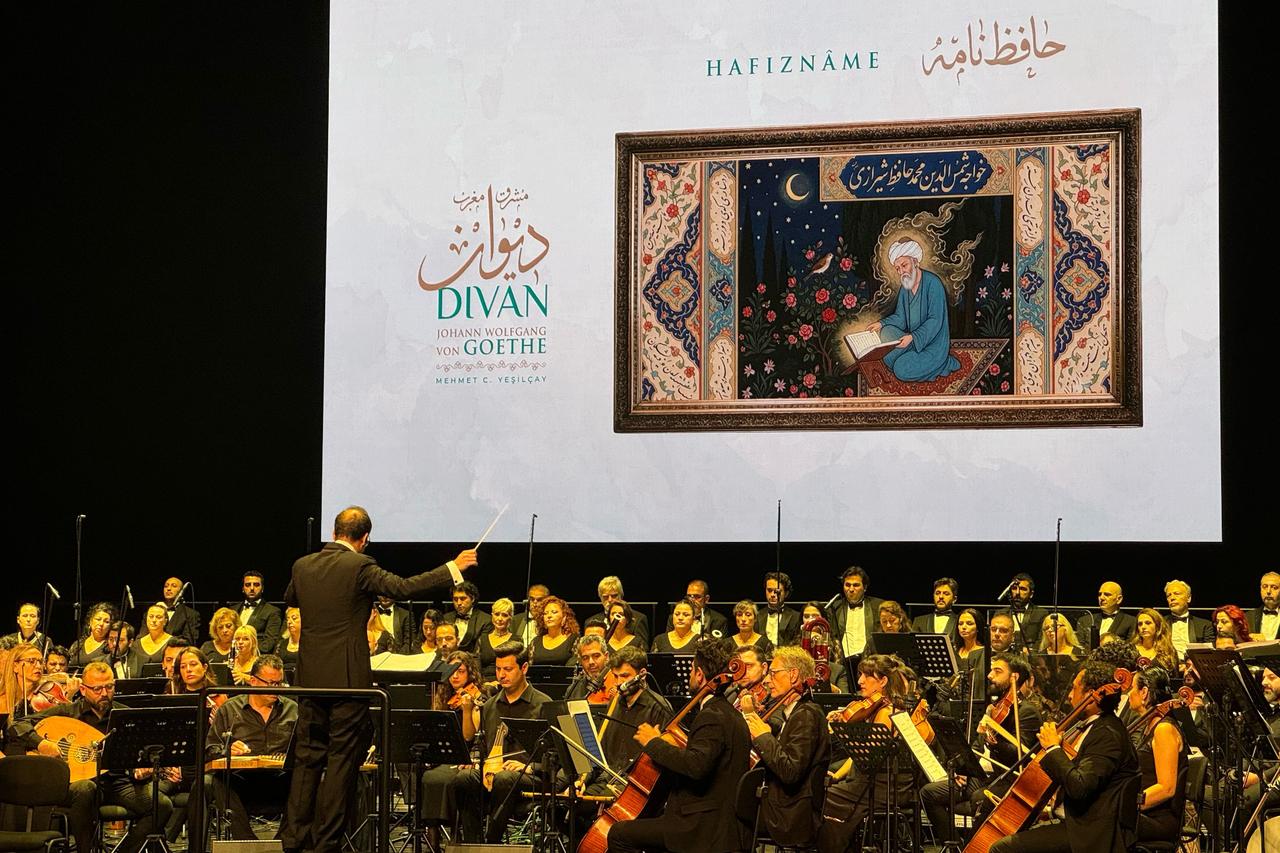


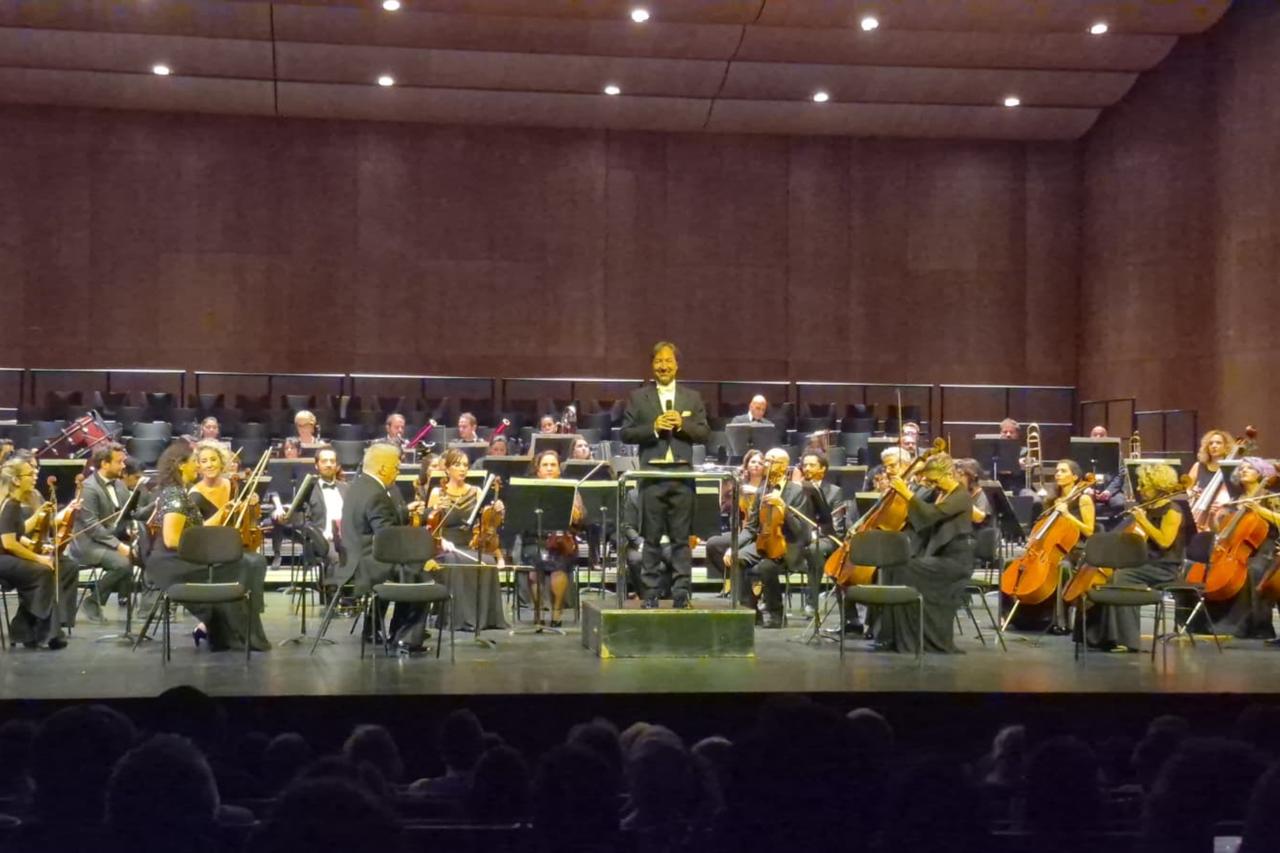
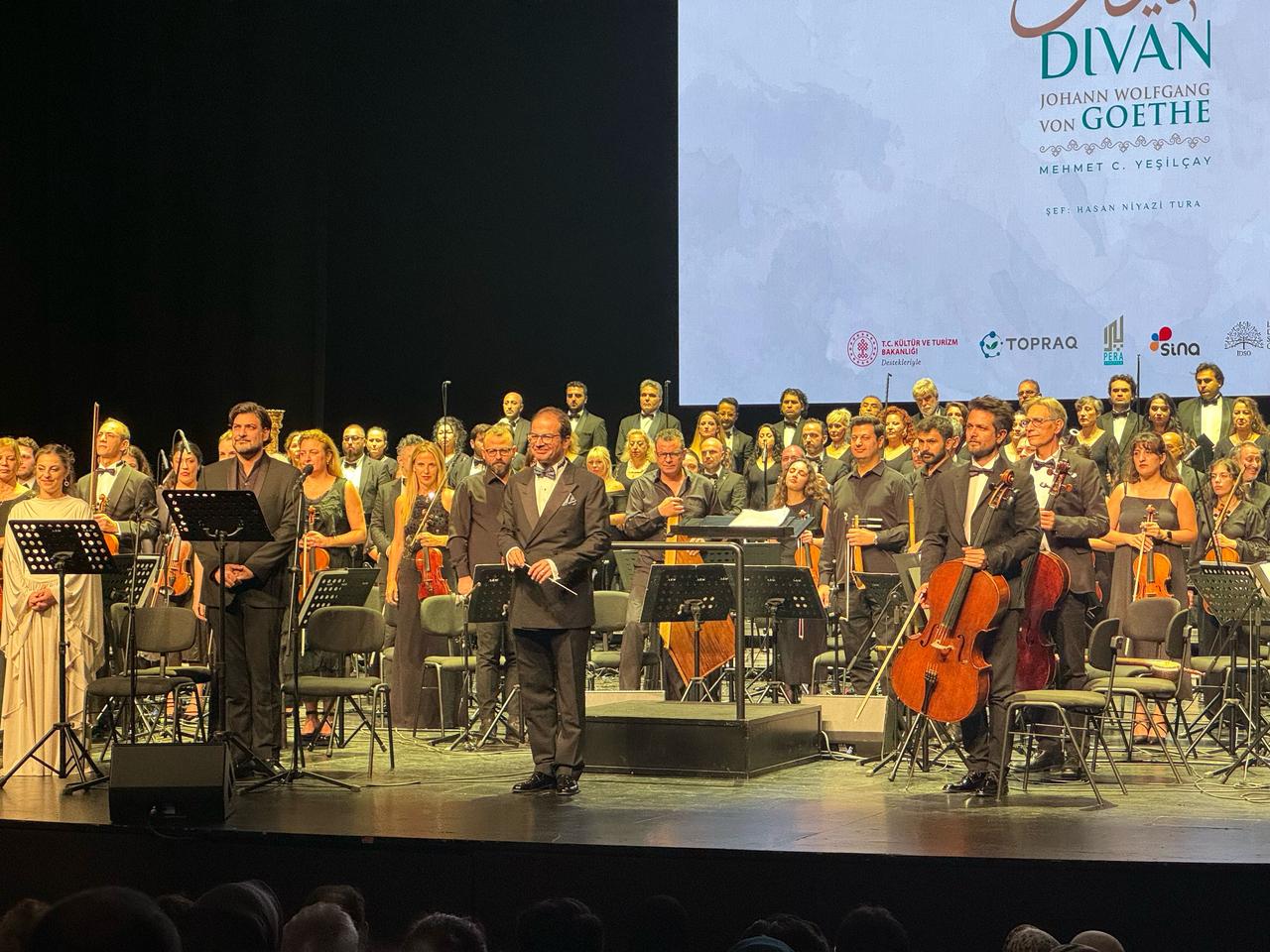
Johann Wolfgang von Goethe's "West-Eastern Divan" was staged at Istanbul's Ataturk Cultural Center (AKM), featuring Senail Ozkan's Turkish translation and music by Mehmet C. Yesilcay.
The performance brought together the Istanbul State Symphony Orchestra, conducted by Hasan Niyazi Tura, the Istanbul State Opera and Ballet Choir and Pera Ensemble. Ceren Aydin and Ilker Arcayurek appeared as soloists, while Mehmet Onder joined the production as narrator.
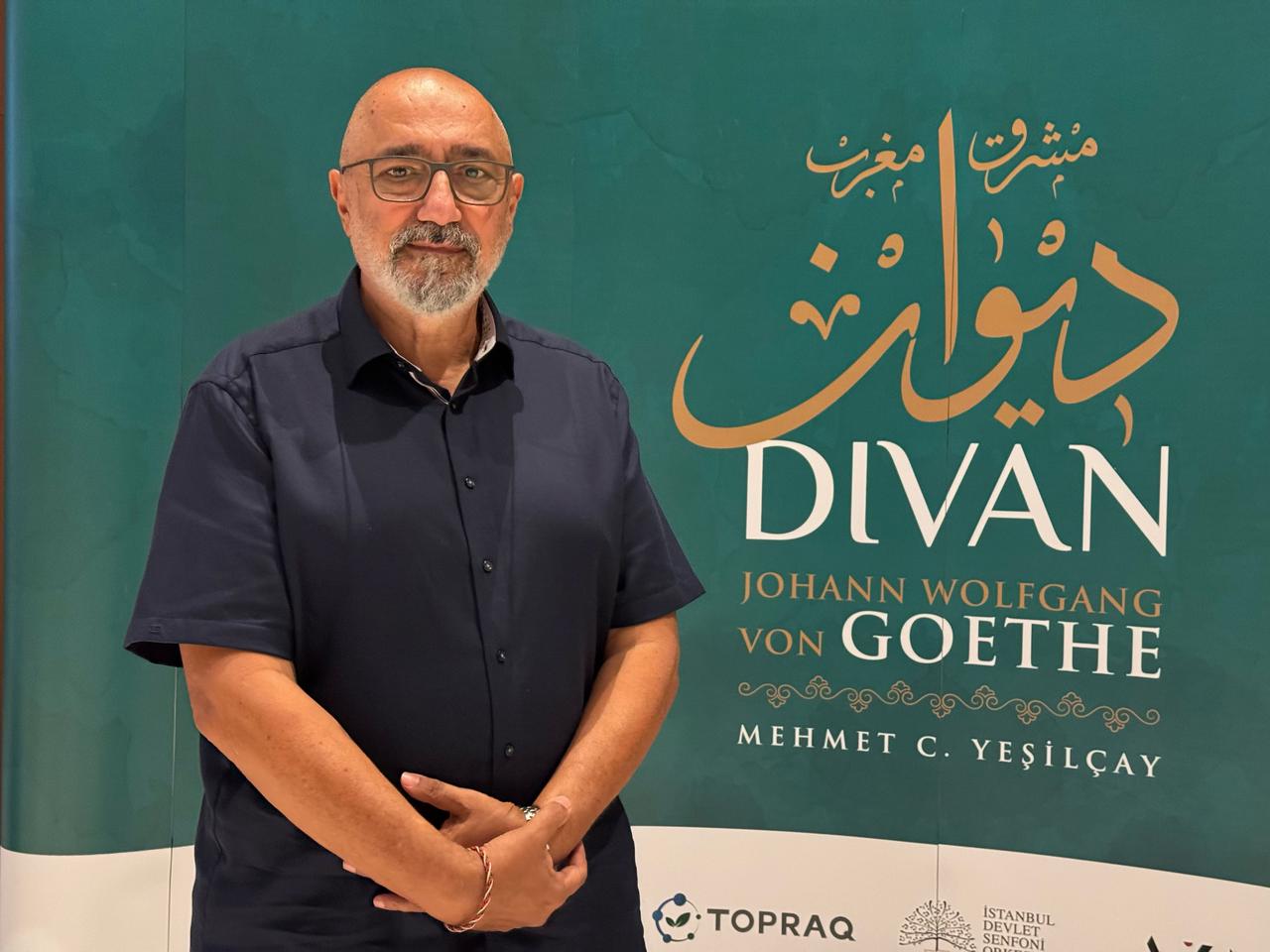

Yesilcay, who also served as artistic director of the project, said he composed the work in 2019, marking the 200th anniversary of the publication of Goethe's collection.
The composition was previously performed before an audience of around 2,500 people with the Munich Philharmonic Orchestra in Germany, while its Turkish-language version could only be brought to the stage years later for various reasons.
"I composed this work to open the door to Goethe," Yesilcay said.
Explaining his approach, Yesilcay said Goethe had effectively laid out how the texts should be set to music, leading him to keep the composition behind the author's words.
"Think of it like film music. Goethe's words are in front, and the music is behind them. The music supports them a little," he said.
Yesilcay, who was born in Istanbul and has lived in Germany since the age of 9, said his own experience between two cultures also shaped the musical language of the production. The score combines Turkish instruments with a broader orchestral structure, drawing on his decades of work with Pera Ensemble.
Yesilcay said Goethe first became interested in Persian literature at a young age before gradually turning toward Islam and the Prophet Muhammad (pbuh) as subjects of deeper study.
According to Yesilcay, Goethe built up a substantial library on Islam and was also helped by a German translation of the Quran connected to the circle of Austrian Orientalist Joseph von Hammer-Purgstall.
He added that Goethe described the Persian poet Hafez as his "twin brother," while also bringing figures and subjects including Timur, Nasrettin Hoca, Ebussuud Efendi, Rumi and the Battle of Badr into his writings.
Yesilcay said this wider intellectual range became an important part of how he approached the composition, which sought to bring together Goethe's text with musical traditions associated with both East and West.
Senail Ozkan, who translated the work into Turkish, said he first encountered the "West-Eastern Divan" while studying German literature at the University of Bonn.
After taking two semesters devoted to the work, Ozkan said he spent roughly two decades collecting books and academic studies about it before beginning the translation after returning to Türkiye in 1998. He completed the project in the 2010s.
Ozkan said he and Yesilcay had discussed the project for years, exchanging their respective knowledge of Goethe's text and encouraging each other as the production gradually took shape.


 Set as preferred source
 Set as preferred source


 3 min read