Newsletters


A 17.5-meter Late Antique floor mosaic featuring Greek inscriptions and geometric patterns has been unearthed during foundation excavation work at a site where a building collapsed in the 2023 earthquakes in Türkiye's Hatay province.
The mosaic, dating to the fourth-sixth century A.D., was discovered in the Masuklu neighborhood of the Antakya district when construction workers encountered the ancient floor while digging foundations for a new building.
"Mosaics are not something that could be found in everyone's home under normal circumstances.
Therefore, we can say this was the residence of someone of high status," archaeologist Ozan Demir told state-run Anadolu Agency (AA) on Sunday.
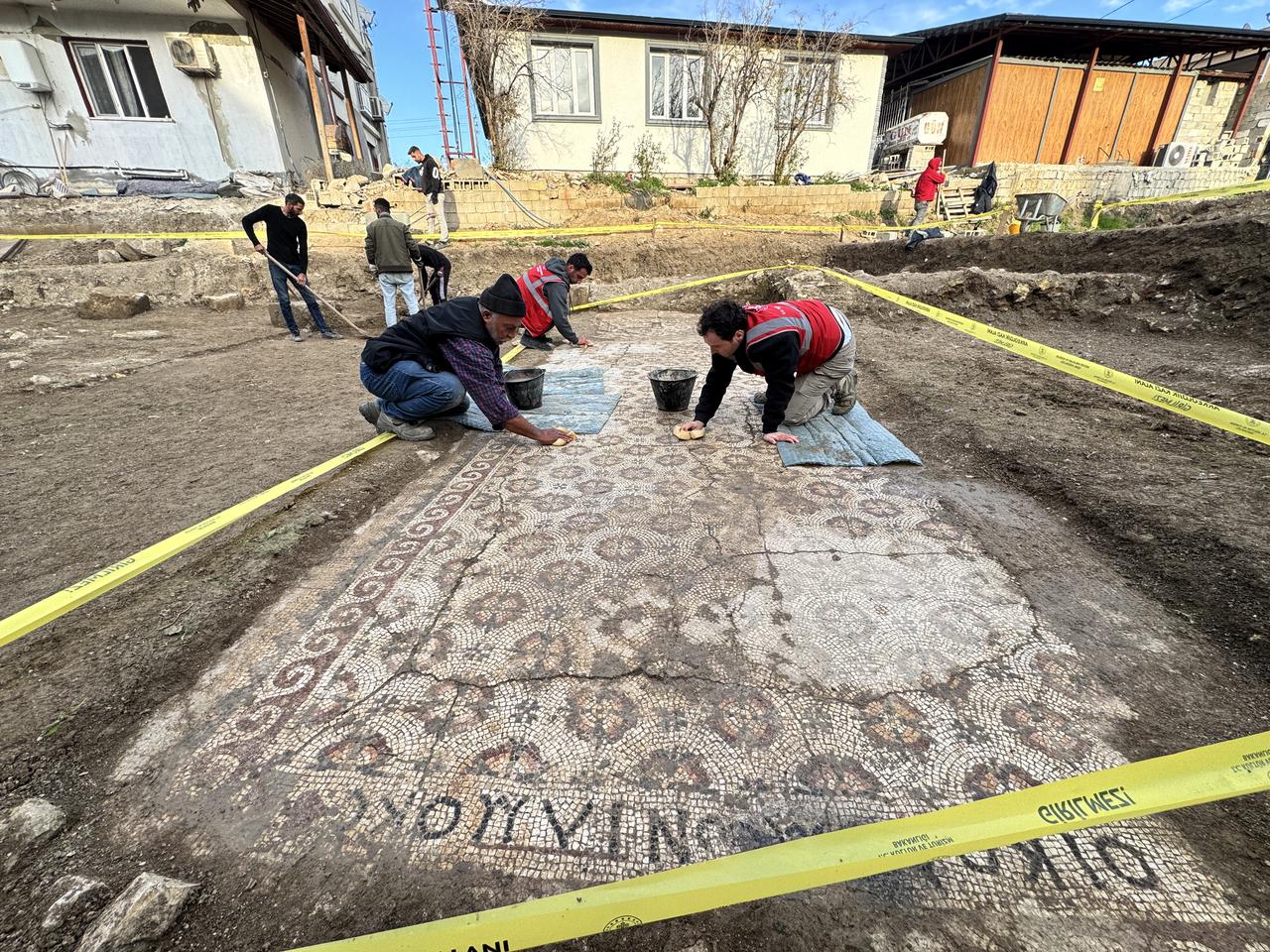

A three-story building in the Masuklu neighborhood collapsed during the Feb. 6, 2023, earthquakes centered in Kahramanmaras, which killed more than 50,000 people across southeastern Türkiye.
After the rubble was cleared, construction work began to erect a new building on the site. When workers encountered the mosaic area during foundation excavation, construction was halted.
The Hatay Archaeology Museum launched a rescue excavation in March to uncover the mosaic area.
Excavations revealed floor mosaics in three separate areas.
Demir said the excavation work continues with two archaeologists and eight workers to uncover the mosaic and architectural remains.
The archaeologist noted that the mosaic is a single piece and shows evidence of period repairs, indicating it was maintained during ancient times.
"The mosaic will be transferred to the museum in 2026. Work will continue in other parts of the area to raise the architectural fabric and uncover archaeological data," he noted, adding that after completing work on the 17.5-meter geometric mosaic, teams will begin work on the two other mosaics found in the area.
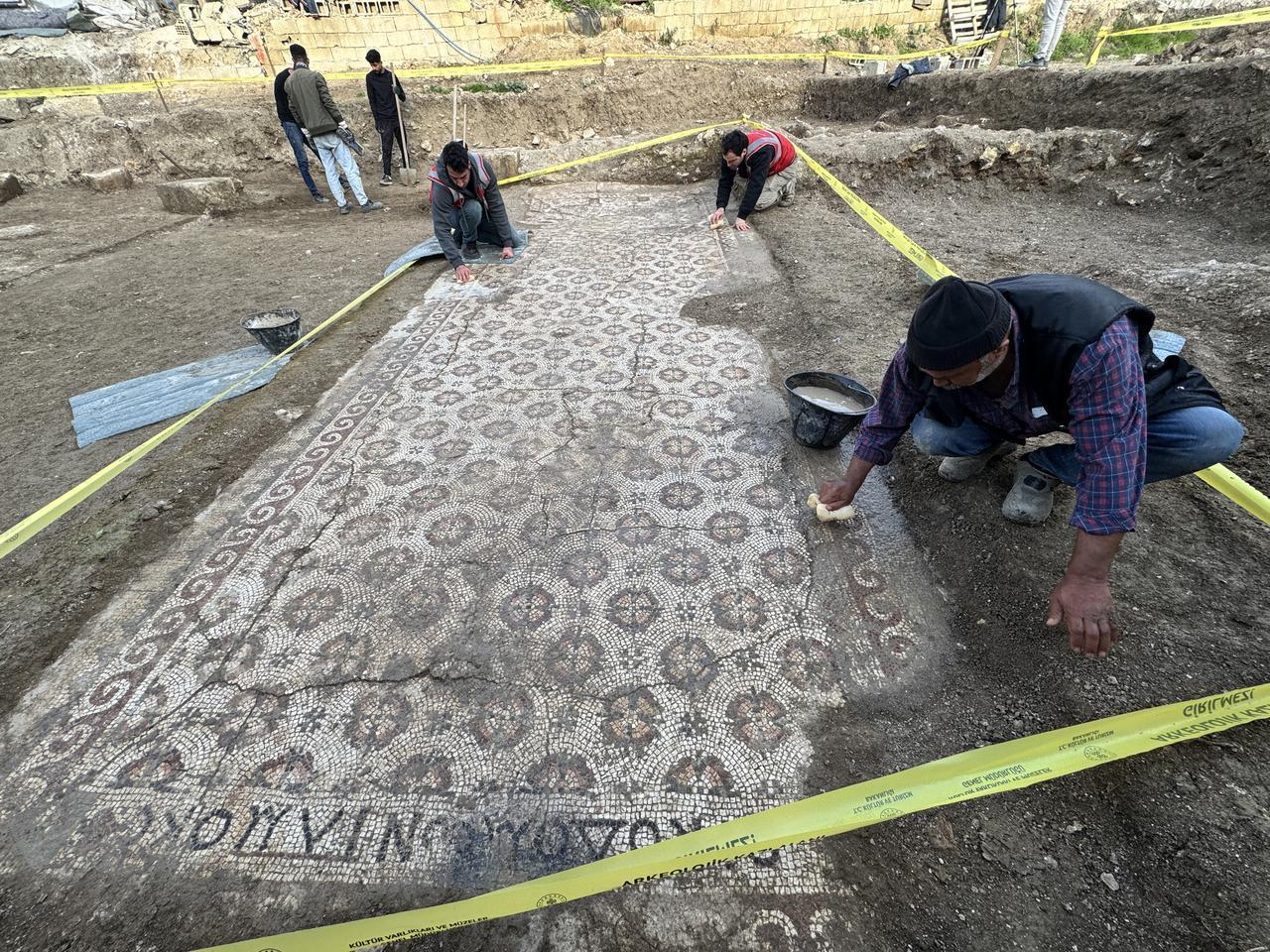
Archaeologist Mert Nalbantoglu stated that the mosaic's excellent state of preservation and the presence of inscriptions make it particularly valuable.
The Greek inscription and geometric patterns are characteristic of the Late Antique period (fourth to sixth century A.D.) floor decoration in the Eastern Mediterranean region.
Antakya, known in antiquity as Antioch, was one of the largest cities of the Roman and Byzantine empires and is renowned for its rich mosaic heritage. The Hatay Archaeology Museum houses one of the world's largest collections of Roman and Byzantine mosaics.


 Set as preferred source
 Set as preferred source


 3 min read

 1 min read