Newsletters


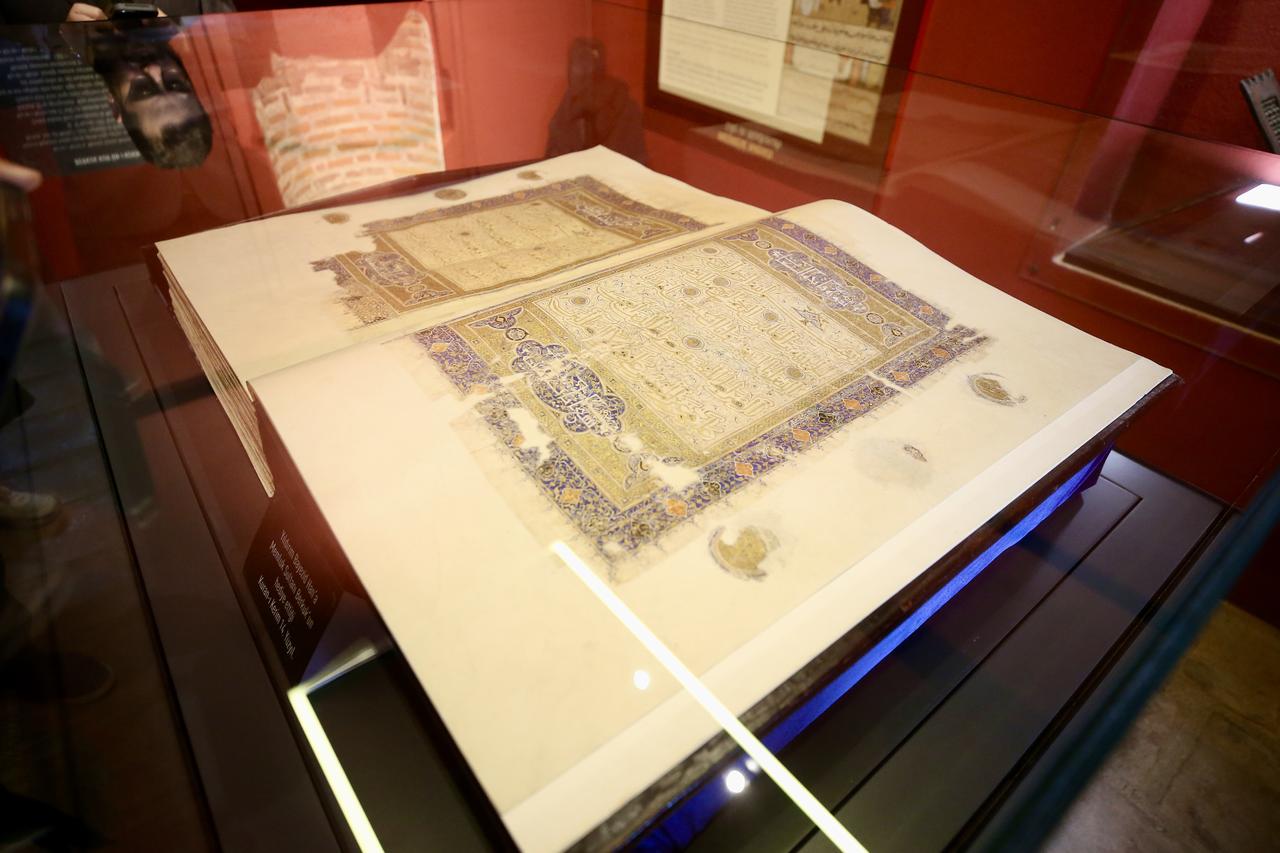


A rare Quran gifted by Mamluk Sultan Barquq to Ottoman ruler Bayezid I in the late 14th century has gone back on display in Bursa, Türkiye, where visitors can view it throughout 2026 as part of events marking the 700th anniversary of the city’s conquest.
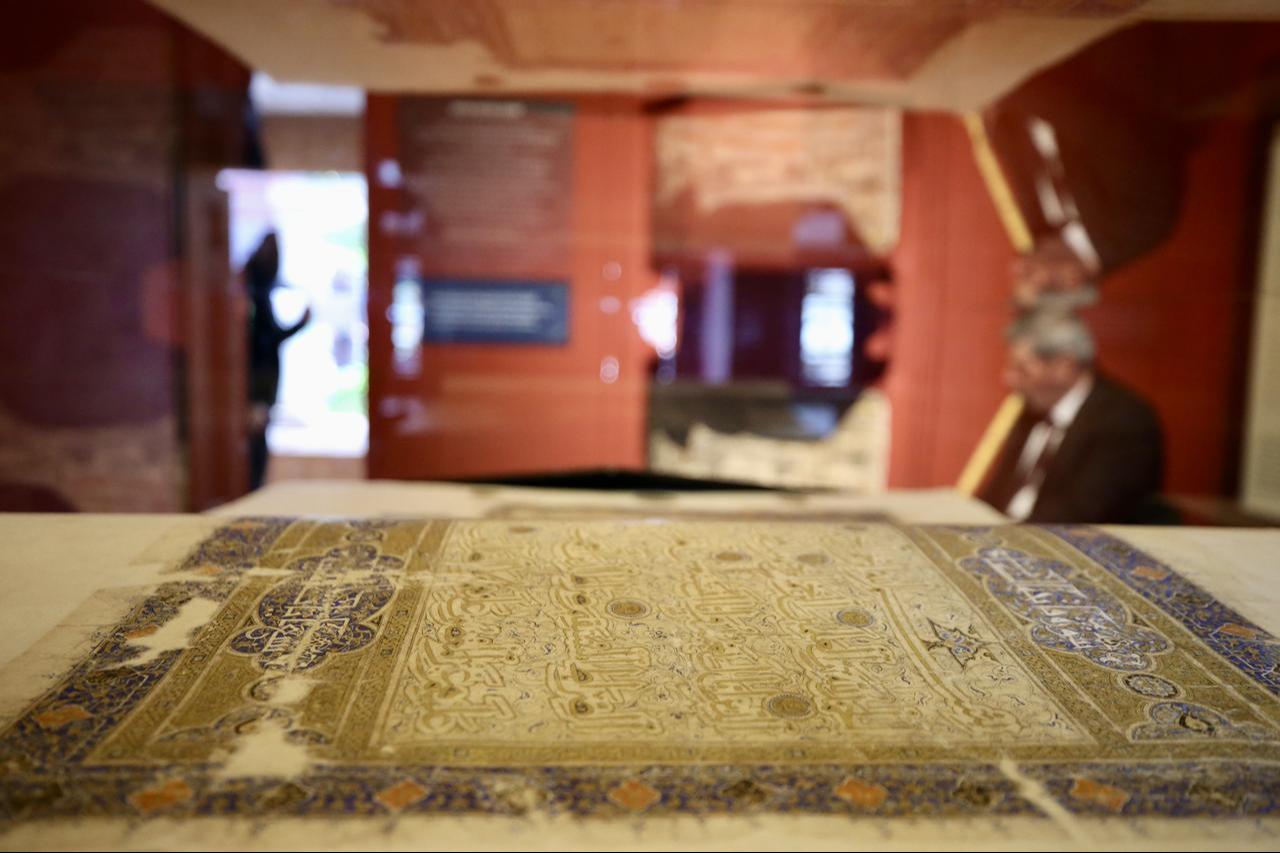
The manuscript is being exhibited at the Turkish and Islamic Arts Museum in Bursa with its gilded opening pages displayed. Written in 1380 in black ink on thick, cream-colored paper, the Quran stands out not only for its historical significance but also for its striking scale. Museum officials said the volume measures 57.5 by 82 centimeters, is around 18 centimeters thick, and weighs about 30 kilograms.
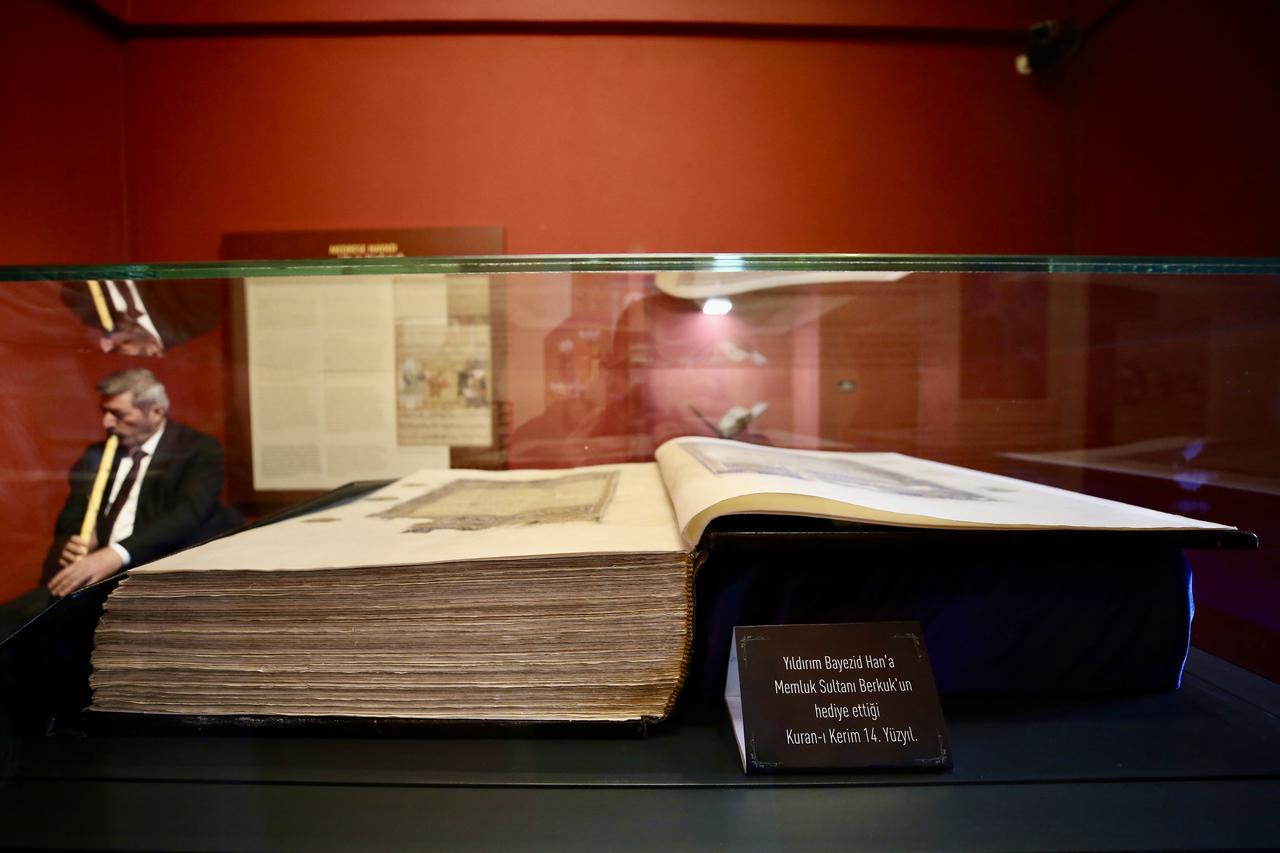

According to officials speaking at the opening ceremony, the Quran was presented by Barquq, the Mamluk sultan of Egypt and Syria, to Bayezid I in 1396. They said the gift was meant to be read at the tomb of Bayezid’s father, Murad I.
Kamil Ozer, Bursa’s provincial director of culture and tourism, said the exchange carried a deeper meaning beyond a royal gift. He said the Quran was sent at a time when two Muslim rulers were seeking to reinforce unity, alliance, and brotherhood in the face of a Crusader coalition.
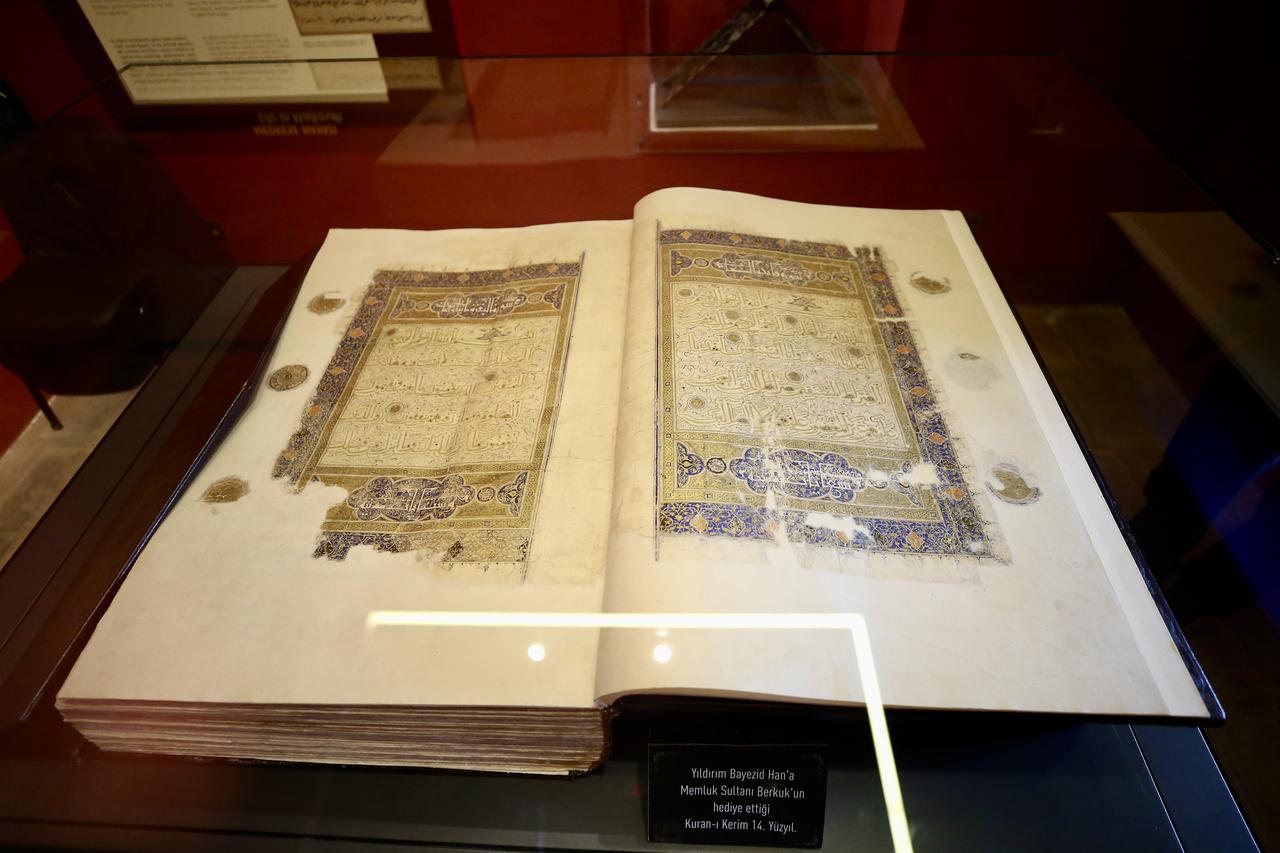
Officials said the manuscript had remained on display at the museum until 2015, after which it was transferred to the Inebey Manuscript Library and later taken in for restoration. After an interval of about 11 years, it has now been brought back for public viewing as part of Bursa’s 700th-year commemorations.
Bursa Governor Erol Ayyildiz described the reopening as one of the most meaningful events held for the anniversary year. He said the presentation of such a rare work was a source of happiness and thanked those who helped bring it back before the public.
Ozer also drew attention to the manuscript as a work of art, saying it brings together several classical Islamic arts, including illumination, calligraphy, binding and paper-cut decoration. The Quran has a dark brown leather cover, while its opening pages are decorated with gold illumination.
During the ceremony, Ozer also read from Bayezid’s endowment text, which states that the Quran was dedicated to be read at the blessed tomb and that the spiritual reward of its recitation be offered to the soul of the sultan who endowed it.
Sufism historian Professor Mustafa Kara said the manuscript should be seen as a gift of friendship that had been preserved by generations for some 700 years. He described Barquq as a Circassian of Dagestani origin who was sold first to Crimea and then to Egypt before rising through the ranks to become sultan of the Mamluk state.
Kara said Barquq had been a close friend of Murad I and, after learning of his death, sent the Quran to his son with the recommendation that it be read at the father’s grave. He portrayed the manuscript as a lasting legacy of friendship, one that had been carefully kept and honored over the centuries.


 Set as preferred source
 Set as preferred source


 1 min read
 1 min read