Newsletters


A conservation and landscaping project has begun around a rare pyramid-style ancient tomb in the Marmaris district of Mugla, as local authorities move to safeguard one of the region’s most unusual archaeological monuments and make it more accessible to visitors.
The work is being carried out with the permission of the Mugla Regional Council for the Conservation of Cultural Heritage and under the supervision of the Marmaris Museum Directorate. The project is also being guided scientifically by Associate Professor Mehmet Gurbuzer from the Archaeology Department of Mugla Sitki Kocman University.
The tomb dates back to the Hellenistic period, a historical era following the campaigns of Alexander the Great when Greek culture spread widely across the eastern Mediterranean.
According to an ancient Greek inscription carved on a marble plaque on the structure, the tomb belonged to Diagoras and his wife Aristomakha. The monument’s pyramid-like architectural form makes it an extremely rare example in the region.
Authorities also note that the structure has been officially registered by the Ministry of Culture and Tourism as an immovable cultural asset that must be protected, highlighting its importance within the broader cultural heritage of the area.
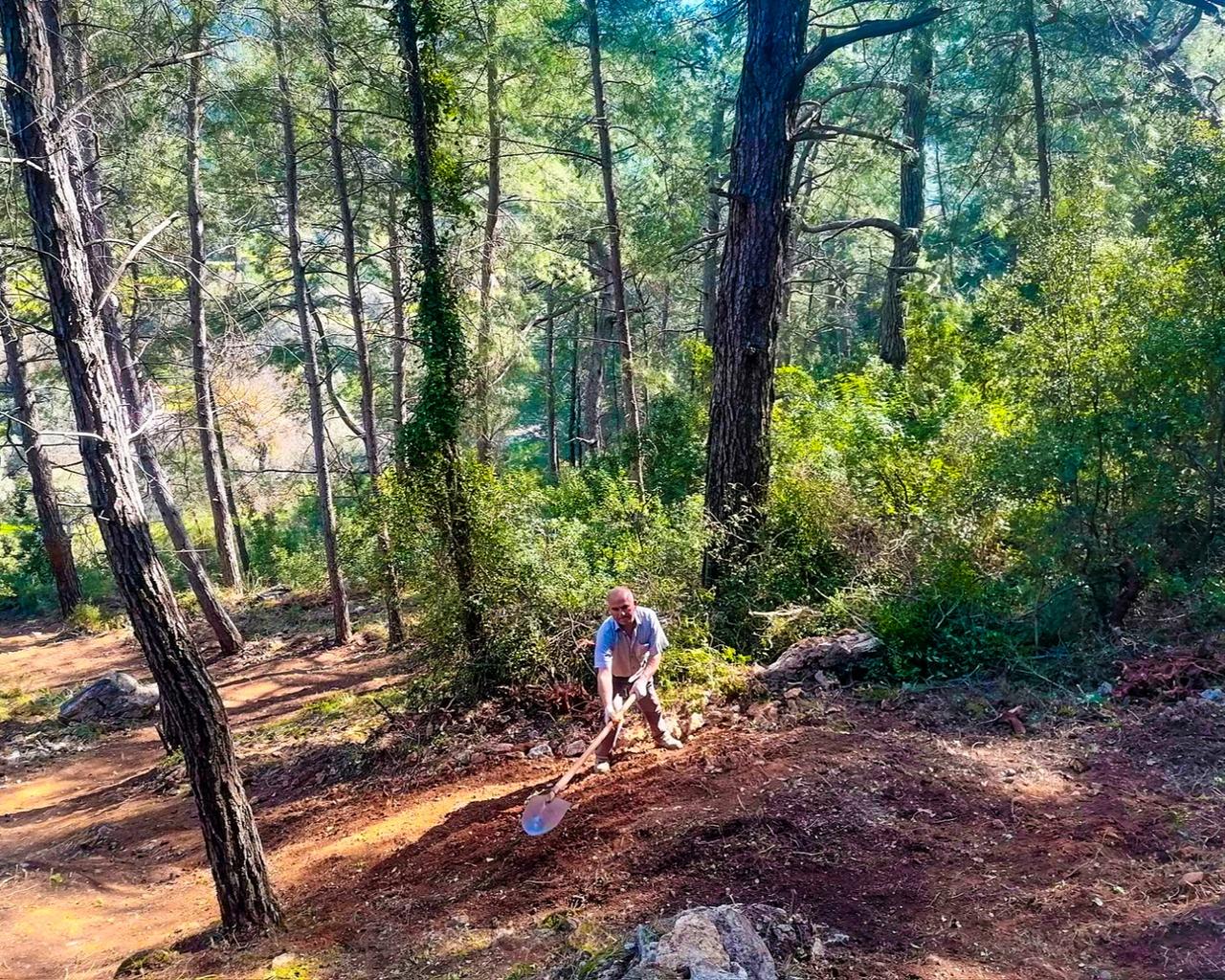

The first phase of the project focuses on clearing dense vegetation surrounding the monument, allowing researchers and conservators to better assess the structure while also preventing damage caused by uncontrolled plant growth.
Once this stage is completed, a protective perimeter will be set up around the tomb to help secure the site. Officials also plan to install camera systems and motion-triggered wildlife cameras, commonly known as camera traps, to monitor the area and deter potential damage or illegal activity.
Beyond conservation, the project also aims to improve how visitors experience the site. Planned additions include a designated walking route leading to the monument, as well as steps to make access easier.
Interpretive information panels will be installed to help visitors understand the history and significance of the structure, while lighting systems will allow the monument to remain visible and secure after dark.
The restoration and site arrangement work is expected to be completed by mid-April.


 Set as preferred source
 Set as preferred source


 3 min read