Newsletters




Ottoman clothing was never merely decorative. It was political, economic, devotional, and aesthetic at once.
Fabric did not simply adorn the body. It governed it. Fabric also encoded hierarchy, negotiated modesty, and stitched reform into the visible body of an empire.
A woman did not need to speak. Her garments had already positioned her within the architecture of empire.
From the conquest of Constantinople in 1453 to the dissolution of the dynasty in 1923, dress in Istanbul operated within a carefully structured system shaped by imperial law, religious principle, and court ceremony.
Appearance was not incidental. It was a hierarchy made visible.
After the conquest, Mehmed II codified attire through the Fatih Kanunnamesi, regulating what members of the imperial council, scholars, soldiers, and civilians were permitted to wear. Fabrics, furs, colors, and silhouettes signaled rank.
Each person was to remain within a designated station.
Clothing at that time ensured that order could be read at a glance.
By the 16th century, under Suleiman the Magnificent, ceremonial protocol reached a deliberate precision.
Brocades such as seraser and kemha were reserved for the dynasty. Specific furs marked bureaucratic hierarchy. Yellow shoes signified Muslim identity, while non-Muslim communities were at times assigned distinct colors or headwear. Dress became a map of faith, authority, and belonging.
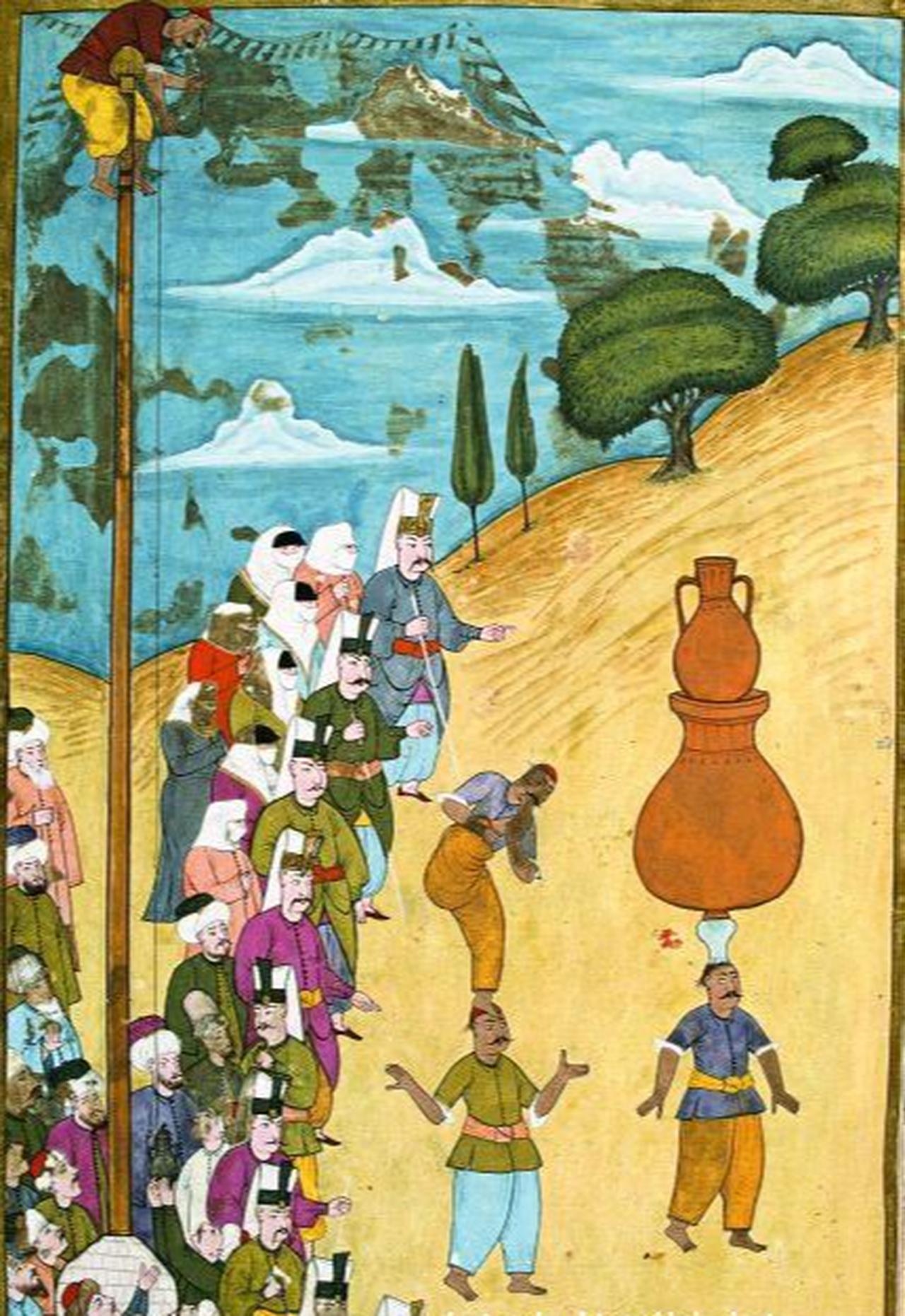

Within these boundaries, women composed themselves with quiet authority.
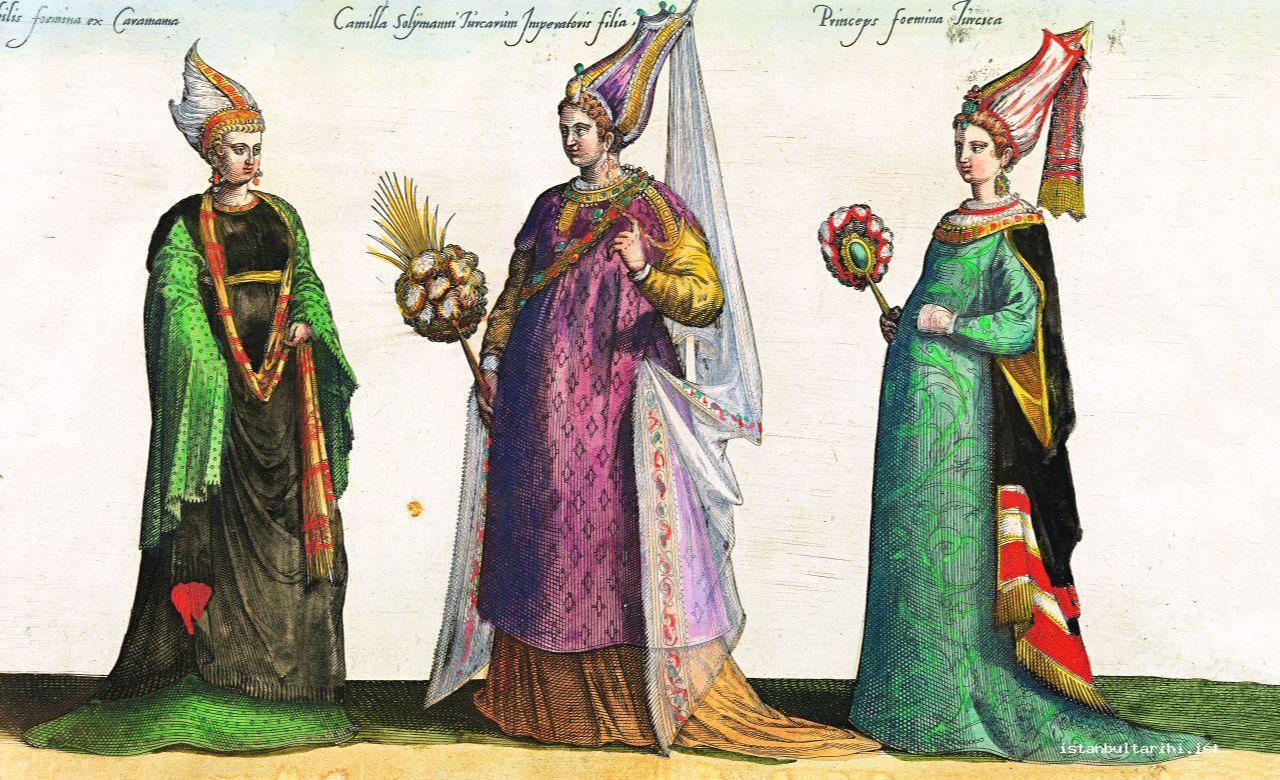
From the late 15th century onward, the recognizable urban silhouette of Muslim women in Istanbul centered on the ferace, long and fluid, worn over layered garments, and the white yashmak that framed the face.
Modesty did not mean disappearance. It meant calibration.
The ferace evolved across centuries. Collars lengthened or narrowed. Colors deepened or softened.
Authorities repeatedly warned against thin veils and close-fitting cuts that, in their view, unsettled moral order. The state legislated fabric because fabric shaped visibility.
Non-Muslim women shared similar silhouettes in public spaces. Though regulations occasionally imposed distinctions, these visual borders softened over time.
The streets of Istanbul were never fixed. They were argued into being.
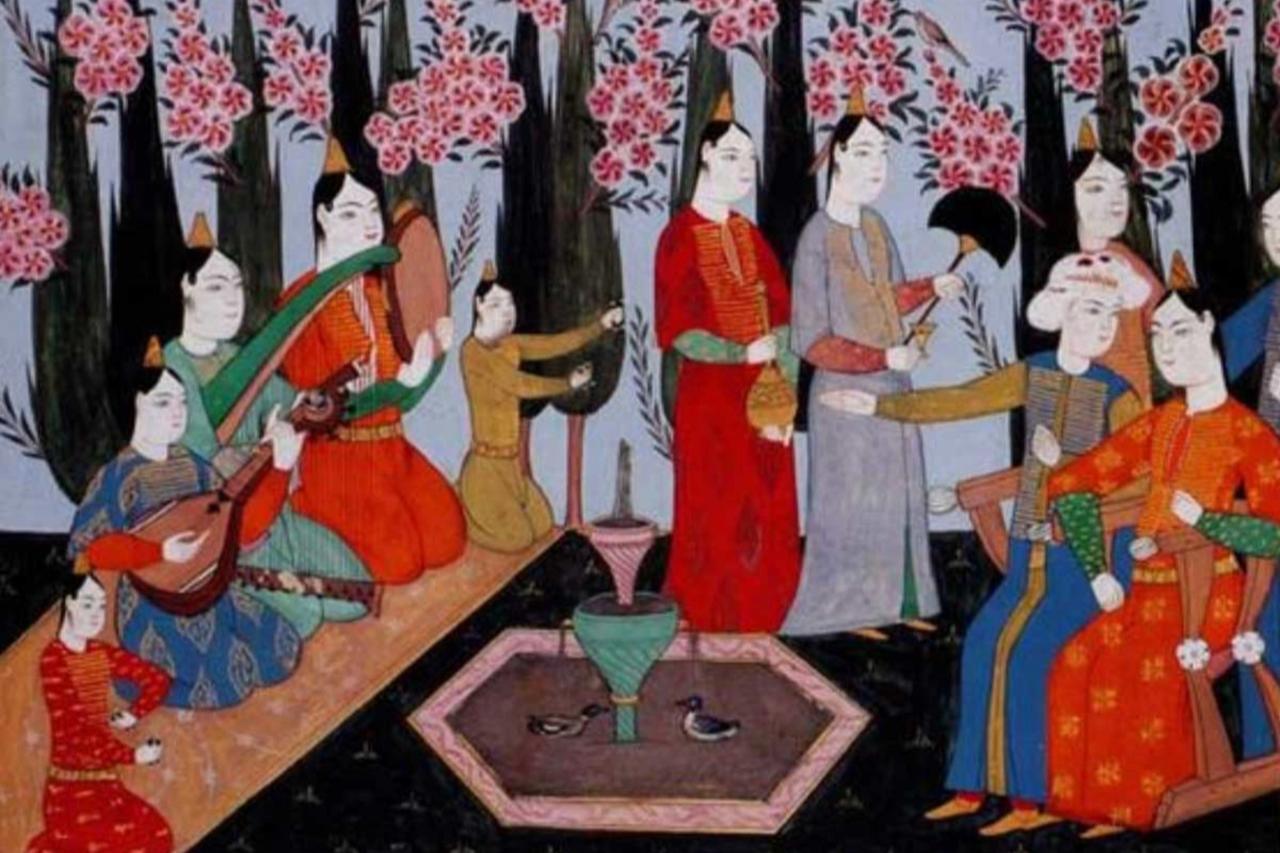
Indoors, clothing breathed differently. Women wore shalvar trousers, embroidered chemises, entaris, kaftans, and fur-lined garments cut for movement and intimacy. Silk touched skin where the law could not see.
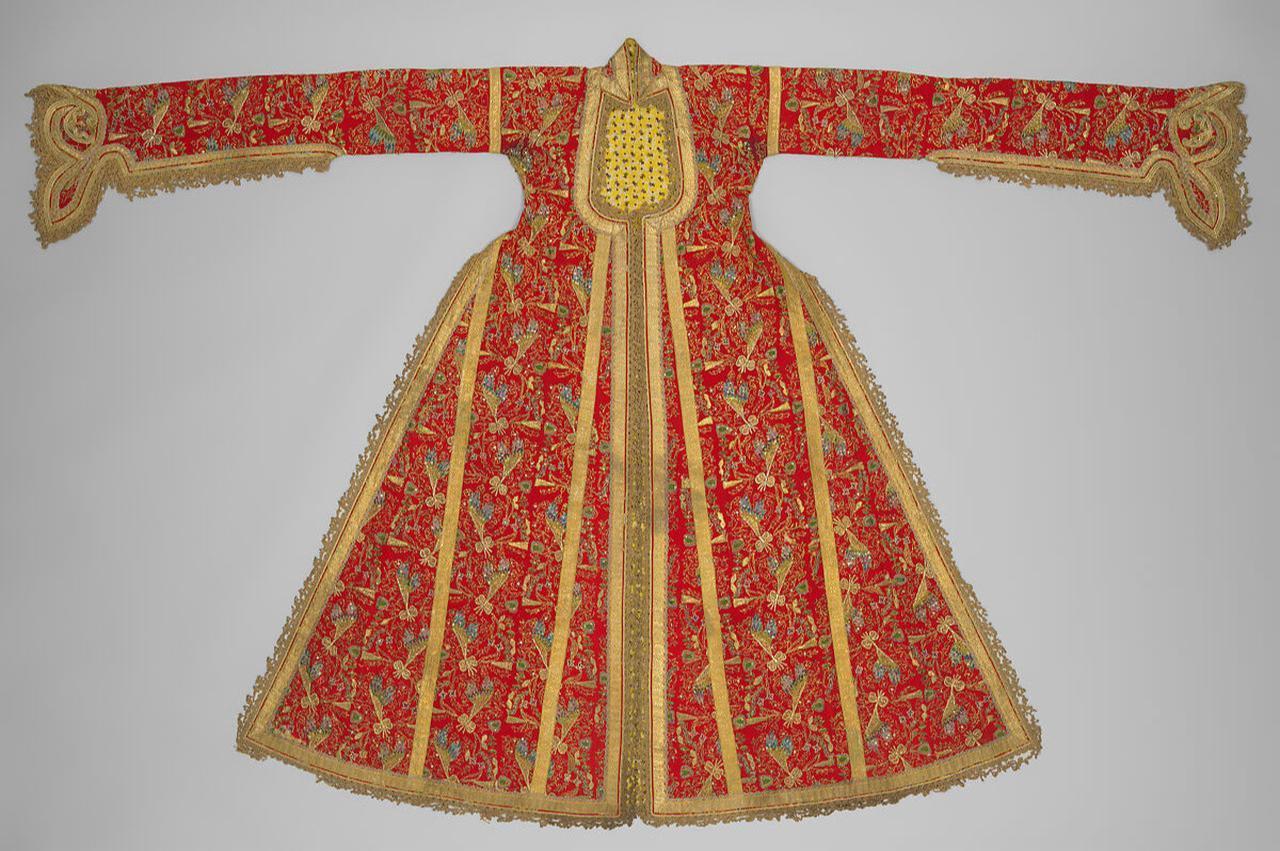
The bindalli, a velvet gown aglow with gold and silver thread. It adorned weddings and henna nights, known for blending centuries of Ottoman tradition with whispers of European style. This bindalli is a mix of belted waists that hugged the body, skirts and dival embroidery that shimmered like constellations of gold, pearls and tiny coils.
Traditionally red, charged with symbolism and continuity, it would only yield to white generations later, as flared skirts and fitted blouses began to echo distant fashions, each stitch quietly declaring status, identity, and the intimate poetry of Ottoman women’s hidden worlds.
Textiles were instruments of power.
Silk production in Bursa sustained Ottoman luxury for centuries. Estate inventories reveal wardrobes dense with sable, ermine, and brocade. Hil’ats, robes of honor bestowed by sultans upon officials, transformed fabric into political currency.
To clothe someone was to elevate them.
Repeatedly, decrees warned against excess. When artisans and merchants dressed above their station, anxiety followed. If clothing ceased to distinguish rank, what, then, sustained hierarchy?
Women’s dress shifted more gradually but no less significantly.
Until the mid 19th century, the outline remained recognizably Ottoman. Yet Western influence intensified through diplomacy and travel. After Abdulaziz returned from his European tour in 1867, Parisian fashion entered elite wardrobes with new confidence.
Three-paneled skirts and loose shalvar yielded among younger women to fitted bodices, pleated skirts, lace collars and heeled shoes. Garments began arriving directly from Paris, carrying not only style but aspiration.
Photography amplified the transformation. Women were documented wearing long-collared feraces over European dresses, thin yashmaks revealing jeweled ornaments beneath.
Modernity did not erase the old silhouette. It slipped beneath it.
By the late 19th century, during the reign of Abdulhamid II, outerwear shifted again. The ferace gradually yielded to the "carsaf," which was debated and at times restricted.
Newspapers discussed "tesettur," modesty and women’s place in public life. Clothing became an arena where ideology met the street.
In 1898, Naime Sultan appeared in a white wedding gown, marking a subtle yet irreversible departure from centuries of red bridal tradition. Western fashion was no longer peripheral. It stood at the center of elite identity.
The Tanzimat reforms, which sought legal equality among Ottoman subjects, softened distinctions in dress between religious communities. The fez became a shared imperial emblem.
Over time, the sharp visual codes separating rank and faith began to dissolve.
By the Second Constitutional period in 1908, debates intensified.
Some women loosened veiling practices. Others defended established norms. Dress was no longer only about hierarchy. It was about identity in an empire confronting its own transformation.
After World War I and the establishment of the republic, the old visual language unraveled.
Differences in clothing according to religion and status faded. European fashion predominated. The intricate vocabulary of silk, fur, and decree yielded to a more global grammar.
Across five centuries, Ottoman women’s dress cannot be reduced to modesty or ornament. It was a negotiation made visible, authority made tactile.
A ferace could signal obedience while the silk beneath asserted taste and wealth. A white gown could announce a new horizon without uttering a word.
In the Ottoman world, fabric was never silent. It carried sovereignty on its surface and change in its seams.


 Set as preferred source
 Set as preferred source



 2 min read