Newsletters


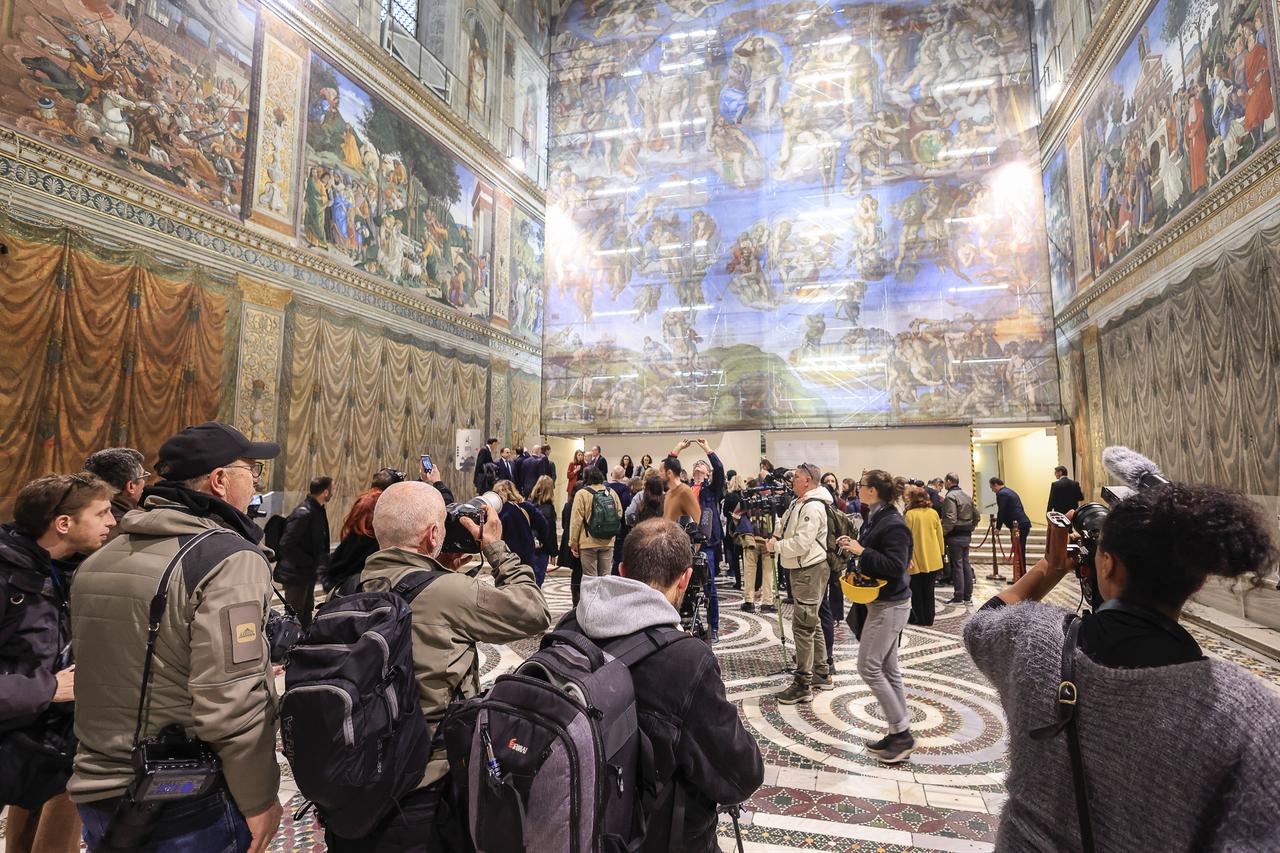


The Vatican Museums have started restoration work on Michelangelo Buonarroti’s “The Last Judgement,” the monumental fresco that fills the altar wall of the Sistine Chapel, with museum officials saying the cleaning aims to bring back the work’s original color and clarity after decades of heavy visitor traffic.
Barbara Jatta, director of the Vatican Museums, announced on Feb. 23 that “the cleaning of Michelangelo’s magnificent fresco has begun.” The project marks the first major cleaning of the fresco since 1994 and is being financially supported by the Florida Chapter of the Patrons of the Arts in the Vatican Museums, a donor group that funds conservation work.
Vatican officials said the Sistine Chapel will remain open throughout the roughly three-month cleaning period, even as scaffolding goes up and partly blocks views of the fresco. Jatta said she expects the work to wrap up by Holy Week, a key period in the Christian calendar that leads into Easter.
The Vatican Museums also said the restoration is intended to remove a light patina of microparticles that has built up over time and is not visible to the naked eye, while helping the fresco’s colors show through with their original brilliance.

In an interview with OSV News, Catholic art historian Elizabeth Lev, who has guided visitors through Rome for more than two decades, described the fresco’s meaning in spiritual and historical terms. She said the work was painted by Michelangelo during a turbulent moment for the Church, and called it “a clarion call to the cardinals of what it means to be Catholic,” noting that the Sistine Chapel serves as the backdrop for a conclave, the closed-door assembly of cardinals that elects a pope.
Lev said the fresco sets out “the end of the world, the awaking of the dead, the second coming of Christ, and the final pronouncement by God of the fate of every soul, salvation or damnation.” For international readers, the “second coming” refers to the Christian belief that Christ will return at the end of time, while “salvation” and “damnation” point to the belief that a soul is ultimately judged for eternal life or separation from God.
Michelangelo began the work when he was 60, after it was commissioned in 1533 by Pope Clement VII. It was ultimately completed in 1541 under Pope Paul III, according to the account shared in the interview.
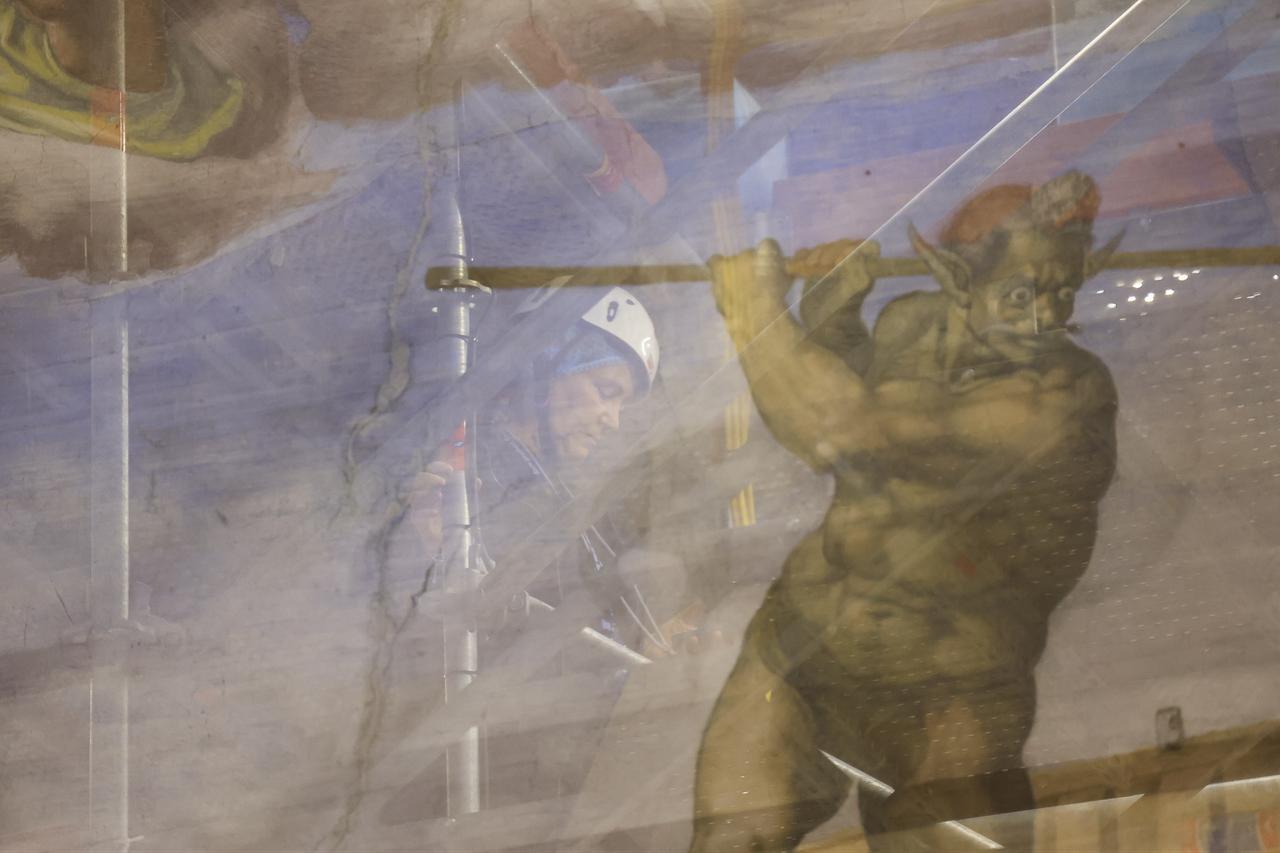
The fresco portrays Christ at the center, surrounded by saints and martyrs, as the dead rise from below and angels sound trumpets. The saved are shown moving upward toward heaven while the damned are dragged downward toward hell by demons, with the entire scene spreading across the chapel’s altar wall.
Lev said Michelangelo showed “the forces of evil seeking the ruin of souls,” but she stressed that the artist “spent most of his energy, not on the damned, but on the glorious bodies of the martyrs.” She also pointed to what she described as “the notable lack of women in Michelangelo’s hell.”
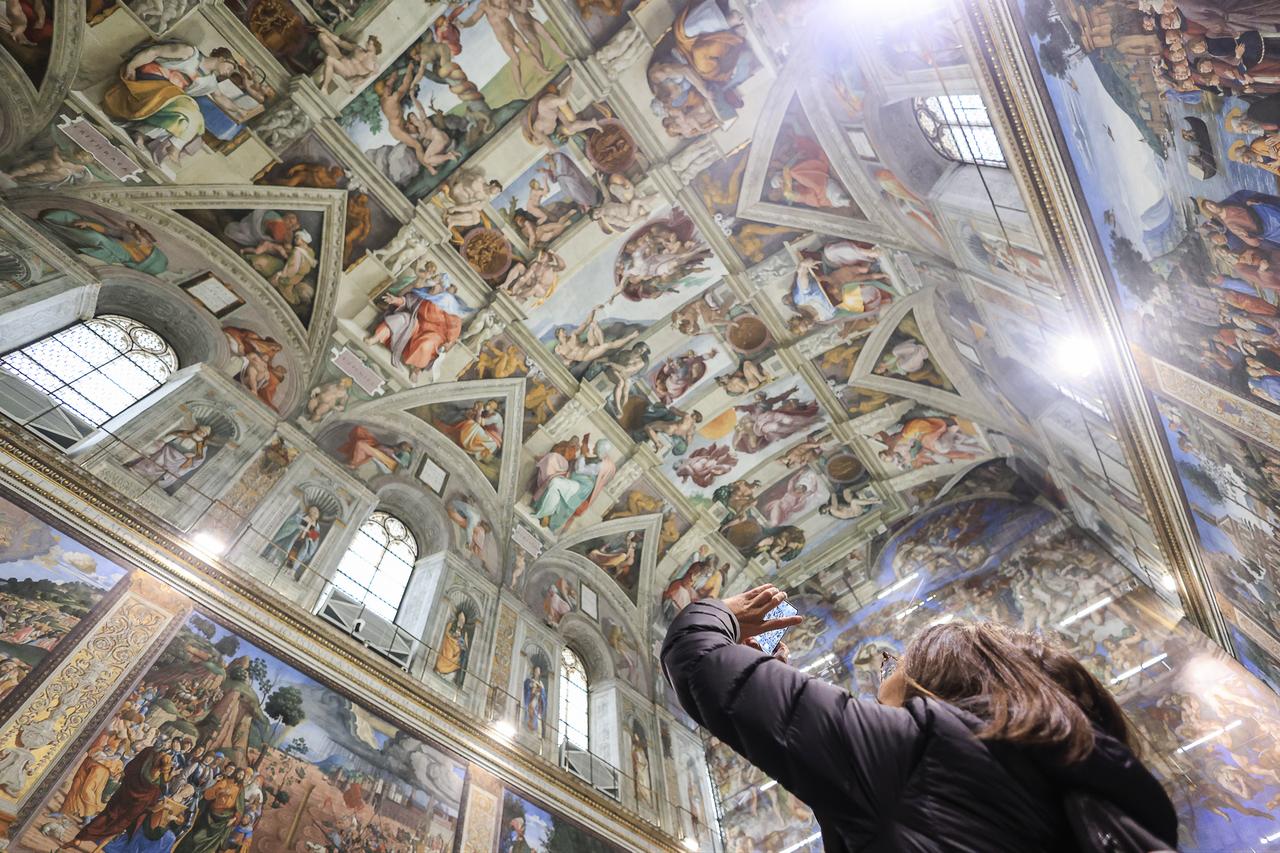
Among the details Lev highlighted was her claim that “a demon above the altar is looking at you,” while “the crucifix on the altar shows Christ body-blocking him from you.” A crucifix is a cross bearing the figure of Jesus Christ, central to Christian worship, and the altar is the focal table used for liturgical rites in a church.
Lev also said the angels descending above the crucifix act as a reminder of sacrifice and accountability, adding: “The angels descend, spiraling above the crucifix reminding us of what Christ did for us and asking, with their books of the deeds, what have we done.”
Lev described visible effects of deterioration, saying there is “a whitish build up on the surface” that is blurring the definition of figures. She also said vibrations from years of foot traffic may have loosened pigment in places, especially in the lapis lazuli background. Lapis lazuli is a deep-blue stone historically ground into pigment; Lev said this area is particularly vulnerable because it was applied to dry plaster.
Lev praised the restoration team, saying, “The Vatican restorers, I am proud to say, are the finest in the world,” and added that she is struck by their humility and awareness of their responsibility for the masterpiece.


 Set as preferred source
 Set as preferred source


 3 min read