Newsletters


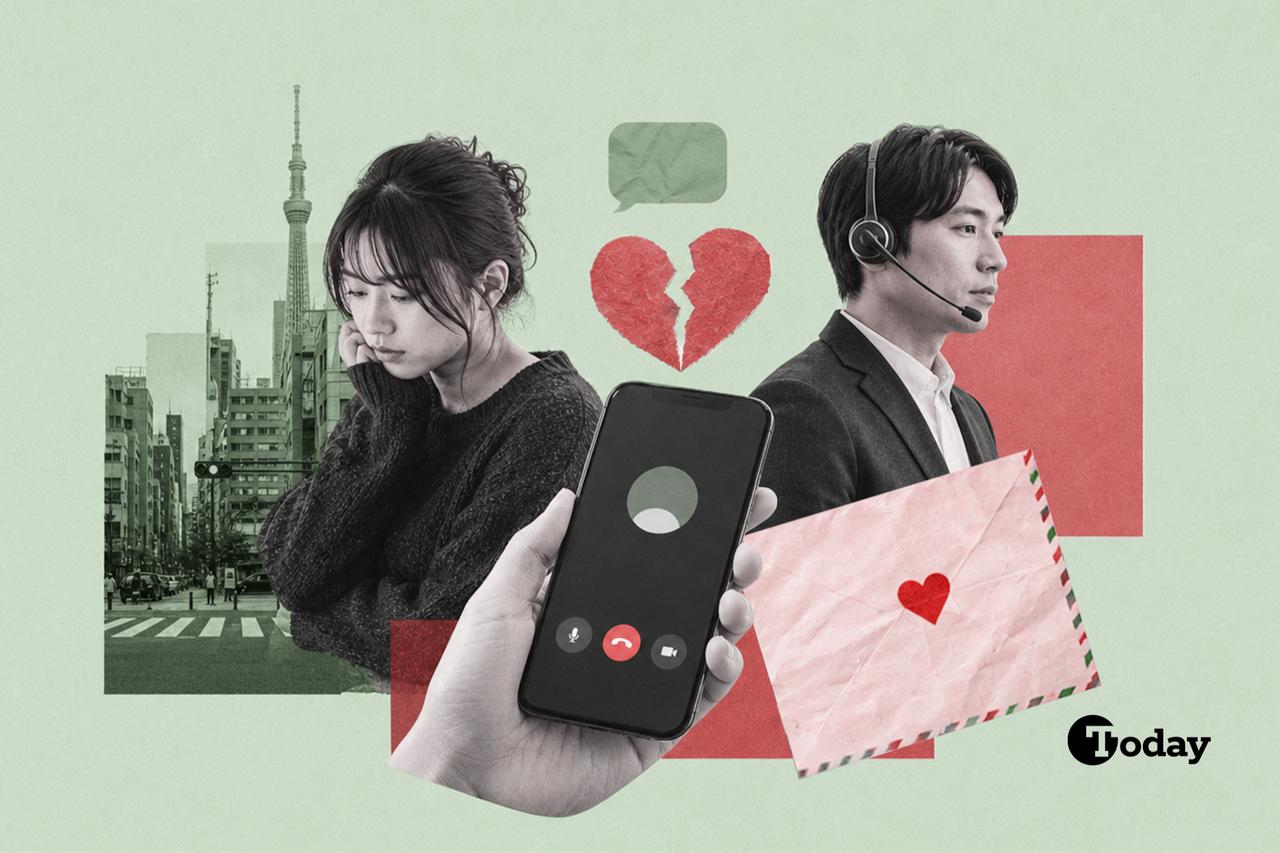


Breaking up with someone is hard. You have to meet again, find the right words, say them, and face the consequences. Even by phone or text, it is difficult. You cannot simply say it and walk away from someone you once liked.
To spare people that pain, one Japanese company has built a business around it. Imasugu Sayonara (meaning "Immediate Goodbye") will phone your boyfriend or girlfriend and tell them the relationship is over. The standard fee is ¥33,000 (about $200).
Founder Hidemichi Nakakura launched the service around December 2025 and built it out in earnest from June 2026. Since June, the company has fielded more than 1,000 inquiries, and nearly 300 people have actually hired it. Seven in 10 customers are women, mostly in their 20s and 30s. The figures come from Nakakura, who gave them in an interview with the Japanese outlet Smart FLASH.


The operation runs almost entirely on smartphones. Customers make contact mainly over LINE, one of Japan's most popular messaging apps. The company also offers phone or in-person consultations on request.
Once a request is logged, staff interview the customer to learn the details of the situation, mainly the reason for the breakup. Customers decide the wording in advance, for instance by asking not to be called again. They then fill in an application form with the partner's name, contact details, and preferred time. The call is made only after payment.
If the partner does not pick up after up to five calls, staff send a social media message or a letter to the partner's home instead. A completed call or a delivered message closes the case.
When partners ask why the customer is not calling themselves, staff say the customer has made up their mind but expects a face-to-face talk to go nowhere. A fair number of recipients accept that explanation, the founder says.

Many early customers could not leave partners they feared because of domestic violence and other serious problems. Increasingly, though, people apply because they have cooled on their partners and simply do not want to deliver the news themselves, the founder says.
One customer, a woman in her twenties from Kanagawa, had dated a man for less than six months after meeting him on a dating app. After he shrugged off having broken their promise to delete the app, she decided she did not want to hear his voice again. She was wary at first; she told Smart FLASH, but videos showing the service at work convinced her.
The founder also recalls a man in his early twenties who asked the service to tell his girlfriend of a year that he had fallen for someone else. Saying it himself, he explained, would make him too sad to do it.
The company also limits whom it accepts. First, it turns away married or engaged people, because breaking off a marriage or engagement can trigger a claim for isharyo, or damages for emotional distress. The founder says such disputes are a matter for lawyers.
Second, it declines cases where the partner appears to be linked to organized crime, as a precaution against trouble.
While Imasugu Sayonara has drawn plenty of interest, it is not the only breakup service, according to Unseen Japan. WAKAREYO, run by LVUP, charges ¥248,000 (about $1,570) for a plan bundled with counseling, and ¥540,000 (about $3,400) for an emergency plan aimed at strained relationships. Freelancers on the Coconala skills marketplace also offer breakup-talk services.
The emergence of breakup services suggests that some younger people are willing to pay someone to deliver the news for them, some for safety reasons and others out of reluctance to face a difficult conversation. Yet with no official data and the only available figures coming from the companies themselves, the true scale of the market remains difficult to measure.


 Set as preferred source
 Set as preferred source


 1 min read



 1 min read