Newsletters




History has a way of whispering its secrets—if you listen closely …
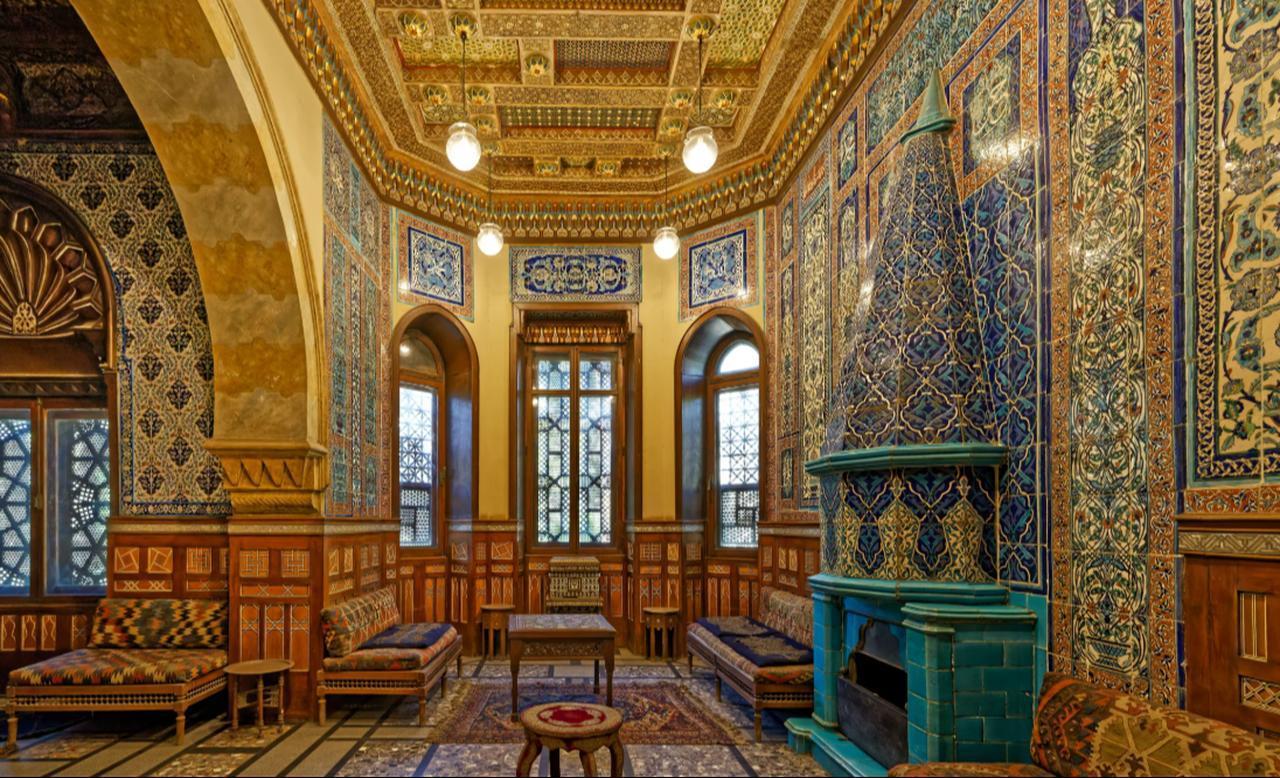
In the late afternoon of Thursday, Sept. 26, 1940, in a quiet room on the first floor of the Al-Manial Palace in Cairo, a beautiful Ottoman princess was crying.

“Come now, darling,” her mother whispered, wiping away her daughter’s tears. “Your guests are waiting.”
Everything had happened so quickly, and only a week had passed since her engagement. Yet it was not only the haste that overwhelmed her. Her youngest sister had been forbidden to attend, as Prince Mohammed Ali, the host of the celebration, insisted that no children be present. This devastated the princess, who was exceptionally close to both her sisters. It made an already emotional day almost unbearably so. She stepped reluctantly into her wedding dress, the same one her mother had worn, its style altered with additional silk and lace to suit a modern bride.
As she stood before the mirror, sunlight filtered through the shutters and birdsong drifted over the Nile and through the windows. Behind her, her mother opened a velvet-lined box, lifted out the necklace, and fastened the clasp at the nape of her daughter’s neck. The diamond clusters and large rose-cut stones sparkled with a brilliance that made them both gasp.

The tale of this necklace begins on another riverbank, far from Cairo, on the scorched banks of the Pruth River in July 1711.
Tsar Peter the Great had invaded the Ottoman vassal Principality of Moldavia after the sultan refused to surrender King Charles XII of Sweden, who had taken refuge in Ottoman territory during the Great Northern War. Now the Russians were surrounded, weakened by exhaustion and dwindling supplies, facing the might of the Ottoman Army and the certainty of defeat.
Were it not for the quick-witted intervention of the future Empress Catherine I, history might have unfolded very differently, and Russia might never have risen as an imperial power.

While Peter rested before battle, Catherine reconvened the War Council and urged the generals to reassess their strategy. Convinced that an attack would lead to their complete annihilation, she went to beg her husband to sue for peace instead. Then, acting in secret, she gathered her most precious jewels and sent them with a personal plea to the Grand Vizier Baltaci Mehmed Pasha, commander of the Ottoman Army. It was an audacious act of both diplomacy and desperation. It succeeded.
The Ottomans granted the Russians unexpectedly merciful terms, allowing their retreat and securing safe passage back to Sweden for Charles XII. Catherine’s priceless collection of colored diamonds was accepted as tribute and presented to Sultan Ahmed III, where it entered the Imperial Treasury.

For the next 150 years, nothing is known of these diamonds. We can only imagine which imperial princesses, wives and favorites may have worn them.
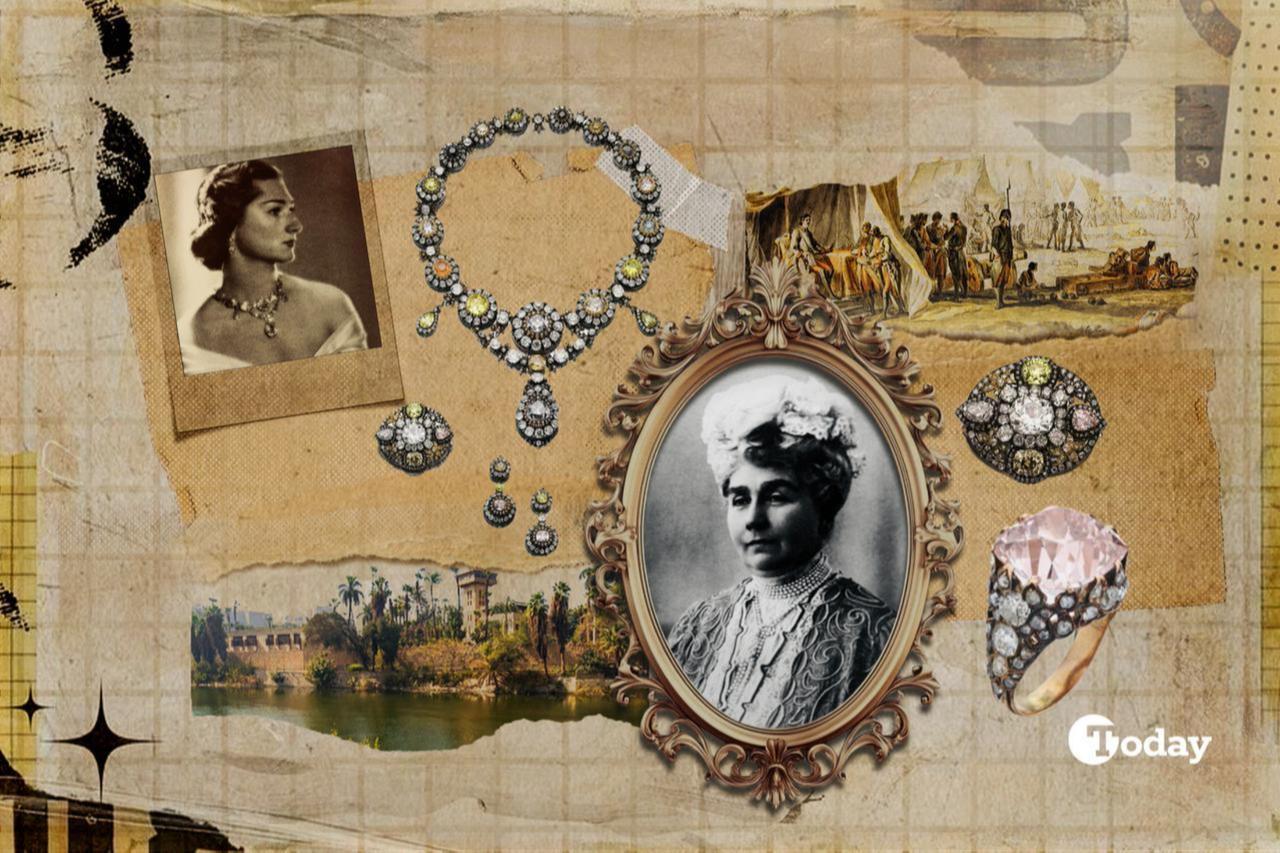
However, we do know that by the early 1870s, the stones had been fashioned into an exquisite parure—a magnificent suite of jewels comprising a necklace, earrings, ring, and brooch, all set with old mine-cut diamonds in shades of rose pink, forget-me-not blue, daffodil yellow, and warm amber.
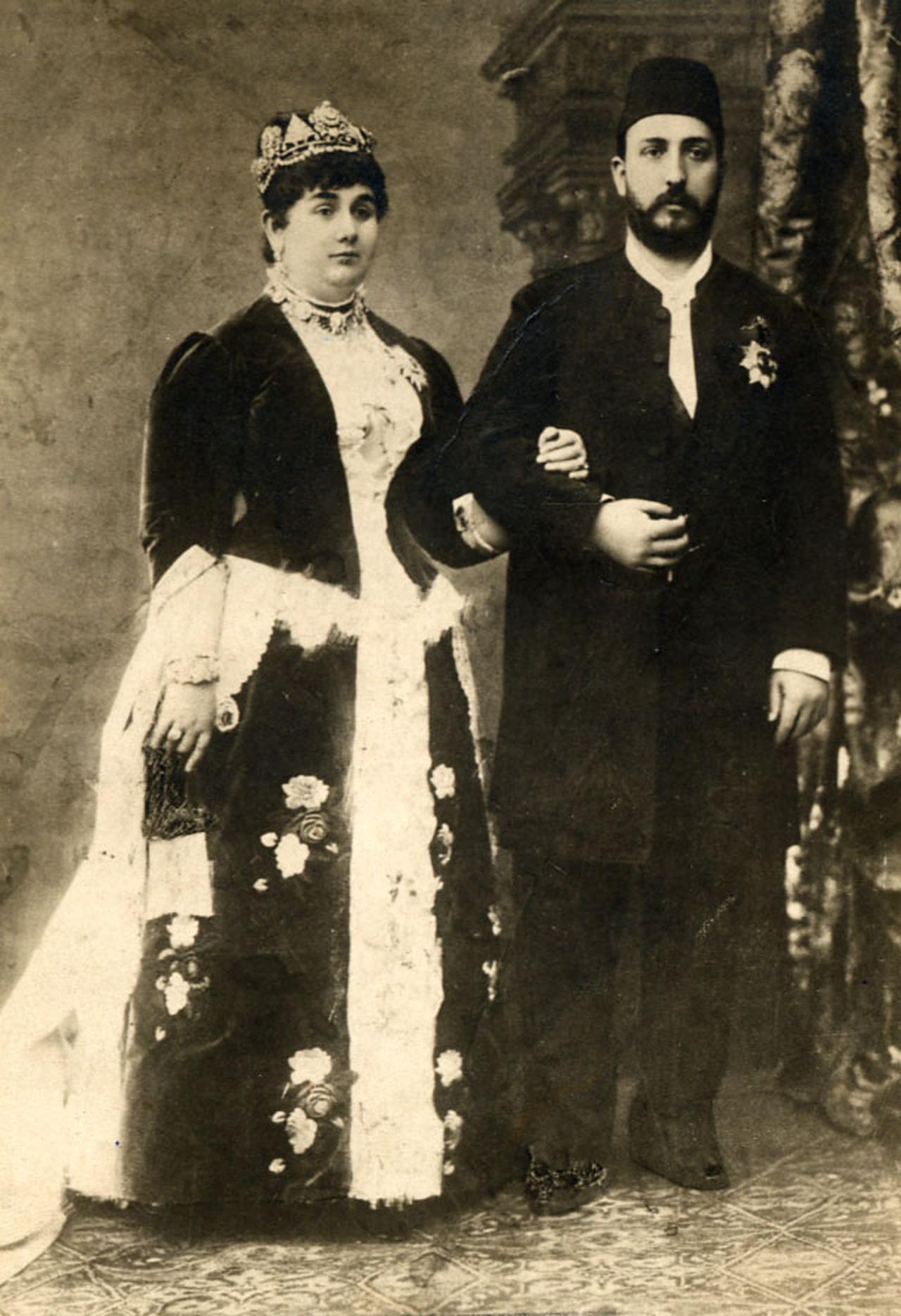
Sultan Abdulaziz presented this parure to his cousin, Khedive Ismail Pasha. It was likely a wedding gift sent in 1873 for the marriage of the Khedive’s son and heir, Prince Tewfik, to Princess Emine Ilhami, though some suggest it was given the following year to mark the birth of the couple’s first child, Prince Abbas Hilmi, who was destined to be the last Khedive.
Whatever the occasion, the diamonds that had once saved Peter the Great and his army passed from the Ottoman Imperial Treasury into the possession of Princess Emine Ilhami, a woman celebrated for her beauty, refinement, and intellect at the Khedival Court.

On her death in 1931, the parure was inherited by her eldest surviving daughter, Princess Khadija. And when her nephew, Prince Abdel Moneim, became engaged to the beautiful Ottoman princess, Fatma Neslishah Sultan, Khadija knew exactly what gift to bestow.
Princess Neslishah was the granddaughter of the last Ottoman Sultan Mehmed VI Vahideddin and of the last Caliph Abdulmecid Efendi. Born in Istanbul in 1921, her entry in the palace birth register of Ottoman dynasty members was the last to be recorded before the abolition of the sultanate and exile of the imperial family. Her childhood was spent in France before the family moved to Egypt just before the outbreak of World War II. Strikingly elegant, strong-willed and fiercely patriotic, she embodied the nobility of her ancestry.

Neslishah wore the necklace and brooch on her wedding day and continued to wear the necklace often, sometimes as a tiara. When the tears of that September afternoon had dried, she greeted her guests with the same poised smile she had practised before the mirror—a composure that would serve her well in the turbulent years ahead.
Following the 1952 military coup led by Gamal Abdel Nasser that deposed King Farouk, her husband was appointed regent for the infant King Fuad II. During this brief interlude before the monarchy’s final abolition, Neslishah served as Egypt’s first lady of the Court, carrying out her duties with dignity and grace.


When the monarchy fell, the couple sent their two children to Europe but remained in Egypt under increasingly hostile conditions. The new regime confiscated all the royal family’s property, but Neslishah managed to hide the parure. She concealed the jewels in her riding clothes and, during her customary morning ride, entrusted them to a friend. By 1957, she and her husband were placed under house arrest, accused of conspiring against the government. The charges were dropped two years later, and they were allowed to leave Egypt. And so, for the second time in her life, Neslishah went into exile, where she was reunited with her children and the Ottoman diamond parure.
Unfortunately, circumstances forced its sale. The parure, minus the ring, appeared at Christie’s in 1963, and resurfaced at Sotheby’s in 2011 and again in 2016. The ring remained in the family until more recently, when it too was sold. As for who now wears the dazzling diamonds that travelled from Romanov Russia to the Ottoman Empire and then Khedival Egypt—that remains known only to a privileged few.
Until we meet again in the next Sultan’s Salon …


 Set as preferred source
 Set as preferred source


 2 min read
 1 min read