Newsletters




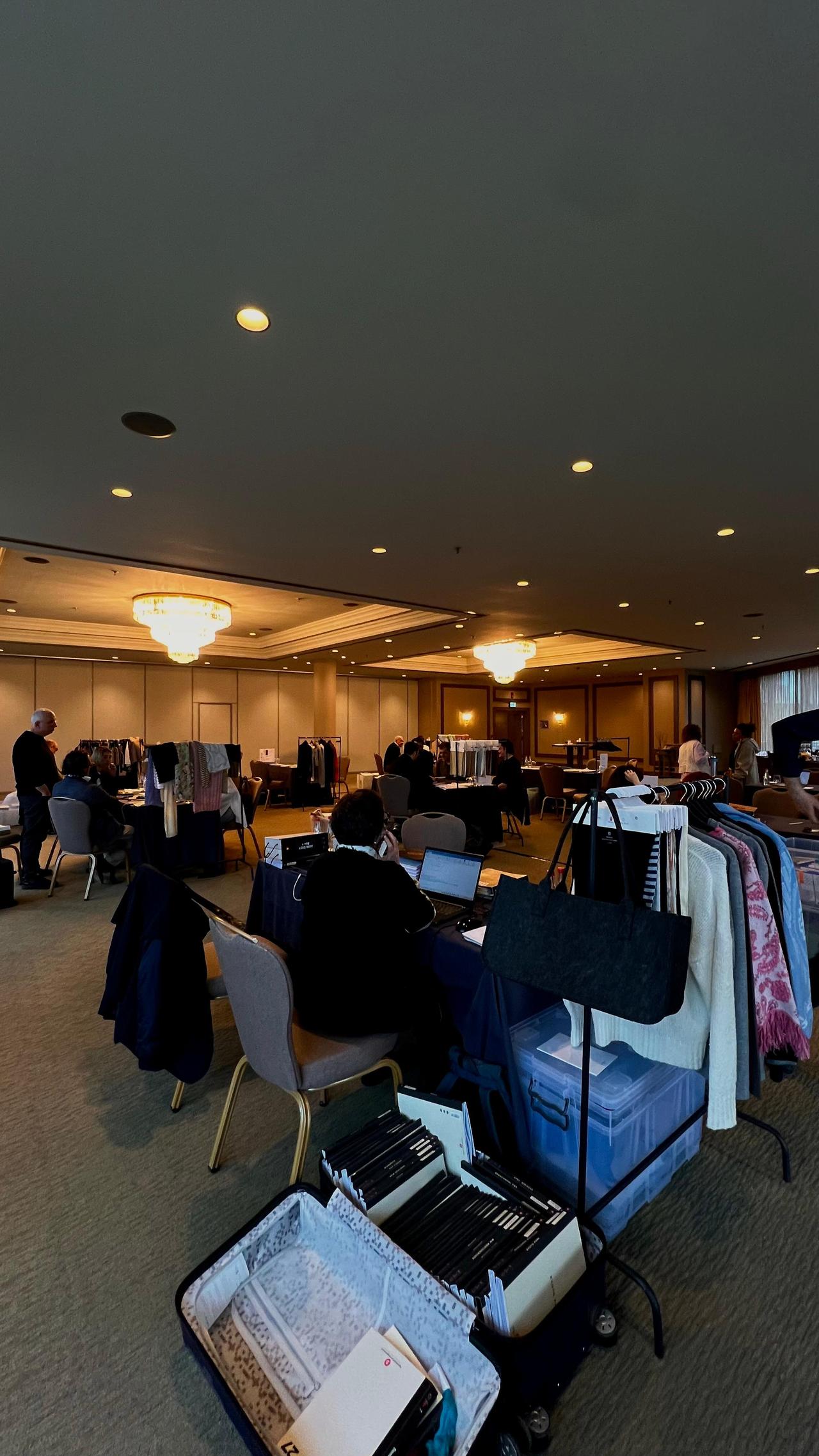
The hall hums softly, not with noise but with restraint. Light settles low across the beige walls of the InterContinental Istanbul.
Nine Italian companies have gathered here at the exhibition titled "Feel the Yarn."
The exhibition's presence moves almost restlessly through cities like Copenhagen, Paris, New York, London, Tokyo, Seoul, and now Istanbul for summer and winter collections twice a year.
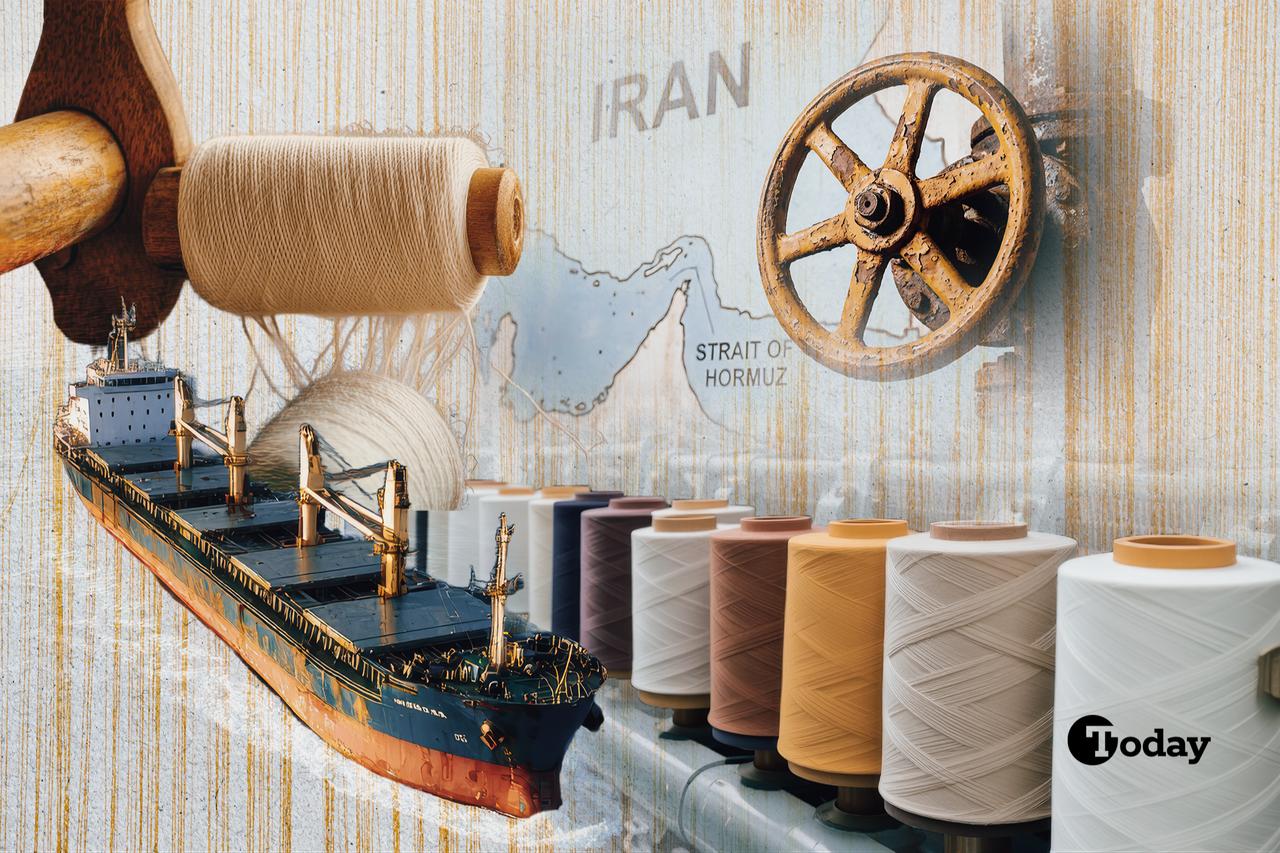
Outside, the Bosphorus carries ships between continents. Ship-tracking data indicates that 279 vessels have transited the Hormuz Strait, while 22 have reportedly come under attack since the war on Iran began.
Inside, light drifts unevenly, catching on the edge of a laptop screen, slipping across a sleeve, and fading into the carpet. Black tables sit in a loose arrangement, not quite symmetrical, and easy to approach.
The war between Iran, Israel and the United States, which has lasted more than a month, presses into the room without being named too loudly. The Strait of Hormuz tightens. Ships wait and cargo stalls. What once arrived late now risks not arriving at all.
Meanwhile, at the exhibiton, boxes lie open. Color cards spill outward in careful disorder. Garments hang beside each station, pale tones dissolving into darker ones, as if following the day itself.
Hands move constantly. Touching. Testing. Lifting yarn to the light.
“What used to be a delay,” Aras, a Turkish manufacturer said, aligning the same stack of swatches for the third time, “is now uncertainty. And uncertainty costs more than time.”
He paused, glancing toward the windows.
“In a moment like this, Türkiye gains,” he added. “China is cheaper, yes. But now it is far. And far has become expensive.”

Each table carries a region, a lineage, and a way of making that begins long before the yarn itself.
Across the room, Lorenzo, an Italian producer, lifts a thread between his fingers. It catches the light.
“Italian yarn producers are known everywhere,” he said, his voice steady, almost quiet. “Not only in Italy but globally, it is known for quality, craftsmanship and innovation.”
He shrugged lightly.
“There is always competition. China competes in everything. But when it comes to premium yarn, we are still strong,” he asserted.
At a nearby table, the global system is reduced to something almost simple.
“A brand chooses the yarn,” the manufacturer said, tapping a cone of soft grey wool. “Often from Italy. We bring it here to Türkiye. We produce the garment. Then we send it back out to the client. Anywhere.”
He leaned back slightly.
“It sounds simple. But everything depends on timing.”
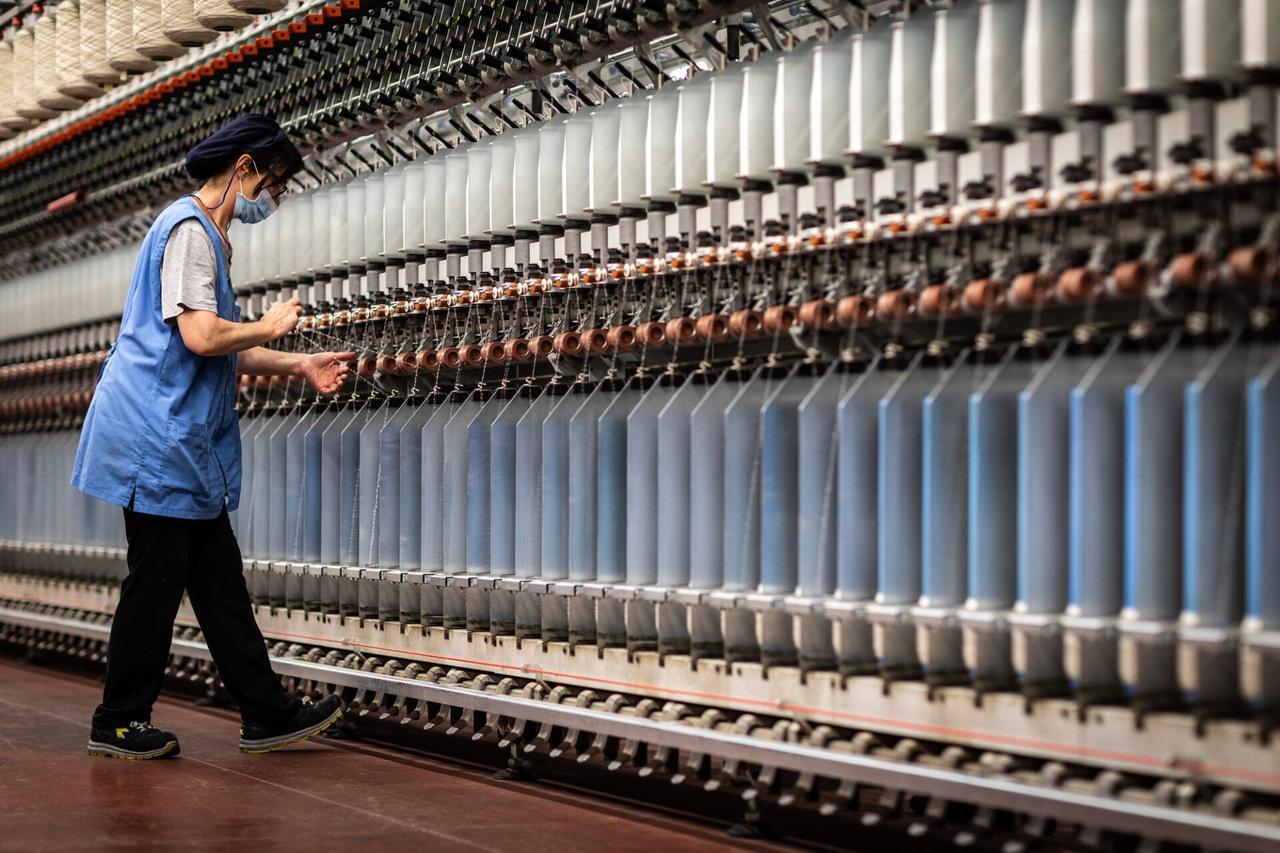
Brands, like Zara, move quietly through this structure. Designers choose materials in rooms like this. Samples are made in Türkiye. Once approved, production scales quickly, efficiently, and outward.
Italy creates the beginning. Türkiye builds the middle. The world receives the end. But the balance is shifting.
“We guarantee good quality, close destinations, and cargo that is not affected by war."
The advantage is not new. But now, it is sharper and more visible.
Italian yarn carries a strong reputation.
It moves through centuries of practice, from family-run mills to international suppliers, from wool districts in the north to experimental production clusters in Tuscany. Tradition and technology exist side by side, not in conflict, but in quiet cooperation.
“These more than 40-year-old companies were once small,” the producer said. “Family businesses. Now they supply the world.”
He lifts another thread. “What matters is how you treat the fiber. Not just the machine.”
The materials themselves remain close to their origins. Wool, cotton, linen. Fibers shaped carefully, often mechanically rather than chemically, preserving structure rather than forcing it.
But the real shift happens later.
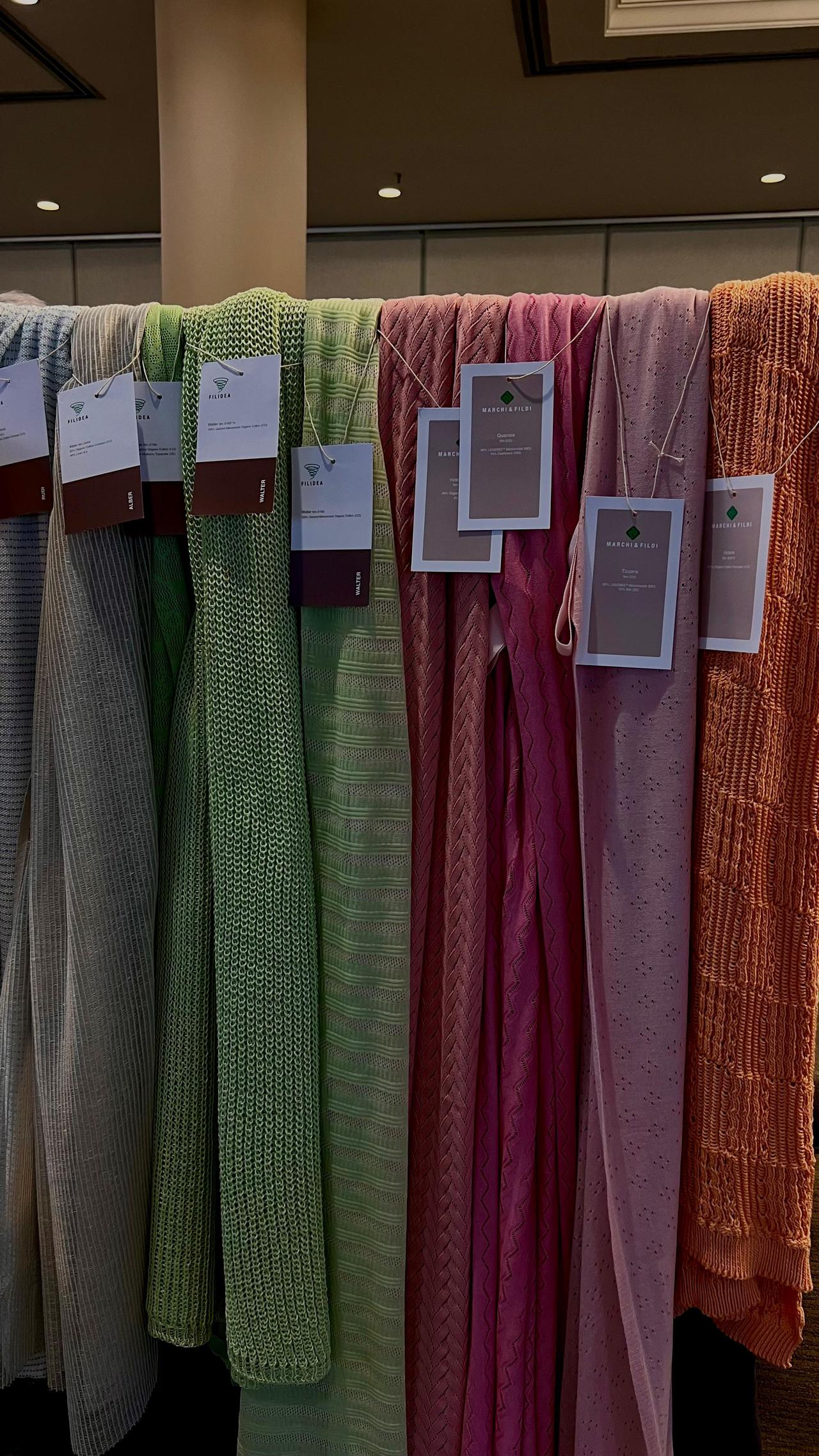
“These are our classic yarns,” he said, gesturing to a muted palette. “They stay for years. Small changes, maybe color.”
He moves to another set. “And these are fancy yarns. New every season. New textures, new ideas.”
The colors shift more dramatically here. Gradients, mixed tones, threads that carry variation within themselves.
“This is where trends begin,” he added.
In a quieter corner, two buyers speak with Aras about labels in low voices.
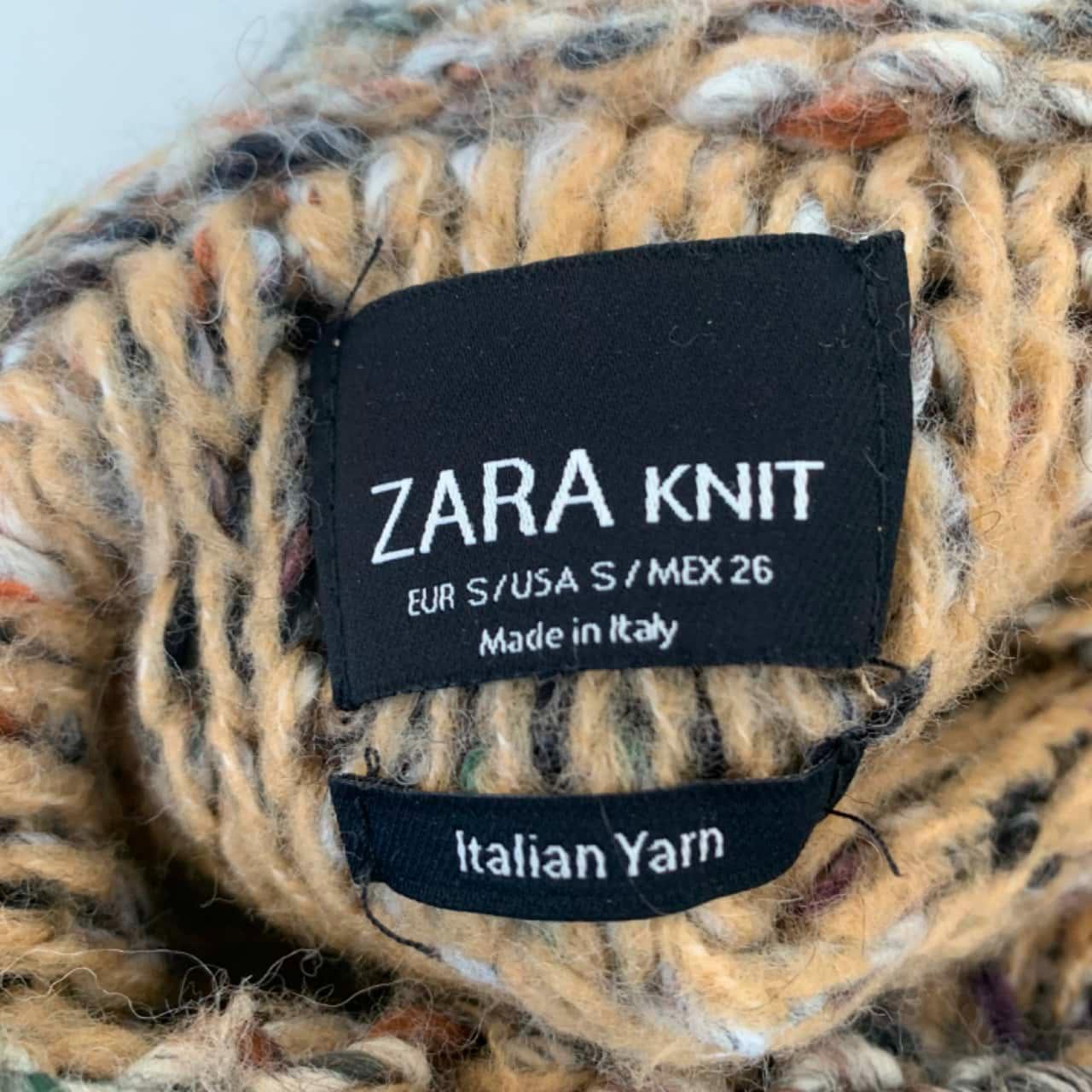
A garment finished in Italy can still carry the “Made in Italy” label, even if much of its production took place elsewhere. In the end, it is the final stage that fixes its identity.
“It’s the same in many industries,” Aras said quietly. “Where you finish often matters more than where you start.”
He paused, then added with a faint, knowing smile: “In some cases, even if 90% is made elsewhere, like, China, and only a small step is completed in Italy, like adding a zipper or a final assembly, the product can still be labeled as Italian. The origin, legally, is decided at the last touch.”
Across the room, conversations overlap in Italian, Turkish, and English. Numbers are exchanged, deadlines set.
Feel the Yarn will move again soon, to another city and another venue, repeating its international circuit.
But here, in Istanbul, something feels more anchored.
The city has always existed between distances, between departures and arrivals. Now, as global routes stretch and tighten, that position feels less symbolic and more strategic.
Factories in Türkiye are widely known for producing high-quality garments and have built a strong position in global textile manufacturing, especially for the European market.
"Across the country, they supply everyone from luxury fashion houses to mass retail brands, covering every stage of production." Aras explains proudly. "Its proximity to Europe gives it a clear advantage, offering faster logistics and more reliable supply chains, which is why many brands prefer producing here," he added.
As the light fades, the garments near the exit deepen in tone, shifting from pale to dark in a quiet sequence. No one arranged them for meaning, yet meaning settles there anyway.


 Set as preferred source
 Set as preferred source


 2 min read