Newsletters


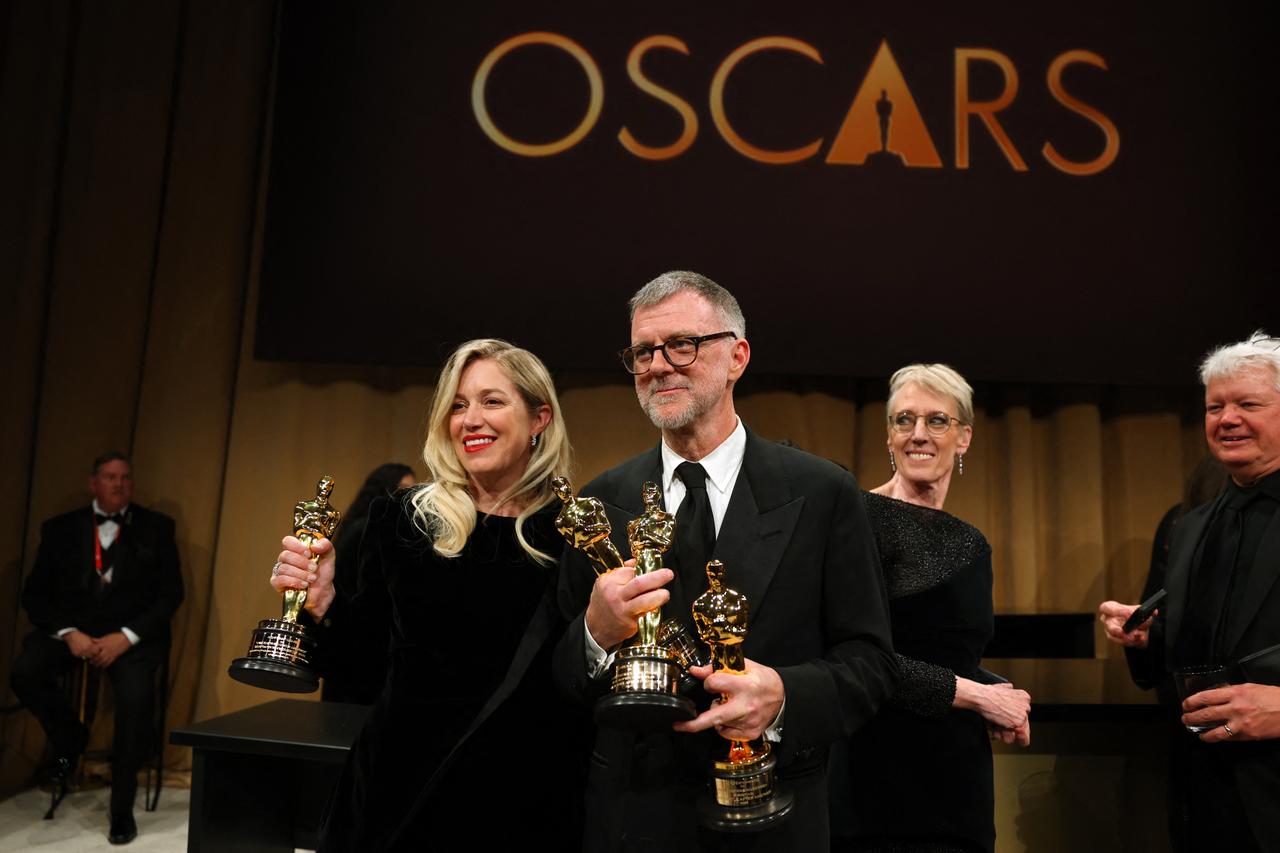


Warner Bros emerged as the dominant studio at the 98th Academy Awards, taking home a record-tying 11 Oscars as its films One Battle After Another and Sinners swept many of the ceremony’s top prizes.
The studio’s total matched the highest number of awards ever won by a single studio in one year at the Oscars. The same benchmark had previously been reached by MGM for "Ben-Hur" in 1959, Paramount for "Titanic" in 1997 and New Line Cinema for "The Lord of the Rings: The Return of the King" in 2003.
Warner Bros entered the ceremony with 30 nominations, surpassing its earlier record of 28 nominations set in 1943, when the studio’s film "Casablanca" won Best Picture. By the end of the night, the studio converted many of those nominations into awards, while its main competitors walked away with far fewer prizes.
Netflix finished second with six wins, while Disney, Apple, Focus Features and Neon each secured a single award. Paramount, despite being involved in acquisition talks with Warner Bros’ parent company, had no nominations this year.
Most of Warner Bros’ nominations came from two films that dominated the awards season: "Sinners" and "One Battle After Another."
"Sinners" entered the ceremony with 16 nominations, while "One Battle After Another" followed with 13. Another Warner Bros production, "Weapons," added one more nomination through Amy Madigan’s supporting actress nod.
In the final tally, "One Battle After Another" secured six Oscars, "Sinners" won four, and "Weapons" earned one award.
The strong showing reinforced Warner Bros’ influence during ongoing negotiations over a proposed $111bn acquisition involving Paramount Skydance and Warner Bros Discovery, the media group that owns HBO, HBO Max, CNN, TBS, Food Network and the Warner Bros film and television studios.
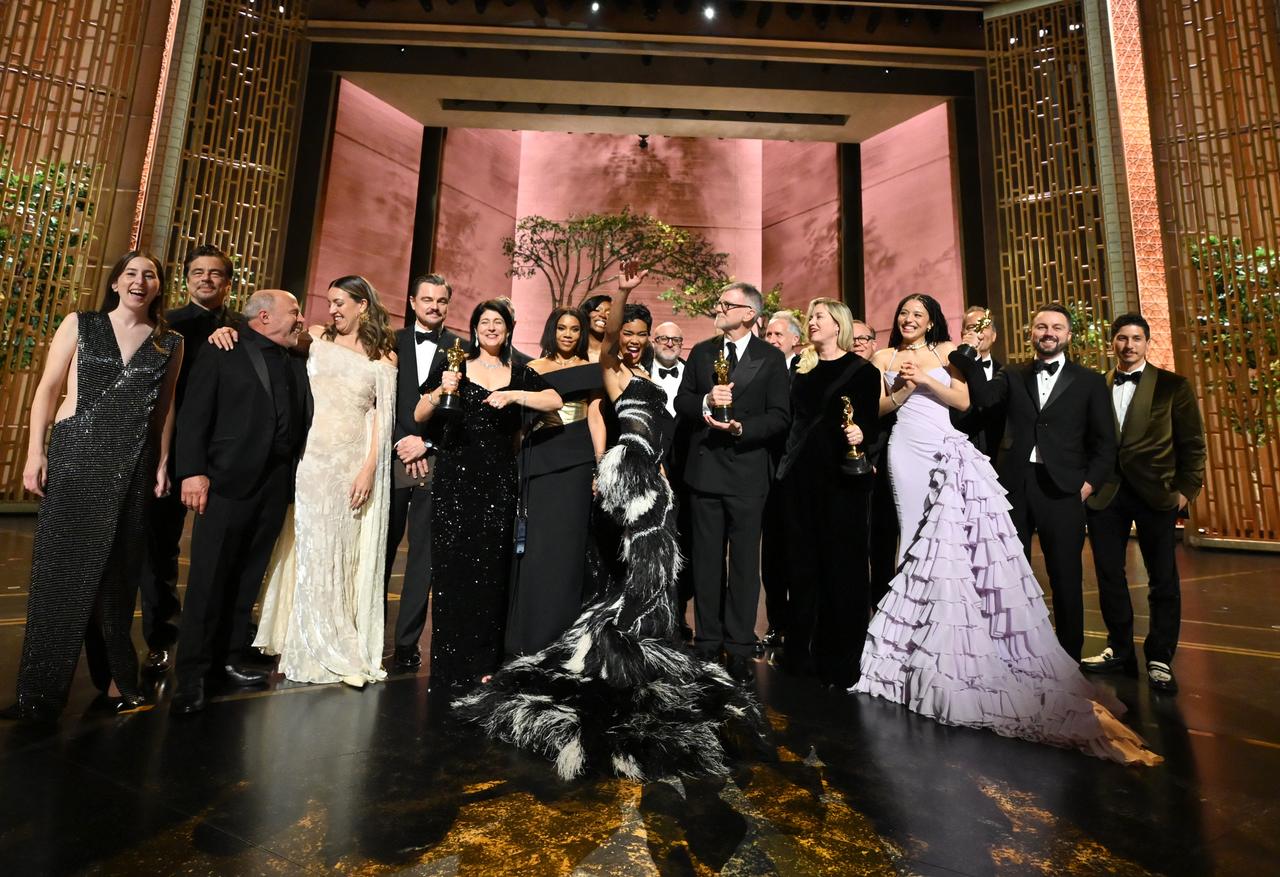

Among the night’s major storylines was the competition between "Sinners" and "One Battle After Another," which had been widely seen as the leading contenders for top awards.
The political thriller "One Battle After Another," directed by Paul Thomas Anderson, ultimately came out ahead with six Oscars. It won several key categories, including Best Picture, Best Director and Best Supporting Actor, as well as awards for film editing and the newly introduced category of Best Casting.
Reflecting on the unpredictability of awards, Anderson pointed to the enduring reputation of classic films nominated together in 1975, saying, “There is no best among them. There is just what the mood might be that day.”
The film also earned Anderson the Oscar for Best Adapted Screenplay, based on the Thomas Pynchon novel Vineland.
Although "One Battle After Another" dominated the overall tally, "Sinners" secured several notable wins of its own.
The film’s director Ryan Coogler received the Oscar for Best Original Screenplay, which drew inspiration from his uncle’s love of blues music.
Actor Michael B Jordan also won Best Actor for his performance in "Sinners," defeating Timothee Chalamet, who had been nominated for the film Marty Supreme. The category was widely viewed as one of the closest contests of the evening.
Another landmark moment came when cinematographer Autumn Durald Arkapaw won Best Cinematography for Sinners. It was both her first nomination and her first win, and she became the first woman to receive the award in that category.
While the two leading Warner Bros productions dominated the ceremony, several highly anticipated films failed to secure major awards.
Guillermo del Toro’s Frankenstein collected three technical prizes, including Best Production Design, Best Costume Design and Best Hairstyling and Makeup.
Netflix’s KPop "Demon Hunters" also met expectations by winning Best Animated Feature and Best Original Song.
Other films that had entered the awards season with strong momentum did not fare as well. "Hamnet," directed by Chloe Zhao, received eight nominations but won only one award, with Irish actor Jessie Buckley taking home Best Actress.
Meanwhile, Marty Supreme, the Brazilian film The Secret Agent, and Yorgos Lanthimos’s Bugonia all left the ceremony without any wins despite receiving multiple nominations.
Beyond the awards themselves, the ceremony also reflected broader concerns facing the film industry.
Several presenters and filmmakers addressed the growing use of artificial intelligence in filmmaking, particularly after an AI-generated video featuring digitally recreated versions of Brad Pitt and Tom Cruise spread online. The clip had been produced using software developed by the Chinese company ByteDance, prompting criticism from industry leaders who viewed it as a threat to creative work and copyright.
Actor Will Arnett emphasized the human element of filmmaking while introducing the animation category, saying: “Tonight we are celebrating people, not AI, because animation – it’s more than a prompt.”
Host Conan O’Brien also joked that by next year his role might be replaced by “a Waymo in a tux,” referring to autonomous vehicle technology.
The political climate in the United States also surfaced throughout the evening, though speakers largely avoided naming specific leaders directly.
Host Conan O’Brien made several indirect references to U.S. President Donald Trump in his opening remarks, while comedian Jimmy Kimmel joked about threats to broadcasting licenses and freedom of speech.
Filmmakers occasionally linked their work to broader political concerns. Documentary director David Borenstein suggested parallels between his film about authoritarianism in Russia and current developments in the United States, warning that countries can lose their freedoms through “countless small little acts of complicity.”
However, most speeches remained cautious and avoided direct criticism.
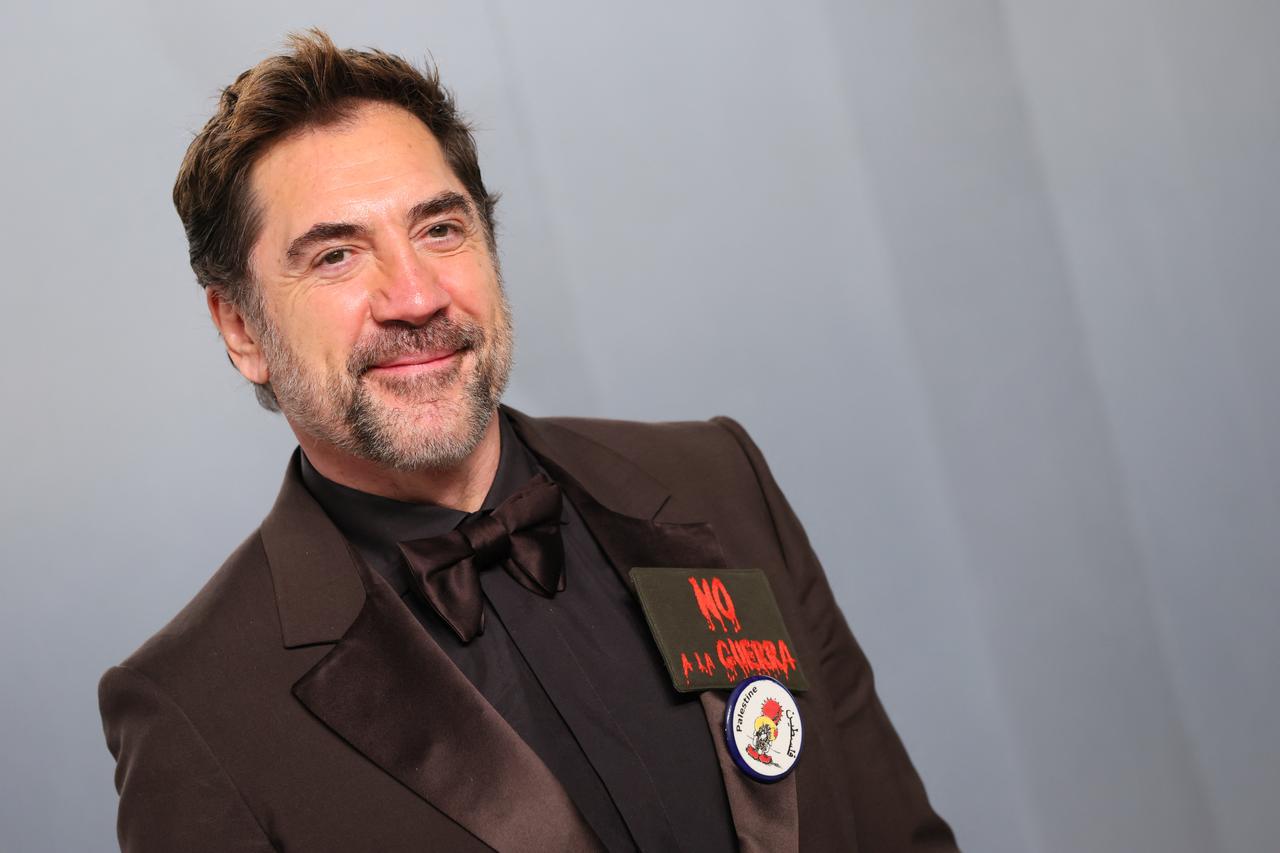
International conflicts were mentioned only briefly. Spanish actor Javier Bardem made a short statement while presenting an award, saying: “No to war, and free Palestine!” Russian filmmaker Pavel Talankin also called for an end to global conflicts.
Despite the political undertones, many speakers emphasized the international nature of filmmaking.
In his opening remarks, O’Brien reminded the audience that the nominated films represented talent from dozens of countries and brought together thousands of people working across languages and cultures.
He told viewers that the Oscars reflected a global creative effort, saying that films honored at the ceremony were made by people from 31 countries across six continents.


 Set as preferred source
 Set as preferred source



 3 min read