Newsletters


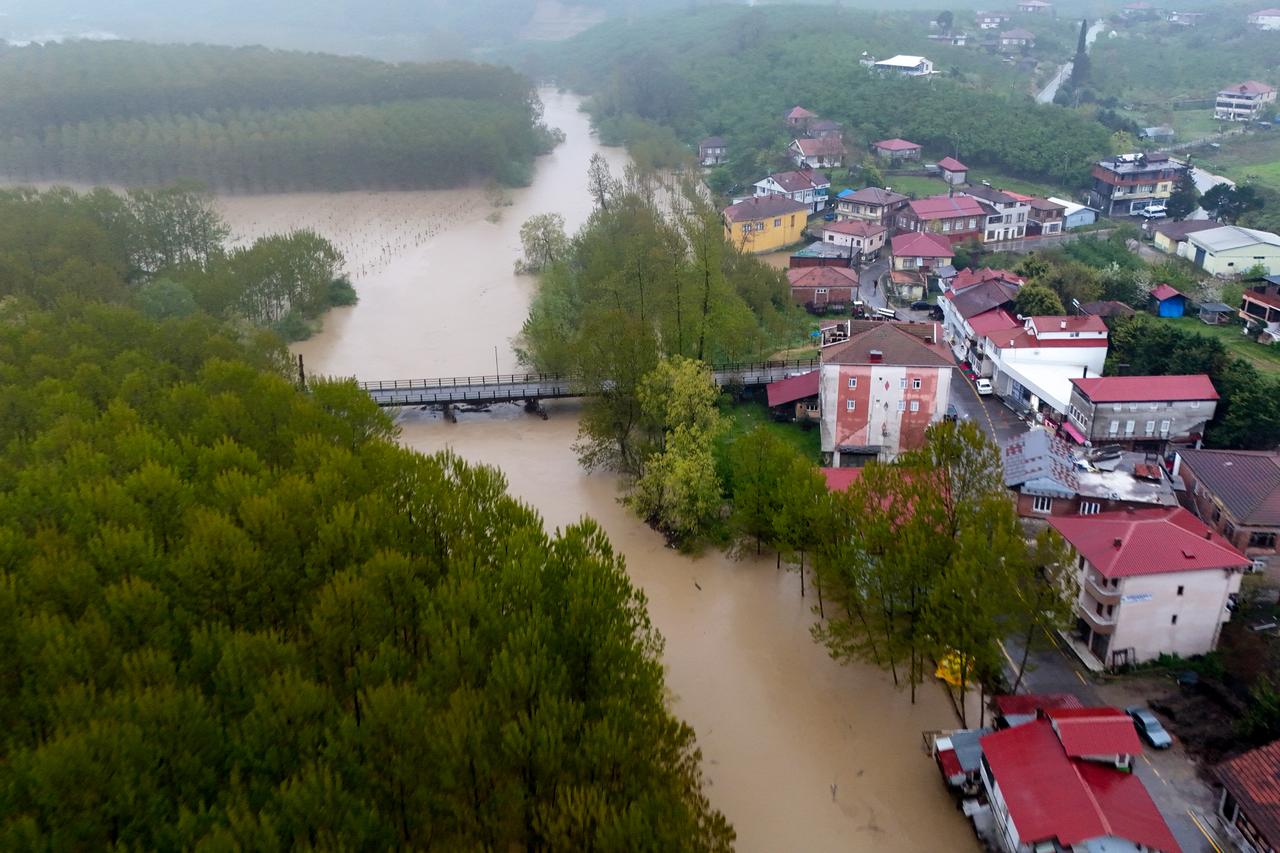


Türkiye recorded significantly above-average rainfall in April, with nationwide precipitation climbing 50% above seasonal norms and 19% higher than the same month last year, according to the Turkish State Meteorological Service’s latest “2026 Water Year” assessment.
Data released by the Turkish State Meteorological Service under the Ministry of Environment, Urbanization and Climate Change also pointed to a broader improvement in moisture conditions, as months of stronger rainfall helped ease the severity of meteorological drought across the country.
April rainfall came in above seasonal averages across all regions of Türkiye, while the southeastern part of the country stood out as the wettest region overall.
The Mediterranean region recorded its highest April rainfall in 24 years, while Central Anatolia saw its strongest April precipitation in 23 years, reflecting an unusually wet spring across areas that have often struggled with dry conditions.
At the provincial level, Siirt in southeastern Türkiye received the highest amount of rainfall, reaching 229.3 kilograms per square meter during April. By contrast, Istanbul recorded the country’s lowest monthly precipitation level at 39.1 kilograms per square meter.
Several provinces also posted record or near-record April rainfall levels. Antalya, Osmaniye, Rize and Siirt experienced their wettest April in 66 years, while Mugla and Kilis saw their highest levels in nearly three decades.
Meteorology officials also evaluated rainfall through the lens of the “Water Year,” seven months used to monitor long-term water trends between agricultural and hydrological seasons.
According to the assessment, rainfall across Türkiye during the 2026 Water Year period came in 29% above the 1991–2020 average and 72% higher than the same period last year. Nationwide precipitation during the seven-month span reached its highest level in 66 years.
The sharpest increase was recorded in southeastern Türkiye, where rainfall rose by 47% during the Water Year period.
Regional cumulative rainfall also climbed to multi-year highs, with Central Anatolia recording its strongest seven-month period in 15 years, while the Marmara and Aegean regions posted their highest levels in 11 years.
April temperatures across Türkiye remained slightly below seasonal averages, with the nationwide average temperature measured at 11.7 degrees Celsius, around 0.6 degrees below the 1991–2020 norm.
Lower-than-usual temperatures were particularly noticeable in southeastern Türkiye, inland parts of the Black Sea region and some areas of Eastern Anatolia.
The coldest temperature in April was recorded in Erzurum at minus 11.4 degrees Celsius, while the warmest reading reached 31.9 degrees Celsius in Kozan, a district of Adana province.
Meteorological assessments suggested that the increased rainfall in recent months helped bring down the severity of meteorological drought across Türkiye.
Authorities also found that humidity levels increased between February and April 2026 compared with the same period last year, signaling an improvement in overall moisture conditions.


 Set as preferred source
 Set as preferred source


 2 min read
 1 min read