Sign in
 Newsletters


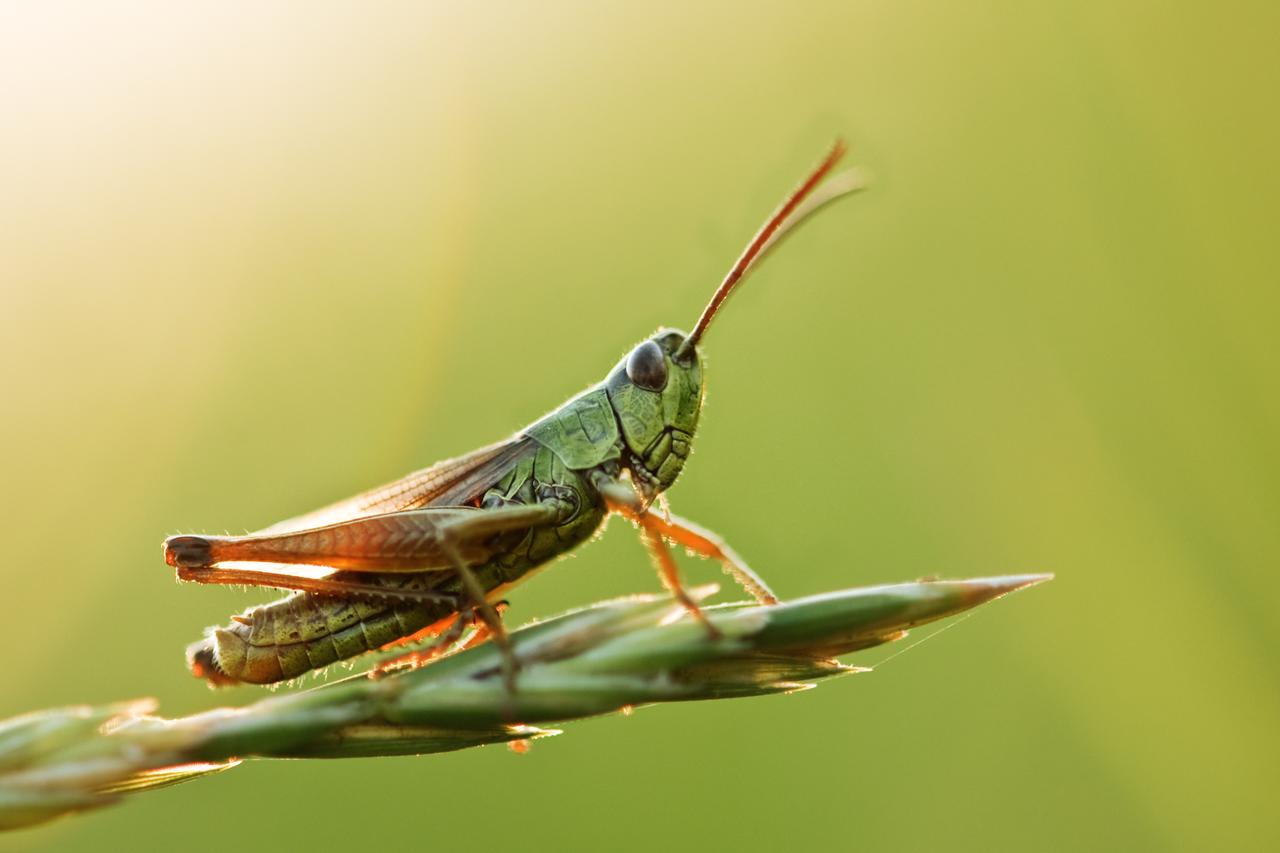


Nearly 100 million years ago, a newly identified family of long-legged grasshoppers may have skated across ponds the way modern water striders do, according to a study of insects preserved in amber.
Researchers report in the journal Proceedings of the Royal Society B, published Nov. 24, that the wingless insects had water-repellent hairs on their front legs and leaf-shaped, paddle-like structures on their lower hind legs.
Those features, preserved in remarkable detail, suggest the insects could balance on the water's surface tension and push themselves along. The finding suggests that at least three groups of insects independently evolved the ability to move across water.
Paleontologist Chunpeng Xu of the Nanjing Institute of Geology and Paleontology in China and his colleagues first came across the creatures while studying a collection of 99-million-year-old amber. Three pieces contained wingless grasshoppers with short bodies and extremely thin, elongated legs.
Xu did not initially recognize the insects as grasshoppers and thought they might be harvestmen, a type of spiderlike arachnid, or stick insects.
"I was genuinely amazed," Xu said. "They are among the most bizarre insects."
Under a microscope, two features stood out: water-repellent hairs on the front legs and the paddle-shaped structures on the rear lower legs.
Based on estimates of the insects' weight, the team concluded they could have stayed atop the water thanks to surface tension, helped by the hairs and by their widespread footprint. The paddles would have propelled them forward.
The researchers named the species "Hydrelcana zhangi" and placed it in a new family, Hydrelcanidae.
"Walking on water is a pretty rare skill in nature," Xu said.
Unlike the predatory and scavenging water-walkers alive today, these grasshoppers were likely vegetarians that may have gathered in numbers, with nine found preserved in one amber chunk.


 Set as preferred source
 Set as preferred source


 1 min read
 1 min read