Newsletters


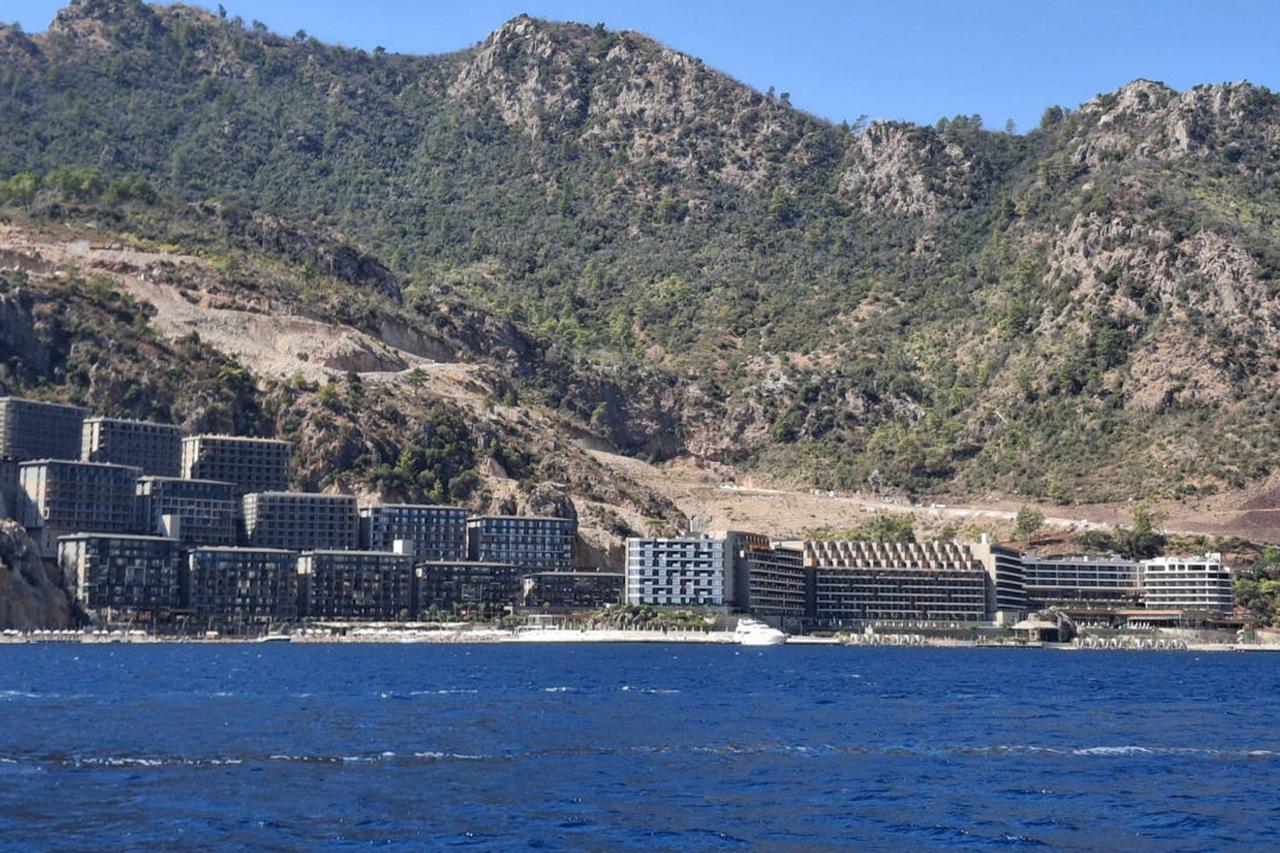


The Mugla branch of the Chamber of Architects said the scale of ecological damage around the Sinpas/Kizilbuk project in Marmaris National Park appeared significantly greater during an on-site inspection than what had previously been visible in photographs and video footage, according to a report by Sibel Bahcetepe for BirGun.
The delegation also raised concerns over the project's impact on the area's natural topography and coastal skyline, while saying that a beach previously used by the public had been closed off.
According to BirGun, the inspection was carried out with the facilitation of the Urban Policies Association and brought together representatives of the Mugla Chamber of Architects and the association.
The delegation said that although the area can be reached by road, access to part of the site within the national park is controlled because of private property arrangements, fencing and a security checkpoint. As the group could not enter the area by land, it carried out its inspection by sea.
The delegation said construction within the project area had placed significant pressure on the natural landscape, the coastal silhouette and the wider natural and cultural character of the region.
Deniz Ozturk, vice chair of the TMMOB Chamber of Architects' Mugla branch, said the group believed the development had moved away from the area's distinctive natural, cultural and architectural character and had failed to sufficiently take into account national park boundaries, the coastal boundary line and basic planning principles.
Urban Policies Association President Ufuk Beytekin said seeing the site first-hand made the scale of the situation clearer, adding that the group had also been briefed on the legal process surrounding the project.
Beytekin said the case was currently pending before Danistay, Türkiye's highest administrative court, while an expert report and two expert opinions submitted to the proceedings were favorable to those challenging the project.
He said they expected a favorable ruling in the coming months.
Following the inspection, the delegation said its concerns went beyond a professional assessment of the development and that the ecological damage observed on the ground was more extensive than what had been reflected through screens and photographs.
The group called for coastal areas, natural spaces and cultural heritage to be protected in line with the public interest and urged the implementation of rulings by Danistay and other courts.
Images shared publicly in May had also shown construction machinery operating directly on the seabed and heavy pollution along the coast.


 Set as preferred source
 Set as preferred source


 1 min read

 1 min read