Newsletters


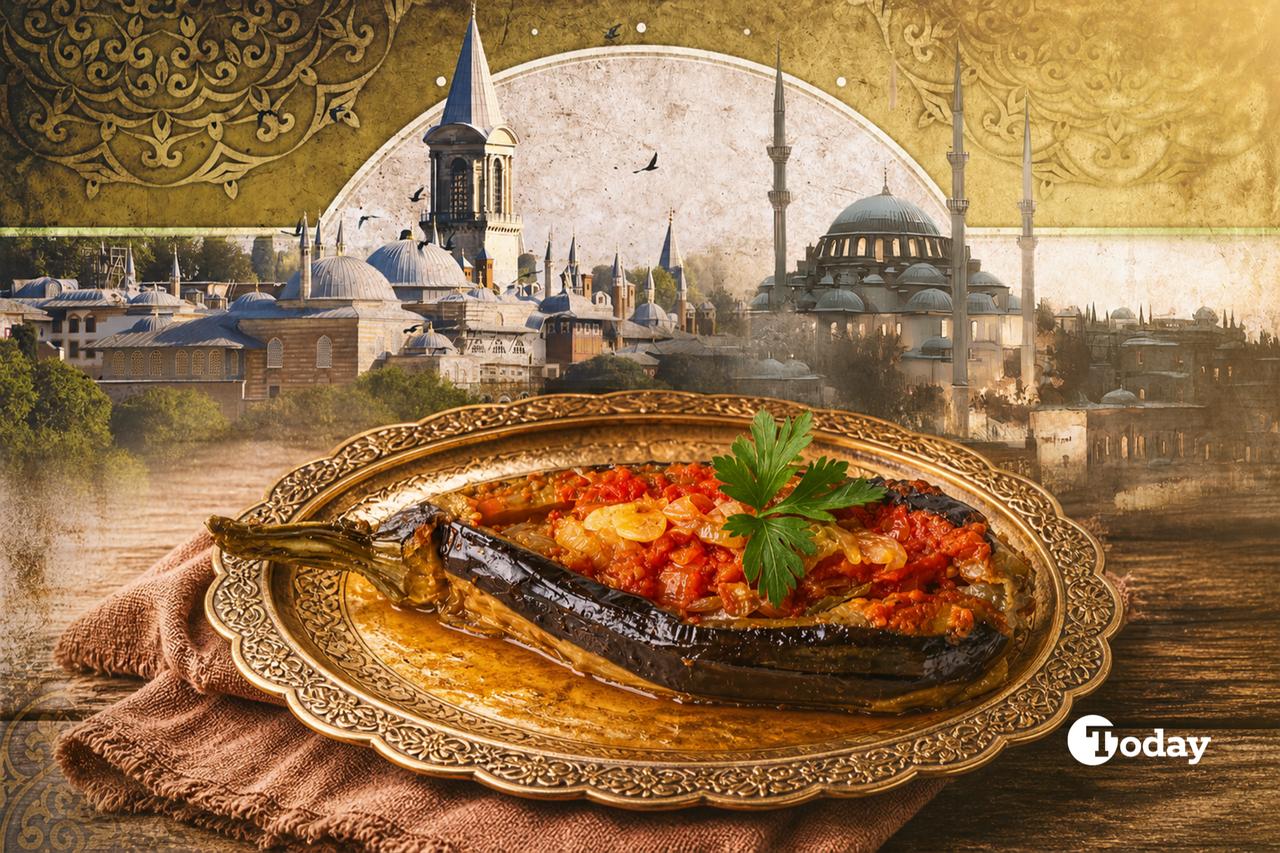


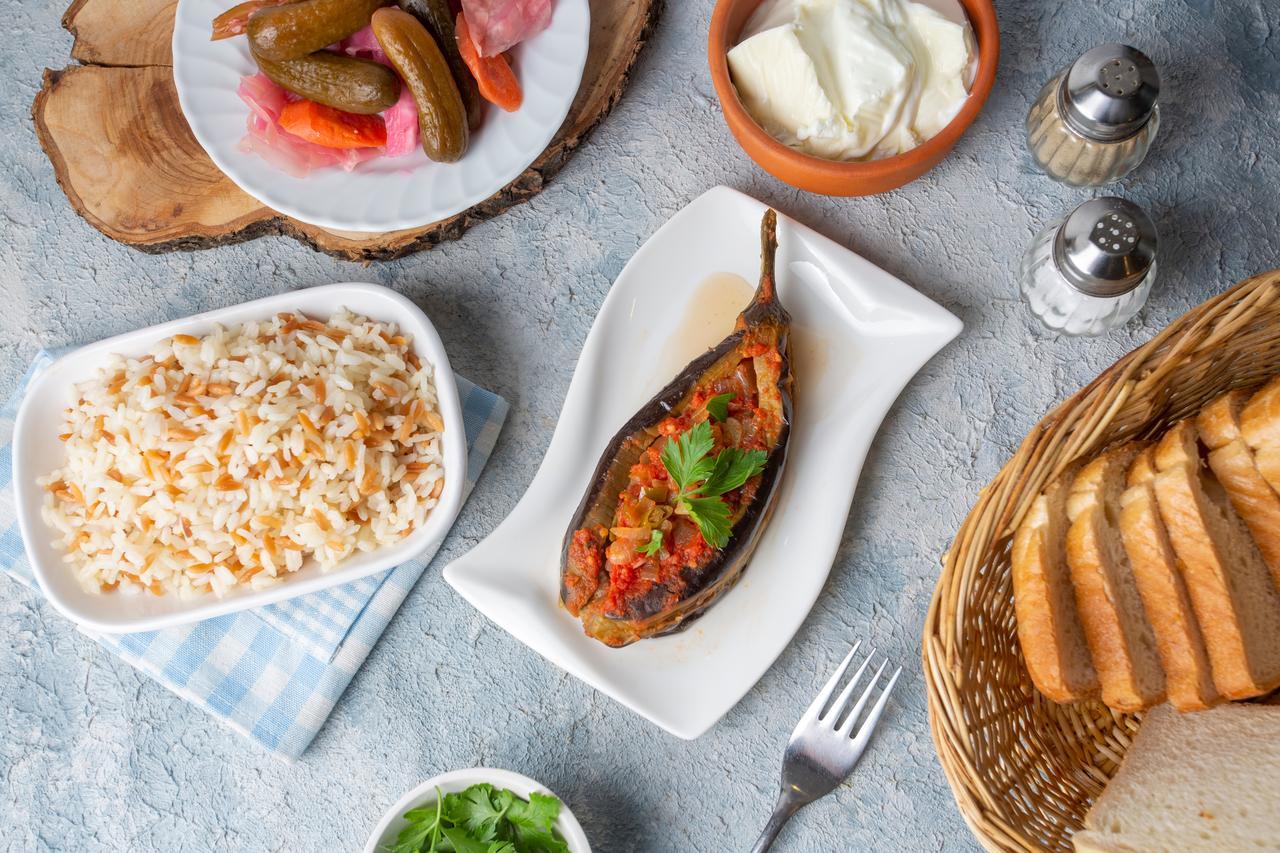
Imam bayildi does not bother with seduction. How could it?
It is a reclining aubergine, obscenely glossy with oil, like an oversized wrestler on a sunbed who's stopped pretending he'll ever get up. He has been there for ages. The towel is not coming. There is no flattering angle, no effort to look lighter: it's all belly and bombast.
Its name, famously, means "the imam fainted." The usual story is that he swooned with pleasure, though, judging by the quantity of olive oil involved, one suspects the decisive blow may have also been financial. Whatever felled the poor cleric, the dish itself does not faint. It lounges, as if anticipating admiration.
And, oh, does it deserve to be admired. Imam bayildi is not a recipe so much as a surviving argument: that vegetables, given sufficient oil and time, can be more serious than meat. This was a Byzantine inheritance, the eastern Mediterranean’s long, unbroken understanding that a well-cooked aubergine promised to release dopamine on levels usually unlocked by major military victories.
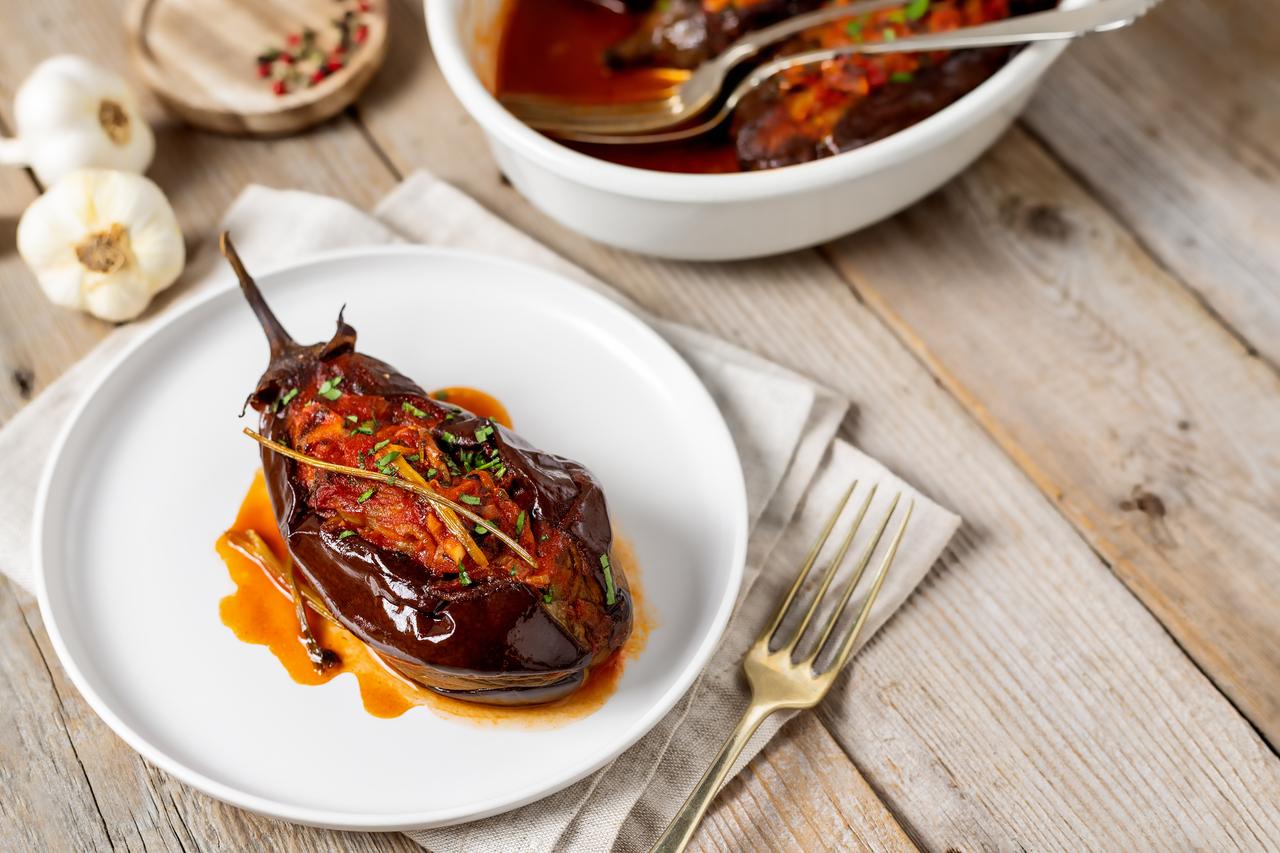

That is how cuisines usually survive political upheaval: not through manifestos, but through repetition. Ecologies rarely change, and habits are sticky, which makes the real mystery not how culinary traditions persist, but how they are allowed to go slack.
Which, regrettably, is where Bulgaria enters the picture.
Not because Bulgaria lacks the ingredients for greatness. Quite the opposite. It has magnificent yogurt, tomatoes, brined white cheeses, Ottoman grills, Balkan pickling, Greek-inflected salads, and a serious commitment to pork.
Ask a rustic neighbour for stuffed, pickled chillies and they alone will justify the airfare. A country, in short, that has been dealt one of the great culinary hands in European history.
Yet it plays it like someone who's forgotten they're holding cards.
Take kebapche beside Turkish kofte. The principle is near-identical: minced meat, shaped by hand, handed over to fire, until you forget where the hot coat of fat ends and your tongue begins.
Yet in practice, the seasoning drops the megaphone and mumbles; the fat sits heavily rather than seductively; the grill is treated less as an ordeal of judgment than as an administrative nuisance. Moussaka arrives under a bechamel of cement. Banitsa has the same bones as borek and has clearly decided that's enough.
This is not a matter of flamboyant failure. That would at least be memorable. The trouble is something more familiar to anyone who has survived postwar British catering: heat treated as moral instruction, stews abandoned in a beige middle distance, bread deployed as ballast rather than pleasure.
You don't expect to find that particular joylessness in the Balkans. And yet here it is, along with the same suspicion that enjoying food too much might constitute a character flaw. The confidence to say “no, not like that” has quietly packed up and left.
And once that insistence weakens, something more important goes missing too: the argument.
In serious food cultures, people quarrel with the homicidal intimacy of family at the reading of a will. Technique becomes pride, pride becomes rivalry, and rivalry, at its healthiest, acts as a quality control mechanism more unforgiving than any critic.
That's the Balkans at its worst and its best. They insist not only that their grandmother did it better, but that she virtually invented it while your clan was still confused by the rolling pin. Yet in Bulgaria, food is served politely and then forgotten. And without that heat, of the kind that makes cousins stop speaking, excellence rarely sparks.
Bulgarian food is at its best when it has the good sense to stop early. Tomatoes, white cheese and rakia can be glorious precisely because nobody is attempting too much. Its great triumph is a pig on a steel pole and a handful of salt.
Not rocket science, not even Bunsen burner science, but correct in the way that only very simple things can be. The accompanying karvavitsa, blood sausage dense with mountain herbs and spices, makes the same argument even more eloquently.
But when complexity enters, coherence falters. Ingredients accumulate without enough force to arrange them. The inheritance is still visible—Ottoman, Greek, Slavic, Balkan—but this on its own is not style. Without proportion, without confidence, without someone prepared to fight about the final result, a mosaic begins to look like rubble.
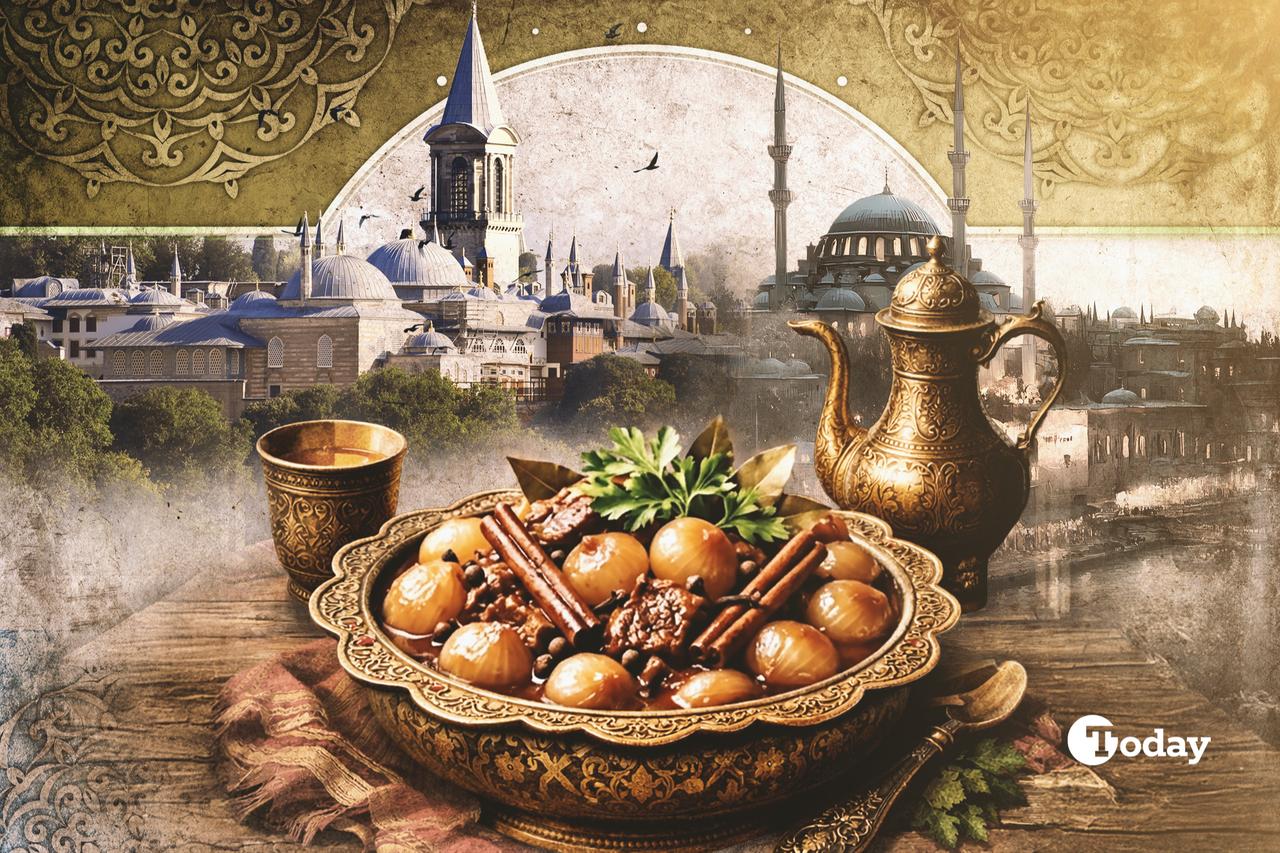
Take kavarma, a slow-cooked meat and vegetable stew that ought to be the equivalent of a French braise: deep, wine-dark, the kind of thing that makes you reconsider your travel plans.
Instead, it arrives as a grey consensus in which every ingredient has been equalized into submission. The clay pot has more character than its contents.
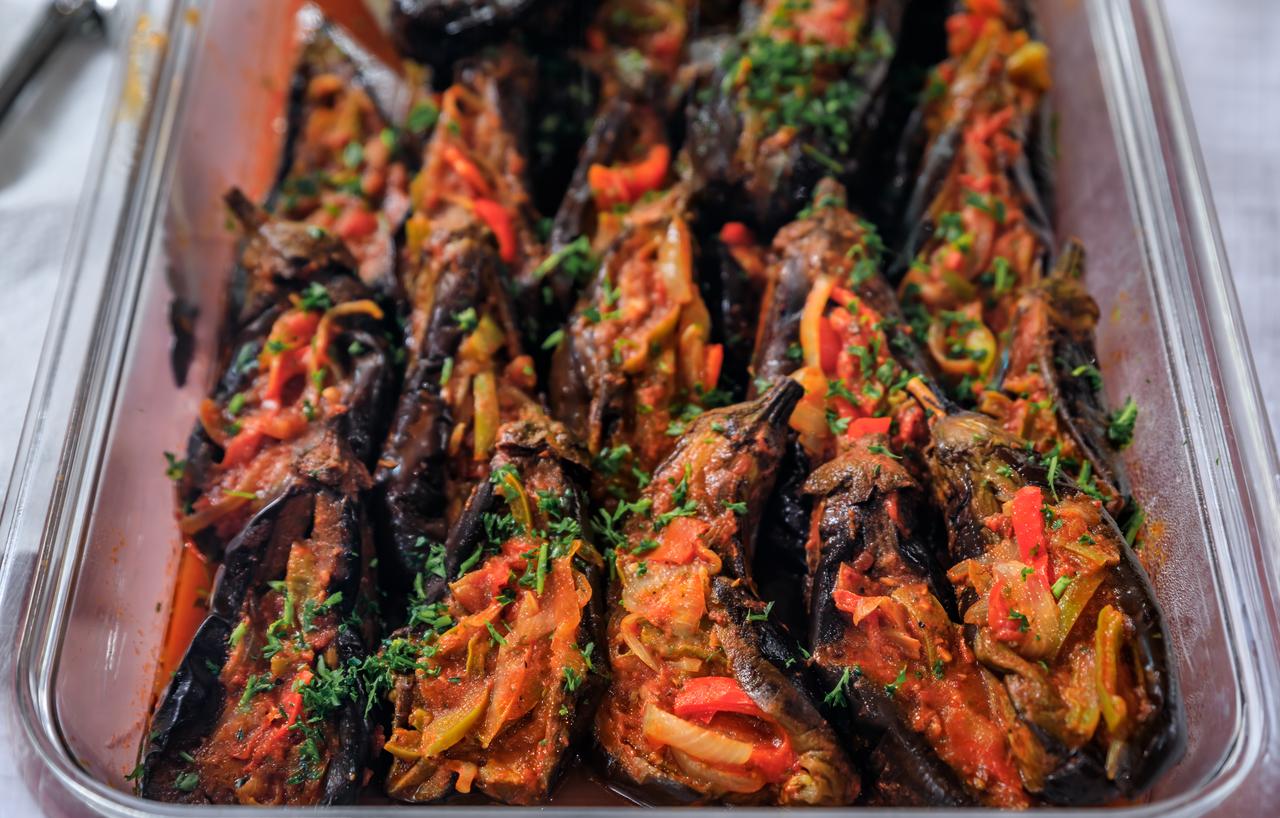
It's all such a far cry from that beautiful aubergine: so glossy and unapologetic, so doted on and loved. In the Byzantine-Ottoman world, it arrives anointed within an inch of its life, as though oiling it constituted less a method than an act of devotion. In Bulgaria, there's no oil, and it's baked.
The Bulgarian version rips the joy from our chubby protuberance like a lollipop from a child and, worst of all, to no conceivable benefit.
Imam bayildi survives because it never forgot how to love itself, and nobody stopped loving it. Its enemy was never some rival dish, or some overambitious update, but indifference—the slow withdrawal of people who stopped finding it worth arguing about.
God looked at creation and called it good. Bulgaria looked at its aubergine and shrugged.
 2 min read
Ingredients
Optional: Pinch of cinnamon
Method
1) Prepare the aubergines
2) Brown the aubergines
3) Make the filling
Taste. It should be sweet, gently acidic and deeply onion-forward.
4) Assemble
5) Bake
Bake at 180°C for 40–60 minutes until fully tender and glossy. The oil should pool slightly around them.
6) Rest
This is critical. Let it cool to room temperature before serving.


 Set as preferred source
 Set as preferred source


 1 min read