Newsletters


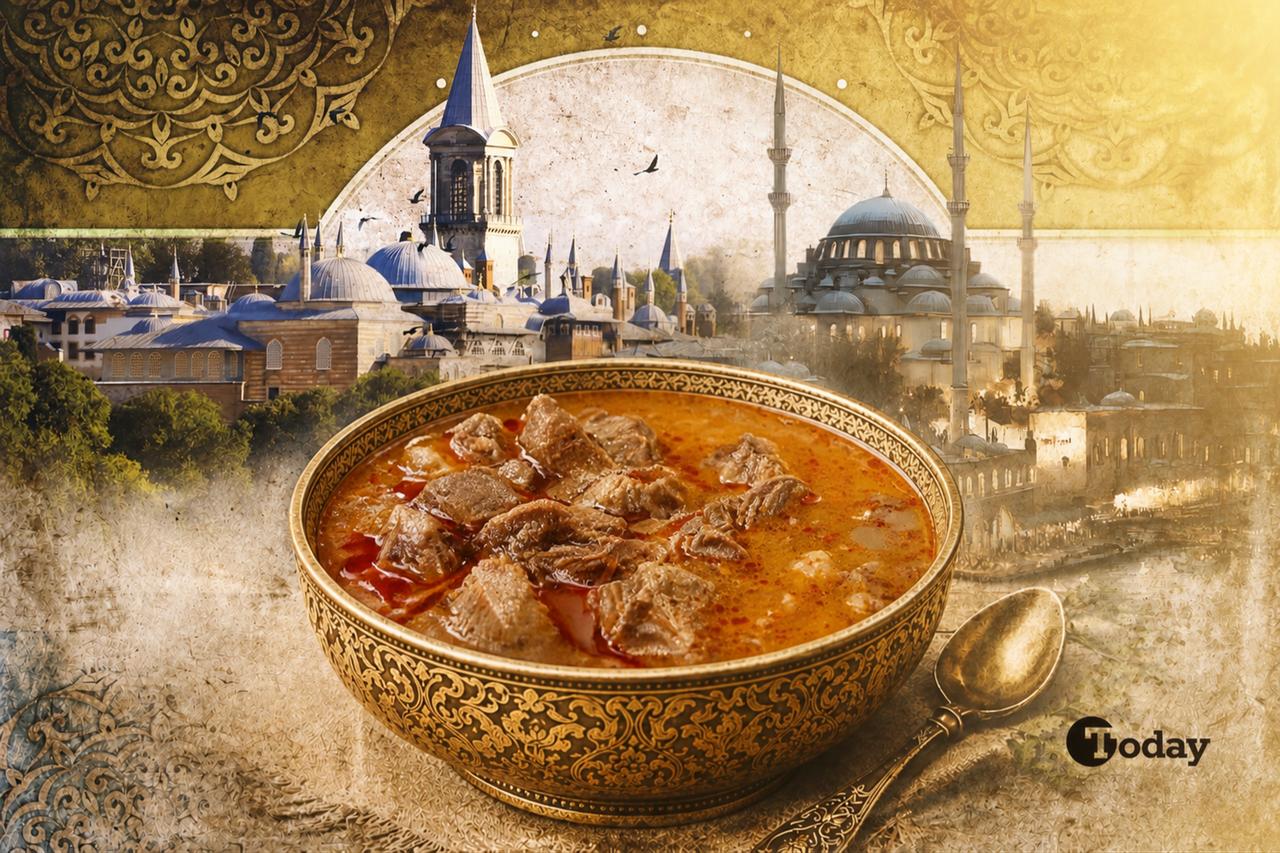


There is a man in Beyoglu who has been awake since yesterday and is eating a sheep's face. Nobody finds this strange. The cook certainly doesn't. He has seen your kind before—the night-shift worker, insomniac, lost tourist, and person whose evening started well only to fall off a cliff—and he’s already decided you're getting the same bowl as everyone else.
Kelle paca is what Istanbul does at 3 a.m. instead of therapy. Yes, it’s “head and trotter soup,” to give it the translation that clears tables at dinner parties. The humble sheep contributes its skull, feet, cheeks, tongue, brain and eyes to a pot that has been simmering since sunset. What emerges six to 12 hours later is a broth the color of old ivory, and viscous in a way that experts call collagen-rich and your instincts would call “wrong.”
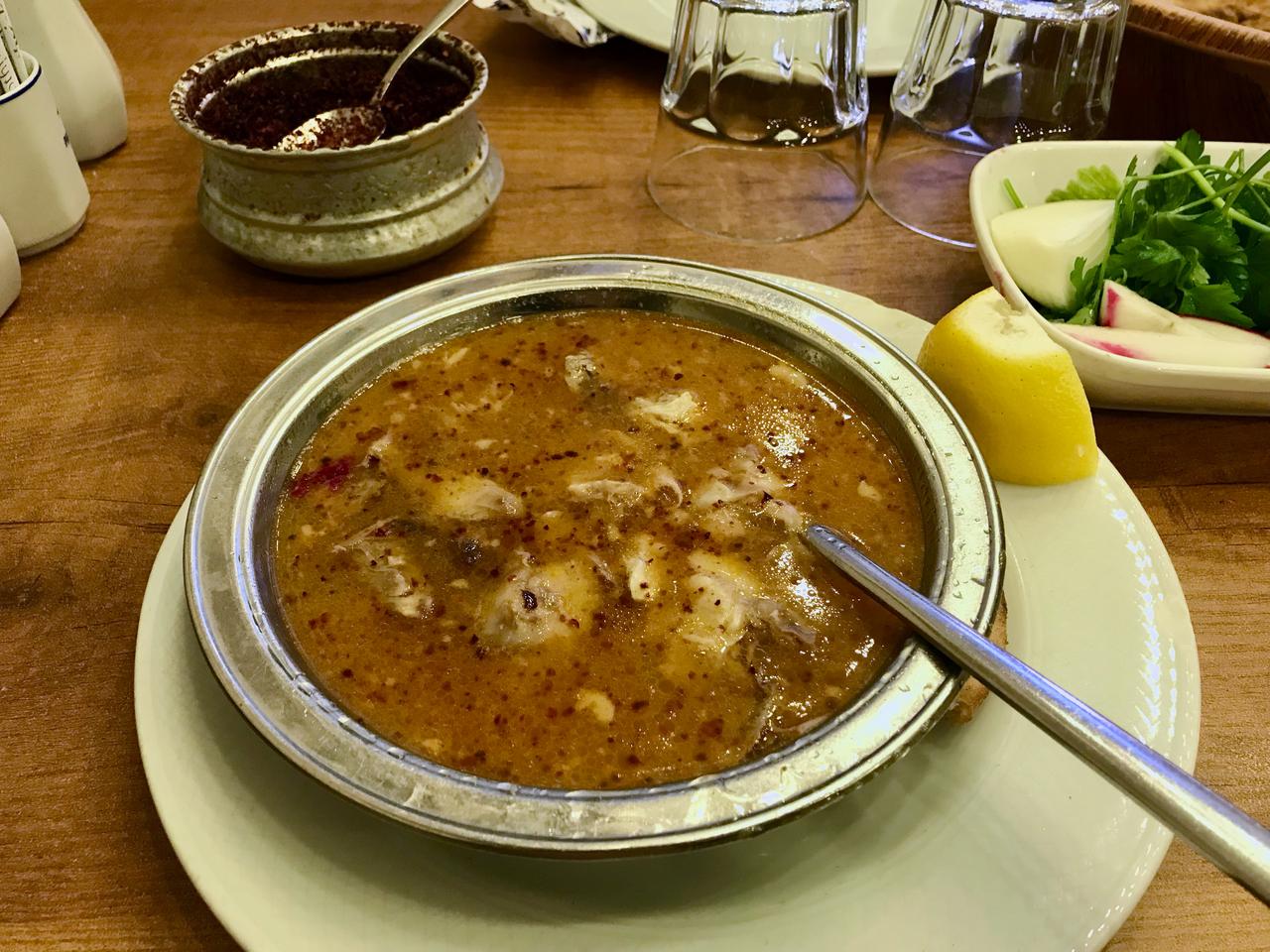

You add vinegar. Then dried chilli. Then the crushed garlic that arrives on the side in a small dish.
And then something happens. By the third spoonful you have stopped interrogating the anatomy and started to notice the scandalous fact that you feel better.
No, not "gut health" better. Actually better, in the old sense, as though the body has emerged from a splendid nap. Which is no accident given the dish has been pulling off the same trick for thousands of years.
The Galenic tradition that shaped Byzantine medicine had strong views on gelatin. It knew that long, slow extraction from joints and extremities produced a broth understood as uniquely restorative to the humors, warming the blood and fortifying everything down to the bones.
The 10th-century Persian physician Rhazes prescribed sheep's trotters specifically for fracture recovery, while cautioning that they might cause constipation and should therefore be taken with vinegar and asafoetida.
Annoying both Hellenes and Turks equally is the fact that Iranian kelle paca claims to date back 3,500 years, which is half bluster, half truth.
The word paca is Persian for trotter; kelle is the head. Together they made the full length of the Silk Road, stopping at every city that had sheep, winters and empty bowls.
By the time the Romans had built Constantinople—boiling being their preferred culinary mode, a habit so dominant it produced the Byzantine proverb αργώ μαγείρω, πάντα εκζεστά, which translates loosely as "the lazy cook prepares everything by boiling" or simply "we rule the known world and still cannot be trusted near a frying pan"—the soup was already ancient enough that the city had built a guild around it.
Guilds covered most things. Inn-holders, for instance, were licensed to trade six days a week, though never on Sundays, and on the remaining six days not a minute past seven in the evening, the Byzantine state clearly having very specific opinions about what constituted a night out. And it was all regulated, priced, and assigned their streets by a government official who ranked 18th below the emperor and had, apparently, a great deal on his plate.
Long before Evliya Celebi arrived in the 17th century to write it all down, Istanbul had already organized its relationship with the sheep's head into a licensed profession, and never once needed anyone's permission to keep doing it.
Four hundred miles west, in Thessaloniki, permission is a big problem. This year, a restaurateur named Dimitris Tsarouchas confirmed that his dossier, co-written with the historian Lena Oflidi, has gone to the Greek Ministry of Culture, seeking recognition for patsas as Greek cultural heritage, with UNESCO to follow.
Patsas is tripe rather than head and trotters, which is to say it’s kelle paca's cousin, not its twin. Known as iskembe to the Turks, who are just as certain it's theirs, it is still cooked in the same shops, at the same ungodly hour, for the same life-wrecked customers, so the argument conveniently blurs familial resemblances.
Tsarouchas' own evidence reaches back to the Odyssey. "If this isn't patsas," he asks, "then what else could it be?" The Turkish rebuttal reaches for Evliya Celebi instead—his 17th-century travelogue conscripted into a custody battle over soup.
There is a broader problem here that both literatures illustrate. Written cultures tend to locate ownership not in the act of eating but in the act of describing the eating, as though a recipe were a title deed. This sounds reasonable until you remember that fire was in daily use for hundreds of thousands of years before anyone wrote a fire manual, and nobody went cold in the meantime.
The sheep's head went into the pot long before Homer sang about it, or Evliya reached for his reed-pen. The honest answer to Tsarouchas's question is that it could be any of the 40-odd cultures across the central swathes of Eurasia that have been boiling sheep heads since before anyone in the Aegean, or anywhere else, thought to write anything down.
The patsatzidika arrived in Thessaloniki in 1923, carried by Greek Orthodox families expelled from Anatolia under the Treaty of Lausanne, who opened the first of them in their new city because it was the food they knew. This is hardly a complicated provenance.
Before being Ottoman, the dish was Byzantine. Before being Byzantine, it was Anatolian and Persian and Armenian and every other civilization that ever ran sheep across that particular stretch of the earth.
What it is not, by any reading of the evidence available to a literate adult, is a dish Penelope invented while waiting for Odysseus.
Back in Beyoglu, the man eating the sheep's face has finished, only to be replaced by a taxi driver eating with the focused silence of a man who has made his peace with the world, and yet will still find it wanting tomorrow.
The cook still hasn't looked up.
The bowl arrives the same way it has arrived in this city for a thousand years—pale, dense, steaming, garnished with a slick of red butter—and you eat it, and whatever the evening did to you begins, slowly, inexorably, to reverse.
Recipe
Ingredients
1 kg lamb trotters, halved lengthways by the butcher
500 grams lamb neck or shank, bone-in (for body and meat, standing in for the head)
1 onion, halved
1 whole garlic bulb, halved across the middle
2 bay leaves
1 tsp black peppercorns
2 tbsp white vinegar
2 tbsp butter
1 tsp dried chilli flakes or paprika
For the table: 4 garlic cloves, crushed, mixed with 2 tbsp vinegar; extra chilli flakes
Method
Notes
On the head: a full sheep's head is, for most domestic kitchens, a bridge too far, both logistically and psychologically. Trotters plus neck give you the same collagen-rich result without a trip to a specialist butcher most people don't have.
On Rhazes: the 10th-century prescription called for vinegar specifically to offset the trotters' reputed tendency to cause constipation, with a pinch of asafoetida for good measure. If you have asafoetida in the cupboard, a small pinch in step 2 is historically defensible. If you don't, nobody in this dish's 1,500-year history will mind.
On timing: this is not a dish for a weeknight. Start it on a day you have genuinely nowhere else to be, the way it was always intended to be eaten—by people who'd been awake far too long already.


 Set as preferred source
 Set as preferred source


 1 min read