Newsletters


The ancient city of Sardis, the UNESCO-listed capital of the Lydian Kingdom where the world's first metal currency was produced, received approximately 60,000 people between January and July, according to data obtained from the Provincial Directorate of Culture and Tourism.
Located in the Salihli district of Manisa, Sardis is considered among Anatolia's most significant archaeological sites, with a history dating back to the 1200s BC.
Known as the place where metallic coins were first minted, the ancient city contains numerous structures belonging to the Lydian, Persian, Hellenistic, Roman, and Byzantine periods.
Visitors coming to the city that once served as the capital of the Lydian Kingdom have the opportunity to see the Temple of Artemis, the largest recorded synagogue of antiquity, the church mentioned in the Gospel of John, and the remains of a monumental Roman bath and gymnasium.
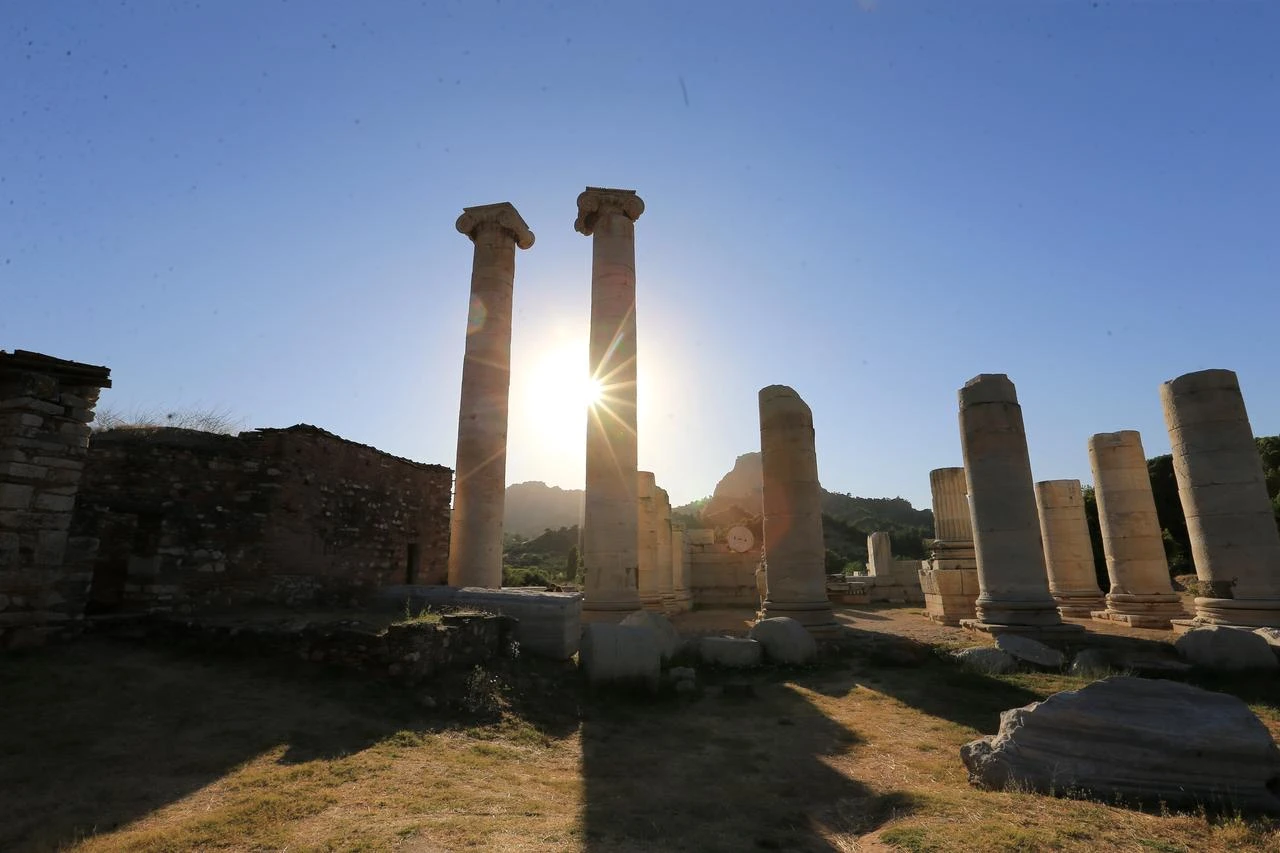

Excavations are ongoing at Sardis, which contains historical layers extending from the surface downward through the Byzantine, Roman, Hellenistic, Persian, and Lydian eras. Artifacts uncovered during excavations that have been conducted for nearly 120 years continue to shed light on the city's history.
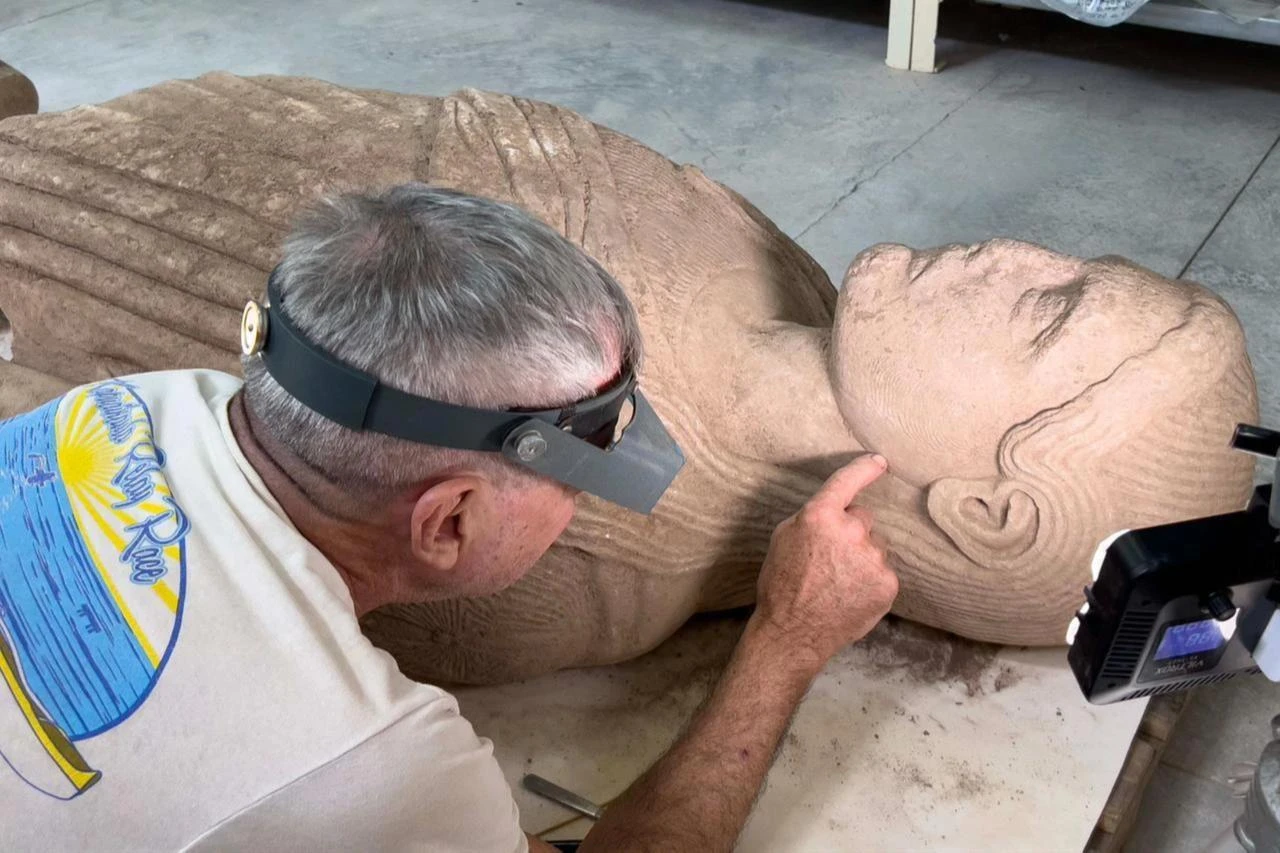
Most recently, excavations in the city unearthed a nearly 2,500-year-old youth statue standing 2.2 meters tall (7.2 feet). Reused during the Roman period as spolia in the paving of a colonnaded street, the artifact stands among rare examples of contemporary sculptural art due to its monumental scale, well-preserved state, and striking details.
Continuing to draw the scientific community's interest with discoveries, the ancient city of Sardis is also a frequent stop for domestic and international tourists.
Aysel Kuzu, an architecture student touring the ancient city, said that despite living in Manisa, she was visiting Sardis for the first time. Expressing how deeply impressed she was upon seeing the city, Kuzu said, "The moment we walked between the columns, we were enchanted. I wish I had come earlier. It is magnificent, and its preservation is truly valuable."
Abdullah Serdar Erceylan, who toured the ancient site with his daughters, noted that he wanted his children to become familiar with historical and cultural heritage at an early age.
Explaining that he named one of his daughters "Lidya," inspired by the Lydian civilization, Erceylan said: "One is 4, and the other is 6 years old. I wanted them to see this beautiful historical place. We named one of my daughters Lidya, taking inspiration from the Lydians, one of the significant civilizations in our history.''
''My other daughter's name is Leyla, so their names complement each other well. I believe this place should be seen by everyone. It is one of the rare historical sites that has managed to stand preserved to this day." She continued.
Asli Akkuzu, visiting Sardis for the first time, expressed that she was moved by the historical atmosphere and that finding such well-preserved historic areas is deeply gratifying.


 Set as preferred source
 Set as preferred source


 1 min read
 1 min read