Newsletters


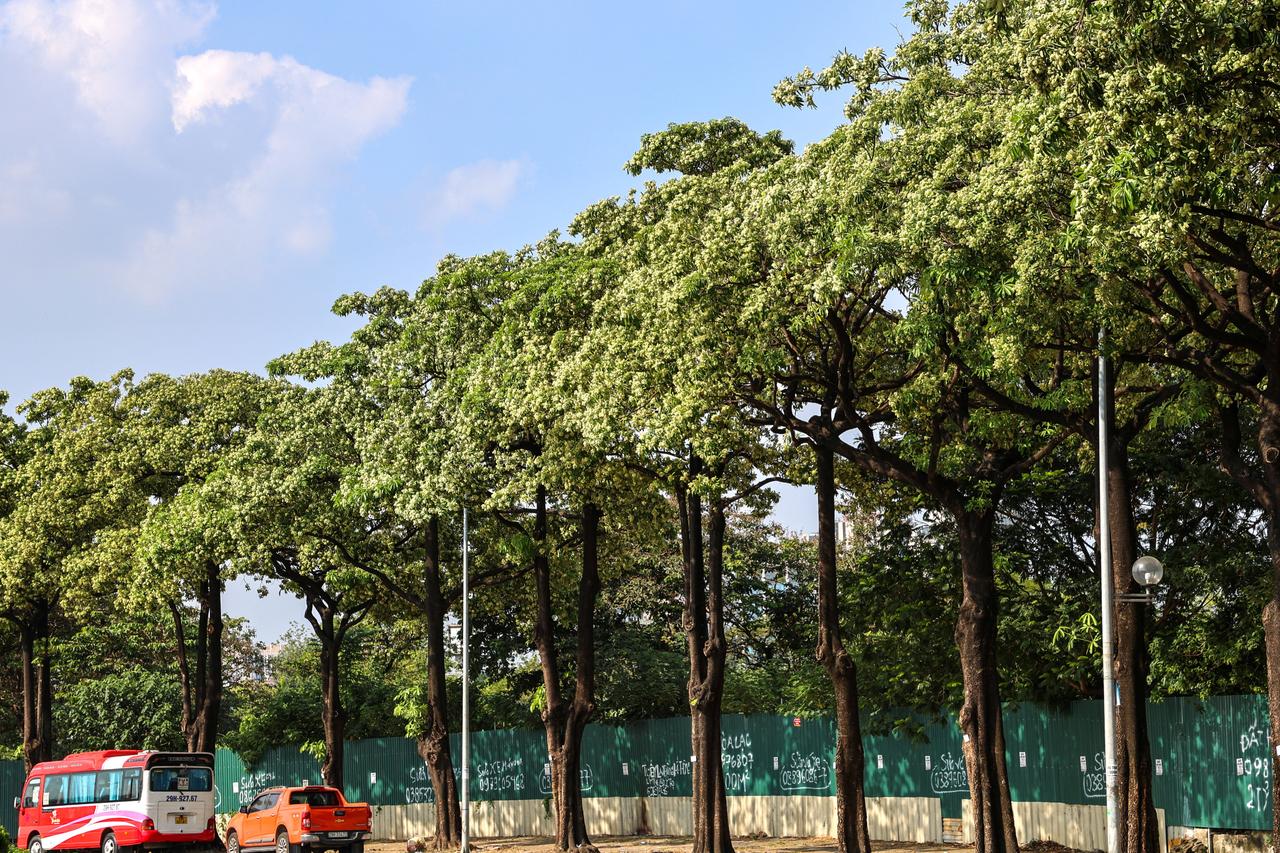


Vietnam's capital, Hanoi, is considering relocating the blackboard trees from city streets following growing complaints from residents about the intense fragrance released by their flowers, particularly during the autumn blooming season.
According to Vietnam's public broadcaster VTV, local authorities are looking into moving some of the trees to other parts of the city as residents increasingly report that their distinctive scent has become overwhelming.
A recent public survey in Hanoi, home to approximately 9.5 million people, found that the fragrance was widely regarded as excessively strong and unpleasant, particularly in neighborhoods where the trees grow in large numbers.
The smell becomes particularly noticeable when the trees reach full bloom, affecting people who live and work nearby.
Do Minh On, a security guard working on Trung Hoa Street, said the intense fragrance could be suffocating and often left him feeling exhausted.
Similarly, Thang, a motorcycle delivery driver living in Thanh Xuan district, explained that the scent becomes especially powerful when the flowers fully open and can trigger complaints involving sinus discomfort.
In response, local authorities have begun extensive pruning in several neighborhoods while weighing up plans to relocate trees growing along major streets.
The blackboard tree (Alstonia scholaris), known in Vietnamese as hoa sua, or “milk flower,” was planted along Hanoi’s streets during French colonial rule in the late 19th century.
More than 14,000 of the trees currently grow throughout the Vietnamese capital, where they have become recognizable features of the city's boulevards and cultural landscape.
The trees can reach heights of up to 60 meters (197 feet) and produce clusters of greenish-white flowers that give off a sharp, sweet fragrance around twilight, when the sun sits just below the horizon.
Although their scent has prompted complaints, the trees remain closely associated with the arrival of autumn in Hanoi and have been celebrated in Vietnamese songs and poetry.
Their cultural significance adds another dimension to the city's consideration of relocating trees from residential streets.


 Set as preferred source
 Set as preferred source



 3 min read