Newsletters


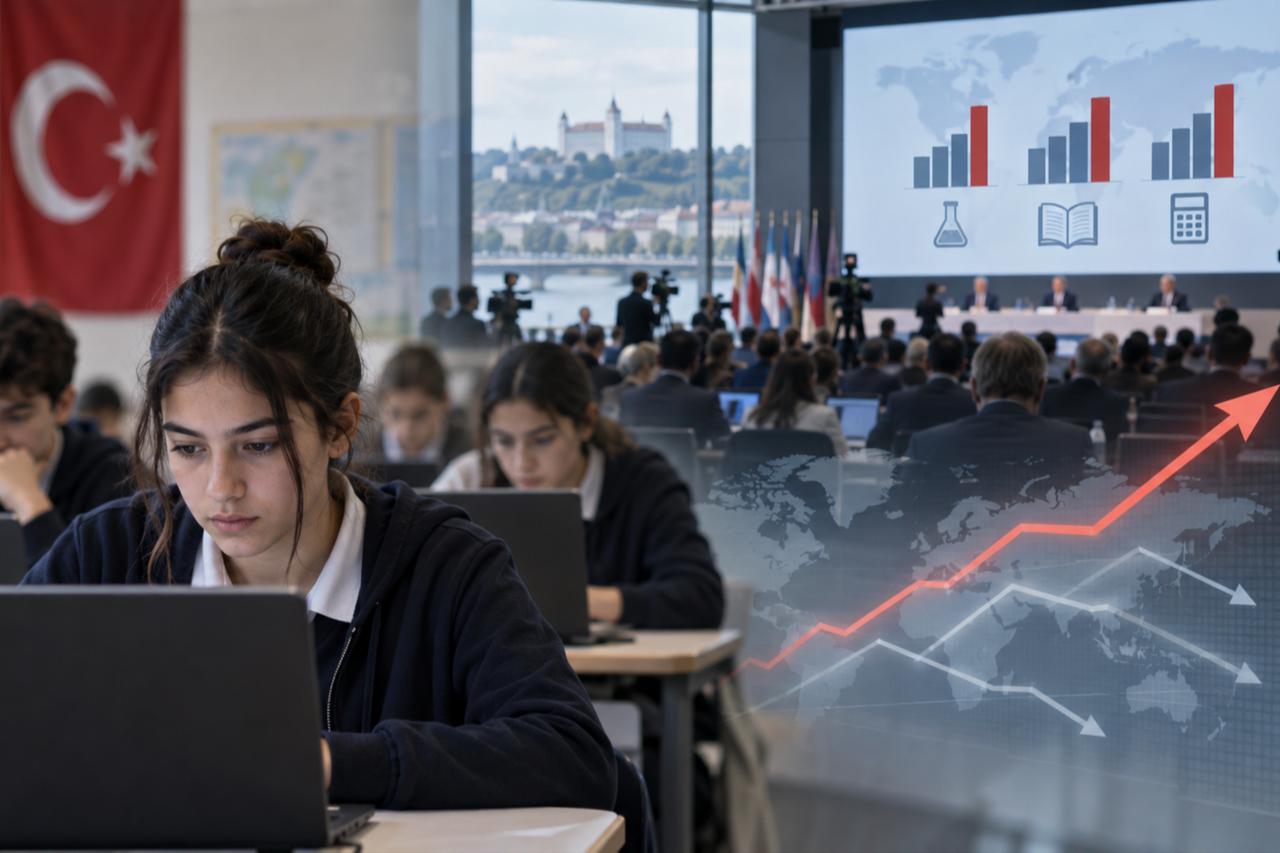


Türkiye improved its results in science, reading and mathematics in the latest PISA assessment, becoming the only OECD member to raise its scores across all three fields over the past decade, according to PISA 2025 results released in Bratislava.
The findings from the Programme for International Student Assessment, or PISA, were announced in the Slovak capital with Turkish Education Minister Yusuf Tekin attending the meeting. The OECD-run study measures the science, reading and mathematics skills of 15-year-old students and is generally carried out every three years.
The 2025 assessment covered 91 countries. In Türkiye, the computer-based testing took place between April 14 and May 16, 2025, involving 7,702 students from 203 schools across 56 provinces.
Türkiye has taken part in PISA since 2003.
Türkiye scored higher in all three subjects than it did in PISA 2022, while average scores across OECD members and participating countries declined.
Its science score rose by 18 points from 2022 to 494, putting Türkiye above the OECD average of 482. Türkiye ranked 19th among all 91 participating countries and 14th among 38 OECD members in science.
Reading also improved, rising by 16 points from 2022 to 472. The OECD average stood at 461, while the overall average across participating countries was 420. Türkiye ranked 18th globally and 13th among OECD members.
In mathematics, Türkiye gained nine points to reach 462, compared with an OECD average of 463 and an overall international average of 429. Its global ranking moved up from 39th in 2022 to 28th in 2025, while its position among OECD countries improved from 32nd to 23rd.
According to the country report, Türkiye recorded the largest increase among OECD members across all three subjects compared with the 2022 assessment.
Science showed Türkiye's largest improvement since it first joined PISA.
Türkiye's science score climbed from 434 in 2003 to 494 in 2025, a gain of 60 points. Over the same period, its reading score increased from 441 to 472, while mathematics rose from 423 to 462.
Because the number of countries taking part grew from 41 in 2003 to 91 in 2025, the report also compared Türkiye's position in relative terms.
Türkiye moved from 35th place in science in 2003 to 19th in 2025, while its reading position improved from 33rd to 18th. In mathematics, it moved from 34th to 28th.
The report said Türkiye was the only OECD member to increase its scores in science, reading and mathematics over the past 10 years.
The results also showed an increase in the proportion of Turkish students reaching the highest performance levels.
In science, the share of top-performing students rose from 4% in 2022 to 7.4% in 2025, slightly above the OECD average of 7.2%.
The proportion increased from 1.9% to 4.2% in reading and from 5.4% to 7.9% in mathematics.
Türkiye also increased the share of students reaching at least the minimum performance level in all three subjects. According to the report, both minimum-level and top-performing student rates reached their highest levels recorded for Türkiye in PISA.
The PISA report also included survey findings on physical and social learning environments, saying Türkiye's indicators in these areas were better than the OECD average.
It also found that improvements related to shortages and qualifications of education staff were stronger in Türkiye than the OECD average, with the country's education system being less affected by staffing shortages and qualification-related problems.


 Set as preferred source
 Set as preferred source


 1 min read
 1 min read