Newsletters




The Middle East is confronting a rapidly intensifying water crisis as climate change, population growth and regional conflict put unprecedented pressure on already scarce freshwater resources. With the region holding only about 2% of the world’s renewable freshwater, governments are increasingly turning to desalination—the process of removing salt from seawater to make it drinkable—to secure long-term water supplies.
Large-scale desalination infrastructure has gradually become the backbone of water security across the Gulf and parts of the wider Middle East. At the same time, geopolitical tensions and attacks on infrastructure are raising new concerns about how fragile this lifeline could become.
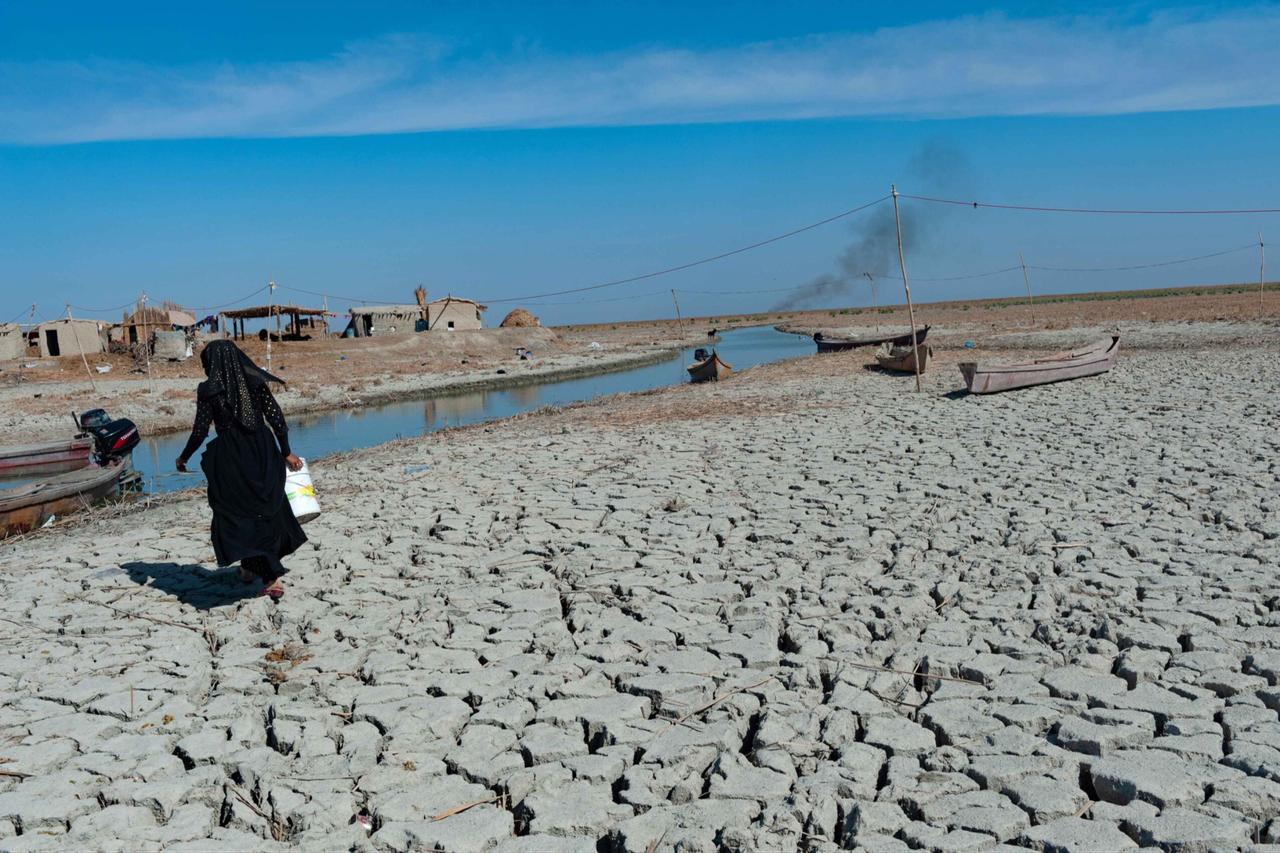
Water scarcity has long shaped life in the Middle East and North Africa (MENA), but climate trends are now intensifying the problem. Rising temperatures, prolonged droughts and growing populations are pushing demand far beyond natural supply.
According to projections from the World Resources Institute (WRI), as much as 83% of the region’s land already faces severe water stress, meaning demand for water significantly exceeds available supply. By 2050, researchers expect the entire population of the region to experience acute water scarcity.
As a result, countries across the region are scaling up technological solutions rather than relying on traditional freshwater sources such as rivers, groundwater and reservoirs.
Desalination has emerged as the most important technological response to the Middle East’s water shortages. A study published in Nature in January found that the MENA region accounts for 41.8% of the world’s operational desalination capacity.
Across roughly 5,000 plants, the region produces nearly 29 million cubic meters of desalinated water every day. Governments are planning to nearly double that capacity between 2024 and 2028, as additional facilities come online.
Investment has followed the same upward trend. Between 2006 and 2024, Middle Eastern countries spent $53.4 billion on desalination infrastructure, accounting for almost half of global spending in this sector. Total investment is projected to climb to around $100 billion by 2030, reflecting growing demand for freshwater worldwide.
In several Gulf countries, desalinated water now provides the majority of drinking water supplies.
Kuwait depends on desalination for roughly 90% of its drinking water, supplied by large plants such as Shuaiba North and South, Az Zour and Subiya.
Oman relies on desalination for around 86% of its water supply, including solar-powered facilities such as the Musandam plant opened in 2025.
Saudi Arabia, one of the world’s largest producers of desalinated water, meets about 70% of its water needs through this technology and operates dozens of plants across the kingdom.
Qatar, Bahrain and the United Arab Emirates also depend heavily on desalination to sustain rapid urban growth and industrial development.
Beyond the Gulf, Israel has become a global pioneer in water reuse and desalination, with major plants such as Sorek and Ashkelon supplying large urban populations.
By contrast, Iran still relies mainly on traditional freshwater sources, with desalination contributing only about 2% of supply, although plans to expand capacity are under discussion as drought conditions continue to strain reservoirs.
Older thermal desalination methods, which rely on heating seawater to separate salt, consume between 14 and 28 kilowatt-hours of energy per cubic meter of water produced. Newer systems using Sea Water Reverse Osmosis (SWRO) require far less energy, typically 4 to 6 kilowatt-hours per cubic meter.
This shift is helping governments reduce costs and integrate desalination plants with renewable energy systems.
Saudi Arabia has become a focal point for technological innovation. In November 2025, the governor of the Eastern Province inaugurated the Toray Membrane Middle East Factory in Dammam, now the region’s largest facility producing desalination membranes — key components used in reverse osmosis systems.
Officials described the project as a way to strengthen regional supply chains and boost industrial self-sufficiency.
Other countries are exploring sustainability initiatives. Oman’s Musandam plant runs on solar power, while Saudi Arabia is working with the US-based company Ebb Carbon to reduce emissions linked to desalination. Modern facilities are also beginning to use artificial intelligence and digital twin technology to optimize energy consumption and predict maintenance needs.
Despite technological progress, desalination remains an energy-intensive and expensive process.
According to World Bank data, producing desalinated water in countries such as Saudi Arabia and the United Arab Emirates costs around $1,50 per cubic meter. Because many plants are linked to electricity generation, rising energy demand can create a feedback loop in which more water production requires more energy, which in turn increases water consumption for cooling processes.
Environmental concerns also remain. Brine discharge, the highly concentrated salt waste left after desalination, can affect marine ecosystems if not managed carefully.
Experts say future water strategies will depend on balancing technological expansion with responsible environmental management.
As desalination becomes central to daily life in the region, these facilities are increasingly viewed as critical infrastructure—and therefore potential targets during geopolitical tensions.
Many Middle Eastern countries rely on a limited number of extremely large desalination plants, often described as “mega-plants.” Damage to even a few of them could disrupt water supplies for millions of people.
A leaked 2008 U.S. diplomatic cable suggested that if major desalination plants in Saudi Arabia were destroyed, the capital Riyadh might require evacuation within a week due to lack of water. A 2010 CIA analysis warned that outages could take months to repair.
Recent regional tensions have already highlighted these risks. Bahrain has accused Iran of damaging one of its desalination facilities, while Iranian authorities reported that a US airstrike struck a plant on Qeshm Island, disrupting water supplies to dozens of villages. Other strikes have reportedly occurred near Dubai’s Jebel Ali port and near Kuwait’s Doha West plant.
Because many desalination plants also generate electricity, known as cogeneration facilities, attacks on power infrastructure can immediately halt water production as well.
Geopolitical analysts say such strikes are sometimes used to pressure governments without triggering full-scale war. However, they also warn that the strategy carries significant risks, as damaging water infrastructure could quickly escalate humanitarian consequences.
Iran’s Foreign Minister Abbas Araghchi recently warned that “attacking Iran's infrastructure is a dangerous move with grave consequences,” following damage to facilities on Qeshm Island.


 Set as preferred source
 Set as preferred source




 6 min read