Newsletters


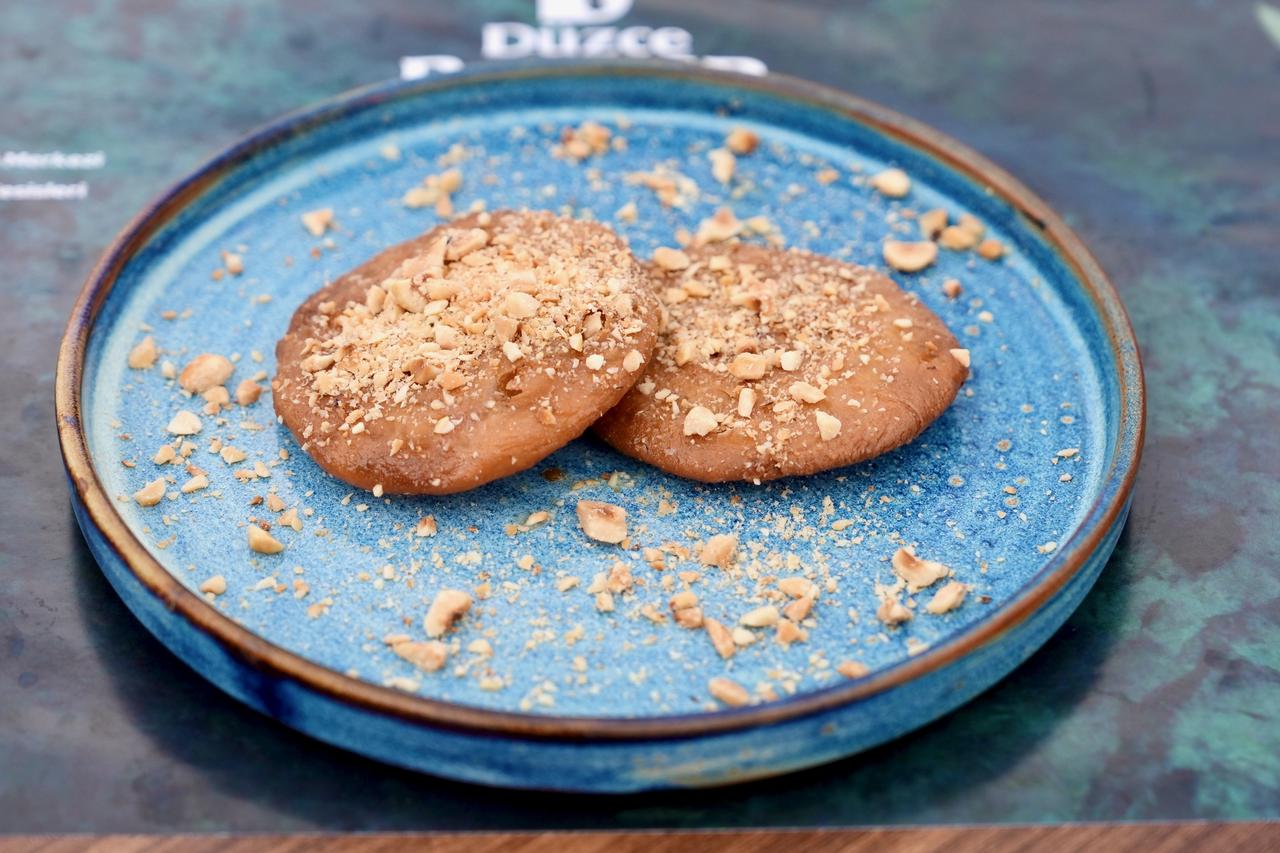


Duzce’s geo-tagged Melenguccegi dessert, a pastry rooted in the culinary heritage of the Manav Turks who migrated from Central Asia and settled in the Akcakoca district, is still being kept alive with its signature filling known locally as “darti,” made by processing milk cream.
Several accounts circulate about how the dessert got its name, reflecting how deeply it is woven into local storytelling. One commonly repeated explanation links it to the old Turkish word “guccek,” used to mean “small bread,” suggesting the name grew out of phrases such as “Melen small bread” and eventually settled into “Melenguccegi.”
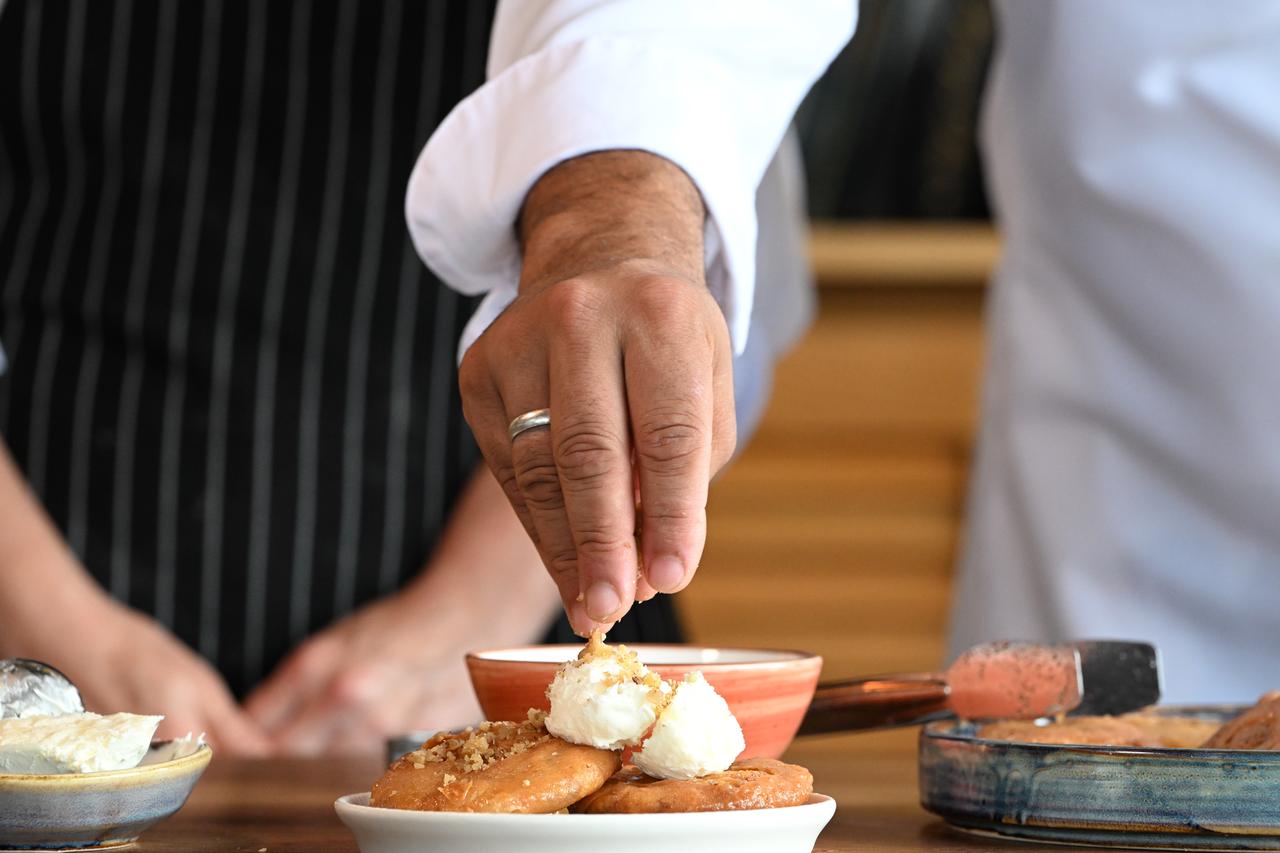

What sets Melenguccegi apart is the “darti” that gives it its distinctive richness. The filling is made by roasting milk cream until it curdles and transforms into a thicker, textured interior.
In the area, that cream has traditionally been obtained from buffalo raised near the Melen River, though cow cream can also be used depending on availability.
The dessert is also known as one of the flavors that made its way into the Ottoman palace kitchen, while continuing to be produced locally as a home-made tradition passed down through generations.
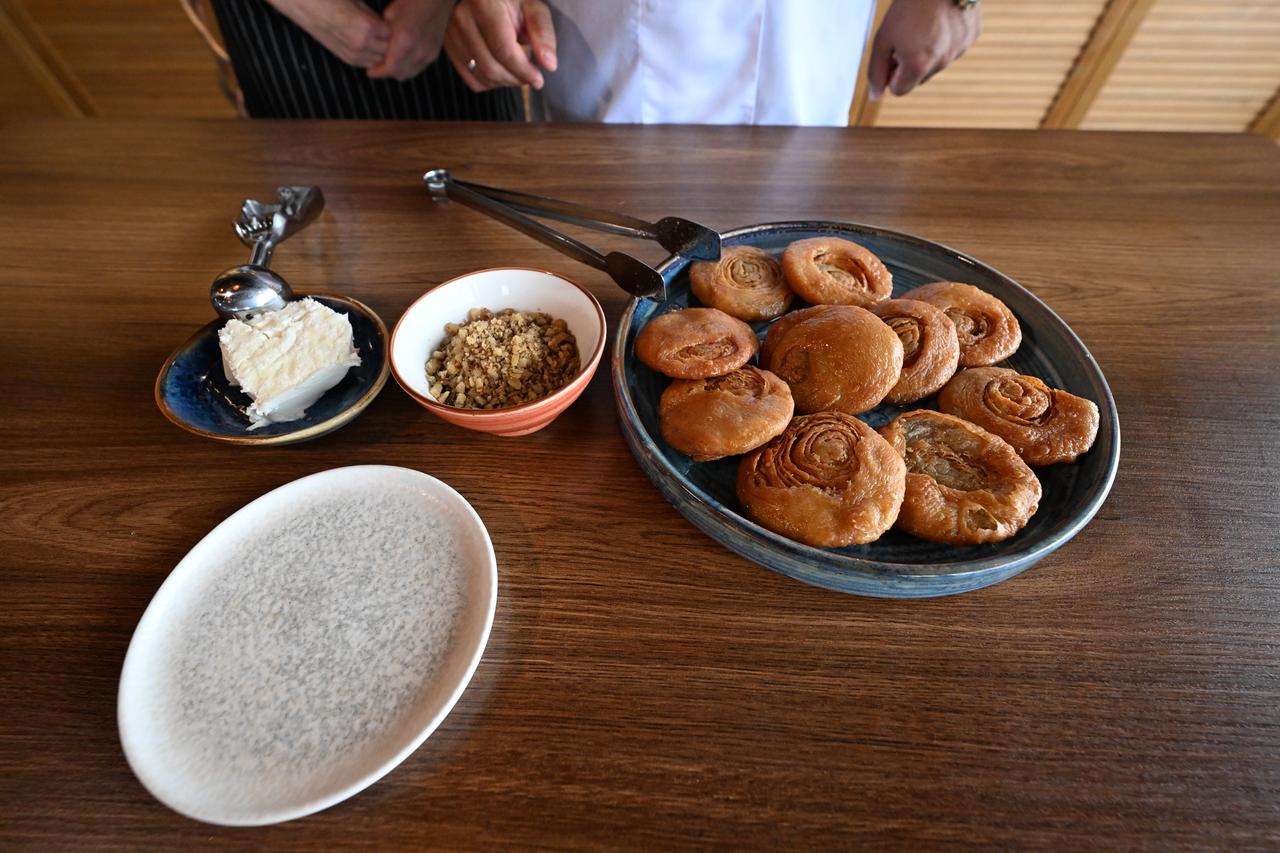
Fedai Turgut, a chef at the Duzce Culinary Arts Center, described Melenguccegi as a taste that Akcakoca’s Manav community has continued to preserve in a traditional form.
He noted that earlier generations are said to have offered it to one another during visits in a dry, unsyruped version, while today it is commonly prepared and served at weddings and religious holidays.
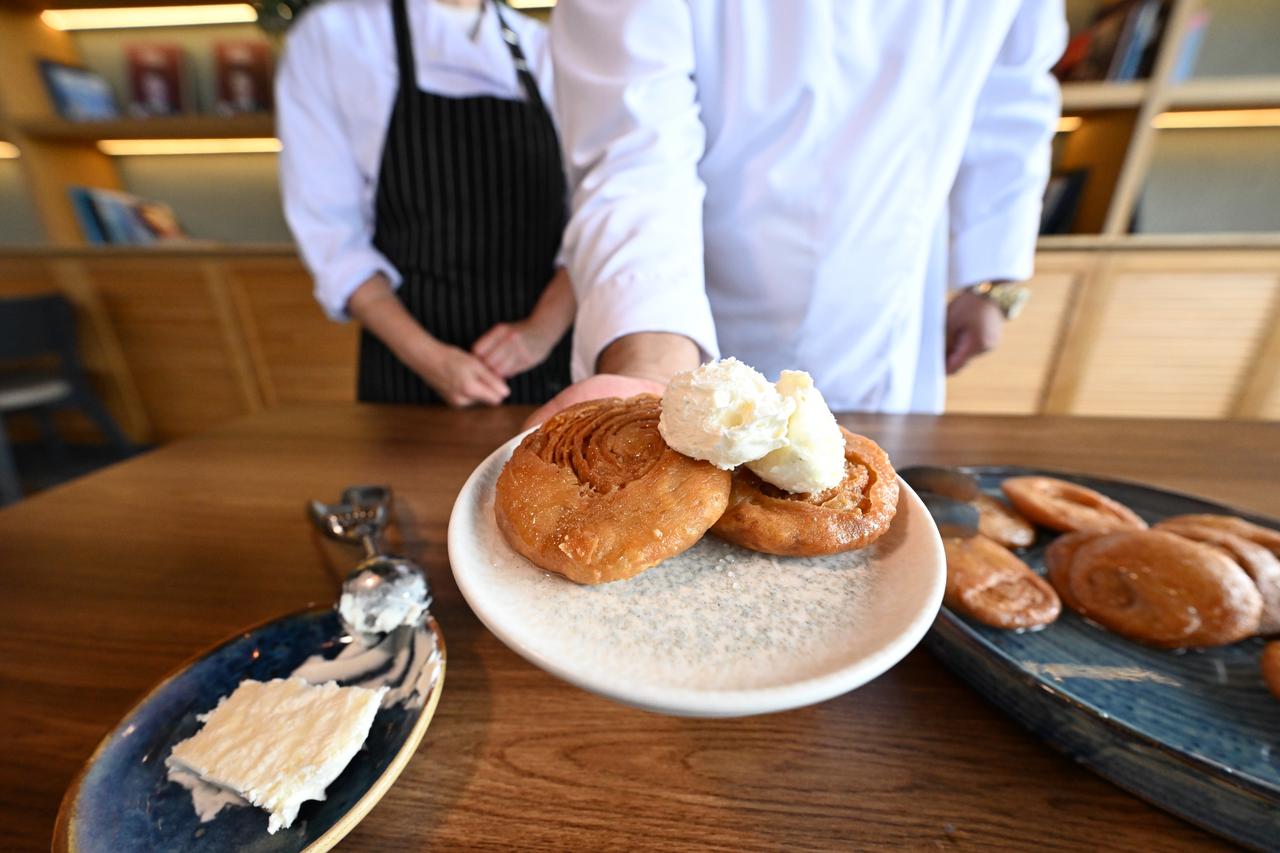
A traditional batch typically serves around 8 to 10 people and combines a soft dough, roasted cream filling, and cooled syrup.
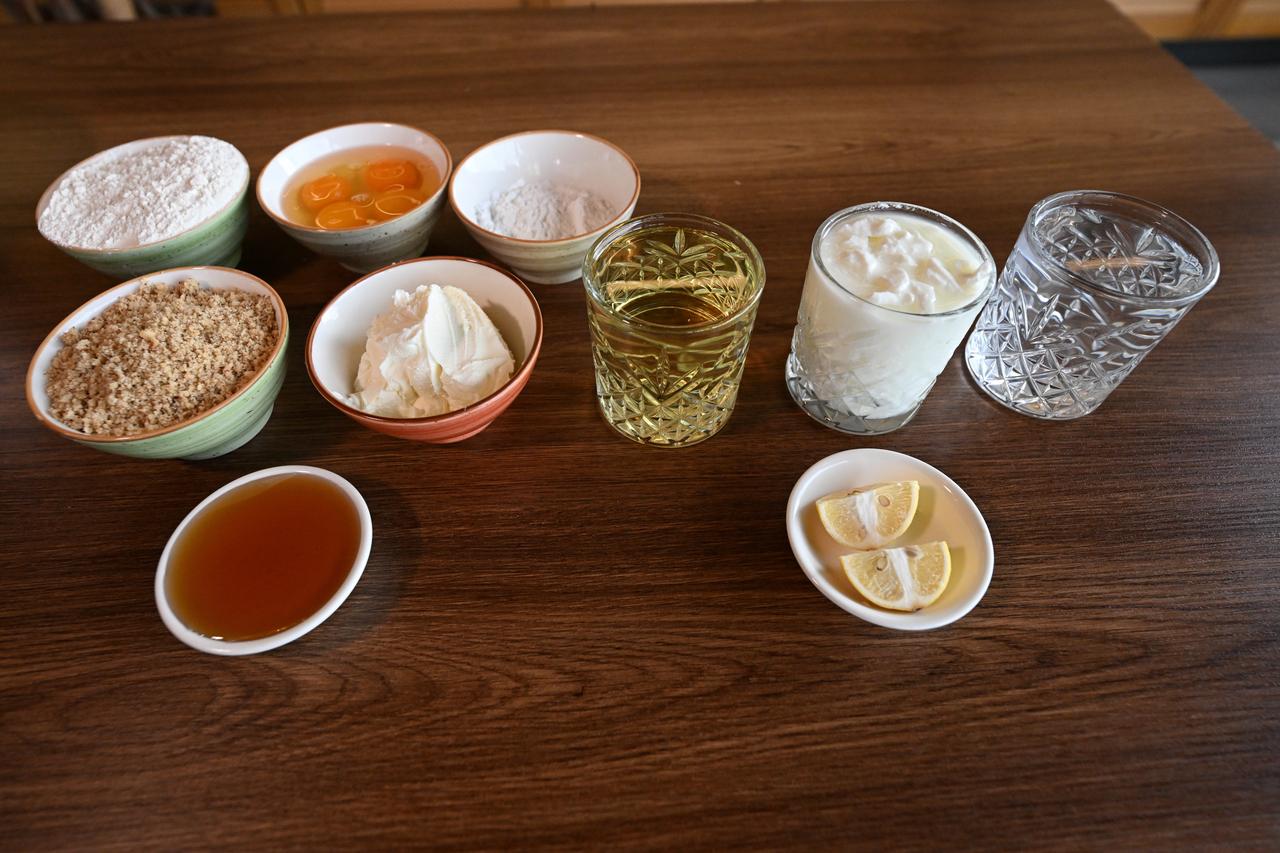
Ingredients
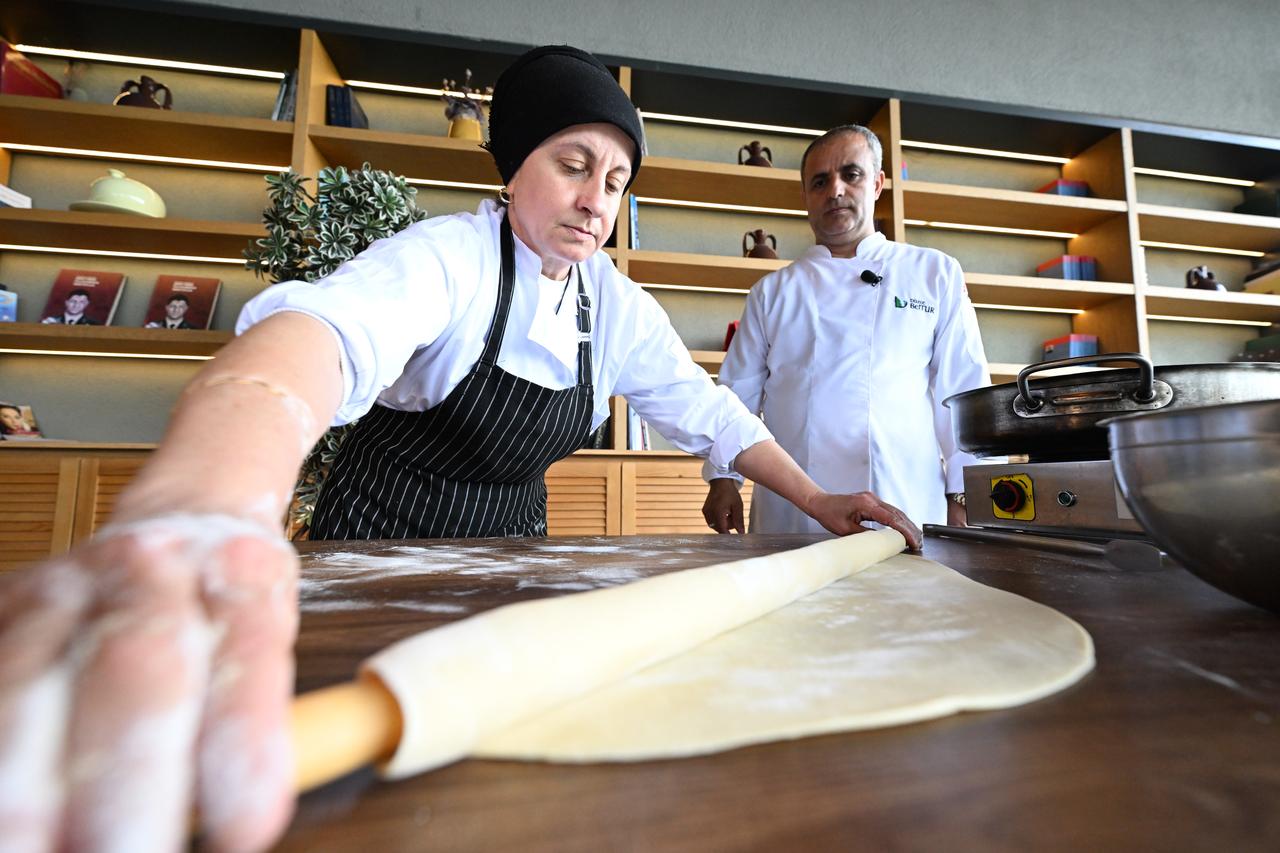
Preparation
First, the syrup is prepared by boiling water, sugar, honey, and lemon together until it thickens slightly, then it is left to cool.
Milk cream is placed in a pan and roasted until it separates and turns into the filling known as “darti,” which is then set aside to cool.
For the dough, eggs, yogurt, oil, flour, baking powder, and vinegar are mixed and kneaded with additional flour and water until a soft, elastic texture forms. The dough is rested to allow it to rise slightly.
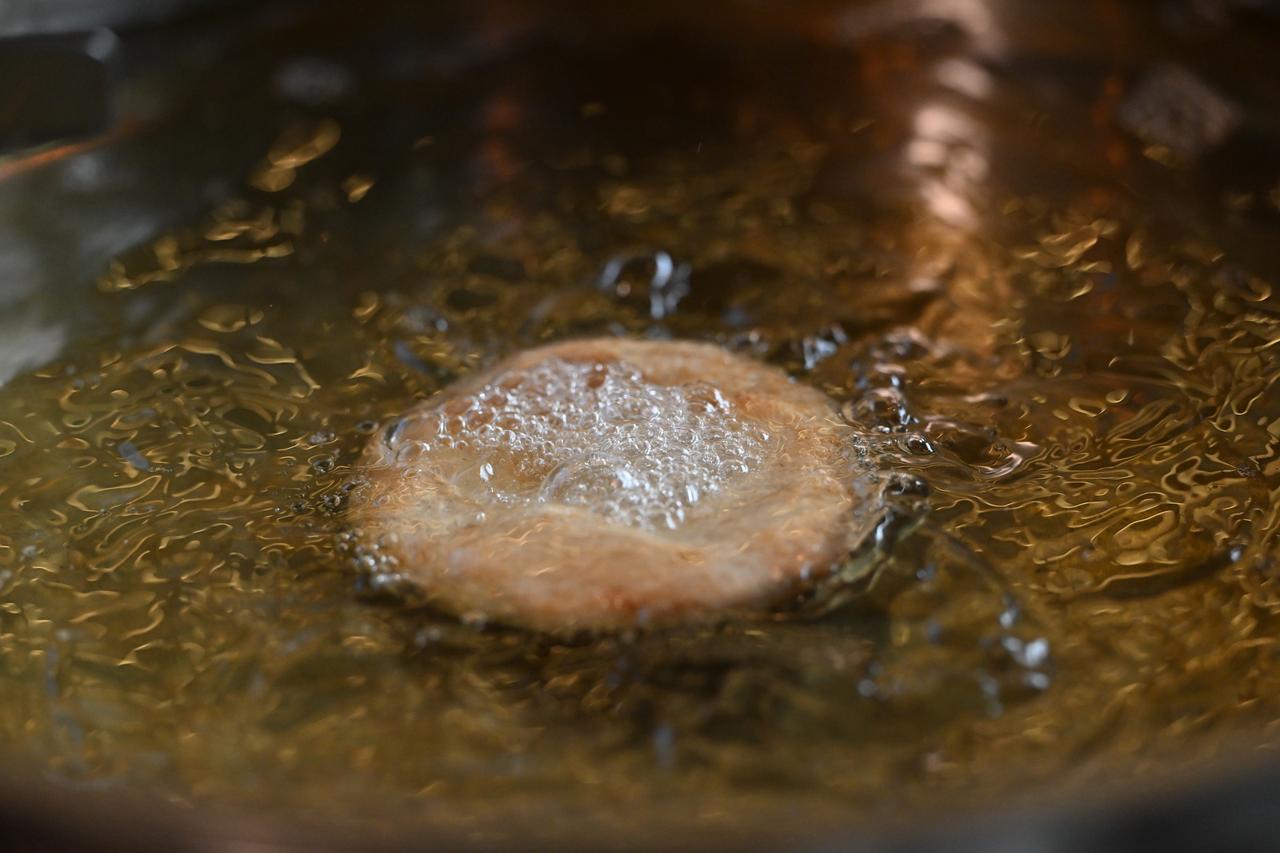
After resting, the dough is rolled out with a rolling pin, filled with the prepared darti and crushed nuts, and shaped into rolls. These rolls are cut into smaller pieces, flattened again into palm-sized rounds, and fried slowly in hot oil over low heat.
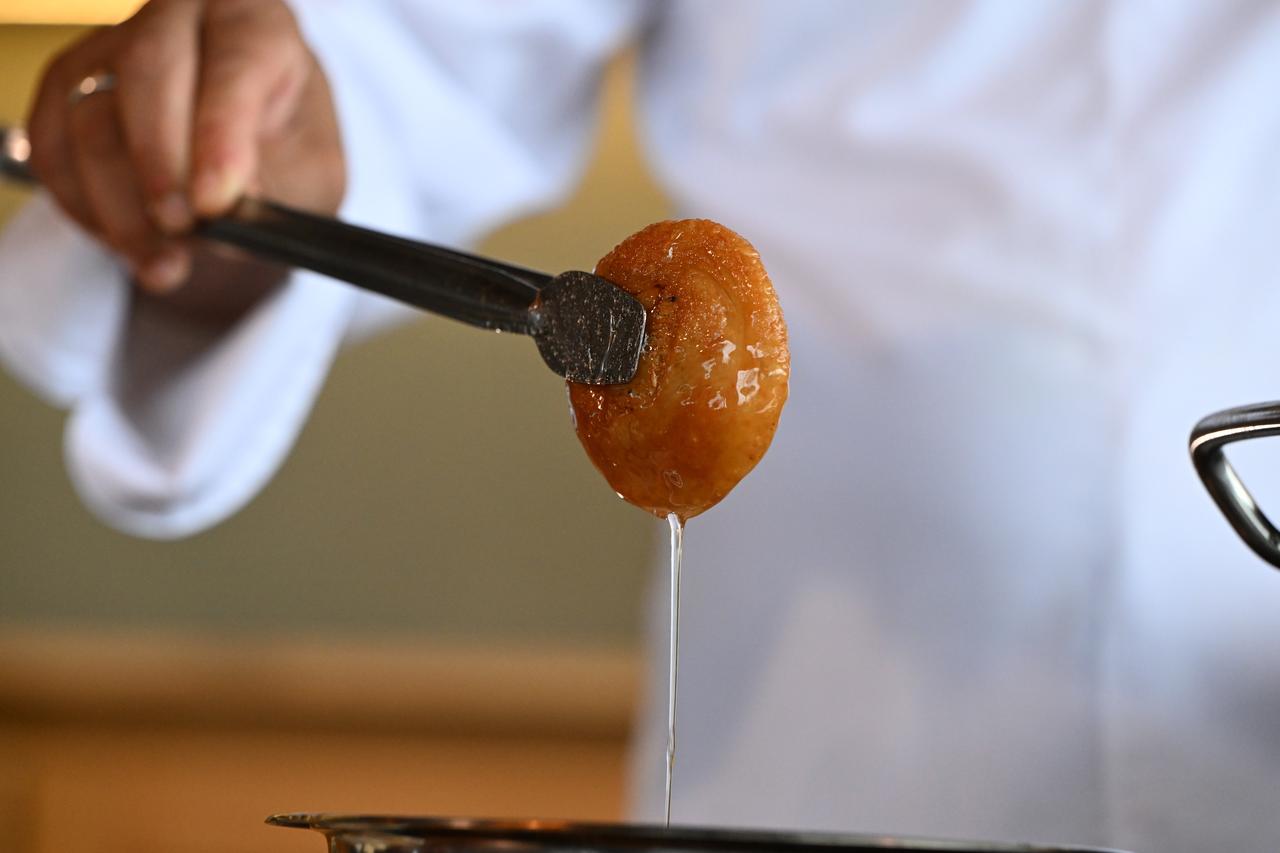
Once cooked, the pastries are removed from the oil and dipped into the cooled syrup so they absorb the sweetness evenly. After soaking, they are transferred to a serving plate, topped with cream, and optionally finished with hazelnuts or walnuts before serving.


 Set as preferred source
 Set as preferred source


 2 min read