Newsletters


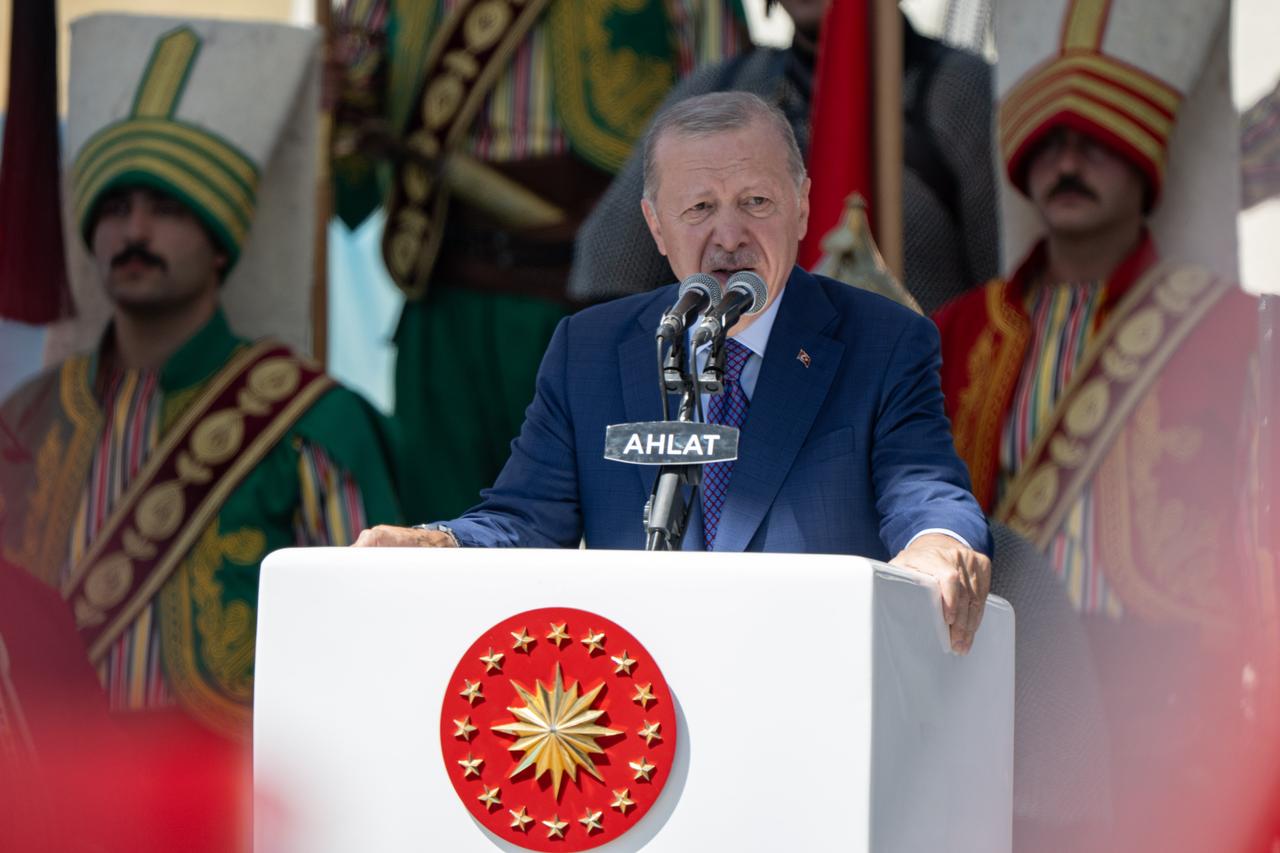


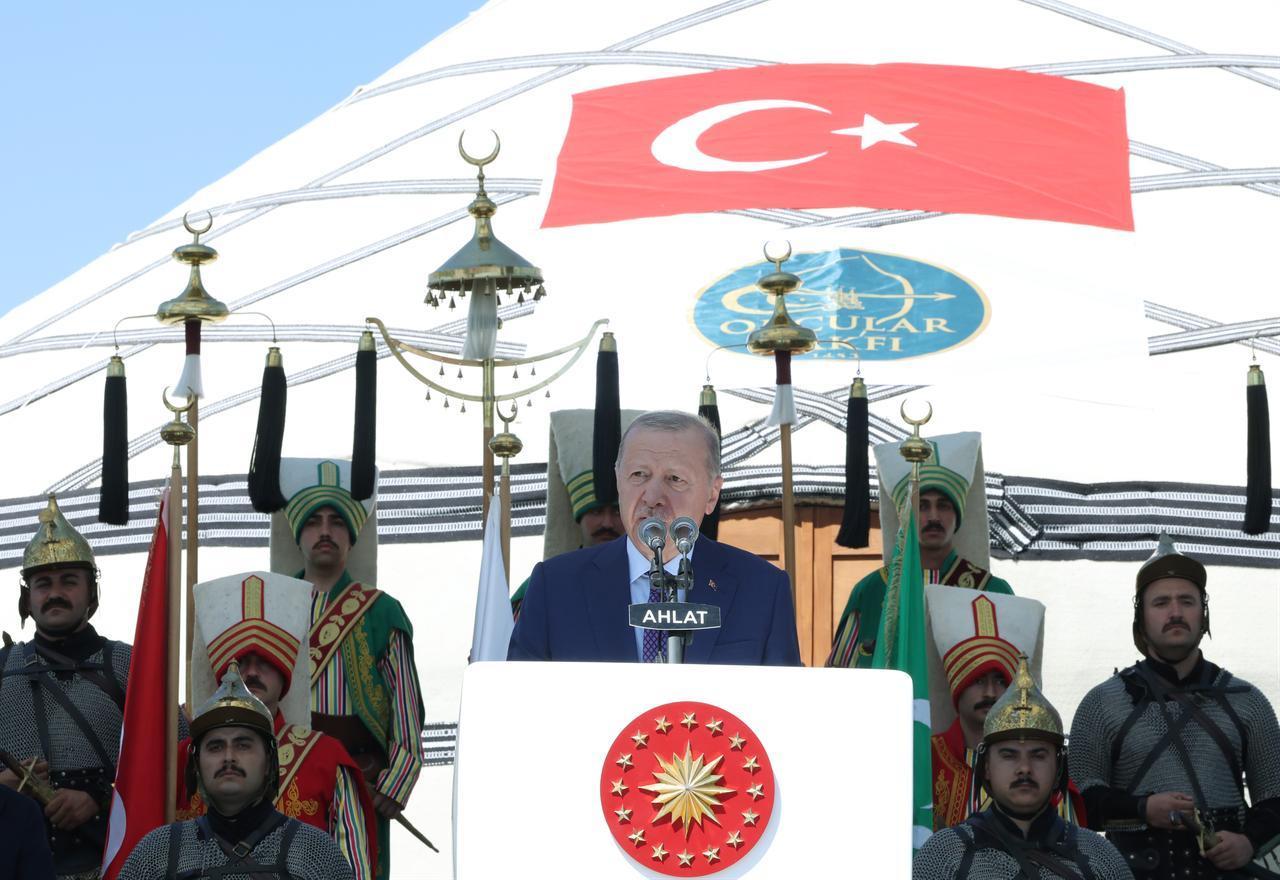
President Recep Tayyip Erdogan said Tuesday that Türkiye would continue on its path toward unity, peace and stability despite efforts to disrupt the country and the wider region, speaking at events in Ahlat marking the 955th anniversary of the Malazgirt Victory.
The speech was President Erdogan's first public address since Israel's Aug. 18 air attacks on the Abu al-Duhur airbase in Idlib, Syria.
The Turkish president did not mention Israel by name during the speech.
The Malazgirt victory of 1071 accelerated the decline of the Byzantine Empire, paving the way for both the Ottoman Empire and the modern Republic of Türkiye. It is considered the start of the Turks' entry into Anatolia.
President Erdogan said Türkiye was aware of what he described as efforts targeting the country, its people and regional peace.
"No matter what you do, you cannot turn us away from our path, and you cannot prevent us from embracing each other as brothers. We know very well what kind of calculations you are making. We know very well the dirty hands reaching toward our homeland and our nation, and toward the peace of our region," he said.
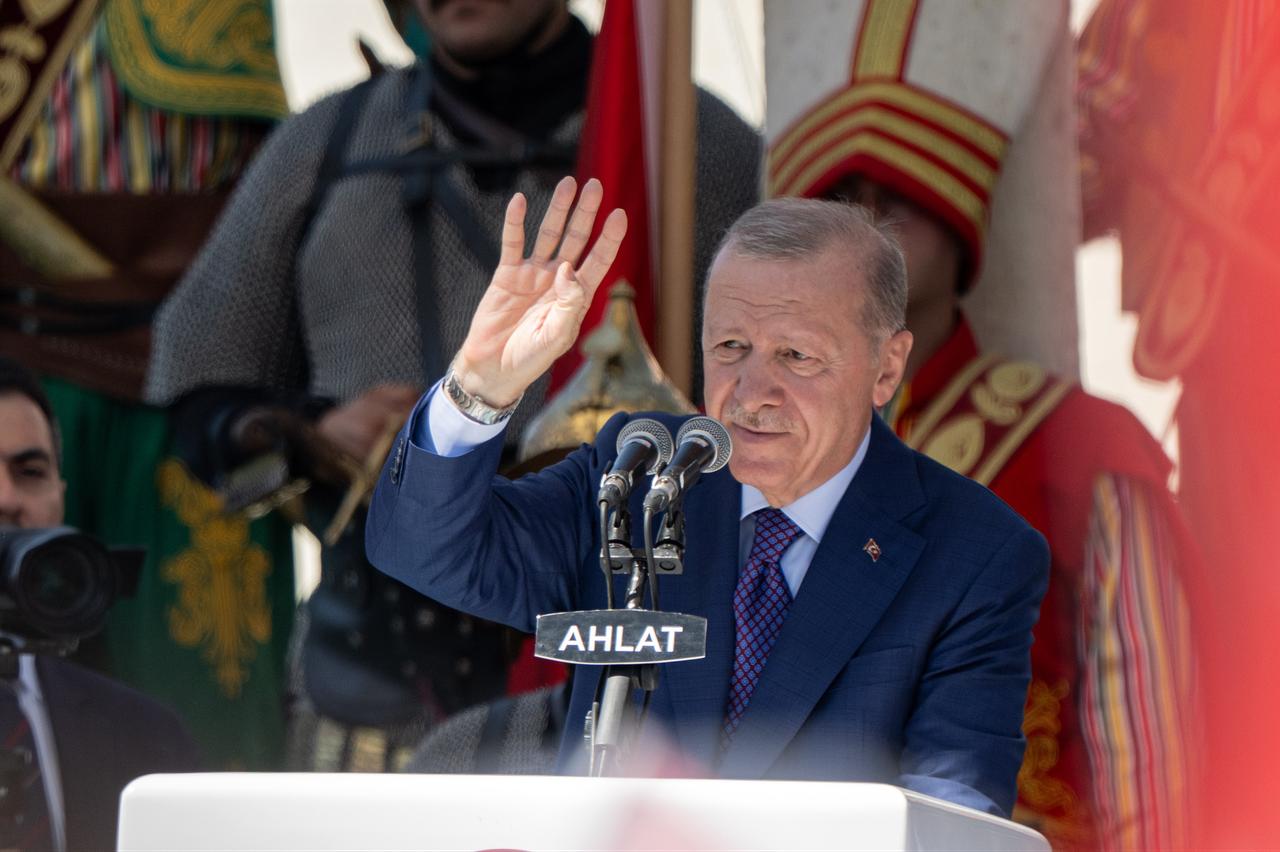

President Erdogan said Türkiye had its own response to those seeking to undermine regional stability.
"If everyone has a calculation, we also have a calculation and a plan. Most importantly, Allah, the Lord of all worlds, also has a plan, and that plan will ultimately prevail," he said.
He said those profiting from instability would not succeed.
"Opportunists who profit from terrorism will lose. Blood merchants and genocidaires will lose. Those who want to plunge our region into instability will lose. The winners will be the front of humanity, brotherhood, peace and stability, the winner will be the Turkish nation, with its 86 million citizens," the Turkish president noted.
He added: "Let no one have any doubt, the dawn of a great and powerful Türkiye has broken, and the construction of the Turkish Century has begun."
President Erdogan tied his remarks to Türkiye's domestic "terror-free Türkiye" initiative, first signaled from Ahlat two years ago.
"When our terror-free Türkiye process, which we signaled from Ahlat two years ago, reaches its goal, Allah willing, new doors will open before our nation. Along with our brotherhood, our economy will also grow stronger. Alongside our prosperity, the resilience of our home front will increase. Syria and Iraq, in particular, along with our near neighborhood, will finally attain the climate of peace and stability they have longed for over the years," he stated.
He said Türkiye and all "brotherly peoples" in the region would benefit together.
"As Turks, Kurds and Arabs, you cannot prevent our embrace as brothers," Erdogan said.
Erdogan's remarks came as Türkiye advances the legislative framework underpinning the "terror-free Türkiye" process.
The Law on Strengthening National Solidarity and Social Integration, passed by Parliament with 467 votes in favor, nearly four-fifths of the chamber's 600 members, entered into force on Aug. 18 after publication in the Official Gazette.
The law sets out procedures for suspending investigations, prosecutions and the enforcement of sentences linked to the PKK/KCK terrorist organization and affiliated groups, once security institutions confirm the organization has ended its activities and surrendered its weapons, and the National Security Council issues a formal determination to that effect.
Prosecutions can be suspended for five years for offenses punishable by up to 15 years in prison, and for 10 years for more serious offenses, though the law explicitly excludes intentional homicide committed as part of terrorist activity and does not constitute an amnesty or terminate criminal liability.
On Aug. 24, Türkiye's Monitoring and Evaluation Board, chaired by Vice President Cevdet Yilmaz, held its inaugural meeting at the Presidential Complex in Ankara and established four subcommissions to coordinate implementation.
The Legal and Judicial Affairs Coordination Subcommission, the Monitoring and Assessment Subcommission, the Social Compliance and Integration Subcommission, and the Disarmament and Strategic Coordination Subcommission.
The board's inaugural meeting was attended by the justice, foreign affairs, interior and national defense ministers, along with the presidential chief of administrative affairs, the head of the National Intelligence Organization and the secretary-general of the National Security Council.


 Set as preferred source
 Set as preferred source


 2 min read
 1 min read