

 Newsletters


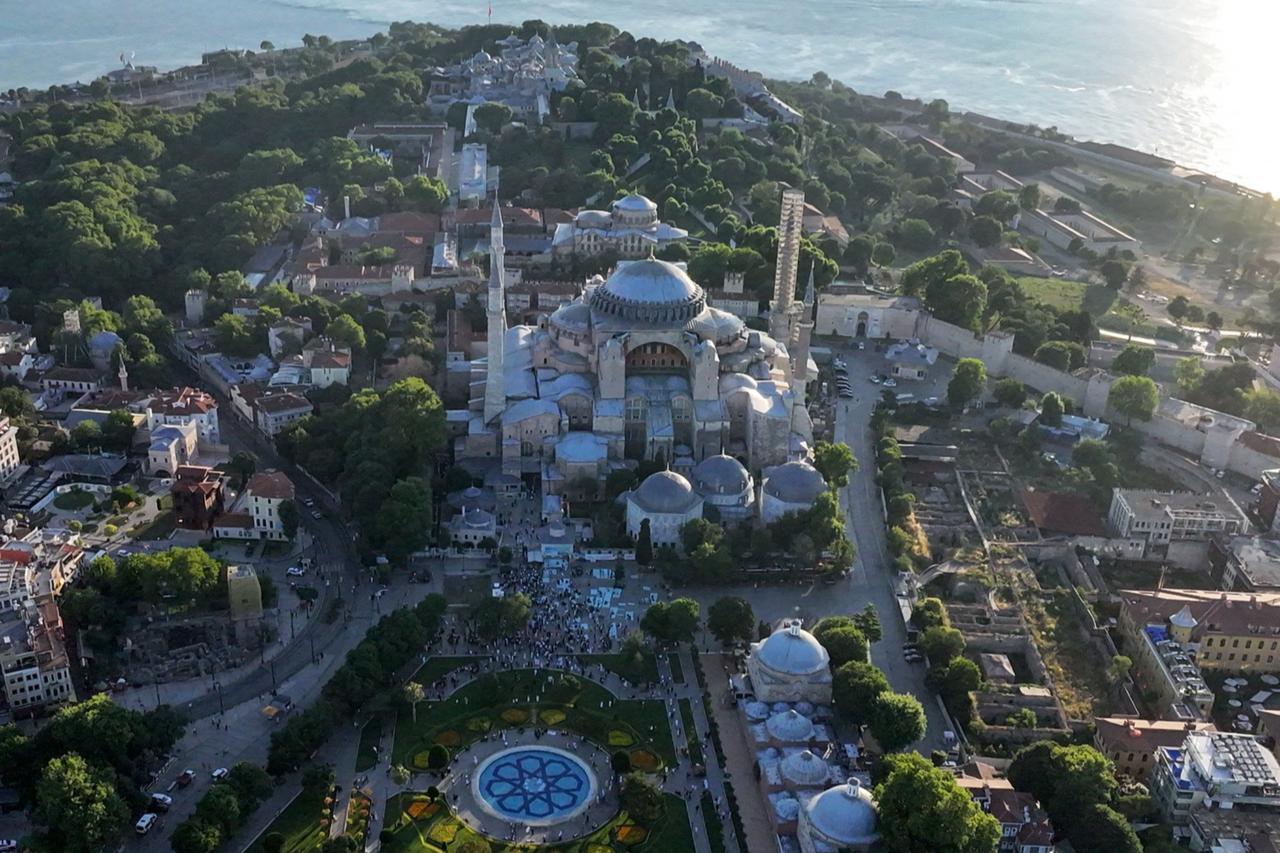
Two tourists from Greece were detained after an incident inside Hagia Sophia Grand Mosque, where they reportedly displayed a flag, featuring the Byzantine double-headed eagle symbol, during a visit.
According to footage shared by NTV, the individuals entered the mosque as part of a tour group on April 9 in the afternoon. After passing through security checks, including X-ray screening and physical inspection, they moved into the upper gallery section, which is open to visitors.
At that point, one of the tourists took out a flag that had been hidden inside his jacket and unfolded it. After posing for a photograph, he handed the flag to another person in the group, who also posed.
Security personnel quickly noticed the situation and intervened while another individual in the group appeared to prepare to display the same flag.
The entire sequence was captured by the mosque’s security cameras, showing the moment the flag was revealed and the subsequent response by authorities.
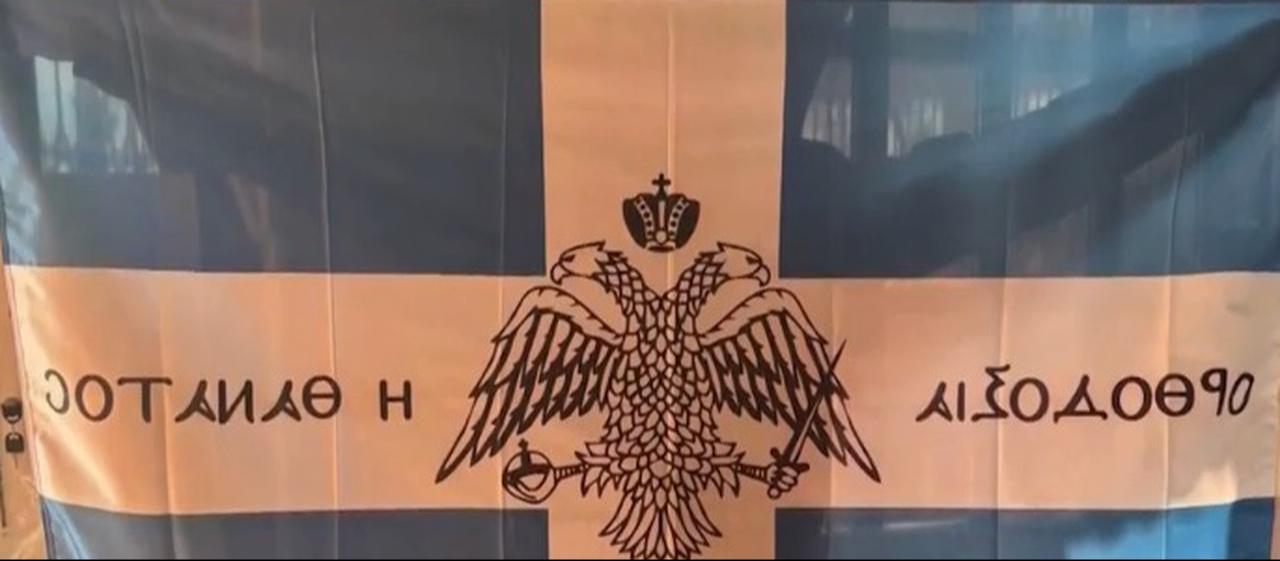

Reports said the flag featured a double-headed eagle, commonly associated with Byzantine symbolism, along with a written message that read: “Orthodoxy or death!”
Police detained two individuals, identified as 35-year-old Emmanouil Michel and 42-year-old Konstantinos Mazi. They were later referred to the courthouse in Istanbul and formally arrested on charges of insulting a segment of the public.
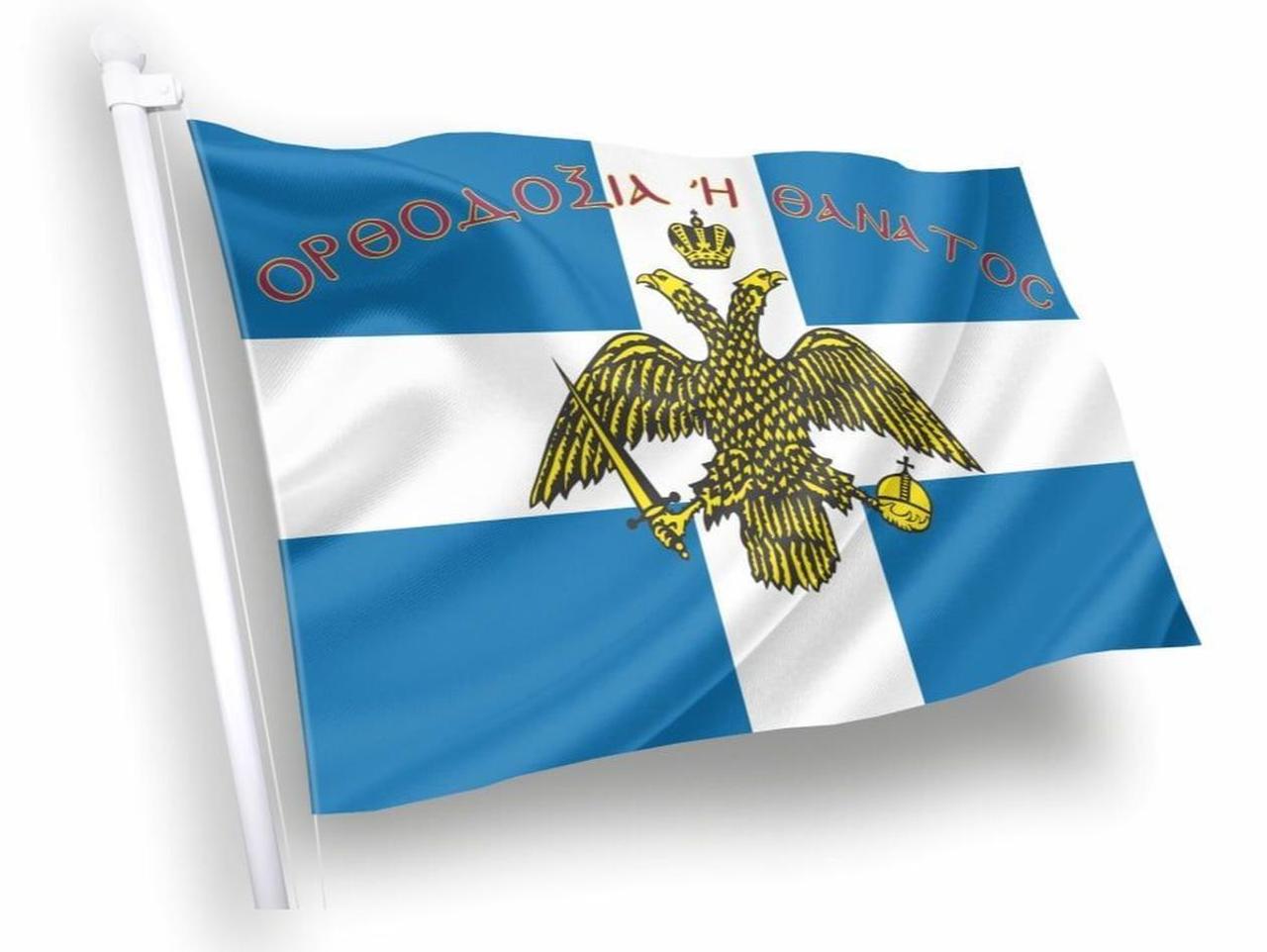
The slogan “Orthodoxy or death!” carries a highly charged historical and political meaning that goes beyond a simple religious expression. First used in 1972 by the Esphigmenou monastery as a protest against dialogue between the Eastern Orthodox Church and the Vatican, it later spread into post-Soviet Russian discourse, where it was adopted by nationalist and hardline Orthodox groups.
Over time, it became associated with exclusionary and extremist interpretations of religious identity, prompting strong criticism from within the Orthodox world itself, including from Patriarch Kirill. In 2010, a Moscow court formally classified the slogan as extremist and added it to Russia’s Federal List of Extremist Materials, underscoring its controversial and politically sensitive nature.
Following their detention, the suspects were transferred to the Istanbul Justice Palace, where judicial proceedings led to their arrest.
Authorities continue to handle the case in line with the charges brought against the individuals.


 Set as preferred source
 Set as preferred source


 1 min read
 1 min read


