Newsletters


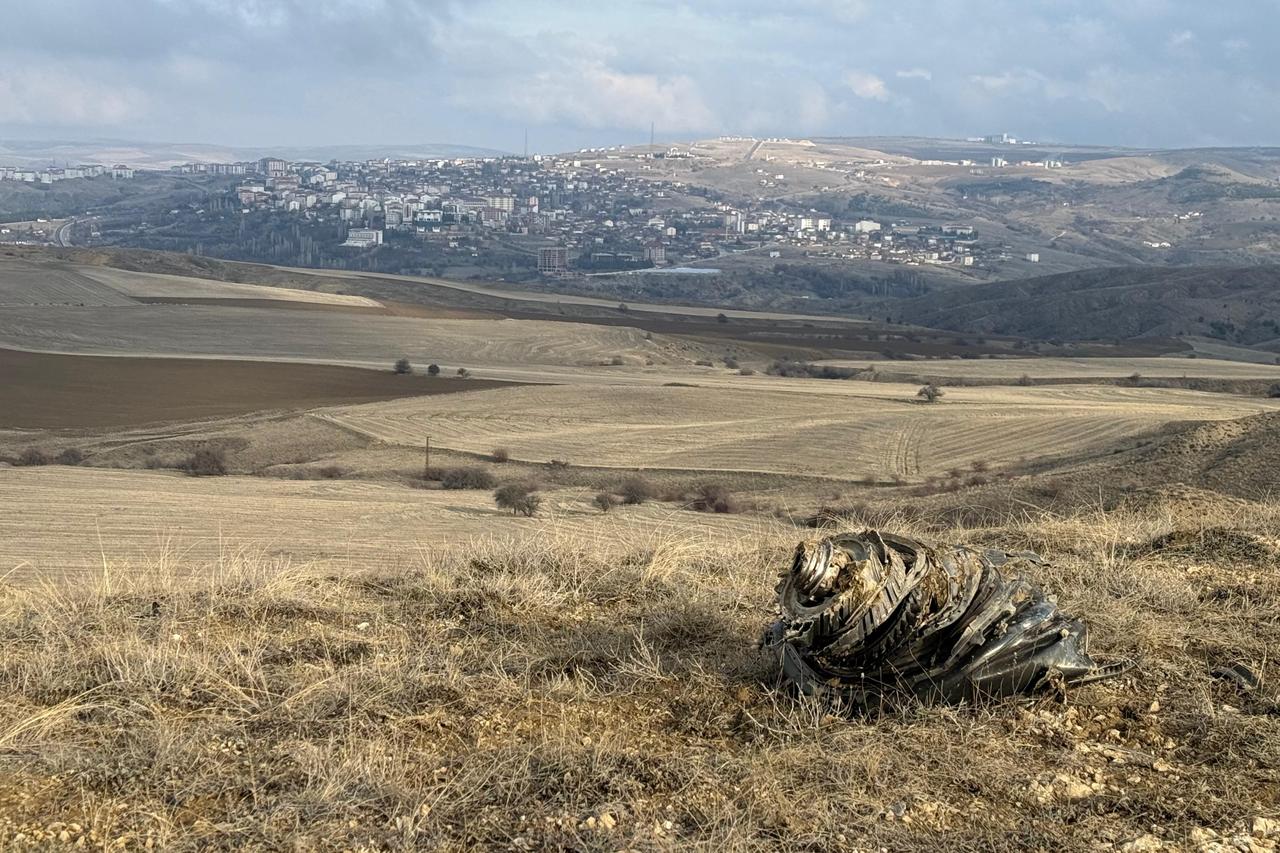


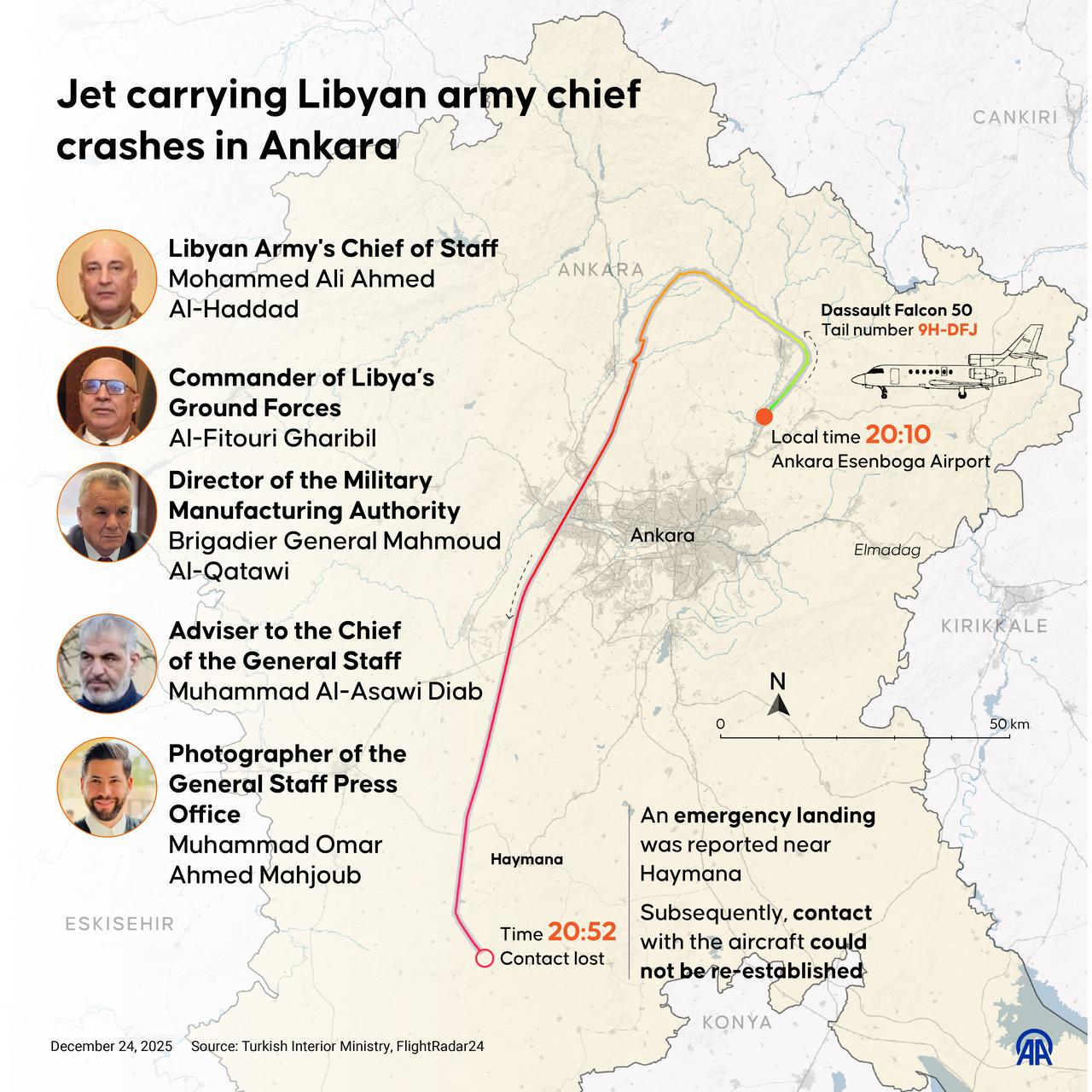
The Falcon-50 aircraft carrying Libyan military officials declared an emergency due to an electrical malfunction before crashing near Ankara on late Tuesday, the Turkish Ministry of National Defense (MoND) said Thursday.
"The cause of the accident is being thoroughly and meticulously examined in all aspects by our state's relevant institutions in cooperation with Libyan authorities," the ministry said at a weekly press briefing held at Aselsan.
"The aircraft, which had taken off from Ankara bound for Tripoli, initiated return procedures to Esenboga Airport after declaring the emergency," the ministry said.


When radar contact with the aircraft was lost, the Air Force Command immediately dispatched two unmanned aerial vehicles (UAVs), one CN-235 aircraft and one search and rescue helicopter to the area, according to the ministry.
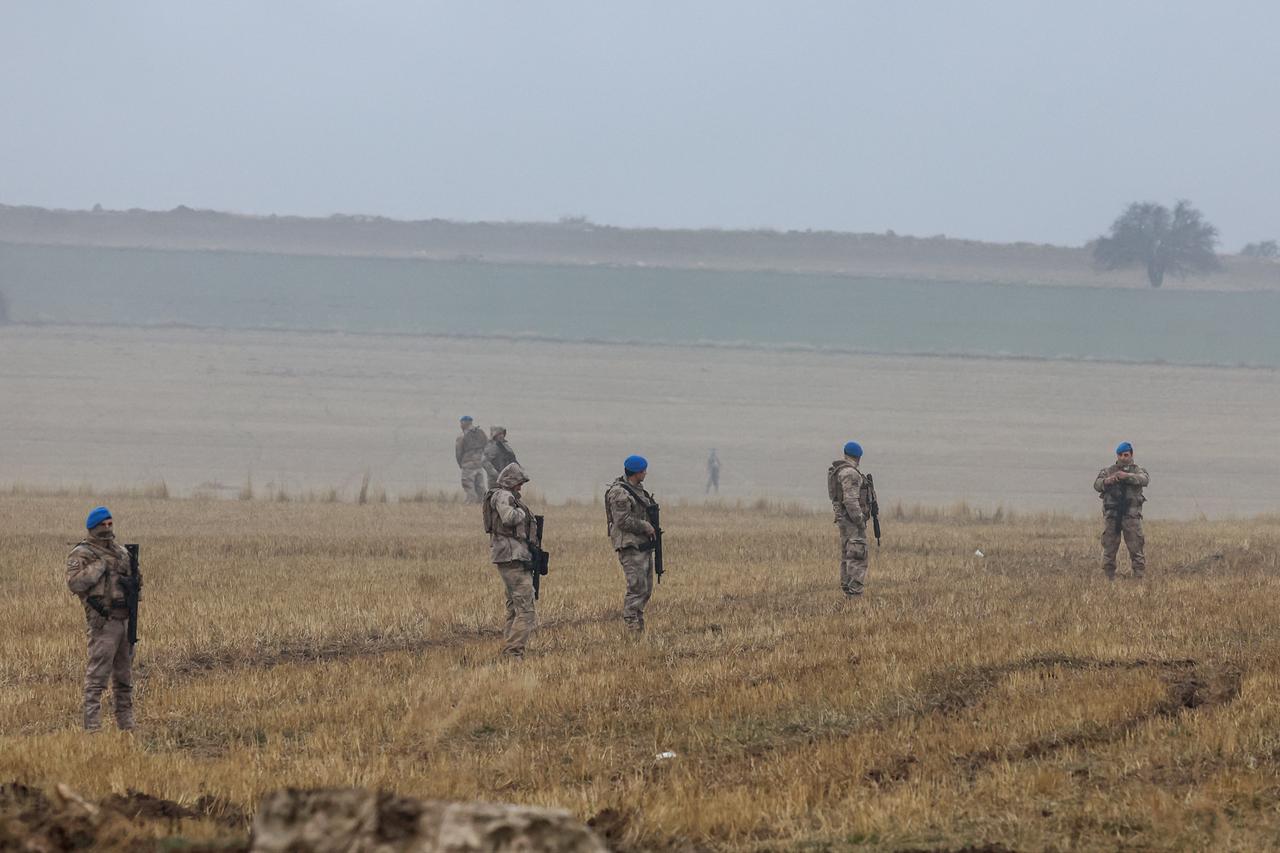
"As a result of the search efforts, the wreckage of the aircraft was found in the rural area of Ankara's Haymana district," the ministry said.
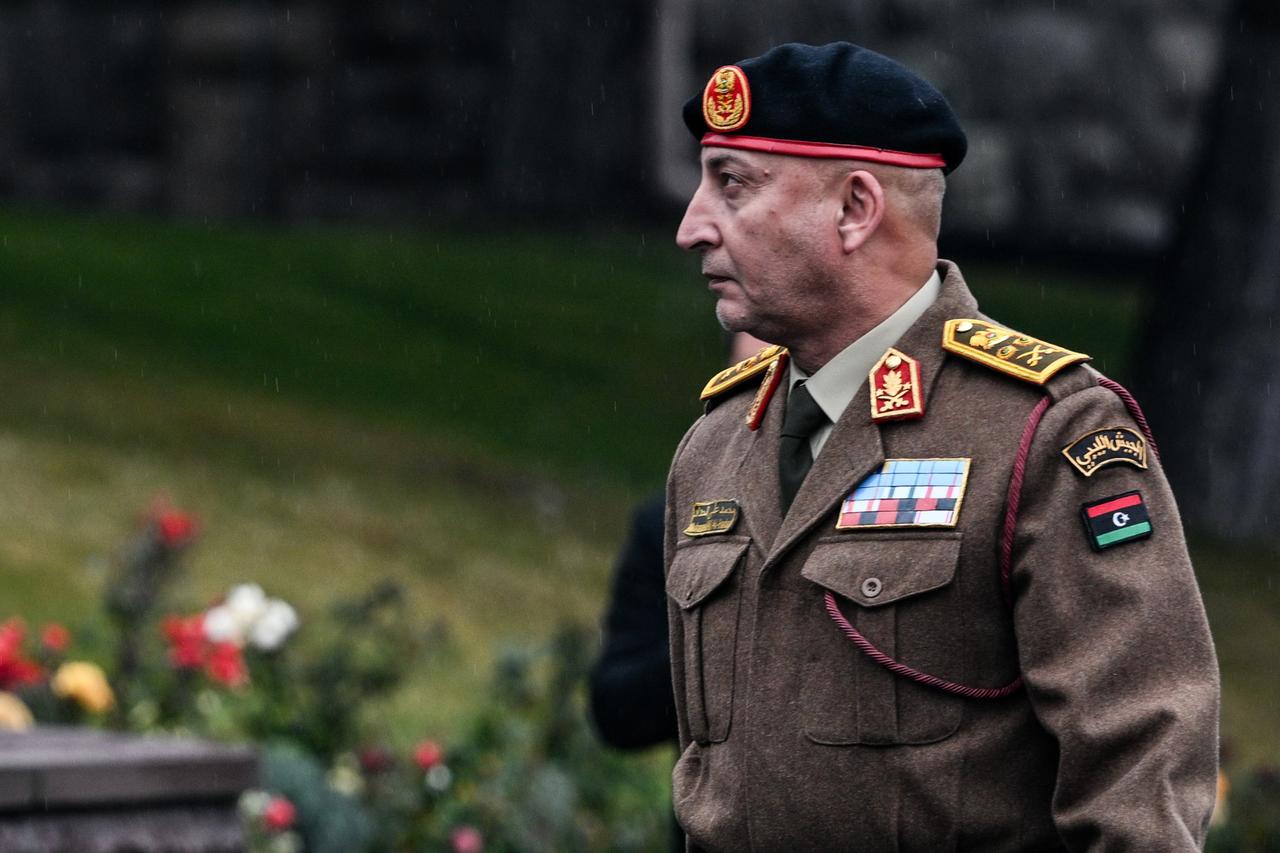
"It was determined that the Libyan Chief of Staff, the Land Forces Commander, the accompanying military delegation members and the entire flight crew on the aircraft lost their lives," the statement added.
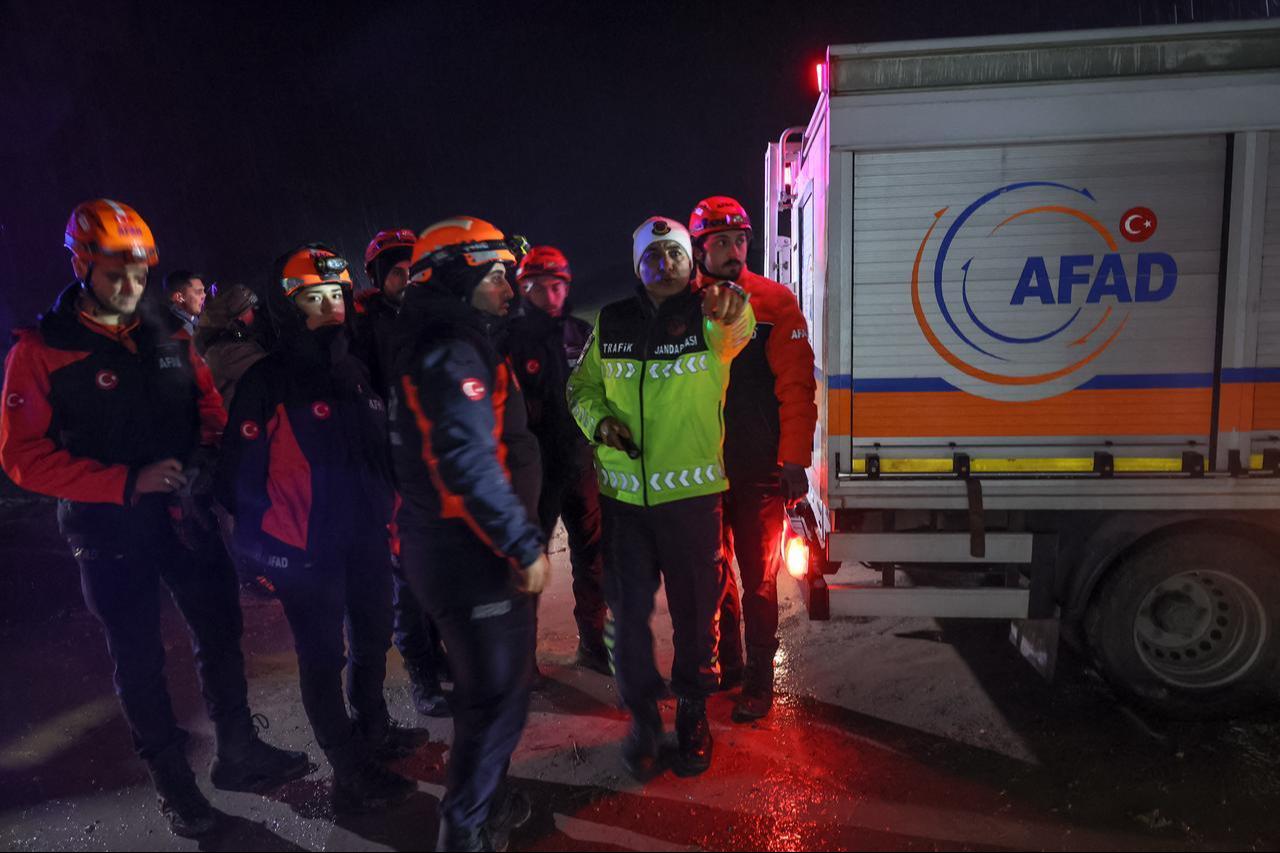
The flight's black box was recovered at the crash site, and the technical examination process has been initiated, the ministry said.
On Dec. 24, the Turkish Chief of General Staff, Force Commanders and the Gendarmerie Criminal Department head conducted inspections at the crash site together with an official delegation from Libya.
The ministry offered condolences: "We once again pray for Allah's mercy on the Libyan Chief of Staff, Land Forces Commander, accompanying military delegation members and flight crew who were martyred in this tragic aircraft accident, and extend our condolences and patience to the friendly and brotherly Libyan people."
The crash killed eight people:
The French Embassy told Türkiye Today in an exclusive statement that it has "no confirmation" regarding the reported French crew members and is "in contact with Turkish authorities."
In response to questions about recent drone incidents, the ministry said an unmanned aerial vehicle (UAV) approaching Turkish airspace from the Black Sea direction on Dec. 15 was tracked by F-16s and shot down with a controlled intervention in a safe zone.
"The wreckage of the UAV destroyed in the air has not yet been reached because it broke into very small pieces and scattered over a wide area," the ministry said, adding that UAVs found crashed in Balikesir and Kocaeli provinces are being examined.
"Turkish airspace control is provided on a 24/7 basis with a multi-layered architecture including radars, electro-optical sensors, land, sea and air elements, and the NATO integrated structure. There is no weakness in this regard," the ministry noted.
"Small, low-altitude and low radar cross-section UAVs are a new generation threat faced not only by Türkiye but by all states, including European countries," the statement added.
"As a result, these incidents are a reflection of the increased UAV use due to the ongoing war between Ukraine and Russia, rather than an air defense weakness. Türkiye is taking additional measures against UAVs, continuously developing its air defense capacity with national projects and allied integrations, and continues to ensure airspace security with determination," the defense ministry concluded.


 Set as preferred source
 Set as preferred source


 1 min read

 1 min read