Newsletters


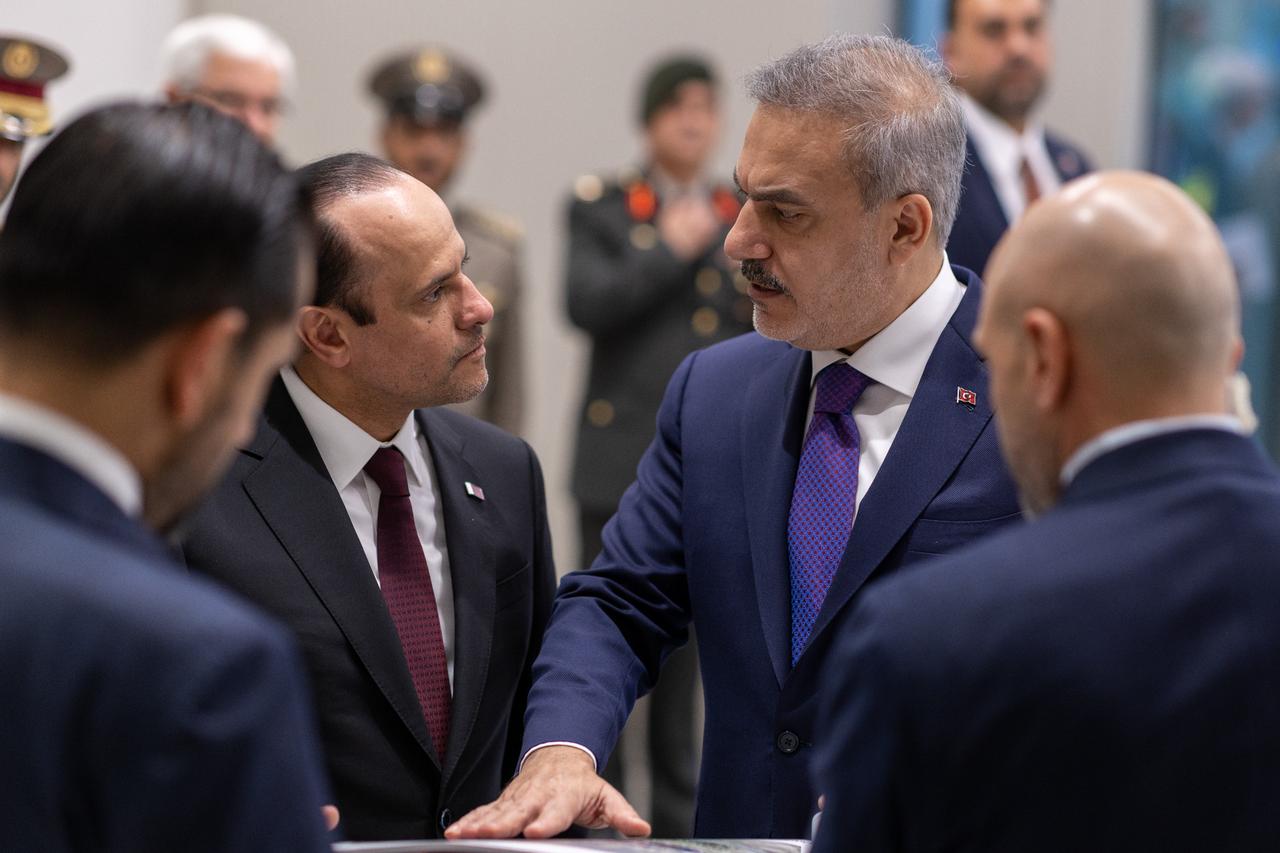
Turkish Foreign Minister Hakan Fidan stated Saturday that global trade routes must be protected from conflict and political pressure, arguing that infrastructure alone cannot guarantee connectivity and that the time has come for Türkiye to consider a global initiative to strengthen it.
"Routes must be protected. Conflicts must be contained. Political disputes must not paralyze the systems that sustain global economies," he said at the TRT World Forum 2026 in Istanbul.
"That is why Türkiye uses these instruments. It seeks to ensure sustainable diplomacy and to protect regional ownership," he noted.
The top Turkish diplomat spoke at a session titled "The New Geopolitics of Connectivity: Sea Lanes, Chokepoints and Corridors" at the 10th edition of the forum, held under the theme "A Centerless World: Who Leads When the Rules No Longer Apply?"
"A shipping route cannot become a war route, as we have seen in the Black Sea. An energy line should not be used as a tool of political pressure. A single chokepoint can disrupt supply chains and affect economies thousands of kilometers away," FM Fidan said.
He said growing global connectivity has increased chokepoints while energy and transport routes are shrinking, creating "a structural vulnerability."
"Countries will naturally try to protect their access to key routes, markets and resources. When this access becomes unreliable, dependency risks will give way to insecurity and competition. We must not allow this," Türkiye's top diplomat noted.
FM Fidan also said Türkiye has taken responsibility for regional political dynamics, adding: "Israel’s expansionist policies, the continuation of its aggression against its neighbors, and when you look at the massacre in Gaza, unfortunately these are issues not given enough importance."
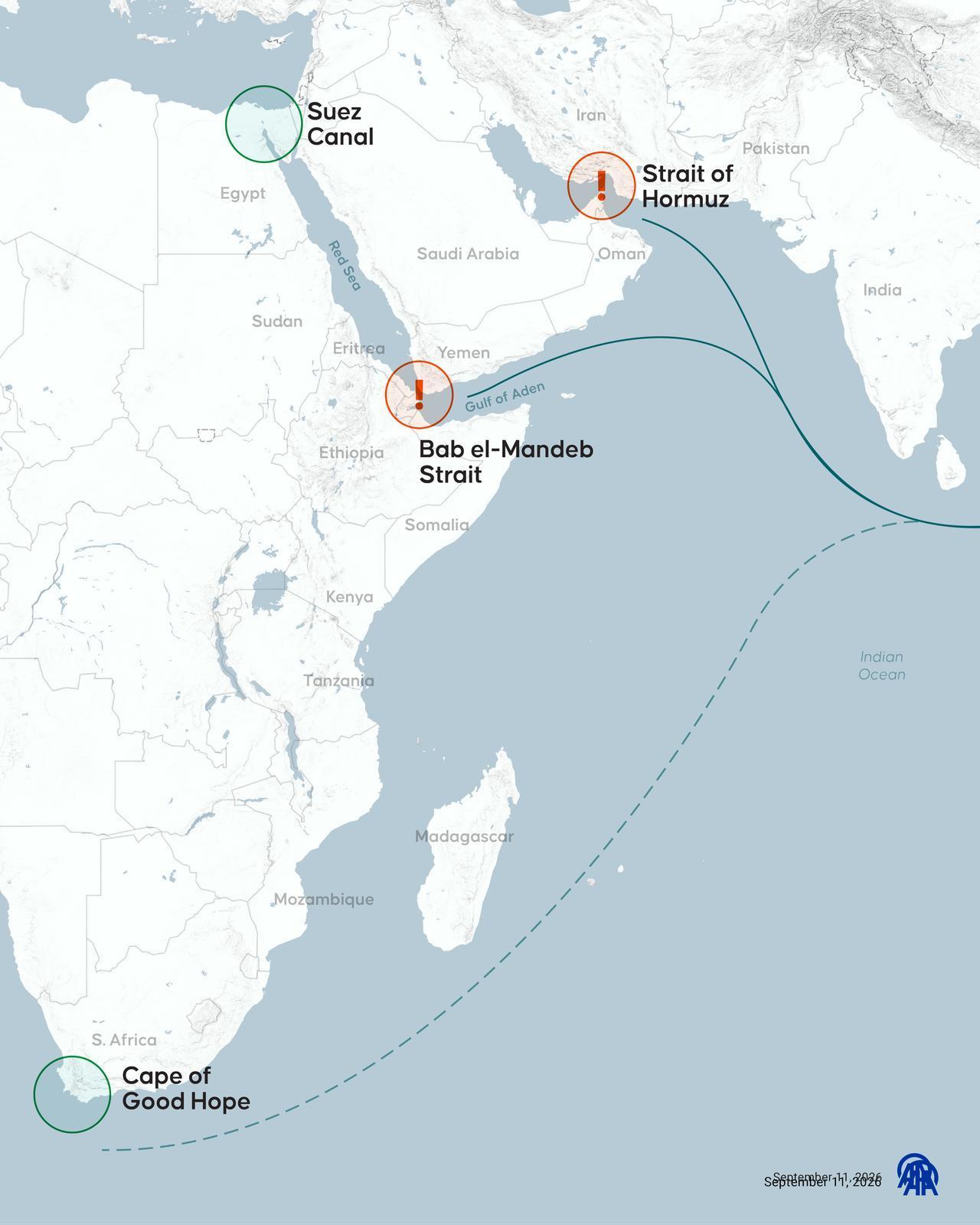

The choice should not be between economic security and greater connectivity, Fidan said. "The strategic imperative here must be to make connectivity more diversified, more resilient and more inclusive," he noted, calling for strengthening existing routes through effective security arrangements and institutions, and diversifying corridors to bolster global supply chains.
"Türkiye is advocating exactly this vision. We do not position our geography merely as a bridge between continents. We believe we have a strategic responsibility," he said, adding, "Geography creates opportunity, but vision, infrastructure and diplomacy are what will realize it."
He cited the Middle Corridor, running from the South Caucasus to Türkiye, as a key trade and transport route, and a project linking the Gulf to Europe via Iraq and Türkiye, adding that Ankara is diversifying its energy portfolio.
"These are cornerstones of a broader connectivity architecture," he said.
Fidan said Türkiye’s Black Sea initiative has ensured sustainable diplomacy and protected shipments of basic food commodities.
"Even in the most difficult conditions, we can produce high-value solutions through diplomatic engagement and high-level dialogue," he said.
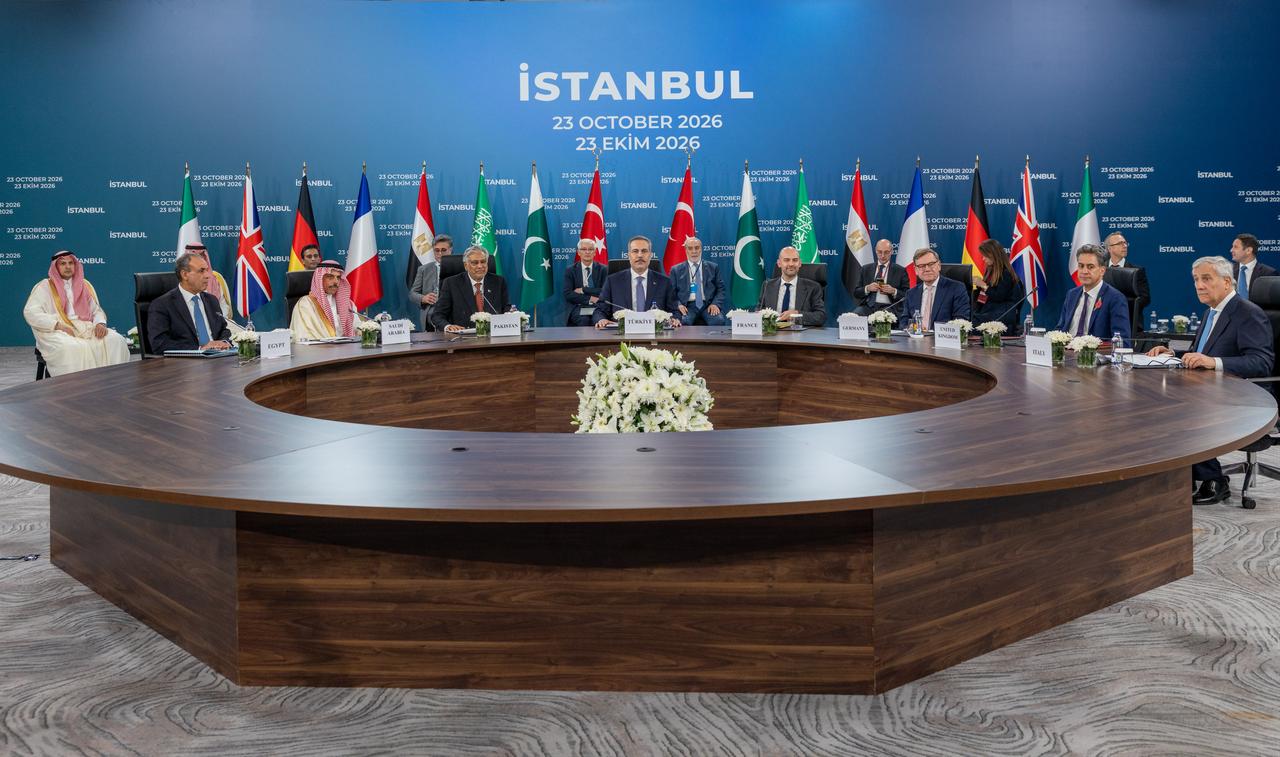
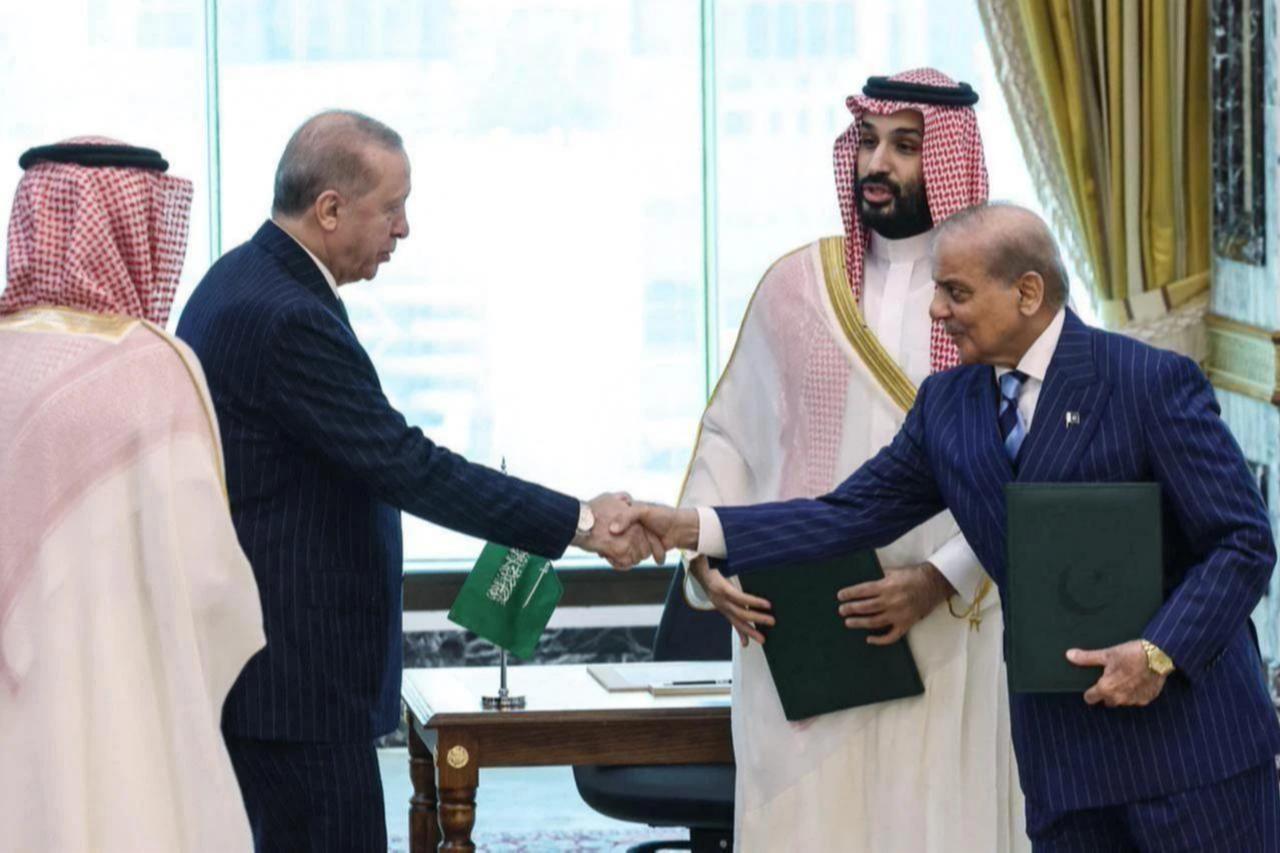
He said countries in the region are also addressing common threats, noting: "The Mecca Defense Alliance brings together Türkiye, Saudi Arabia and Pakistan in terms of collective defense."
"Global leadership does not necessarily have to be concentrated in a single center," Turkish foreign minister said.
"In this spirit, the time has come for Türkiye to consider a global initiative. Such an initiative, especially to strengthen international connectivity, could bring countries together across regions around a common goal," he added.
"Türkiye is ready to work with all partners who share this vision," he noted.
"Our goal must be clear: to turn this connectivity into strategic precision, for collective security, for shared prosperity and for lasting peace. This is the leadership our time demands, and this is the responsibility Türkiye is prepared to take on," the top Turkish diplomat stated.
At the same forum, Turkish intelligence chief Ibrahim Kalin stated on Friday that the terminology of a "Palestinian problem" is wrong.
"The problem is not Palestine; the problem is occupation," he said, noting, "There will be no solution, peace and justice in the Middle East without ending the occupation."
"The struggle for peace, dignity and freedom in Palestine actually means regaining the moral and political order we have lost in a fragmented world," the Turkish intelligence chief said, adding that peace will come only with a Palestinian state on 1967 borders with East Jerusalem as its capital.
He warned that continued occupation could trigger another wave of radicalization and said a "new age of awakening" on Palestine had begun globally.
Kalin said he was somewhat more hopeful about a new political arrangement after elections in the U.S. and Israel, as Fidan pressed Türkiye’s connectivity agenda.


 Set as preferred source
 Set as preferred source


 2 min read
 1 min read