Newsletters





You've fallen for an unemployed Turk, or perhaps, as fate would have it, someone with a criminal record. Yet despite every hurdle, you’ve decided to take the plunge anyway.
But once the wedding bells fade, the legal reality sets in, and this is where most couples get tripped up.
One of the most common errors in Turkish immigration law is treating marriage, residence, work, and citizenship as though they were stages of a single process.
They aren't.
Each is governed by its own legal requirements, and clearing one hurdle says nothing about whether you'll clear the next.
Consider what's actually true under Turkish law:
The question that matters isn't "Does this person have a criminal record?" or "Do they have a job?"
The question that matters is: which legal status is this person trying to obtain, and what does the law specifically require for that status?


There is no general rule requiring a Turkish citizen to have a job or a certain level of income to marry a foreign national.
The fact that the Turkish citizen is unemployed does not, by itself, prevent the marriage.
The issue usually appears later, when the foreign spouse applies for a family residence permit.
At that point, the Turkish citizen may be treated as the supporting spouse, and the authorities may ask how the family will support itself in Türkiye.
This is where marriage law and immigration law begin to separate.
The right to marry is one question.
The right of the foreign spouse to remain in Türkiye is another.

This is where a common misunderstanding appears:
“If the Turkish spouse does not have a job, the foreign spouse cannot get a residence permit.”
That is too simple.
For a family residence permit, the financial situation of the supporting spouse matters. But having a formal job is not the only way to show financial capacity.
If the Turkish spouse is working, salary and employment documents may provide the easiest evidence. If the person is not working at the time of the application, other financial evidence may be used, most commonly, savings held in a bank account.
In practice, applicants are sometimes asked to show around ₺300,000-₺400,000 ($6,200-$8,200 as of September 2026) in savings, though this varies by case and how the application is assessed.
It is important to understand that this is not a fixed legal requirement written into the law.
This is not a fixed legal threshold. There is no rule in the law requiring exactly this amount in every case. The amount that's actually needed depends on the family's circumstances and the documents submitted.
Having less than this figure doesn't automatically mean an application will fail—if anything, applicants with savings are generally better off showing as much of their available financial resources as possible.
The basic question is not simply: “Does the Turkish spouse have a job?”
The more important question is: “Can the family show, in a credible and documented way, how it will support itself in Türkiye?”

This is the harder situation.
Suppose the Turkish spouse is unemployed, has no regular income, and doesn't have enough in the bank to demonstrate financial capacity on their own.
There may still be another option.
Depending on the circumstances, financial support can sometimes be provided by a blood relative of the Turkish spouse, a mother, father, or other relative.
The relative may provide a notarized undertaking stating that they will cover the relevant living expenses of the family or the foreign spouse. The relative's own income can then be documented as part of the application.
The wording of this undertaking matters.
If the relative is only agreeing to cover living expenses, the document should clearly say what expenses are being covered.

There is also an important point concerning accommodation.
If the married couple will not actually live at the relative's address, the undertaking should not state or suggest that the relative is providing accommodation.
In other words, someone who is financially supporting the couple does not necessarily have to provide their home as well.
Financial support and accommodation are separate matters.
This may sound like a small technical detail. In immigration applications, it is not.
Documents should reflect the family's real living situation. A document that says one thing while the couple actually lives somewhere else can create unnecessary questions.
The same distinction—between the general assumption and the specific legal rule—matters when the Turkish spouse has a criminal record.
A criminal record does not, by itself, generally prevent a Turkish citizen from marrying a foreign national.
But the criminal record can become relevant when the foreign spouse applies for a family residence permit.
Turkish immigration law contains a specific rule for the supporting spouse.
Under Article 35 of the Law on Foreigners and International Protection, the supporting spouse must not have been convicted of an offense against the family order during the five years before the application.
Notice the wording.
The law does not simply say: “The Turkish spouse must have a clean criminal record.”
The rule is much more specific.
The question is whether the Turkish spouse has been convicted of an offense against the family order during the previous five years.
That distinction can matter.
A person may have a criminal record for an offense that is unrelated to the family order. That is not automatically the same legal situation as having a recent conviction for an offense covered by this specific rule.
So when looking at a criminal record, the first question should not be: “Does this person have a record?”
It should be: “What was the offense, when did the conviction occur, and what exactly was the final court decision?”
In immigration law, those details can change the answer.
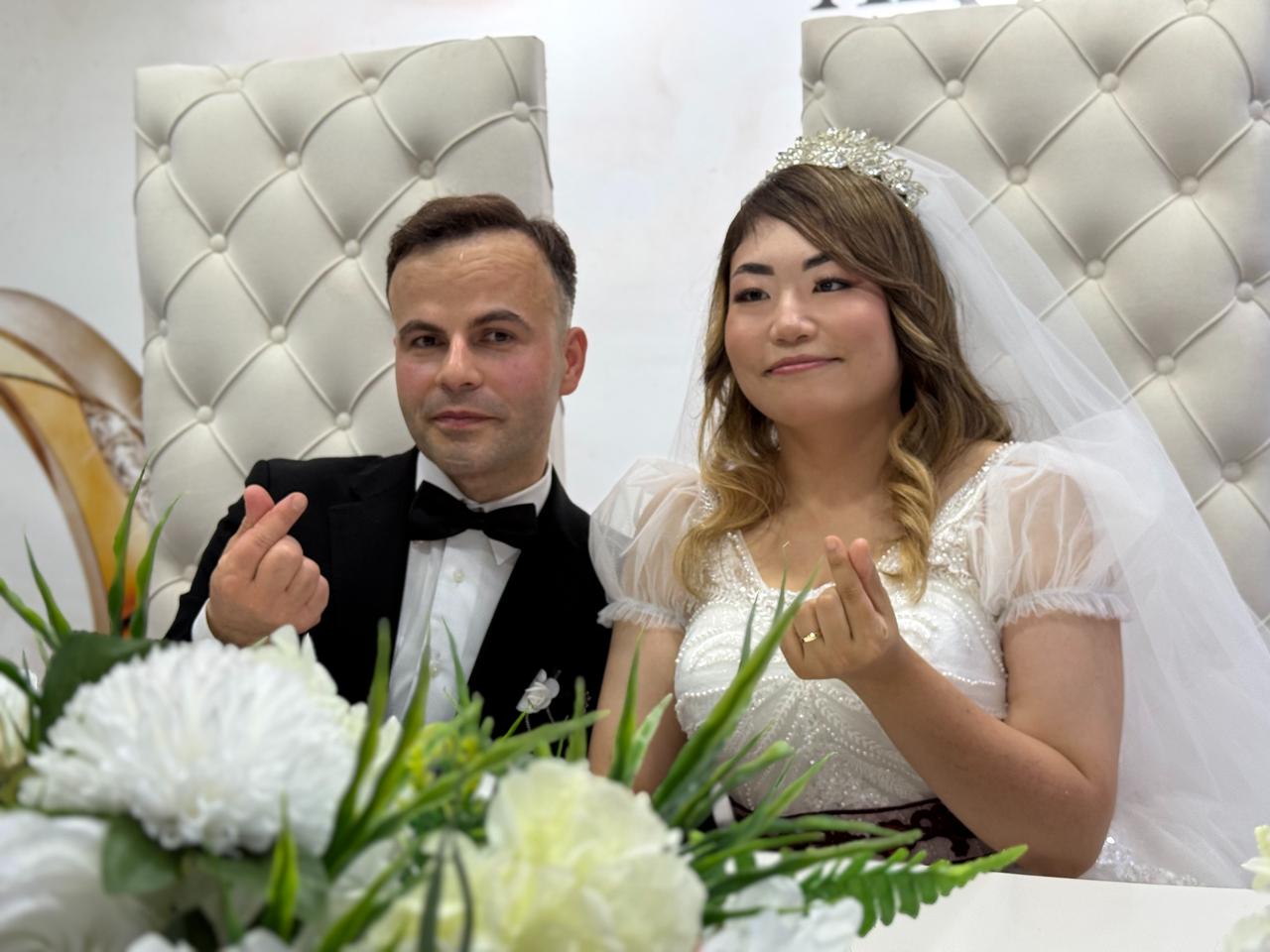
Again, the answer is not as simple as many people assume.
A foreign national who has a criminal record in their home country or another country is not automatically prohibited from marrying a Turkish citizen.
More importantly, a past conviction does not automatically mean that the person can never live or work in Türkiye.
Depending on the circumstances, a foreign national with a criminal record may still apply for a residence permit.
The same can be true for a work permit.
A criminal record does not mean that every work permit application will automatically be rejected. The authorities can consider the nature of the offense and other legal requirements related to the work permit application.
So the statement “I have a criminal record, therefore I cannot work in Türkiye” is too broad.
The real question is what the conviction was for and whether it creates a serious concern under Turkish law.
This is perhaps where the most confusion exists.
A common statement is: “A foreigner with a criminal record cannot become a Turkish citizen.”
That statement is also too broad.
Marriage to a Turkish citizen does not automatically make the foreign spouse a Turkish citizen.
However, after being married to a Turkish citizen for at least three years, a foreign spouse may apply for Turkish citizenship if the other legal requirements are also met.
A key requirement is that the applicant must not have a record that flags them as a national security or public safety risk.
That's important because a criminal record isn't an automatic dealbreaker when applying for citizenship.
A final criminal court decision can be part of the citizenship file, and the authorities can review the person's background.
But there is a difference between having a past conviction and being considered a serious risk to Türkiye's national security or public order.
For example, a past offense that does not create such a risk may not automatically prevent a citizenship application or the eventual acquisition of citizenship.
On the other hand, offenses involving terrorism, organized crime, or serious risks to national security and public order can lead to a very different assessment.
The important point is this: A criminal record is not the same thing as an automatic citizenship ban.
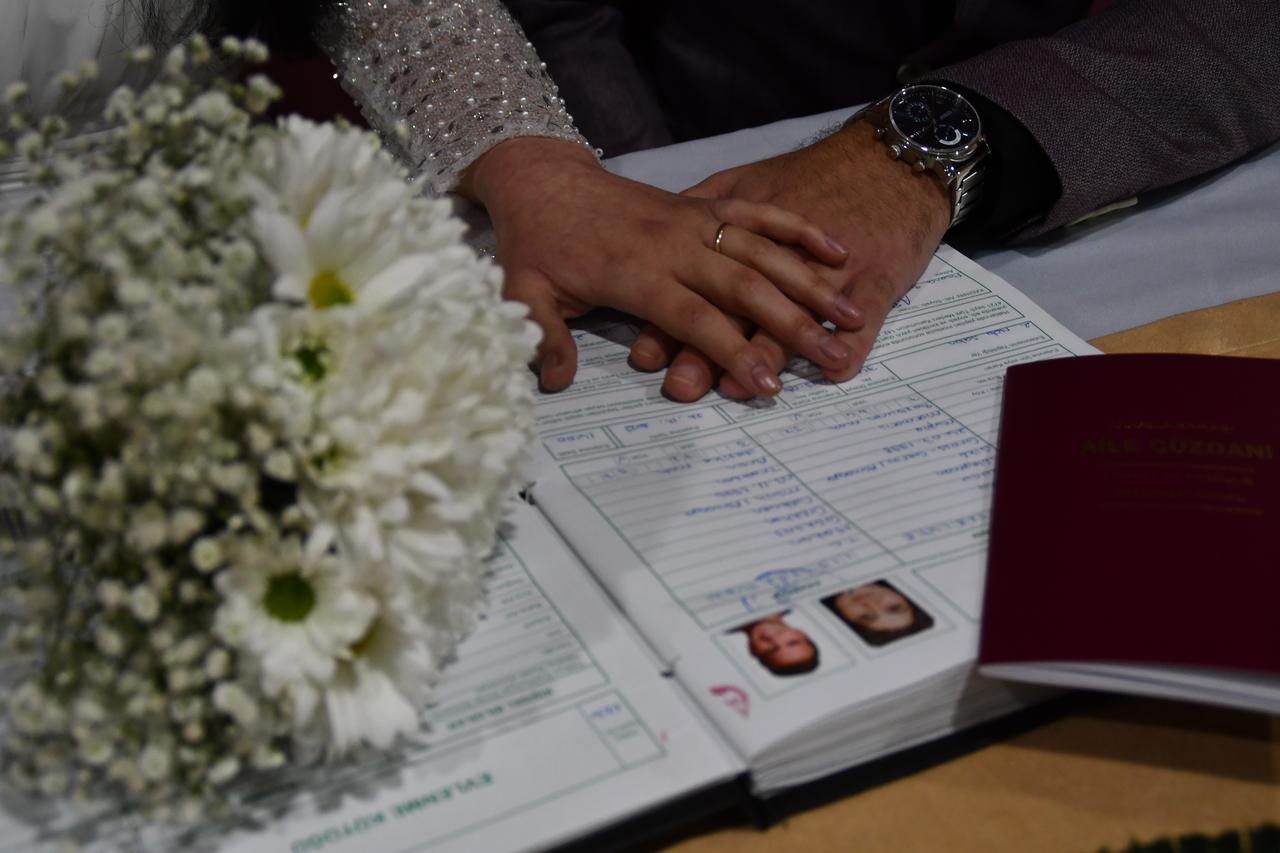
The easiest way to understand the issue is to think of four separate doors.
Here, the Turkish spouse's income, housing, health insurance, and certain criminal record requirements can become important.
Having a past criminal conviction does not automatically mean that a foreign national can never receive a work permit. The application can be assessed according to the relevant rules and the facts of the case.
Citizenship is another process altogether.
There are two extreme views about marriage between Turkish citizens and foreigners.
Neither is an accurate description of the law.
But none of these steps automatically guarantees the next one.
Marriage is not residence.
Residence is not a work permit.
A work permit is not citizenship.
And a criminal record does not produce the same legal result at every stage.
For couples planning a life together in Türkiye, the better question is therefore not: “Can we get married?”
It is: “What legal status will the foreign spouse need after the marriage, and how can we prove that the requirements for that status are satisfied?”
That is where the real immigration planning begins.
Because in Turkish immigration law, the problem is often not that the door is completely closed. It is knowing which door you are actually standing in front of.
About the author: Kagan Orhan is a human resources and immigration consultancy expert at Expat Solutions Turkey, dedicated to facilitating the adaptation processes of foreigners in Türkiye with the expertise and knowledge in managing legal procedures such as residence permit applications, work permits, business establishment, real estate, and citizenship processes for foreigners settling in Türkiye with their team of lawyers and consultants.


 Set as preferred source
 Set as preferred source



 2 min read