

 Newsletters


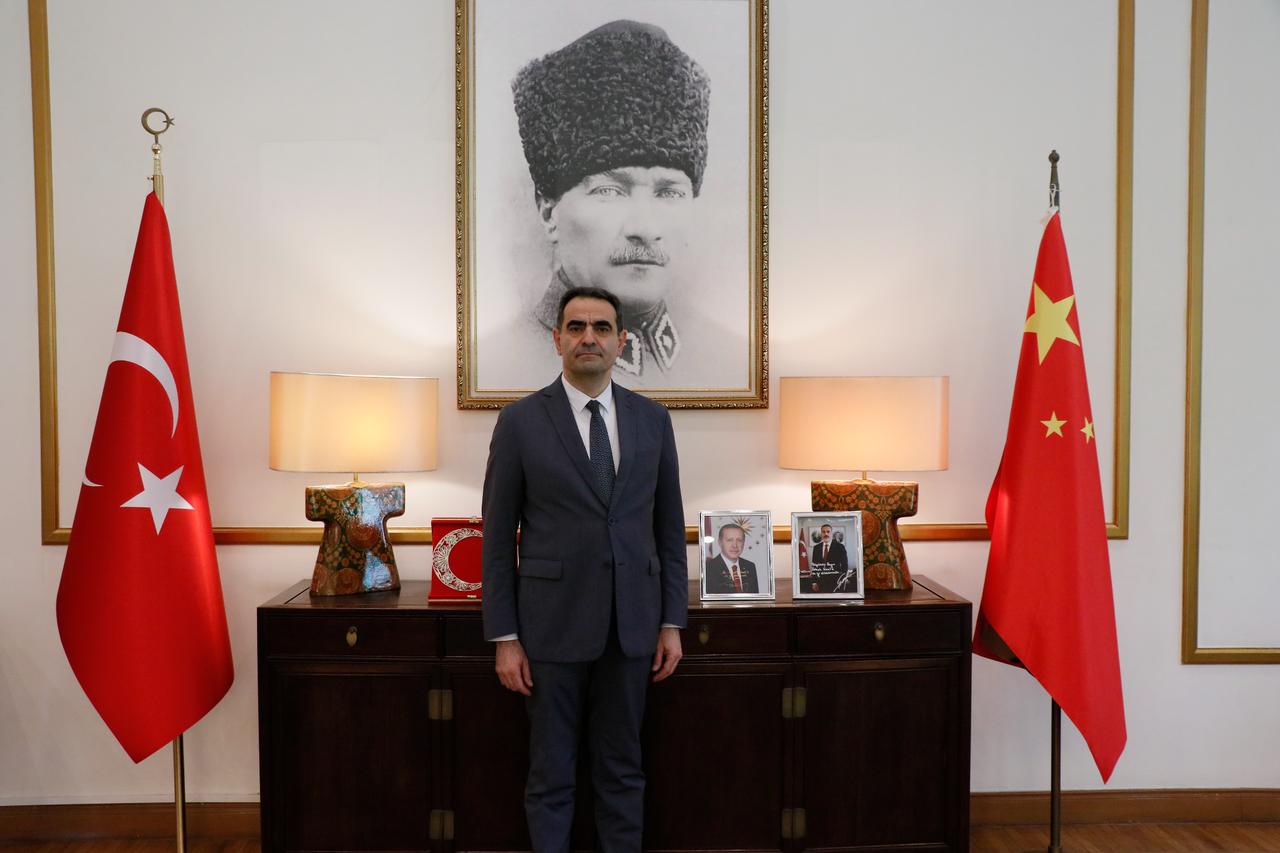


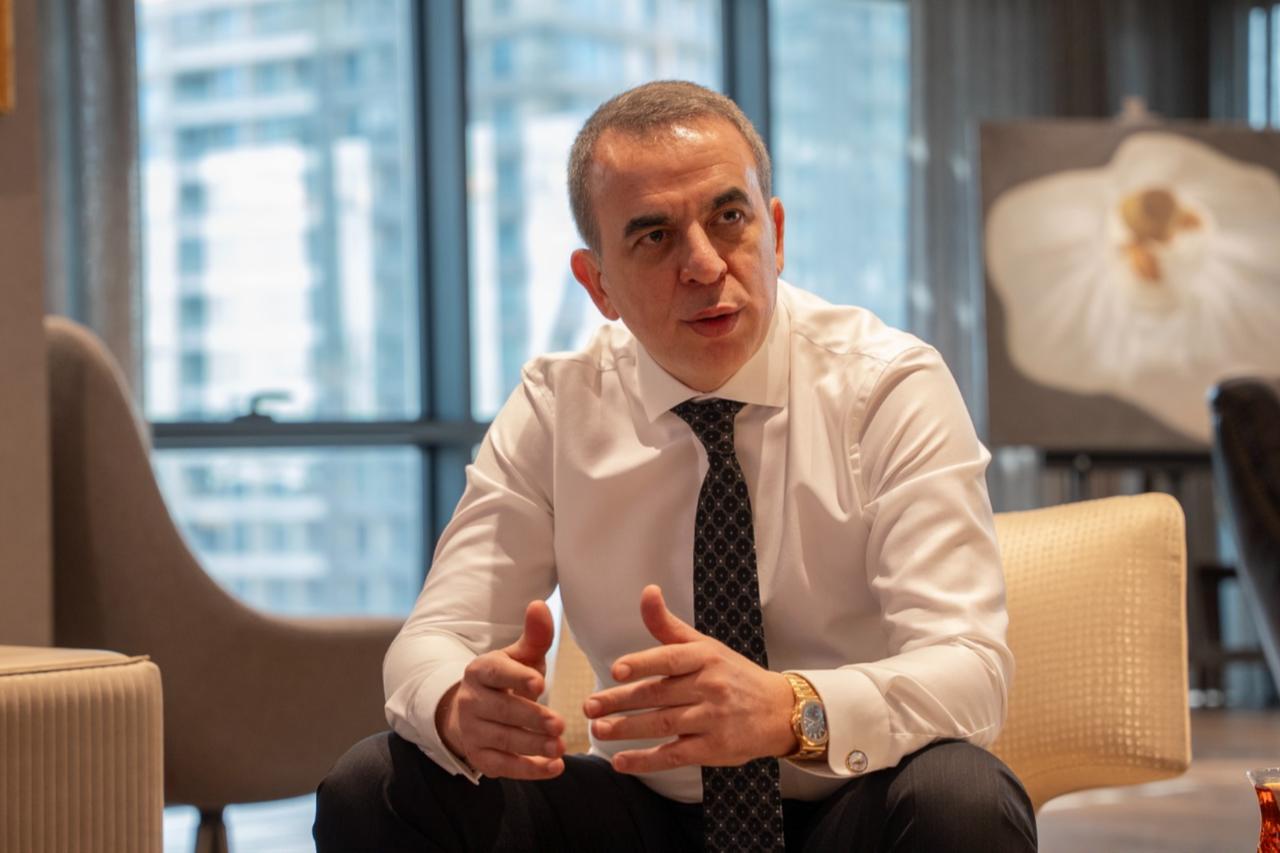
Türkiye's Ambassador to Beijing, Selcuk Unal, said relations with China have continued to deepen, evolving from historical ties into multidimensional cooperation.
He added that efforts will continue to further advance relations between the two countries, which increasingly share similar perspectives on global, international and regional issues.
Speaking to Anadolu Agency on the 55th anniversary of diplomatic relations between the two countries, Unal reviewed the development and current state of bilateral ties, from the historical links between Turkish and Chinese cultures and the first official contacts in the first half of the 20th century to the establishment of diplomatic relations following Türkiye's recognition of the People's Republic of China in 1971 and the broad cooperation of recent years.
Unal emphasized that the historic Silk Road created a bridge between two ancient civilizations located at the eastern and western ends of Asia, facilitating exchanges and interaction while fostering a sense of shared destiny throughout the transformations of the modern era.
Pointing to the multidimensional development of bilateral relations over the past 25 years alongside global economic and trade growth, Unal noted that China has become Türkiye's largest trading partner and said the two countries increasingly view global, international and regional issues through a common lens based on peace and development.
Unal underlined that Türkiye and China represent two ancient civilizations and that the history of their relations extends far beyond the past 55 years.
He said contacts dating back centuries, and even ancient times, were built upon the connectivity established by the Silk Road.
"The Silk Road connected Turks and Chinese for a long time. It became a route where trade, exchange of goods, cultural relations, interaction and even technology transfer took place and where envoys traveled back and forth. This road, which linked two civilizations and two peoples, continues today under different names," he said.
Unal noted that diplomatic contacts were limited in earlier periods because of the vast distance between the two countries and the limited transportation options available, with diplomatic journeys sometimes taking as long as seven years.
Despite this, the Silk Road ensured continuous communication between cultures.
He added that interest in the Far East, referred to during the late Ottoman period as "Aksay-i Sark," increased significantly.
During the Boxer Rebellion in China in the early 20th century, European powers requested troops from the Ottoman Empire, but Sultan Abdulhamid II rejected the request and instead sent an advisory delegation.

According to Unal, formal diplomatic engagement expanded during the early years of the Turkish Republic.
He said Hulusi Fuat Tugay was sent from the Turkish Embassy in Tokyo to China as charge d'affaires in 1927. He first traveled to Shanghai and later to Nanjing, where he established a diplomatic mission.
The mission was later closed for economic reasons but reopened in 1937 in Chongqing by Charge d'Affaires Emin Ali Sipahi after China's capital was moved from Nanjing during the Japanese occupation before World War II.
Two years later, in 1939, Hulusi Fuat Tugay was appointed to China again, this time with the rank of minister, and the mission was subsequently elevated to embassy status.
"Türkiye pursued a policy of active neutrality during World War II. China, meanwhile, became involved in a major war. For China, as for many countries, World War II did not begin in 1939 but earlier and lasted longer," Unal said.
"Despite many difficulties, our embassy remained open throughout this period. While many countries closed their embassies and left, the Turkish Embassy remained open and acted in solidarity with China's national resistance."
He noted that Chinese leaders at the time explained the relocation of the capital under occupation by drawing a parallel with Ankara's role during Türkiye's War of Independence, adopting the slogan: "Chongqing will be our Ankara."
Unal said Türkiye officially recognized the People's Republic of China in 1971 and established diplomatic relations with Beijing during a period of major geopolitical change.
"The 1970s were a period of major changes in the international environment. On one hand, there was the rapprochement between the United States and China, and on the other hand, China perceived a threat from the Soviet Union. At the same time, US-Soviet relations were entering a different phase," he said.
Negotiations on establishing diplomatic relations were conducted through the two countries' embassies in Paris, and diplomatic ties were formally established on Aug. 4, 1971.
Recalling that the People's Republic of China was recognized as the legitimate representative of China at the United Nations General Assembly on Oct. 25, 1971, Unal noted that Türkiye recognized China before the UN vote, demonstrating the importance it attached to bilateral relations.
He added that Turkish ambassadors quickly arrived in the country after relations were established and built the institutional framework of the relationship, noting that Türkiye's Embassy in Beijing has continued operating from the building it moved into in 1972.
Unal said relations initially progressed slowly because of geographical distance and limited connectivity, but later accelerated significantly.
He noted that trade volumes were modest in the early years and diplomatic missions remained limited. However, bilateral relations expanded rapidly, particularly after the establishment of direct air links.
"In this year, as we mark the 55th anniversary of diplomatic relations, China has become not only our largest trading partner in Asia but also our largest trading partner in the world. Our trade volume exceeds $50 billion," he said.
Unal highlighted growing connectivity between the two countries, noting that Turkish Airlines operates two daily flights to four Chinese cities, while major Chinese carriers also fly to Istanbul.
According to him, more than 50 passenger flights operate weekly between the two countries, while cargo traffic continues to increase.
He also pointed to Türkiye's expanding diplomatic presence through its embassy in Beijing and consulates general in Shanghai, Hong Kong, Guangzhou and Chengdu.
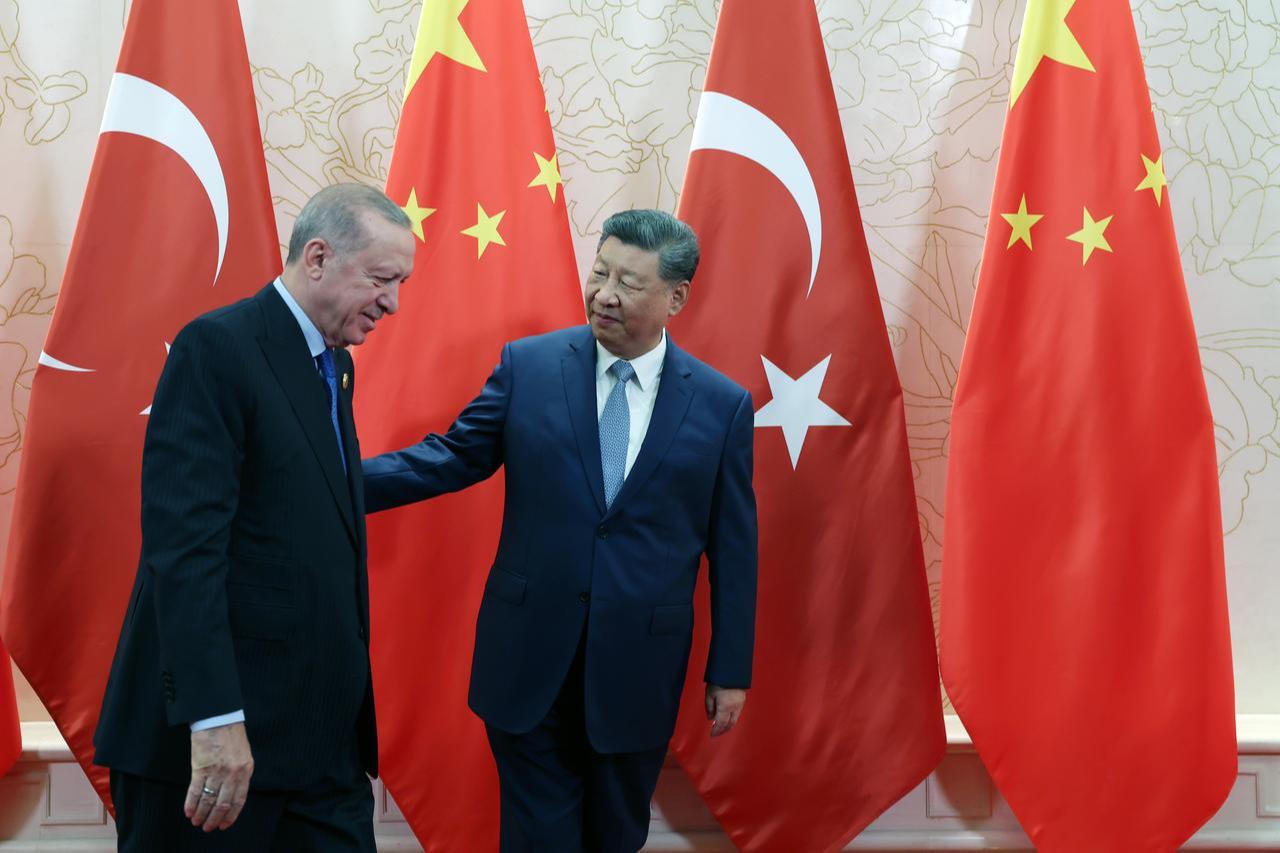
Unal said Ankara and Beijing are working to deepen cooperation in line with the vision set by President Recep Tayyip Erdogan and Chinese President Xi Jinping.
He noted that the two leaders have met repeatedly and most recently reaffirmed their commitment to strengthening bilateral relations during Erdogan's visit to the Shanghai Cooperation Organization summit in Tianjin.
According to Unal, the two countries aim to expand cooperation in areas including connectivity, energy, artificial intelligence and the green economy.
"Fundamentally, both countries view the international system through the principles of peace, stability, preventing wars, stopping conflicts and, where possible, ending them," he said.
"In this sense, we actually look at many global, international and regional issues through the same lens. This clearly demonstrates where the two countries stand in the international community today."
Unal said relations are currently at their most advanced stage and expressed confidence that cooperation will continue to deepen across political, economic and strategic sectors.


 Set as preferred source
 Set as preferred source


 2 min read
 1 min read


