Newsletters


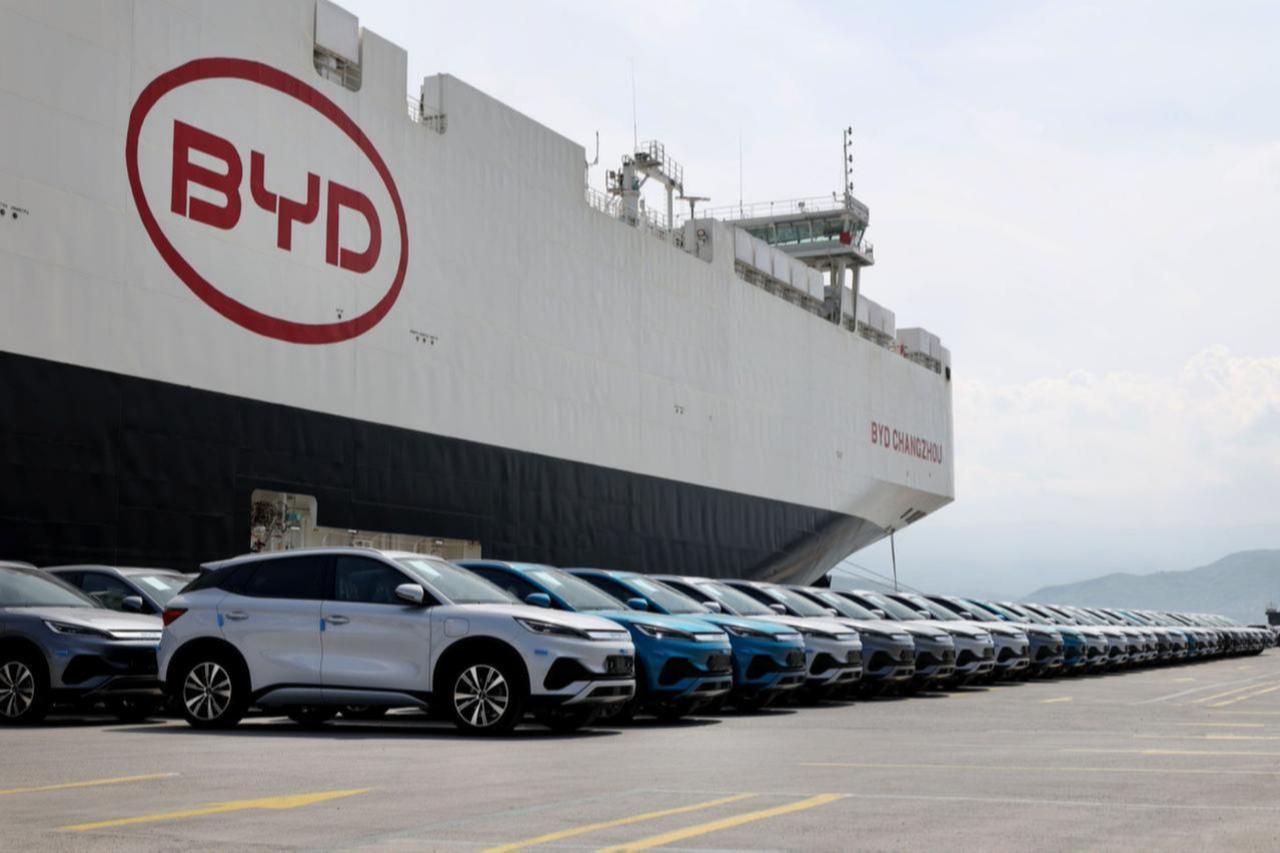


Manisa Organized Industrial Zone ranks among Türkiye’s top five industrial regions. Over the past two years, whenever you visited Manisa, a Turkish city in western Türkiye, the expectation was hard to miss: a global automotive corporation was expected to establish a significant manufacturing facility there.
Initially, Volkswagen (VW) disclosed plans to construct a factory in Manisa. However, the German company’s subsequent suspension of this decision due to COVID19 led to increased interest in other prospects. Subsequently, Chinese carmaker BYD’s announcement generated considerable enthusiasm. Nonetheless, last week, the Chinese electric-vehicle leader BYD formally confirmed that it would not proceed with the $1 billion investment it had announced two years earlier.
Why did BYD opt out of Türkiye?
Some immediately read this as another story about Türkiye’s rule-of-law problems. That argument may belong in the broader foreign direct investment (FDI) debate, but it does not explain this case. BYD did not move from Türkiye to Switzerland. It moved to Hungary, a European Union member state that has itself been under rule-of-law scrutiny from Brussels.
To better understand BYD’s decision, one needs to understand the reorganization of global value chains. For decades, the development playbook for middle-income countries was to attract global manufacturers, plug local suppliers into their networks, climb the quality ladder, and export into rich markets. That playbook is now being challenged from two directions at once: geopolitics and technology.
After spreading production capabilities around the world for decades, based on which locations were most efficient, major industrial powers decided to keep value chains short following COVID-19. Now, redundancy and hence security are as important as efficiency. The European Union’s response to this new paradigm is the “Made in Europe” logic.
As I wrote in my previous piece, Türkiye’s old assumption in industrial development was simple: its Customs Union with the EU guaranteed its position within Europe’s industrial perimeter. The new “Made in Europe” draft regulations signal that this may no longer be the case. Chinese EV makers are following these regulatory developments closely.
Both Türkiye and Hungary offered a wide range of incentives to BYD—low taxes, low-cost land, etc. Yet, Hungary has one capability that Türkiye cannot offer: EU membership. This provides uncontested access to the EU market and –perhaps more importantly—a seat and a vote in the EU’s policymaking. Hungary is an EU member state whose position in Brussels could be politically useful for China.
If the race were only about incentives, Türkiye would be competing with many generous hosts—from Morocco to Serbia—willing to match tax breaks, land offers, or grants. If the issue is “access to market without taxes,” it turns out that access to the Turkish market, the 16th largest economy in the world, is not attractive enough. Investors want more than that. They look for secure regulatory eligibility and geopolitical leverage to influence the policies in the largest consumer market in the world, the EU.
The second shift is technological. Automotive suppliers have long been central to the industrial development of middle-income countries. Mexico is another example, with its proximity to the American market.
The old automotive industry was unusually useful for industrial development because it was supplier-rich. Engines, transmissions, exhaust systems, fuel systems, machining, maintenance parts, and tooling created wide local ecosystems. A country not only hosts an assembly plant; it could build tiers of suppliers around it.
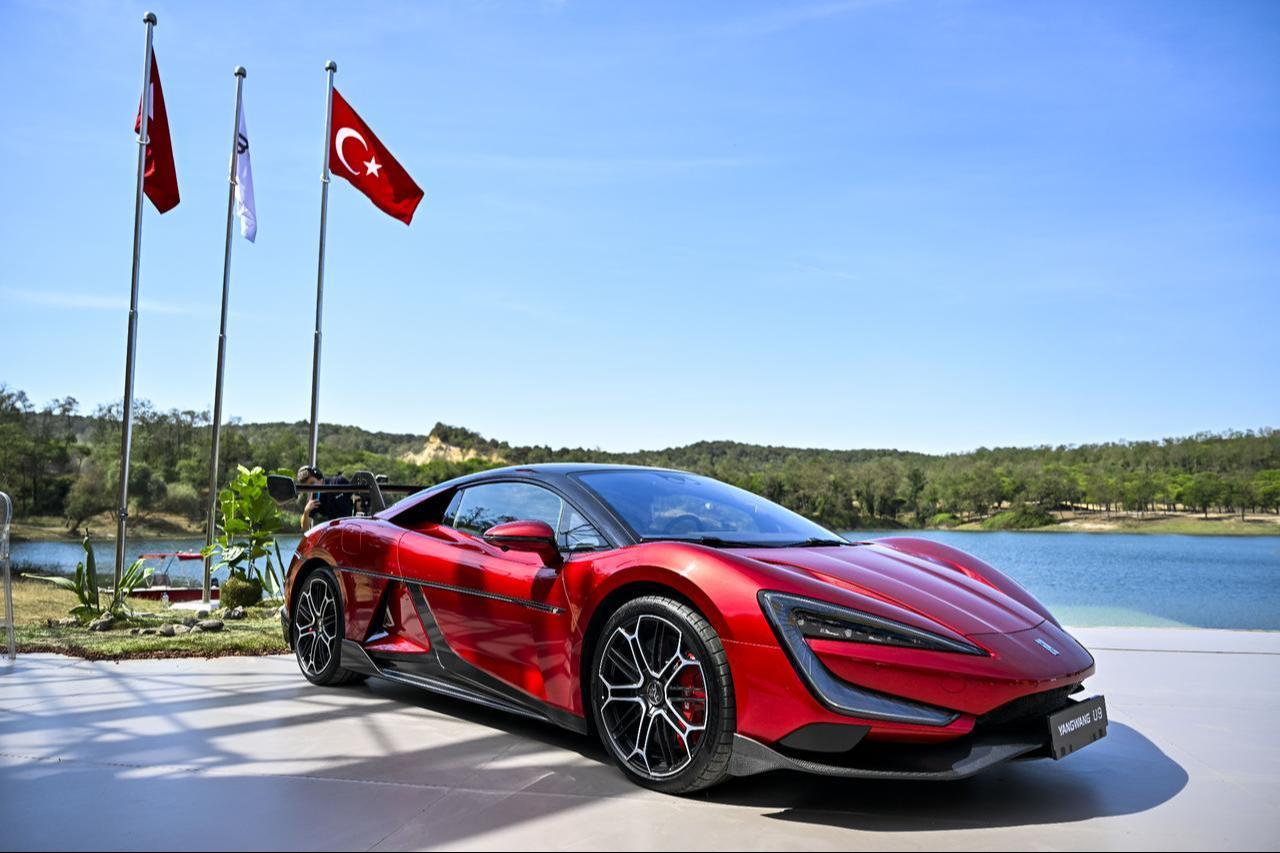

Electric vehicles change this logic. They remove many of the systems that made internal-combustion vehicles so supplier-intensive. Value shifts toward batteries, power electronics, software, chips, and electric motors.
This is one reason Chinese EV makers scaled so quickly. Much of the strategic value lies in a limited number of components in which Chinese firms already have scale at home. When they internationalize, the foreign plant can become less of an open supplier-development platform and more of a controlled extension of an existing Chinese system. Indeed, there were rumors that BYD would even build a Chinatown in Manisa and bring 2.500 Chinese workers to Manisa (half of the workforce) to keep the system even more closed.
 1 min read

Let’s go back to the VW investment story in Manisa.
A few months before VW formally backed out from the investment “due to COVID-19,” Bernd Osterloh, then head of Volkswagen’s global Works Council, said: “Employee representatives will withhold their approval as long as Türkiye continues to pursue its political objectives through war and violence.”
The VW episode was an earlier warning. Automotive investment decisions were already moving beyond cost, logistics, and incentives. Labor representation, geopolitics, and Europe’s political climate were entering the investment calculus.
The World Bank’s 2024 World Development Report shows how rare it is to escape the middle-income trap. Among the exceptional countries that have climbed from middle-income to high-income since 1990, more than one-third did so by joining the European Union. Hungary is one of them. This external anchor will matter even more in the new world of short regionalized industrial supply chains, where eligibility becomes political.
This is why the BYD case matters beyond Türkiye. Middle-income middle powers built much of their industrial strategy on a simple bargain: attract the global manufacturers by offering cheaper land, lower taxes, or larger grants.
That bargain is now harder to sustain. Technology is concentrating value in fewer strategic components. Geopolitics is making market access conditional on bloc rules. External anchors are becoming rarer—and more valuable.
The next industrial strategy will be built by combining production capacity with technological depth, regulatory diplomacy, and geopolitical optionality. The factory still matters. But it no longer carries the same promise of development.


 Set as preferred source
 Set as preferred source



 1 min read