Newsletters





Financial scandals become politically dangerous when people stop asking only how much money was lost and begin asking who knew, who acted, and whether the same rules apply to everyone. Türkiye's fund crisis is approaching that point. The official figures cover 131 funds and 455,758 investors, yet scale alone does not explain the political significance of the episode.
The government has significant advantages. The Financial Stability Committee says the problem is concentrated in a limited part of the fund market, remains manageable, and does not constitute a fundamental or structural threat to Türkiye's capital markets. Türkiye's Capital Markets Board (SPK) has also documented regulatory work that began in late 2025, which undercuts any simple story in which the state suddenly discovered a problem nobody had noticed.
For years, Türkiye's government has generally proved capable of containing controversies by establishing a persuasive interpretation of what happened, defining responsibility, and shifting public attention toward its preferred account of the response.
What has been unusual in the first phase of this crisis is the absence of the dominant framing the government has often established around previous controversies. Competing explanations remain alive, and the technical complexity of the case makes simple narratives harder to sustain. Judicial proceedings can establish legal responsibility, but they cannot by themselves settle every political question the episode has raised.
Political shockwaves rarely produce a mechanical electoral response. Party loyalty, prior beliefs, and polarization shape how new information is interpreted.
A scandal becomes especially damaging when it tells voters something significant they did not already believe about those governing them. If new allegations merely confirm an image already incorporated into their political judgment, the additional cost can be surprisingly small. Hardened supporters interpret the controversy defensively, opponents see further confirmation, and little movement occurs between the two camps.
The greater political movement usually comes from voters whose judgments remain unsettled. Their reaction depends on whether the episode seems isolated, responsibility appears to be established fairly, and the institutions handling the crisis look credible.
Scandals can also end in very different ways. Some trigger broader political or institutional change. Others produce a limited correction while leaving the wider system largely intact. Repeated controversies can also lose disruptive power as society absorbs them into the normal rhythm of politics. Türkiye has experienced enough political controversy for that third possibility to deserve attention.
Political cost also depends on whether unresolved questions remain visible long enough to shape public judgment. That usually requires a media environment capable of keeping them in circulation. A controversy that dominates discussion for several days and then disappears can leave remarkably little residue.
The effect can even reverse. A government that persuades voters it has exposed wrongdoing, imposed consequences, and repaired the institutional weakness involved can convert part of the original damage into evidence of governing capacity. The eventual political cost of a scandal therefore depends less on its existence than on how the response is understood.

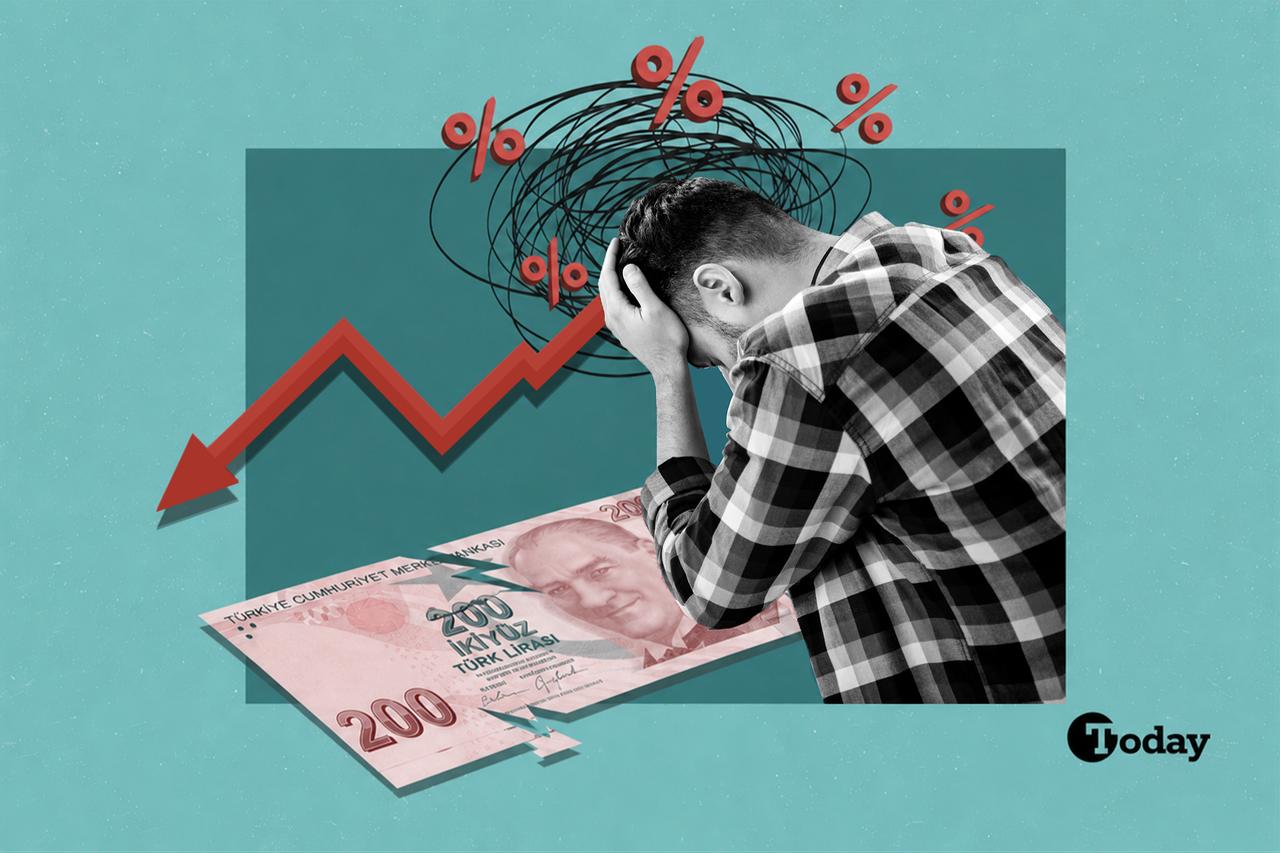
Money creates a different political psychology from many conventional scandals. A household confronting a frozen or sharply reduced financial asset has a more immediate relationship with the underlying event than someone encountering another abstract political controversy.
That does not automatically translate financial loss into opposition to the government. The political effect depends on what investors conclude about responsibility. Ordinary market losses create one reaction; losses perceived to involve manipulation, inconsistent enforcement, or avoidable institutional failures create another. Courts will determine individual criminal responsibility, while the political system will be judged more broadly on whether public authority responded competently and impartially.
The institutional question also reaches beyond arguments over whether Türkiye needs another capital markets law. SPK's own chronology shows that authorities had identified unusual patterns and were changing rules before the current crisis. More revealing is what happens when existing rules encounter genuine pressure. Institutional credibility ultimately depends on implementation, professional competence, and the ability to examine failures without prejudging legal responsibility.
Judicial proceedings are indispensable for determining offences, but markets continue operating while courts investigate the past. Investors still need clarity about liquidation, recovery, and supervision. A state capable of handling both processes at once is more likely to contain the financial problem and its political consequences.
Every period tends to produce abuses that imitate the legitimate economic aspirations of its time. Earlier generations encountered schemes built around land, banking, or industrial investment. Contemporary wealth increasingly appears through financial products, digital platforms, and assets whose value is visible on a screen long before the investor fully understands what stands behind it.
Whatever the courts eventually establish in the present case, the attraction of rapid financial gains belongs to that wider environment. Questionable schemes rarely offer something alien to the economy around them. They usually take a familiar promise of prosperity and stretch it beyond reasonable limits.
The fund crisis is therefore becoming a test that extends beyond portfolio management. Türkiye appears capable of containing its immediate financial consequences. Politically, the episode could generate a wider demand for institutional change, end with a narrower repair of the weaknesses exposed by the crisis, or eventually be absorbed into an already polarized environment with surprisingly little lasting effect.
How the government, regulators, and judicial authorities handle the next phase will help determine which path becomes more plausible. The movement of Borsa Istanbul over the next few weeks may matter less than whether citizens come away believing that responsibility was established fairly and that the institutions involved learned something from the crisis.


 Set as preferred source
 Set as preferred source


 2 min read
 1 min read