Newsletters


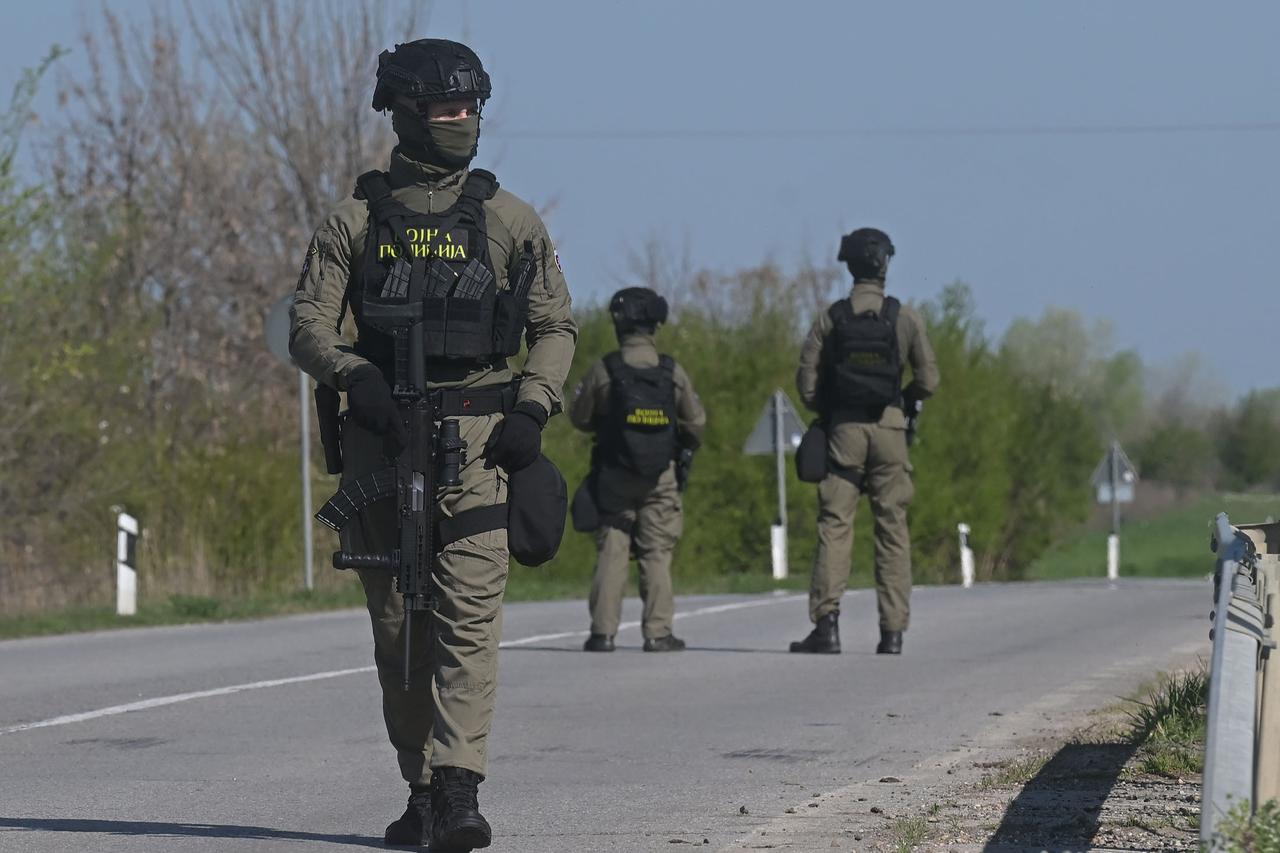


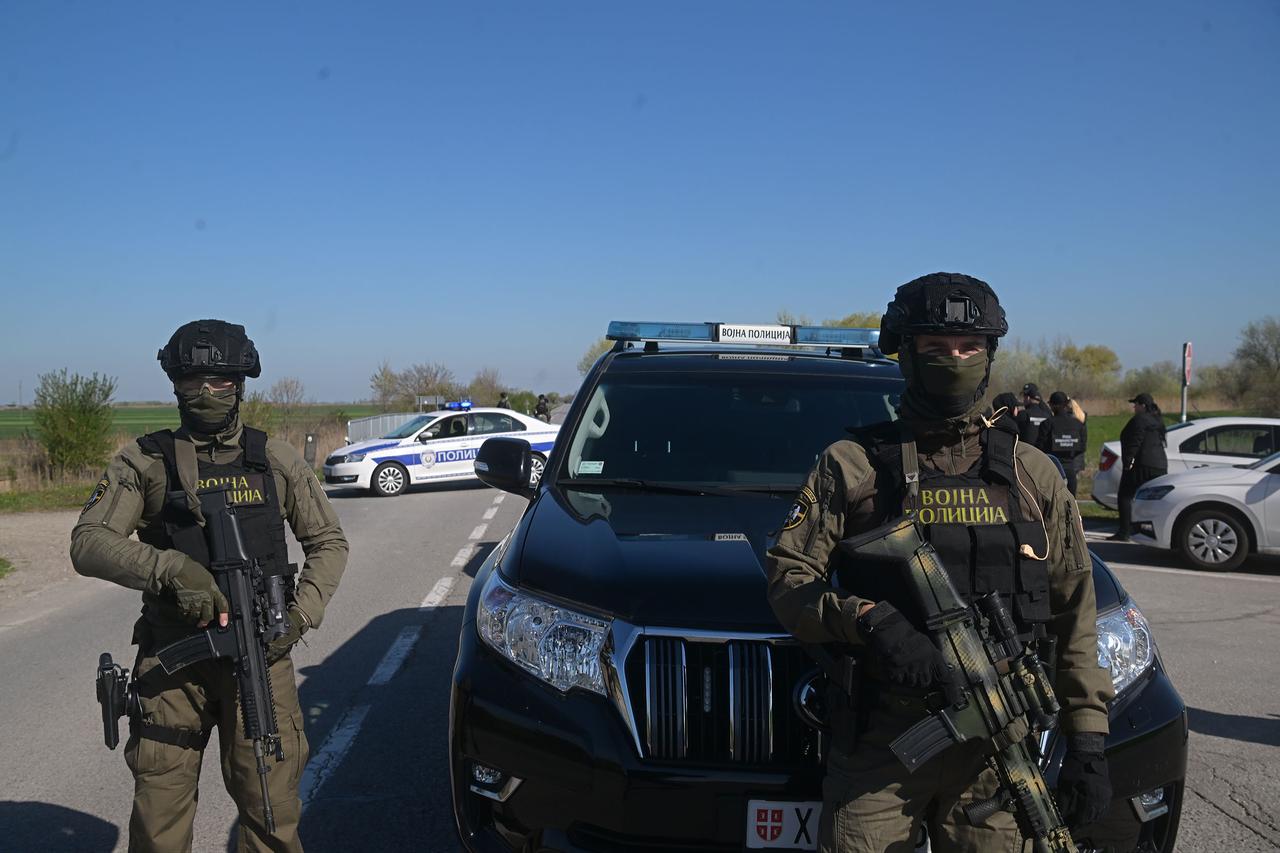
On the morning of April 5, 2026, Serbian army and police units sealed roads across the municipality of Kanjiza in northern Vojvodina, deployed helicopters, and mobilized 140 personnel in what Belgrade described as a counter-terrorism operation to protect critical energy infrastructure. By early afternoon, Serbian President Aleksandar Vucic announced the discovery of two backpacks containing approximately four kilograms of plastic explosive, detonators, and detonating cord, found several hundred meters from the Balkan Stream gas pipeline near the village of Velebit. By evening, Hungarian Prime Minister Viktor Orban had convened an emergency Defense Council, Serbian Military Intelligence had held a public briefing, and Republika Srpska President Milorad Dodik had posted a photograph of himself alongside Vucic and Orban expressing political solidarity with Belgrade and Budapest.
No explosion occurred. The pipeline was never damaged. No suspect was arrested. No photograph of the physical evidence was released. The sole description of the individual believed responsible: a migrant with military training.
What follows is not a determination of what happened near Kanjiza on April 5. The investigation remains formally open, and the Serbian judiciary has classified the case as a sabotage attempt under Article 313 of the Criminal Code. What follows is an account of the information operation that ran alongside the physical event, and of what that operation reveals about the Vucic-Orban-Dodik axis and its methods.
Three days before Serbian authorities announced the Kanjiza discovery, Andras Racz, a Hungarian expert on Russian intelligence operations affiliated with the Estonian Foreign Policy Institute, published an analytical scenario describing precisely what would unfold on April 5. Racz argued that a Russian intelligence operative would propose sabotage of energy infrastructure large enough to generate political momentum for the ruling party, but that any such operation could not take place inside Hungary itself, because Orban had already deployed the army to guard critical infrastructure there. An operation inside Hungary would make the army look complicit or incompetent. The logical target was therefore Serbian territory, where the Balkan Stream pipeline runs, and where Orban could count on Vucic's cooperation.
When asked, on the same day the incident broke, whether Vucic had known in advance what was going to happen, Rácz said he "certainly knew."
This was not a prediction made after the fact. The scenario was published on April 2. The incident was announced on April 5. The match between predicted mechanism and actual execution is precise enough to warrant analytical attention as a potential evidentiary signal. None of this establishes authorship. It establishes alignment between prediction, timing, and political utility.
Racz was not alone. A former Hungarian intelligence official told Reuters there had been discussions inside Hungarian security circles in the days before April 5 about a specific plan for a false flag operation targeting the pipeline in Serbia as part of an effort to influence the Hungarian vote. Hungarian investigative journalist Szabolcs Panyi reported that similar information had reached several journalists weeks earlier from sources in Hungarian government circles.


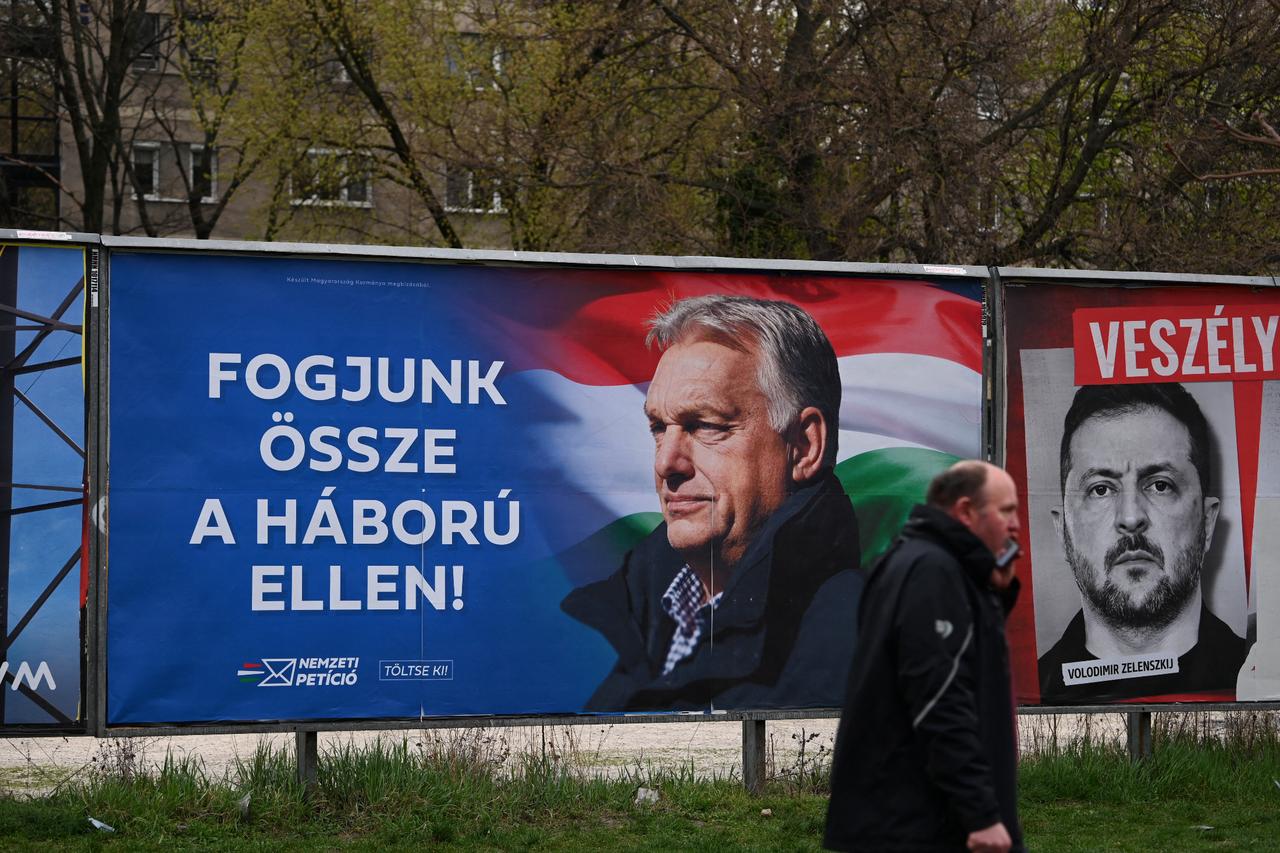
Hungary goes to the polls on April 12, 2026. The April 5 incident occurred seven days before that vote. Orban's Fidesz party had trailed the opposition Tisza party of Peter Magyar in every independent poll for months, with one February poll showing a 20-point deficit sufficient to deliver Magyar a parliamentary supermajority capable of amending the constitution and dismantling the institutional architecture Orban has built over sixteen years.
Orban's campaign had been built on a single narrative: Ukraine threatens Hungary's energy supply and sovereignty, and a vote for Magyar is a vote for war. For months he had accused Kyiv of withholding repairs to the Druzhba oil pipeline damaged by Russian strikes, deployed the military to guard 75 facilities inside Hungary, and argued that if Ukraine dared to destroy Nord Stream, it would not hesitate to target Hungary. He offered no evidence for any of these specific claims.
What Kanjiaa provided was physical confirmation of the threat Orban had been describing in the abstract. Two backpacks. Four kilograms. Detonators. A gas pipeline. An unnamed migrant with military training.
Magyar's response was immediate. "Several people have publicly indicated that something will 'accidentally' happen at the gas pipeline in Serbia at Easter, a week before the Hungarian elections," he said. "And so it happened." He added that Orbán would not be able to prevent the election. That sentence was not rhetorical. Hungary's constitution prohibits elections during a declared state of emergency. Rácz had explicitly warned that the incident could serve as a pretext for one.
The coordination visible in the incident's management is precise and fast.
Vucic announced the discovery publicly while visiting an EXPO construction site in Belgrade, calling Orban by phone before any press conference. Orban convened an emergency Defense Council and framed the incident as part of a pattern of Ukrainian attacks on Russian energy infrastructure, referencing Nord Stream and drone strikes on TurkStream's Russian section, without presenting evidence linking Ukraine to Kanjiza. Szijjarto cited what he described as signs of Ukrainian involvement and immediately announced that Hungary, Russia, Türkiye, and Serbia would jointly strengthen TurkStream protection. Dodik posted within hours. Zakharova amplified from Moscow. The full axis is activated within a single morning, running from Belgrade to Budapest to Banja Luka to Moscow in the time it takes most governments to convene an initial briefing.
VBA Director Duro Jovanic's public statement at 18:00 merits attention. He confirmed the explosive bore American manufacturing markings, then immediately asked rhetorically whether anyone would seriously claim the United States had ordered the attack, then answered his own question by affirming that the Serbian Army does not interfere in the politics of other countries. He built the accusation, the disclaimer, and the self-absolution into a single sequence. The effect was to place "American-made explosive" in the public record without requiring attribution to be sustained.
The public record on Kanjiza consists of three categories: official claims by Serbian authorities, pre-event warnings by independent analysts, and post-event political attribution by aligned governments. Only the first is evidentiary; the others are interpretive. Analysts assessing this incident should keep those categories distinct.
What Serbian authorities have established: two backpacks, four kilograms of plastic explosive, hermetically sealed, with detonators and preparation tools, found several hundred meters from the pipeline. What they have not established publicly: any forensic timeline, any chain of custody, any named suspect, any nationality, any arrest.
The explosives were not attached to any infrastructure. They were not rigged for detonation. By the physical description offered, there were two backpacks in a field. A competent saboteur plants the device. The official account requires a third category: a trained operative with a military background who transported professionally prepared explosives to within several hundred meters of the target, then left them for Serbian military dogs to find.
On the question of origin, the American manufacturing markings, rather than narrowing attribution, widen it. Since 2022, significant quantities of US-supplied materiel have entered the conflict zone in Ukraine. Russian forces have captured substantial stocks across Donbas and elsewhere; that materiel has since moved through multiple hands across a region with limited border controls and active black markets. The presence of American-marked explosive in Vojvodina establishes the manufacturer. It establishes nothing about the chain of custody, the intermediary, or the party that placed the backpacks in that field. Anyone asserting a direct line from American markings to Ukrainian state authorship is making an evidentiary leap the physical evidence does not support. Anyone dismissing the Ukrainian connection on the same basis is making the same leap in the other direction. The markings are a fact. Attribution remains open.
Ukraine's Foreign Ministry denied any involvement and named the incident a Russian false flag operation. That denial carries its own political weight and should not be treated as dispositive. But the structural fit between the Racz prediction, the former intelligence official's account, the pre-election timing, the instant multi-government coordination, and the absence of verifiable forensic evidence presents a coherent alternative explanation that the official narrative has not addressed.
 1 min read
What Kanjiaa illustrates is the specific utility Serbia provides to the Orban-Putin axis. An operation of this kind requires a cooperating government with credible security institutions, a shared border with Hungary, a pipeline with genuine strategic significance, and a president willing to publicly activate the narrative at the operationally required moment. Serbia provides all four.
Vucic's value to the axis lies precisely in his ambiguity. His simultaneous pursuit of EU accession and Russian alignment gives him the appearance of a serious state actor responding to a genuine threat. The operation works because it is not implausible. TurkStream has been the subject of genuine Ukrainian drone attacks on its Russian section. Pipeline infrastructure across Europe has been under real pressure since 2022. Kanjiza does not need to be entirely fabricated to function as a political instrument. It needs only to arrive at the right moment, to be managed in the right sequence, and to be attributed in the right direction.
Dodik's involvement extended the axis geographically. His statement added no information. It added territory, signaling to audiences across the Western Balkans that this was a regional matter, that the threat was shared, that the alignment ran deeper than bilateral convenience.
This is also where the pattern becomes worth watching beyond the immediate incident. The Vucic-Orban-Dodik axis has now demonstrated a working template: a physical event of ambiguous authorship, activated simultaneously across aligned governments, attributed toward a designated enemy before any investigation can produce findings, and amplified by Moscow within hours. The specific geography and pretext will vary. The operational logic will not. Observers of the Western Balkans should not assume Kanjiža was singular.
By the evening of April 5, Orban had a Defense Council meeting on the record, military protection of TurkStream on the record, a joint security statement with Russia, Hungary, Türkiye, and Serbia on the record, and without presenting a single piece of forensic evidence, had linked an unnamed migrant to Ukrainian-adjacent hybrid warfare in the final week before a national election.
Whether any of this moved Hungarian voters will not be known until April 12. What is already known is that the operation was predicted in detail before it occurred, activated across four governments within hours, produced no verifiable suspect and no published evidence, and served the political interests of every government involved.
The investigation may continue. The political work was completed before the evidence began.
This article was first published on the Kosovo Dispatch website.
DISCLAIMER: The views and opinions expressed in this article are those of the author and may not necessarily reflect the editorial policy of Türkiye Today.


 Set as preferred source
 Set as preferred source



 1 min read