Newsletters


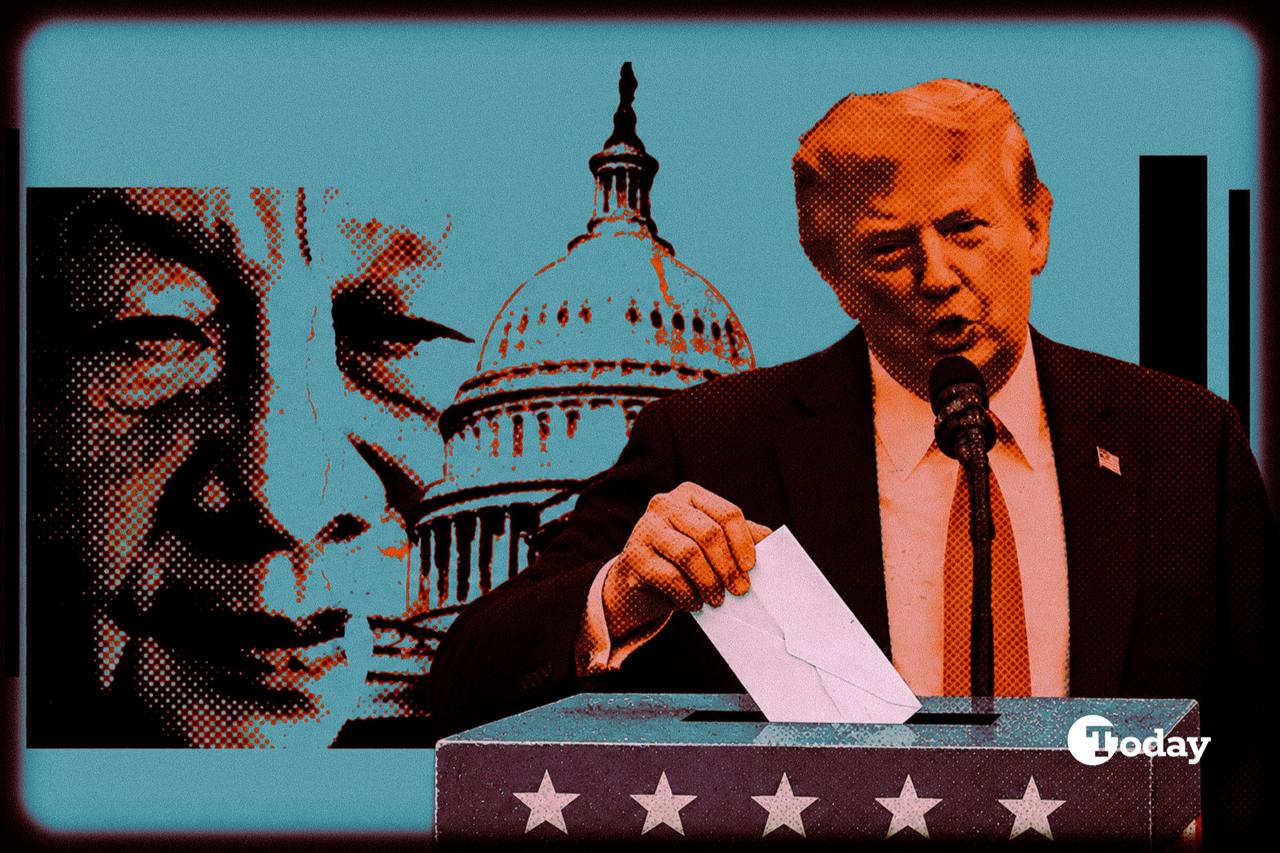


By November, everybody had a story, nobody had an alibi, and the truth was missing.
The day of reckoning will send a Nevada UFO insurance salesman, a Florida alligator hypnotist and a New York sanitation worker to the polls. Each will carry more information in their pocket than any generation in history. Meanwhile, the country’s sewage system overflows with campaign promises and counterfeit miracles.
Americans have split the atom, manufactured intelligence and built machines capable of sending a lie around the planet before an Oklahoma rooster clears his throat. For all that progress, voters on Nov. 3 still have to figure out who's running the con.
The country will elect all 435 members of the House of Representatives and 35 senators, determining control of Congress for the remaining two years of Donald Trump's second presidential term.
Percolating beneath the campaign slop lies a harder question: whether those elected will serve the Constitution or the president.
The trail leads to Beijing, where the boss demands loyalty and the loyal keep disappearing.
Xi Jinping has spent more than a decade purging officials, demanding obedience and administering what Beijing calls “self-revolution.” It is political housekeeping conducted with the solemnity of a funeral and the efficiency of an abattoir.
The Communist Party's Central Committee began with 376 members in 2022. Attendance had fallen to 315 by last year. Huang Qifan, once the powerful mayor of Chongqing, is under investigation.
Even associates of Wang Qishan, who helped build Xi's machinery of political discipline, have discovered that yesterday's loyalty offers little protection against tomorrow's suspicion.
In Xi's China, yesterday's trusted sidekick can become tomorrow's suspect. The charges change, the faces disappear, and the gears keep grinding. Nobody asks too many questions. That is generally how one stays out of the machinery.
Xi speaks of corrupt officials as diseased trees that must be uprooted or chopped down. But a man who spends his life cutting down trees may one morning discover that he has destroyed the forest.
Political scientist Ling Li put the governing philosophy plainly: “An injection of fear will make consensus easier to achieve.”
It certainly will. Fear can make a room full of men nod in perfect agreement. It cannot make them wise.
And that is where Beijing's troubles become Washington's warning. Xi has spent years making officials afraid to contradict him.
America's founders constructed Congress precisely so that a president would have to live with contradiction. One system silences dissent; the other gives it constitutional authority.
“I alone can fix it,” Trump declared at the 2016 Republican convention. The Constitution, unfortunately for men who fancy themselves indispensable, was written on the opposite assumption.
The danger in November is not that America will suddenly become China. It is that Congress could surrender its independence voluntarily, without a purge, a prison cell, or a single shot being fired.
Trump has made personal allegiance a defining currency of his political movement, rewarding those who defend him and turning against those who challenge him.
And once Congress stops asking tough questions, presidents discover that the limits of their power are whatever they can get away with.
Beijing shows how fear can silence the people who govern. Yemen shows how propaganda can manipulate the people who choose their governors.
The Iranian-backed Houthis have assembled a propaganda operation using social media, comedians, musicians and animated Lego warriors to turn political grievances into popular entertainment.
Their unlikely weapon is Jeffrey Epstein. Reports that tapestries once draping Islam's holiest site reached his private island have become ammunition against Saudi Arabia's rulers.
“Those who gave Epstein the Kaba's cover are the ones targeting Mecca,” declared Houthi leader Mahdi al-Mashat.
The accusation demands evidence. The propagandist demands only attention. By the time anyone checks the facts, the story has crossed three borders and acquired a thousand believers.
The Houthi method is familiar enough in American politics. A damaging accusation appears, the outrage spreads, and the evidence arrives late, if it arrives at all. A voter persuaded by a fabricated recording or a cleverly edited video may carry that conviction straight into the polling booth.
“What you're seeing and what you're reading is not what's happening,” Trump told an audience in 2018. It sounded less like a political argument than instructions for making the evidence disappear.
Artificial intelligence makes the racket cheaper and more convincing. The old political confidence man needed a street corner and a willing mark. His modern successor has an algorithm, a synthetic voice and an audience of millions. He can work every street corner on earth without leaving his chair.
A man who believes everything can be fooled. A man who believes nothing can be led anywhere. Both make excellent customers for the fellow selling certainty.
And there, laid out like evidence on a detective's desk, are the two cases confronting America. China shows what happens when powerful men punish independent judgment. Yemen demonstrates how easily that judgment can be manipulated before anyone gets to exercise it.
The connection is simple. A president who dislikes being questioned and a political operative who dislikes inconvenient facts are working different sides of the same street. One wants obedience from those in office. The other wants belief from those who put them there.
There will always be prophets promising salvation through loyalty, vengeance, and the destruction of enemies. Most seem more interested in owning the mountain than bringing wisdom down from it.
America's great advantage over dictatorship is that it can correct its mistakes without asking permission from the men who made them.
And the culprit, when the smoke clears and the witnesses have finished lying, has a familiar name: political cowardice. The kind that makes a politician bow to power and a citizen swallow a lie rather than face an uncomfortable fact.


 Set as preferred source
 Set as preferred source


 1 min read

 1 min read