Newsletters


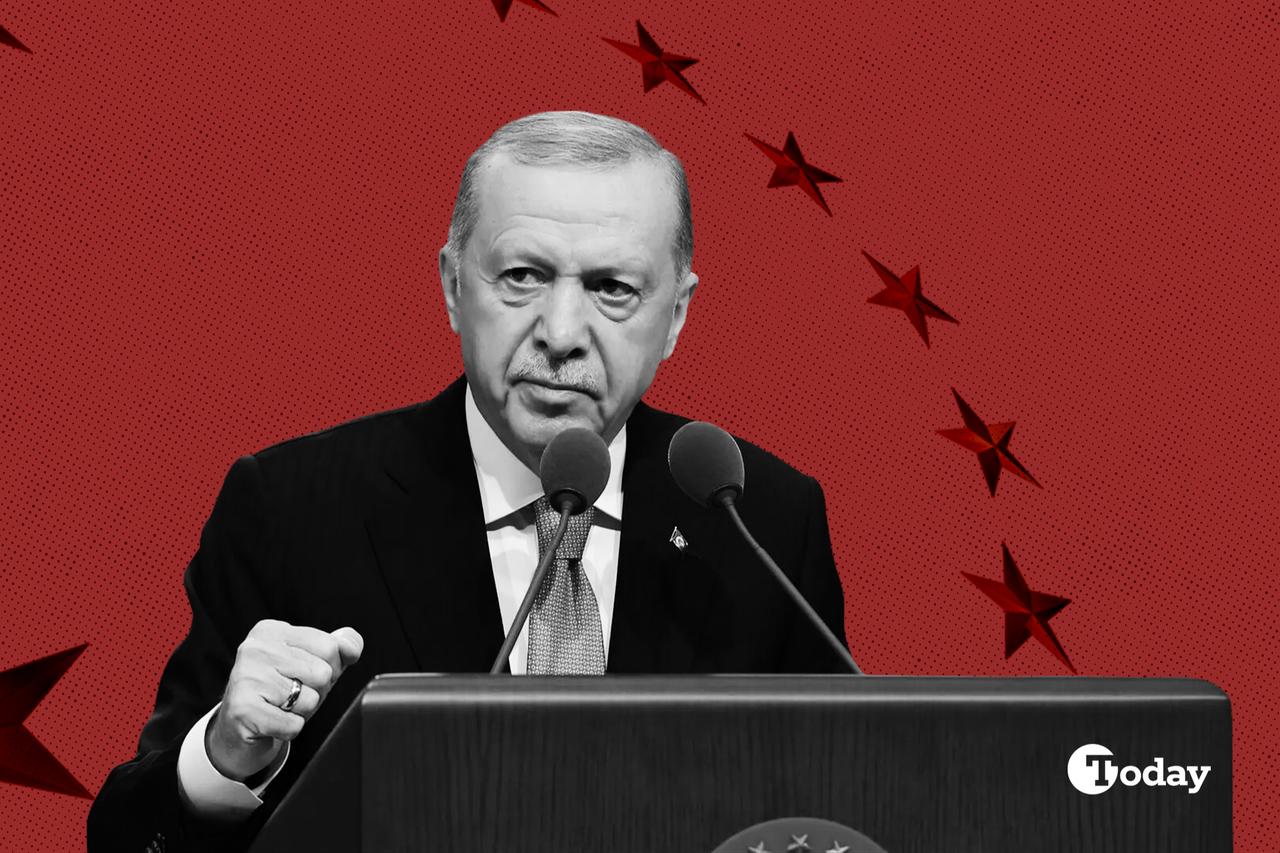


A journalist asked U.S. President Donald Trump a remarkably simple question: Could President Recep Tayyip Erdogan’s harsh rhetoric toward Israel push the two countries toward conflict?
Trump’s answer was not diplomatic. It was personal. He described Erdogan as “a very good friend” and “a strong leader,” then brushed aside the possibility of conflict by referring to the respect Erdogan supposedly has for him. “I don’t think that will happen as long as I’m president because he respects me.”
Trump simply revealed how Washington views Türkiye, how much regional weight Ankara carries, and where Israel’s long-standing narrative of a “Turkish threat” ultimately falls apart.
What is equally clear is that his map is being shaped less by Israel than by the Erdogan-Trump relationship itself.
A few years ago, Tel Aviv quietly began developing a new strategic concept, as I discussed in a previous article. It was no longer enough to position Türkiye as a Sunni buffer against Iran. For Israel, it became far more useful to frame Ankara as the next major threat.
The plan operated on several levels. Türkiye would be portrayed, alongside Qatar and Pakistan, as part of a hostile Sunni bloc. Ankara’s growing ties with Gulf capitals would be undermined. Its expanding defense cooperation with the UAE would be disrupted. Turkish influence in Syria would be rolled back.
Behind this approach stood a coherent scenario. Iran’s regime would not survive for long. Gaza would fall under Israeli control. Syria would ultimately accommodate Tel Aviv’s demands.
In this victory scenario, Türkiye would find itself increasingly isolated across the region and gradually transformed into an unreliable actor in Washington’s eyes.
None of that happened.
While political pressure campaigns continued, something much more tangible was taking shape in the Eastern Mediterranean.
The trilateral framework linking Israel, Greece, and the Greek Cypriot administration presented itself as a platform for regional stability and energy security. Yet when examined alongside the joint cybersecurity center in Nicosia, the deployment of the Barak MX air defense system in Greek Cyprus, and military exercises such as Noble Dina and Iniochos, a different picture emerges.
Together, these initiatives form a layered containment architecture designed to constrain Türkiye’s operational freedom.
The latest piece was added in Houston last week. The Greece-Cyprus-Israel-US 3+1 format activated a previously dormant provision of the 2019 EastMed Act and established the Eastern Mediterranean Energy Center. The legislation itself states that one of the center’s missions is to analyze crises and threats related to competition over regional natural resources, energy reserves, and strategic investments.
In other words, this is not merely an energy cooperation mechanism. It is also an early warning and strategic analysis platform focused on a specific regional actor.
Türkiye, meanwhile, has pursued a different path. Rather than investing in EastMed, a project burdened by high costs and long implementation timelines, Ankara has moved toward an initiative with greater potential at a moment when tensions around the Strait of Hormuz are forcing the world to consider alternatives.
By signing a memorandum of understanding with Saudi Arabia, Türkiye has taken a step toward integrating Gulf oil and commodities into secure overland railway routes, Turkish ports, and existing pipeline infrastructure.
This initiative is not only economic. The geography of the proposed route also creates a strong incentive for broader regional security cooperation.
Viewed from this perspective, Türkiye’s regional policy offers a framework built on development and cooperation. Erdogan’s recent speech should be understood in this context: as a warning against Israel’s increasingly aggressive efforts to reshape the region around a Tel Aviv-centered order.

When Erdogan stated that Türkiye’s security begins not in Hatay but in Aleppo and Damascus, and extends to Beirut, he was openly identifying what Ankara sees as a regional threat emerging from Israel’s actions.
His reference to the “Promised Lands” was not merely rhetorical. It was a strategic interpretation that connected the regional competition generated by Israel’s expansionist policies under a single conceptual framework.
Yet there is another dimension to this speech that has received less attention.
Erdogan’s foreign policy practice represents a type of middle-power diplomacy that has become increasingly rare in today’s international system.
Türkiye remains a NATO member while maintaining dialogue with Russia. It preserves its institutional ties with the Western alliance while engaging diplomatically with Iran. It deepens cooperation with Gulf states while continuing to place the Palestinian issue on the agenda.
The speech reflected this broader position. It was not a threat. It was an early warning regarding a growing military and economic challenge in the region.
This posture can sometimes appear contradictory or risky. Yet it is precisely this flexibility and the willingness to accept risk that make Ankara indispensable. The number of actors capable of speaking to all sides continues to shrink with each passing year.
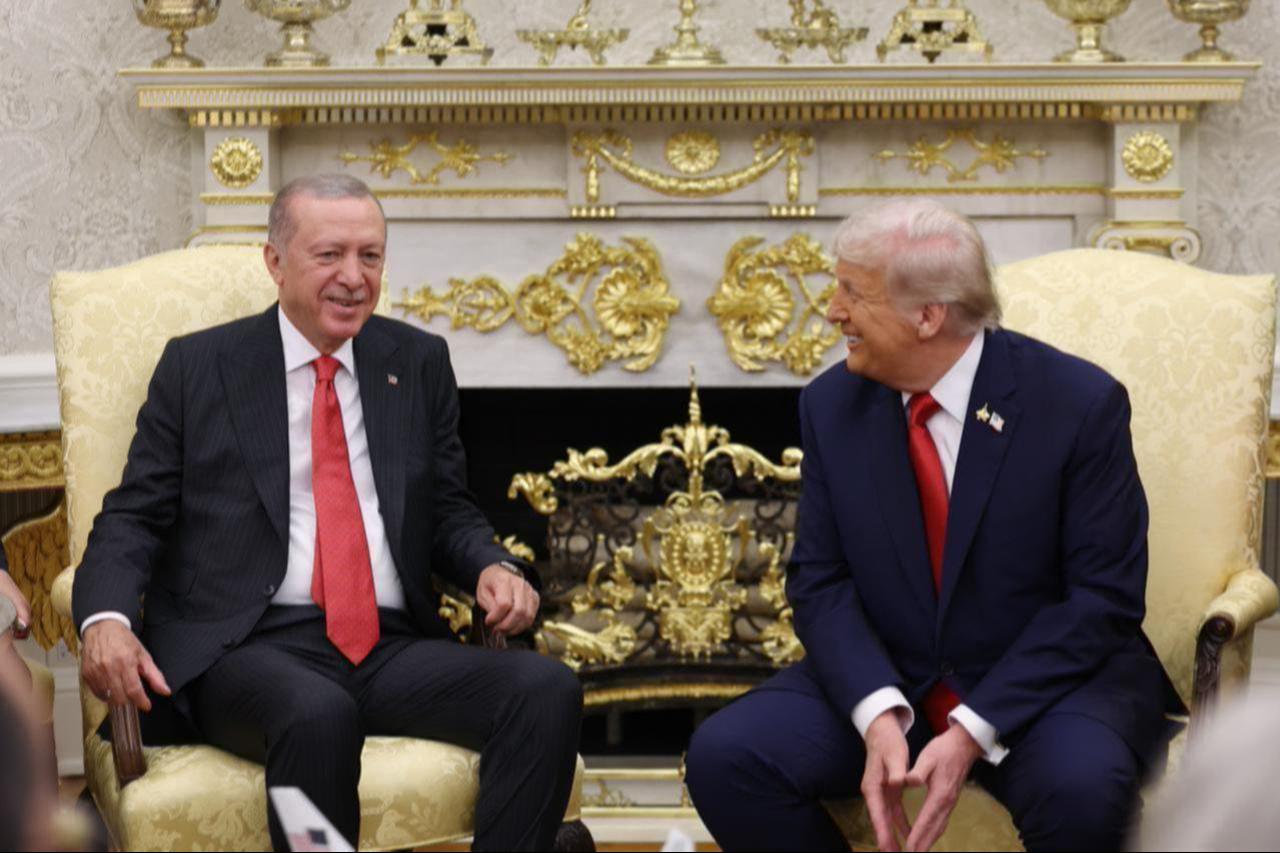
The Oval Office meeting in September 2025 effectively institutionalized the renewed Erdogan-Trump relationship. It opened a broad framework for coordination extending from Ukraine and Syria to Iran and the Gulf.
During the meeting, Erdogan welcomed the extension of the ceasefire between Iran and the United States and expressed confidence that outstanding disputes could be resolved.
Türkiye’s role went beyond simply carrying messages. Ankara tested American positions, issued warnings, and put forward proposals for resolving disputes.
At the same time, Israel was finding itself in an increasingly difficult position.
Former Prime Minister Naftali Bennett warned that Israel’s standing in Washington had “never been worse” and accused Netanyahu of turning the country into a “leper state.”
During a reportedly tense phone call with Netanyahu in late May, Trump also made clear that actions targeting Beirut would further deepen Israel’s international isolation.
The emerging picture highlights a significant Israeli miscalculation.
The military and institutional architecture developing across the Eastern Mediterranean is real, growing, and deserves serious attention from Türkiye. Yet Ankara’s own initiatives, built around crisis management, regional cooperation, and cost-benefit-driven economic projects, appear increasingly capable of reducing the strategic impact of this challenge.
President Erdogan’s speech should therefore be understood as an effort to expose Tel Aviv’s expansionist and confrontational policies, which seek to redesign the region around Israel as its central organizing principle.


 Set as preferred source
 Set as preferred source



 4 min read