Newsletters


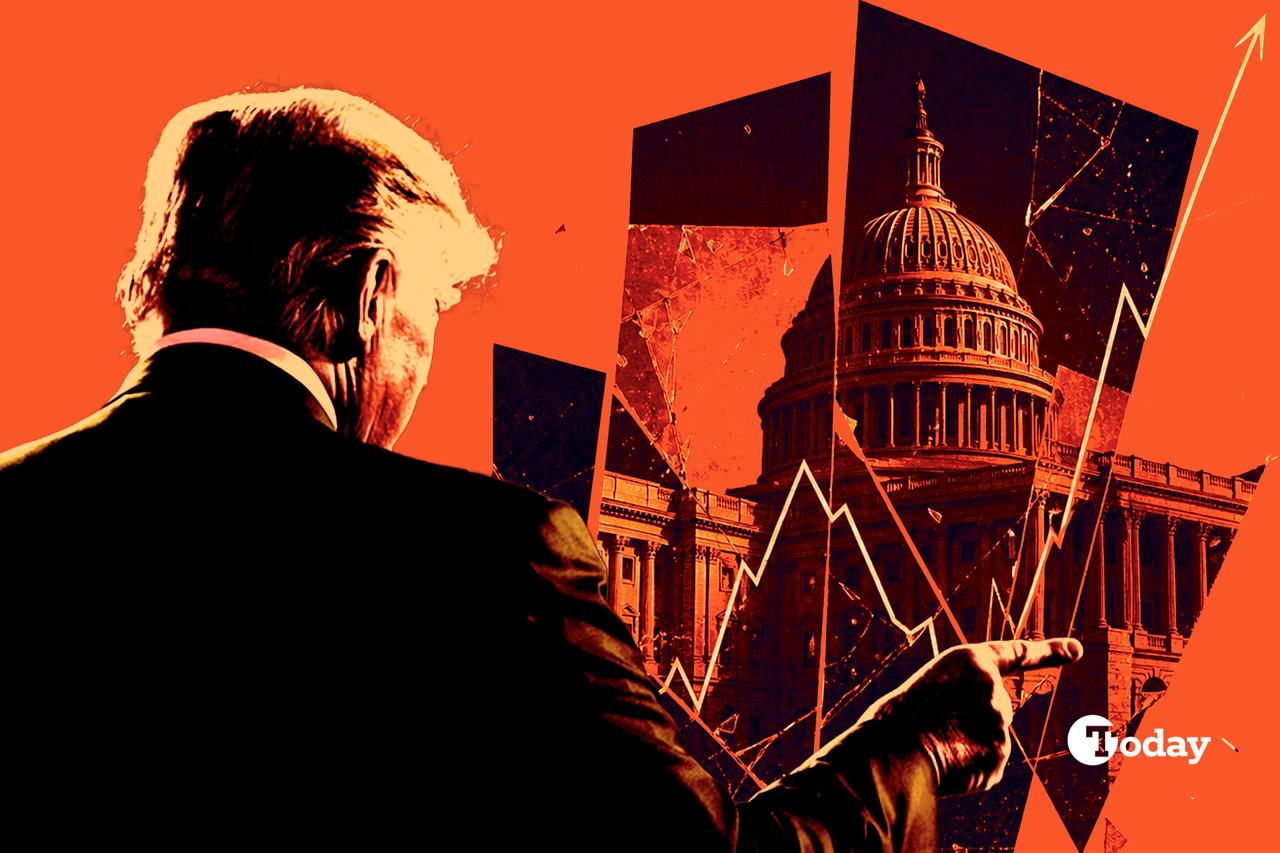


There’s good money in America's collapse, provided the paperwork is in order, the insurance premiums are paid and the policy covers whatever is left standing.
Every calamity needs a Willy Loman. MAGA has Donald Trump. With the Nov. 3 midterms looming, the president is once again crying fraud, dangling cash rewards and turning up the heat beneath an already combustible republic.
Behind the barricades, the insurance men are doing their arithmetic.
Shopkeepers, hotel owners, landlords and corporate giants all have something to lose when the mob comes calling. Most businesses already carry some riot protection in ordinary property policies; the bigger, more nervous operators can buy specialized coverage against political violence.
Nobody is insuring the survival of the republic. They're insuring the plate-glass windows, the merchandise, and, sometimes, the profits that disappear when the windows go.
Yet there’s a catch in the business of underwriting Trump’s madhouse. Riot protection is already buried in millions of property policies, while specialized political-violence insurance operates in a murkier market.
Nobody has a reliable national count of new customers since the Jan. 6 attack on the Capitol, much less a figure for how many Trump personally frightened into buying coverage.
To be sure, the business was stirring long before Washington was stormed. Reuters reported that American sales of commercial policies covering civil unrest doubled in October 2020 from September. By May 2026, Allianz specialist Srdjan Todorovic was seeing “more buyers than ever in this space.”
At Aspen Insurance, chief executive Mark Cloutier offered a grimmer assessment. “Some people still try to deny that 6 January happened, but it happened,” he warned in 2024, describing a country growing angrier and more divided.
These were not political firebrands or television prophets selling the apocalypse. They were insurance executives, whose professional business is to calculate the cost of things going terribly wrong. And in America, the calculations were becoming increasingly interesting.
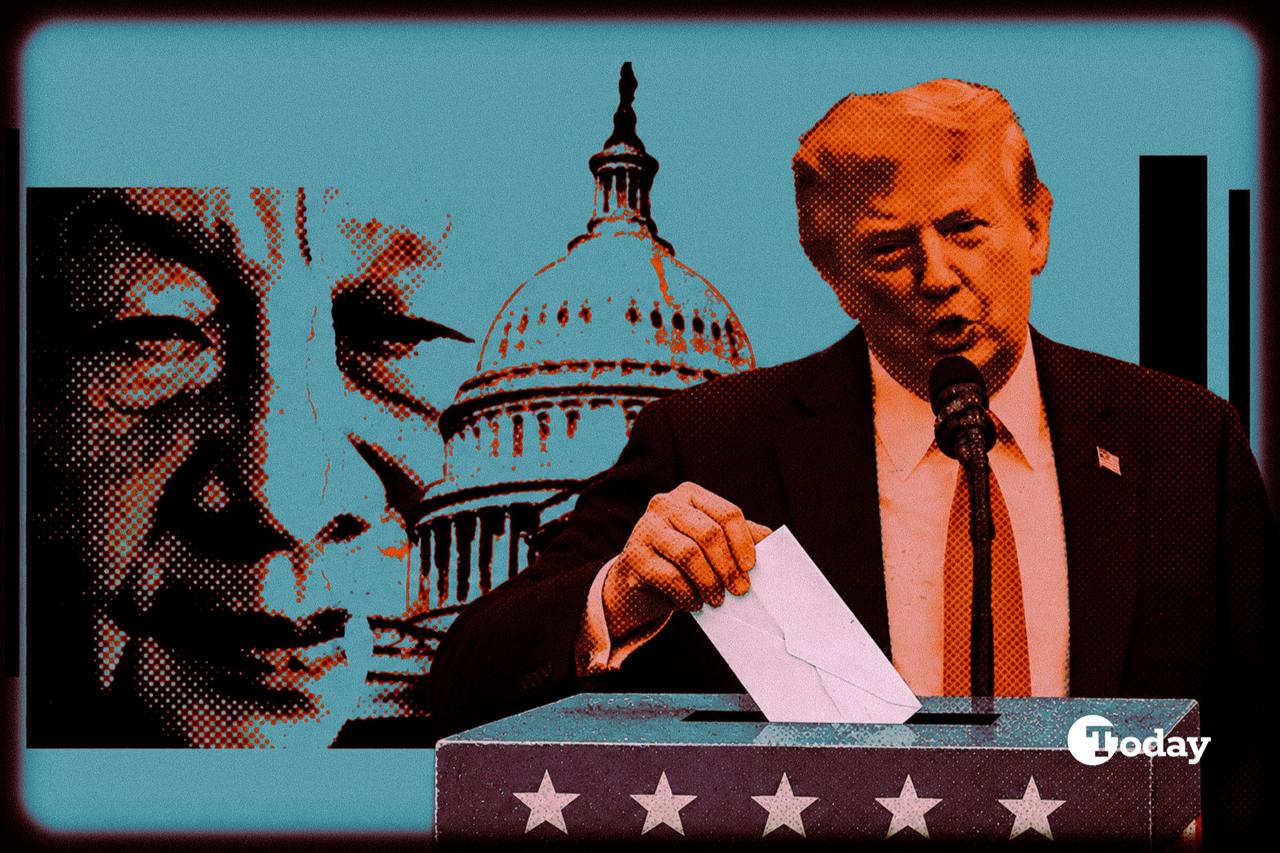
As the republic lurches toward its next electoral nervous breakdown, Trump announced a $1 million reward for reporting voter fraud leading to an arrest and conviction, without explaining where the money would come from.
“I will be the arbitrator of all of these decisions,” Trump declared, appointing himself chief claims adjuster.
He has also promised Americans a $5,000 dividend if Republicans retain control of Congress, a proposition costing more than $1 trillion.
Trump’s United States of America is now a very peculiar three-card monte operation, with the president shuffling the deck and the public underwriting the losses.
Vote correctly and perhaps collect $5,000. Find a convicted election cheat and perhaps collect a million. Lose your storefront in the resulting political excitement and consult Section Seven of your insurance policy.
In France, where revolution is practically a national inheritance, the authorities have been wrestling with a marvelous financial contraption called the taxe émeutes: a riot tax, or more precisely, a proposal to spread the cost of riot insurance among property owners.
The proposition has Gallic elegance. The citizen pays taxes to maintain public order, pays insurance premiums in case public order collapses, and may now face an additional charge to help finance the collapse itself.
Imagine a Parisian shopkeeper standing among the splintered glass and overturned shelves of his livelihood, comforted by the knowledge that somewhere an actuary has classified his catastrophe.
The French figures are impressive. The Yellow Vest upheavals produced €267 million ($297.4 million) in insured losses. The 2023 riots cost €798 million. New Caledonia's troubles in 2024 generated €945 million.
Civil disorder has become an expensive national pastime.
The principle of making society pay for its own explosions goes back centuries. England's Riot Act of 1714 provided compensation for certain victims of mob destruction, while the Riot (Damages) Act of 1886 formalized payments from police funds. These were early forms of collective financial protection, not commercial insurance.
Modern insurers have turned that ancient problem into a business of pricing public fury.
In America, riot and civil commotion coverage is commonly included in commercial property policies.
Specialized political-violence insurance can extend protection to additional risks, although exclusions for war, rebellion and insurrection create potentially expensive disputes over precisely what kind of catastrophe has occurred.
After George Floyd's murder in 2020, protests swept American cities. Most were peaceful, but the accompanying violence generated more than $2 billion in insured losses, according to industry estimates.
Then came Jan. 6, 2021.
The Capitol was invaded, police officers assaulted, windows shattered and the peaceful transfer of presidential power violently challenged by supporters of a president unwilling to accept defeat.
One might expect a stampede toward the insurance counter. Yet the industry's economics are less straightforward. Rising risk can produce higher premiums, tighter underwriting, larger deductibles and reduced coverage rather than a flood of new customers. An insurer facing catastrophic losses may decide to charge more, insure less or retreat altogether.
Trump's repeated unsupported allegations of widespread election fraud, refusal to accept the 2020 result and role in the events preceding the Capitol riots made political instability a tangible concern for businesses and underwriters. But America's enormous riot losses in 2020 preceded Jan. 6, while France, Chile and New Caledonia have experienced costly unrest without his direct involvement.
The phenomenon is international: political anger capable of traveling from a telephone screen to a burning building with terrifying speed.
Trump did not invent this predicament. He is one of its most conspicuous American accelerants. He supplies the accusations, the crowds supply the fury, and the insurers supply the paperwork.
Nobody can say what Nov. 3 will bring. But if America catches fire again, somebody will be standing in the ashes arguing about the deductible.


 Set as preferred source
 Set as preferred source


 1 min read
 1 min read