Newsletters


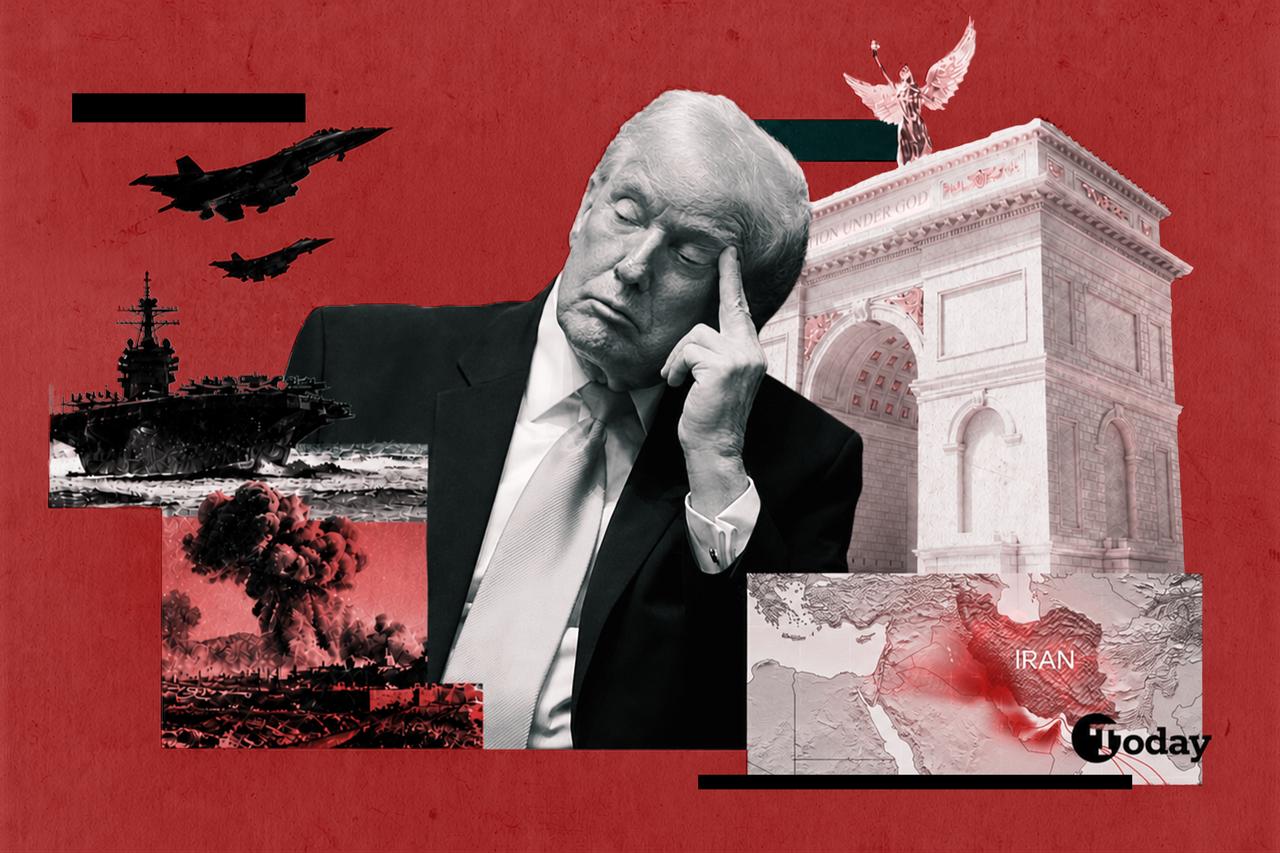


America has entered Deciding Mode, the capitalized stage of empire where you start one war, load the bombs for the next, and hope somebody eventually remembers to produce a plan.
Donald Trump used those words Sunday while discussing the war with Iran—the conflict he started that has yet to end and now threatens to sprout another American front in Yemen.
Deciding Mode. It sounds less like doctrine than an admission. The bombs are ready. The targets are ready. The president is still deciding.
In spring 2025, the U.S. spent over 50 days bombing the Houthis before Trump abruptly announced a ceasefire after the group agreed to stop attacking American ships.
They largely did.
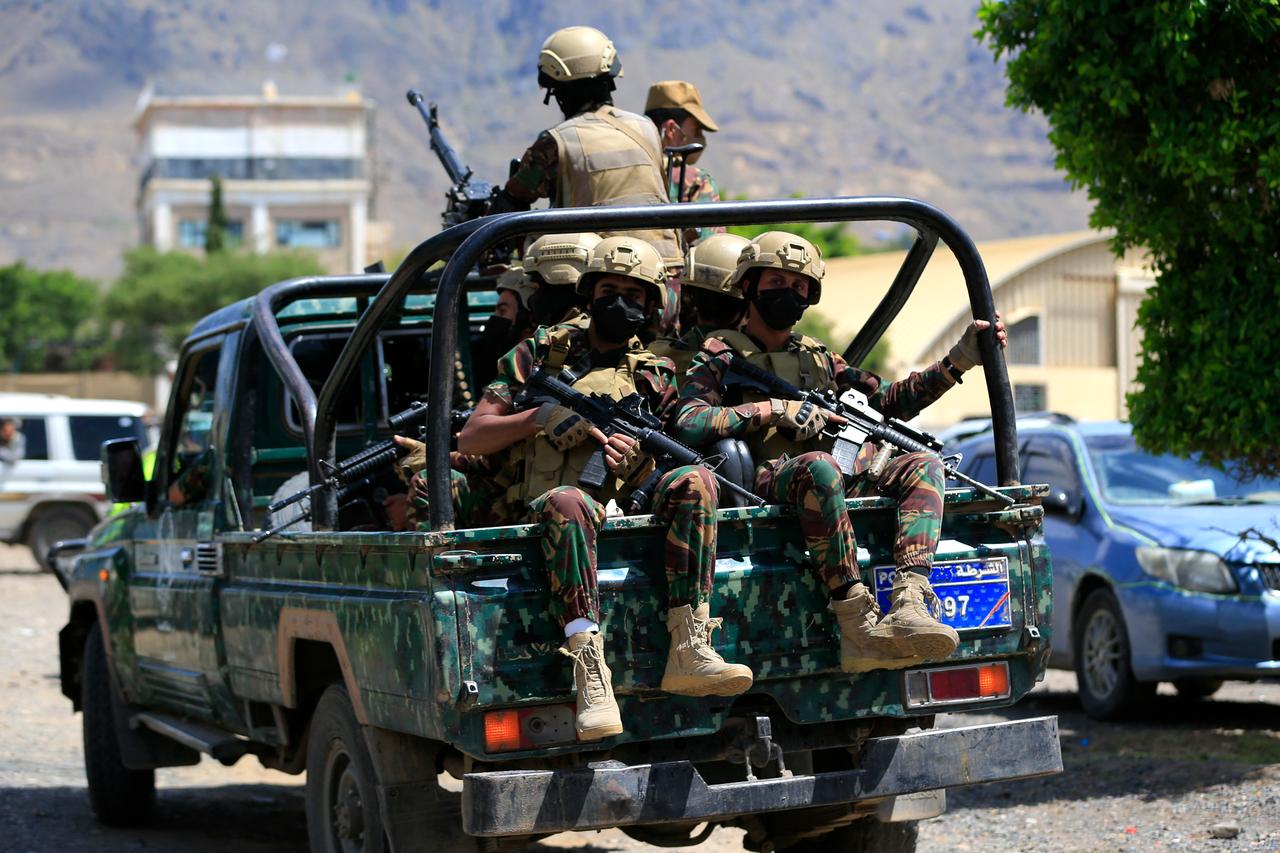
Then came the summer of 2026. The Iran-backed Houthis reignited their war with Saudi Arabia, attacked Saudi shipping, and threatened the Bab al-Mandab Strait.
Riyadh began pressing Washington to join the fight.
For two weeks Trump resisted, wary of opening another front while already at war with Iran. Then Crown Prince Mohammed bin Salman called and pressed the case again. Trump reversed course. The Pentagon prepared to strike. Target lists were approved, and crews began arming aircraft.
Then Trump reversed himself again. No attack. Not yet.
So by Sunday, the U.S. was fighting Iran while considering renewed attacks on an Iranian-backed movement it had bombed more than a thousand times the previous year—and which had since stopped attacking American ships.
This is how policy now moves through the most powerful military apparatus on earth: yes, no, load, wait, perhaps—foreign policy as muscular sclerosis, with aircraft carriers attached.
But the genuine story is what happens when presidential impulse becomes the operating system of the state. A crown prince calls. Trump changes his mind. The Pentagon moves. Trump changes his mind again. The Pentagon stops.
There is a think-tank term for government organized increasingly around the ruler rather than the rules: patrimonialism.
Rules bend toward the ruler. Appointments turn personal. Law enforcement grows political. Pardons, prosecutions, and the prestige of office become instruments of loyalty and grievance. Trump did not invent the instinct. He has brought it into the Oval Office with the enthusiasm of a casino developer discovering somebody else is paying for the chandeliers.
Beyond government lies another transformation: the lowering of the threshold of the unacceptable. Insults become background noise. Threats become jokes; jokes become policy signals; falsehoods dissolve into atmosphere.
Exhaustion does the rest. Each transgression makes the next cheaper until what disappears is not a particular convention but the expectation that limits exist.
And now, naturally, there is a 250-foot triumphal arch. Not metaphorically. An actual one.
Trump announced Sunday that his proposed monument near Arlington National Cemetery would double as what he called a "top-grade Military Complex/Triumphal Arch,” accommodating drones, snipers, and ammunition. The conversion, he said, was necessary for national security.
At some point satire has to surrender its weapons and go home. Rome erected arches after victories. Washington is proposing one while deciding which warplanes might hit which country tomorrow, then filling the monument itself with weapons.
It begins to resemble less a memorial than an architectural rendering of the presidency: colossal, gilded, armed, and permanently expecting trouble.
The bill from the last Yemen experiment was impressive. Central Command hit more than 1,000 targets during the 2025 campaign, burning through roughly $1 billion worth of munitions in the first month alone.
The Houthis endured. They shot down American drones and fired at naval vessels. Two $67 million F/A-18 Super Hornets assigned to the campaign somehow ended up in the sea.
A year later, the enemy Trump had pummeled from the air had rebuilt significant military capabilities.
That leaves Trump and Middle Eastern allies with the circular logic of modern imperial management. Intervene, and the U.S. reenters a fight against an enemy that had stopped attacking it.
Stay out and Riyadh can withhold cooperation Washington needs elsewhere, as the Saudis have already demonstrated over a U.S. plan involving oil tankers in the Strait of Hormuz.
For Türkiye, heavily dependent on imported energy and sitting astride trade routes linking Europe to Asia, simultaneous instability in Hormuz and the Red Sea is hardly a distant spectacle. Every threatened tanker and rerouted container ship has a way of eventually arriving in Istanbul with a higher bill.
This is what an anxious superpower looks like in its patrimonial baroque phase. Weapons budgets bleed into architecture. Architecture mutates into security infrastructure. National defense becomes an all-purpose sacrament, while the boundary between the state and the personality commanding it grows harder to locate.
Normalization is the real narcotic. Consider what now passes for an ordinary Sunday in the republic: a billion dollars in munitions burned through in a month, two $67 million fighters at the bottom of the sea, over 1,000 targets struck, another war plan prepared against an enemy the planners doubt can be bombed into submission, and a 250-foot triumphal arch being discussed as a handy place to keep the snipers and ammunition.
The lunacy no longer interrupts American political life. It is American political life, arriving at broadband speed until the citizenry develops the survival instincts of lab rats living beside the shock button.
And perhaps that is what Trump’s arch is really for. Not victory—there isn't one. Not peace—certainly not that. It is a monument to the Great American. Maybe, a colossal gilded shrine to impulse, reversal, and permanent emergency, erected while the jets are fueled, the allies haggle, and the enemies reload.
Napoleon ordered his arch at l’Étoile atop the Champs-Élysées to celebrate military victory. Trump wants his while the wars are still running; nobody knows where the next bombs will fall, and he plans to stash ammunition inside it just in case.
Trump may anoint it his L’ Arc de Triomphe. History will likely have a better brand name: L’Arc de Turpitude.


 Set as preferred source
 Set as preferred source


 8 min read