Newsletters




This article was originally written for Türkiye Today’s weekly newsletter, Saturday's Wrap-up, in its April 18, 2026, issue. Please make sure you subscribe to the newsletter by clicking here.
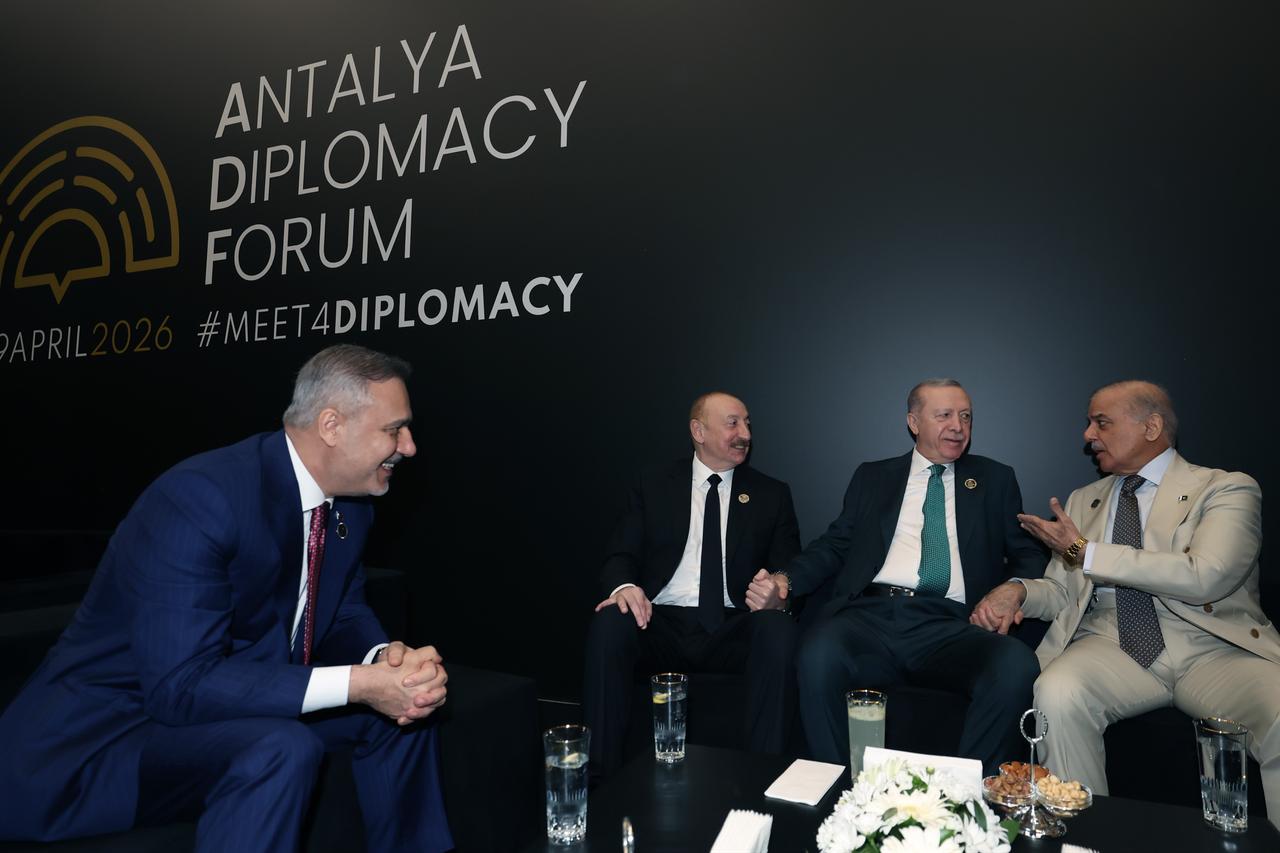
Get dazzled by peacemaker Shahbaz Sharif’s tan suit, bump into Turkish Cypriot President Tufan Erhurman on the smoking terrace and watch Ahmad al-Sharaa successfully open a bottle. You may even cross paths with the exiled political leader of the Crimean Tatars in the restroom or witness Tom Barrack winning over the room with Ottoman references and flattery.
This is the Antalya Diplomacy Forum, an event showcasing Türkiye’s accelerating diplomatic agency. For a nation that was once a bystander on world stage, its a point of pride.. It’s a haven for journalists, effectively slashing your travel budget for networking. Every Ankara bureaucrat who matters is within arm’s reach.
The Global South is there, too. Erdogan’s foreign policy mantra, "The world is bigger than five," has proven to be far more than a covenient political slogan. It isn’t just bait for the domestic audience, a ploy to rally conservative voters, or filler for empty speeches.
Across all the panels at the forum, a consistent threat emerged: a shared frustration with the uncertainties bred by current international decision-making. Speakers repeatedly pointed to the resulting disorder, chaos, and rogue state behavior of actors like Israel.
So, what exactly does “a world bigger than five" mean?
Coined by President Erdogan around 2013 and famously cemented during his 2014 U.N. General Assembly address, the phrase is a direct indictment of the U.N. Security Council's archaic architecture. It calls out the absurdity of leaving the fate of global security in the hands of five veto-wielding permanent members—the U.S., U.K., France, Russia, and China—who essentially represent the victors of a world war that ended over 80 years ago. It is a demand for a multipolar reality where Africa, Latin America, and the broader Islamic world actually have a seat at the table, rather than just being on the menu. At the ADF, this isn't just a Turkish talking point; it's the underlying pulse of the entire Global South's frustration.
While diplomats from God-knows-how-many countries network, think-tankers scout their future clients, and journalists obsessively monitor their rival outlets, the world’s focus shifted for an instance. Trump announced the opening of the Strait of Hormuz on Truth Social—or rather, half-Truth Social.
Whenever you read a Trump post these days, you naturally proceed with caution; if he says you have two eyes, your first instinct is to find the closest mirror just to be sure. But then Trump’s post was reinforced by Iranian Foreign Minister Abbas Araghchi’s tweet, and you reluctantly accept that he might actually be telling the truth.
Trump’s all-caps digital victory lap declaring the Strait "FULLY OPEN AND READY FOR FULL PASSAGE" sent global oil prices into a sudden 10% tailspin, momentarily wiping out the apocalyptic energy shock we've all been sweating over. For many, the peace negotiation in Islamabad is a way to gain time, as they find it unlikely for the U.S. and Israel to leave the war as it is without achieving any of their stated strategic objectives.
Whatever happens with the Iran war, it is too late to go back to pre-war days. The gathering of the foreign ministers from Türkiye, Saudi Arabia, Pakistan and Egypt at the Antalya Diplomacy Forum marks their third consecutive quadrilateral meeting in less than a month. Following initial summits in Riyadh and Islamabad, the reconvening in Antalya underscores an urgent diplomatic push to manage the fallout of the Iran war.
Turkish media outlets have closely tracked the gathering, heavily speculating that the quadrilateral talks could lay the groundwork for a broader mutual defense cooperation agreement in the future. This speculation is possibly driven by the Saudi-Pakistan Mutual Defense Agreement, which saw Pakistani troops deployed to the Gulf.
There was no public speech or any sort of remarks from Pakistan’s Prime Minister Sharif in Antalya. Sharif clearly doesn't want to jeopardize the fragile positive developments unfolding with Iran by saying too much, too soon.Like many Pakistanis, he is pleased with momentum, quietlyproud of the role the country is undertaking.
When it comes to Türkiye, the country is reacting to the Iran situation with the utmost caution. Türkiye does not even appear cautiously optimistic about a quick peace; rather, it calculates every scenario as if it were the first day of the U.S. attack on Iran.


 Set as preferred source
 Set as preferred source


 7 min read