Newsletters


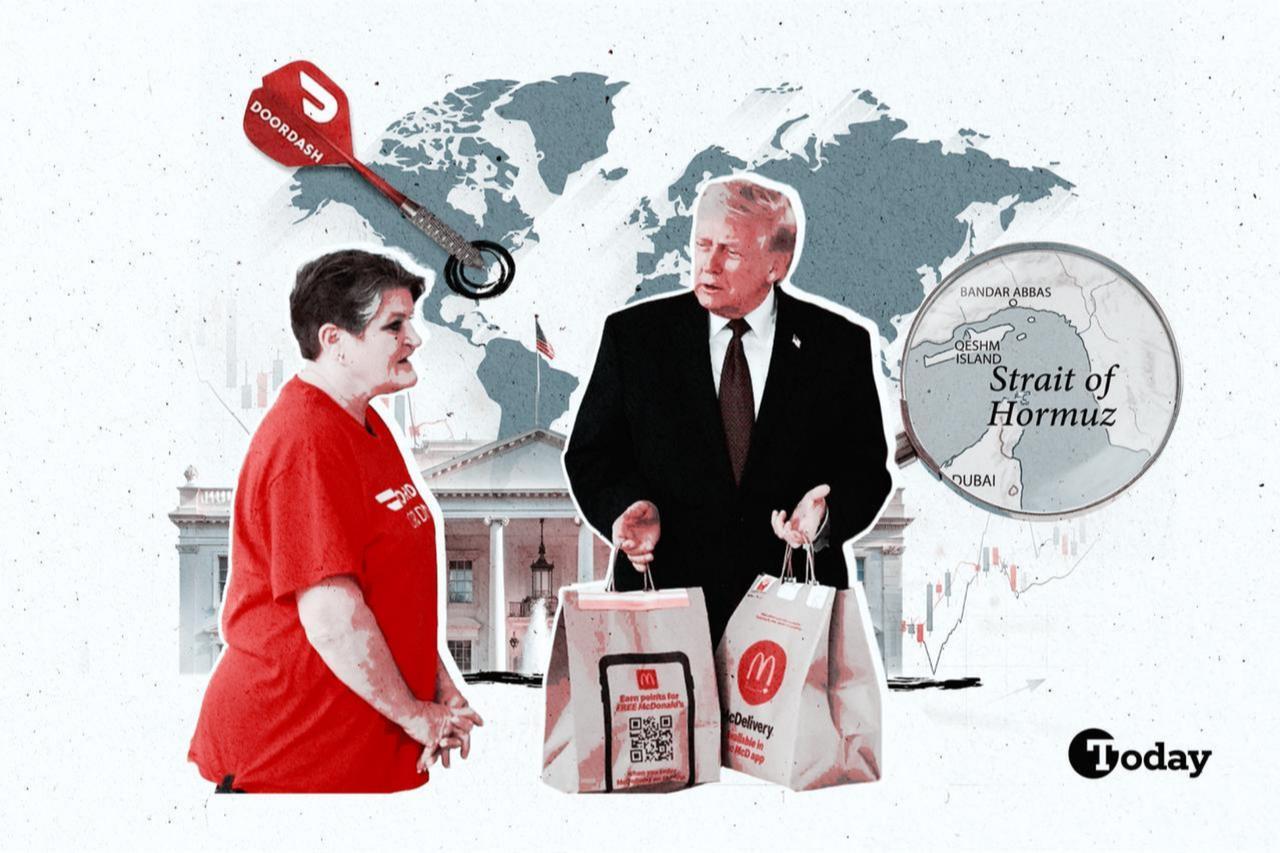


The event smelled of flaccid fries and slick puffery. It's the kind of odor that clings to your clothes long after you’ve bolted the McDonald’s on 17th Street NW for a high-velocity political consultation in Washington.
No, not this week’s 2026 Spring Meetings of the IMF and World Bank, where ministers and central bank governors scramble to contain the unprecedented cascade effects of the worldwide energy shock triggered by Operation Epic Fury and closure of the Strait of Hormuz.
“The global outlook has abruptly darkened following the outbreak of the war in the Middle East,” Pierre-Olivier Gourinchas, the IMF’s chief economist, told the congregation.
“The war interrupted what had been a steady growth trajectory.”
But President Donald Trump wasn’t letting the global economy throw shade on the North Lawn. There, the man who bankrupted six casinos hosted the "Welcome to the Gig Economy Summit of the Damned."
Under a sky scrubbed for television, Trump gazumped the IMF by masquerading political theater as a dishwasher-safe press event with a delivery receipt stapled to his forehead.
The premise: A DoorDash driver, a grandmother named Sharon Simmons, bearing a fast-food offering to the gods of optics. The subtext: policy laundering, grievance politics, and a humming anxiety about enemies abroad and decay at home.
Simmons—with the practiced composure of someone used to juggling too many things at once—was there to praise the “No Tax on Tips” provision tucked inside Trump’s so-called “Big Beautiful Bill.”
She’d advocated for it before and even testified in its favor.
On paper, she was the perfect witness: working-class, articulate, sympathetic. In practice, she became a human shield in a carnival shooting gallery.
The scene opened as soft and tender as a chicken McNugget. Trump played greeter-in-chief, the local car dealership tone dialed up just shy of parody.
“Nice to see you,” he said, as if the cameras weren’t already eating the moment alive.
Simmons stayed on script.
Then the mask slipped. Trump glanced at the press pool and asked, “This doesn’t look staged, does it?”
That’s what poker players call the “tell,” when a detective knows the room’s gone crooked and the perp prays the anaesthetic kicks in.
From there, the event unraveled into a jagged series of pivots—part grievance rally, part improvisational spectacle. Trump invited Simmons into a live press exchange, framing the assembled reporters as hostile fauna.
“These are not the nicest people,” he told her, coaxing complicity with a wink and a shove.
Simmons agreed to participate politely and cautiously, like someone stepping onto ice she knows might crack.
And crack it did.
When pressed on a social media post depicting himself in Christ-like imagery, Trump swerved into a fog of denial and invention. He claimed the image was misunderstood.
A “doctor” meme, he said, was about healing and making people better. It was the kind of explanation that doesn’t withstand a stiff breeze, let alone scrutiny. But scrutiny never came. Not one follow-up question. Not one attempt to pin the story to the mat.
Instead, Trump veered again, dragging Simmons’ personal life into the spotlight. Her husband’s cancer treatment became a rhetorical prop, folded into his narrative about economic relief. The implication was blunt: his policy helps people like you; therefore, the spectacle is justified. Simmons, cornered by circumstance and decorum, affirmed politely.
What else was she supposed to do?
Here’s the harder truth: her situation is precisely the indictment no one wanted to voice. Even with insurance, her family’s savings had been gutted by medical bills. That’s not a victory lap for tip policy—it's a flashing red alarm about the system itself. Yet the press corps, assembled in full force, let it pass like a ghost in daylight.
No questions about health care. No pressure on the contradiction. Just silence.
And in that hush, the broader narrative crept in, the one purring beneath the surface of modern American politics. Fear, not just of domestic decline but of external threats.
Iran looms large in the rhetoric, cast as the archetype of the dangerous other: radical, unknowable, nuclear-capable. The “DoorDash war,” if you can call it that, isn’t about logistics or labor. It’s about framing a world where enemies are everywhere, and strength must be performed, loudly and often, even in the delivery of fast food.
Back on the lawn, the performance continued.
Trump tried to bait Simmons into culture war territory, pivoting to trans athletes with the casual aggression of a man testing fences. She refused.
“I’m here about no tax on tips,” she said, clean and direct. It was one of the few moments of clarity in an otherwise murky affair—a refusal to be conscripted into a broader ideological battle.
Meanwhile, over at the IMF meeting, bankers warned that oil is set to increase 21.4% this year, with energy and commodity prices, once projected to fall, now spiking by 19%.
Yet the only disruption in Trump World came when Simmons revealed she hadn’t actually voted for Trump in 2024. Not out of protest, but due to circumstances such as registration timing and bureaucratic friction.
Yikes! a featured supporter who didn’t cast a ballot. In another setting, it might have sparked a conversation about voting access.
Here, it barely registered, along with no mention of how Epic Fury has surged the cost of fertilizer, sent oil above $100 per barrel, and skyrocketed natural gas by over 80%.
Then came the sideshow flourish: a question about a hypothetical UFC fight on White House grounds, complete with branding suggestions.
“UFC 1776,” the reporter offered, with the earnestness of a man who’s forgotten where he is. Trump liked the idea. Of course he did. In this arena, everything is spectacle, and spectacle always needs a sequel.
By the end, the facts were clear, even if the narrative wasn’t. Simmons is a real person with real struggles, advocating for a policy she believes helps her.
The event was orchestrated, tightly enough to guide the message but loosely enough to let chaos seep through.
Trump leveraged personal stories to reinforce political claims, often stretching or distorting reality in the process.
The press, for its part, missed multiple opportunities to challenge inconsistencies or probe deeper issues—especially health care.
And hovering over it all was the raw anxiety of America staging performances of strength while wrestling with internal fractures and projecting fear onto external foes.
In the end, it wasn’t about DoorDash or McDonald’s or even tax policy. It was about control of the narrative—who gets to tell it, who gets used in the telling, and who, if anyone, is willing to call it what it is when the curtain slips.
Apparently, auditioning for that role, U.S. Treasury Secretary Scott Bessent told the IMF to “get rid of their golf course out in Maryland.”


 Set as preferred source
 Set as preferred source


 7 min read