Newsletters




This article was originally written for Türkiye Today’s weekly newsletter, Saturday's Wrap-up, in its Feb. 14, 2025, issue. Please make sure you subscribe to the newsletter by clicking here.
For months now, a familiar pattern has re-emerged in regional info wars. Israeli politicians and pundits are actively pushing a narrative painting Türkiye as the next “Iran,” a state with a secretive nuclear agenda, aggressive intent, and hidden motives.
This all started after the fall of former Syrian President Bashar al-Assad. This narrative was driven by the same instincts that once governed the Israel-Iran story: fear, more fear, and the power of a label once it sticks.
Israel’s messaging seeks to transform uncertainty into a “fait accompli” in international media, showcasing Ankara not as a stabilizing regional actor but as a lurking nuclear threat. The standing ovation Israeli Premier Benjamin Netanyahu received in the U.S. Congress shows that, no matter what he does, it's easy for him to turn his narrative into everyday talk.
Israel’s narrative building against its regional rivals is far from accidental. For decades, narratives about “secret programs” have been potent tools in the Middle East, evident in Israel’s long-standing opposition to Iranian enrichment and its doctrine of preventive strikes to stop nuclear breakouts.
Until recently, Ankara had been remarkably disciplined in avoiding hints that might validate such a framing. Türkiye is a signatory to the Nuclear Non-Proliferation Treaty (NPT).
At the same time, its civilian nuclear energy infrastructure, like the Akkuyu plant and cooperation with Rosatom, has become fodder for speculative reporting abroad. It is sometimes accompanied by deliberately alarmist spin in Israeli outlets keen to shape Western perceptions.
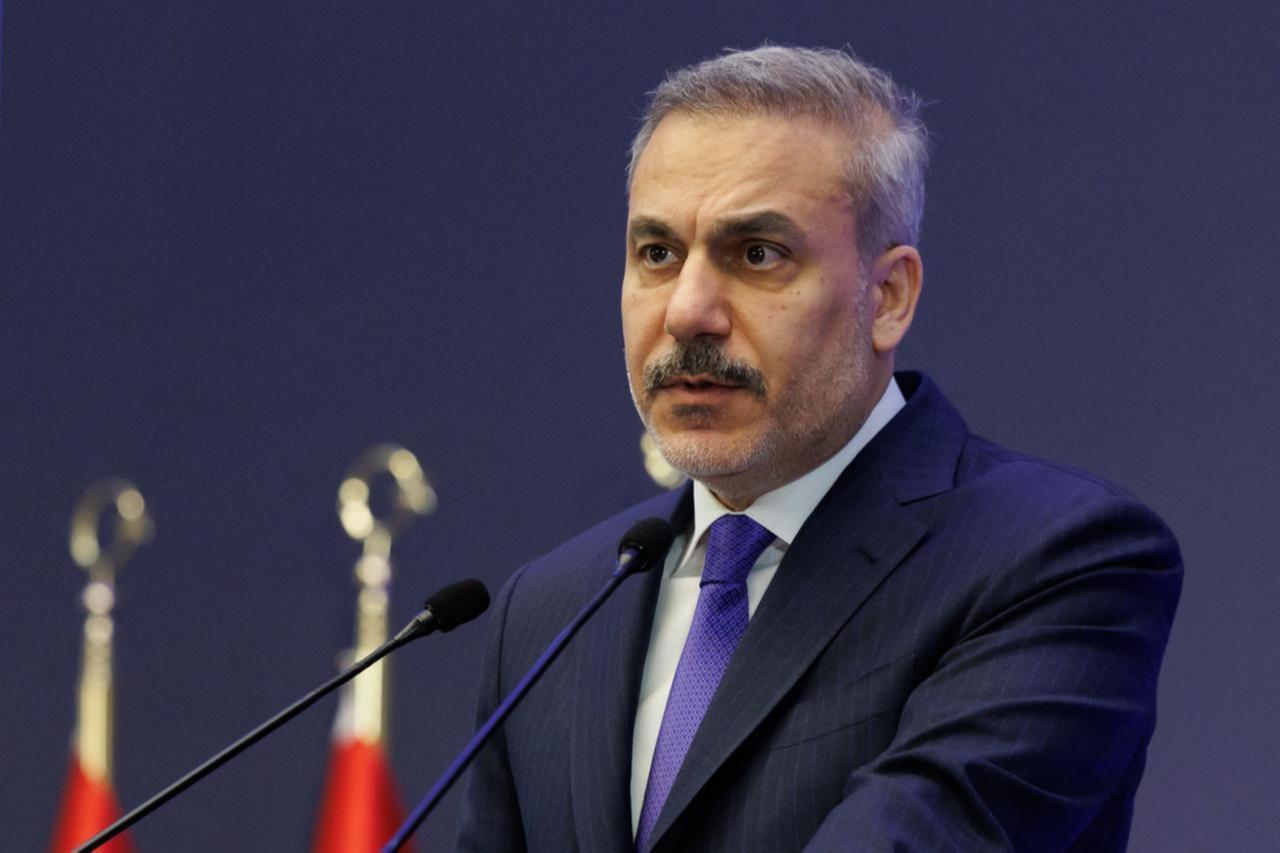
But this week’s CNN Turk interview with Foreign Minister Hakan Fidan introduced a new dynamic, not through words, but with silence.
In a weird exchange on national television, Fidan was asked directly whether Türkiye should acquire nuclear weapons by Hurriyet's Editor-in-Chief Ahmet Hakan.
We don’t know if the question was pre-approved by Fidan’s team, or if the journalist did not think it was a big deal. He is not a foreign policy junkie, but he is an ‘experienced’ journalist who would be careful not to surprise Fidan big time, considering Türkiye’s tough media landscape.
Instead of the standard diplomatic denials we have become accustomed to, the foreign minister paused for 'seven seconds' and chose not to answer, not even opting for “no comment” when offered the chance.
This silence has reverberated regionally and internationally. While on the surface his silence may appear inconsequential, geopolitical contexts rarely reward mere absence of speech.
In fact, commentators in Israel and Greece have already treated this moment as a strategic signal, precisely because it was neither an affirmation nor a denial.
Are we overthinking Fidan's 7-second silence?
Türkiye Today contributor Deniz Karakullukcu has something to say on that. He argues, ''By not providing a standard denial, the Turkish state compelled regional audiences to price in worst-case scenarios in their own strategic calculations. Ultimately, this development is not about the announcement of a weapons program; it is about the emergence of strategic uncertainty in a world where traditional certainty has weakened.''
In other words, Fidan may have revealed a calculated exercise in strategic ambiguity that forces external observers to question their assumptions, without Ankara ever breaking international legal commitments.
This may sound counterintuitive, but in fluid security environments, ambiguity itself can become a deterrent tool, forcing adversaries to consider risks they previously dismissed.
Let’s go back to what we know. There is no credible evidence that Türkiye is pursuing nuclear weapons.
No verified program, no clandestine facilities, no breakout indicators, just deliberate speculation amplified by strategic narratives emanating from Türkiye's top regional rival and picked up by international media cycles.
Once such narratives gain traction, they shape risk perceptions more than facts.
Yet, a deliberate uncertainty with no trace behind, as in Fidan’s case, may play a significant role in sending the right message in critical moments.


 Set as preferred source
 Set as preferred source


 7 min read