Newsletters




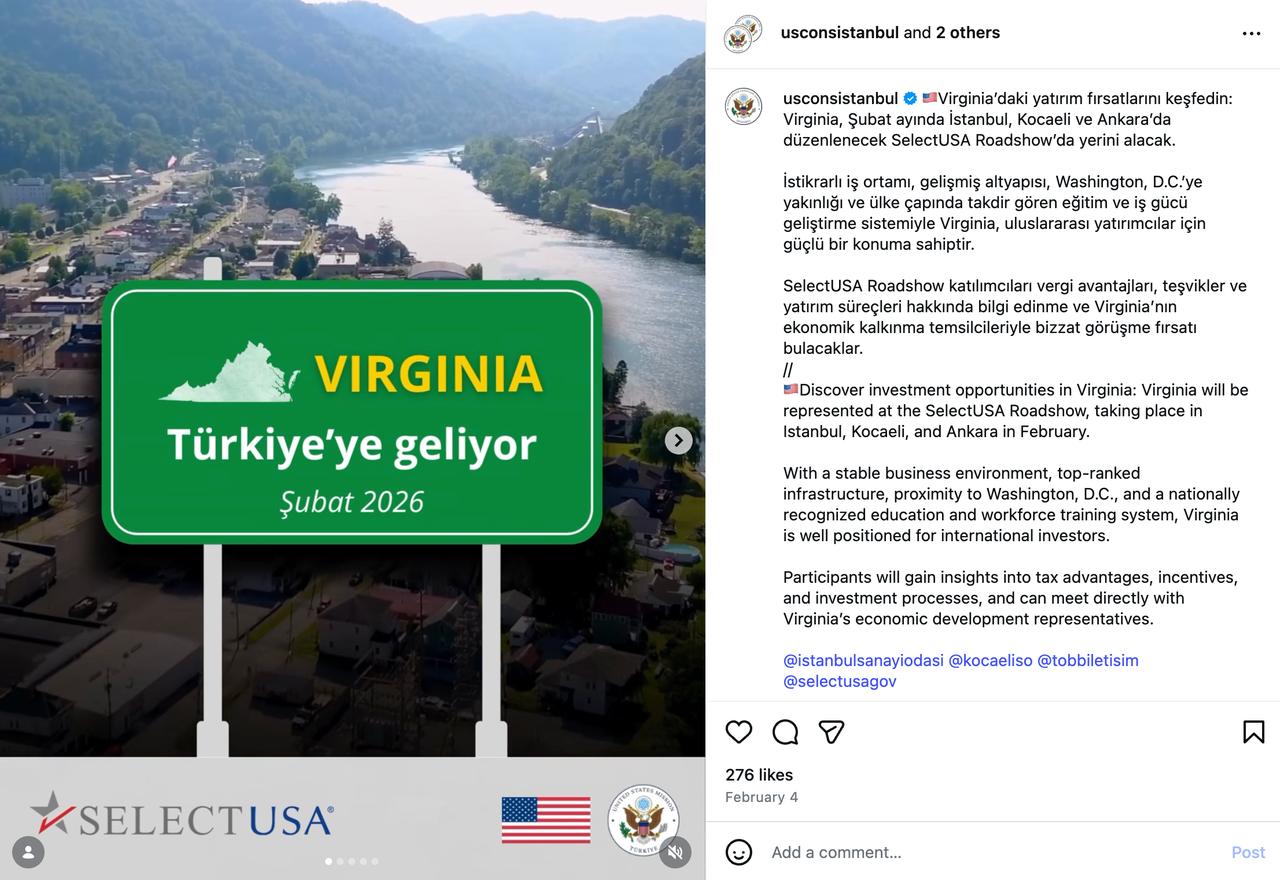
Official U.S. embassy and consulate social media accounts announced on Feb. 4 that Virginia would spend the month presenting itself across multiple cities in Türkiye.
The initiative was framed as an economic promotion effort, bringing Virginia’s development officials directly together with Turkish business representatives.
For Turkish participants, the outreach provides direct access to state-level economic decision-makers from the United States.
Rather than operating through federal channels in Washington, the engagement focused on practical conversations around investment, trade, and sectoral cooperation.
Examples of this kind of subnational diplomacy have always existed. However, a new era is unfolding in which states are seeking to reassert and project their own power in response to the Trump administration’s efforts to strengthen federal authority at the state level.
As pressures have increased through instruments such as National Guard deployments and ICE operations, states have moved to reinforce their autonomy by all available means.
In this context, as the decline of the increasingly contested liberal international order accelerates, other countries are also stepping up efforts to develop relations with U.S. states, and states themselves are increasing investment in this field.

Although it often comes to public attention through clashes between governors or mayors and the federal government, the rise of subnational diplomacy is not a partisan practice.
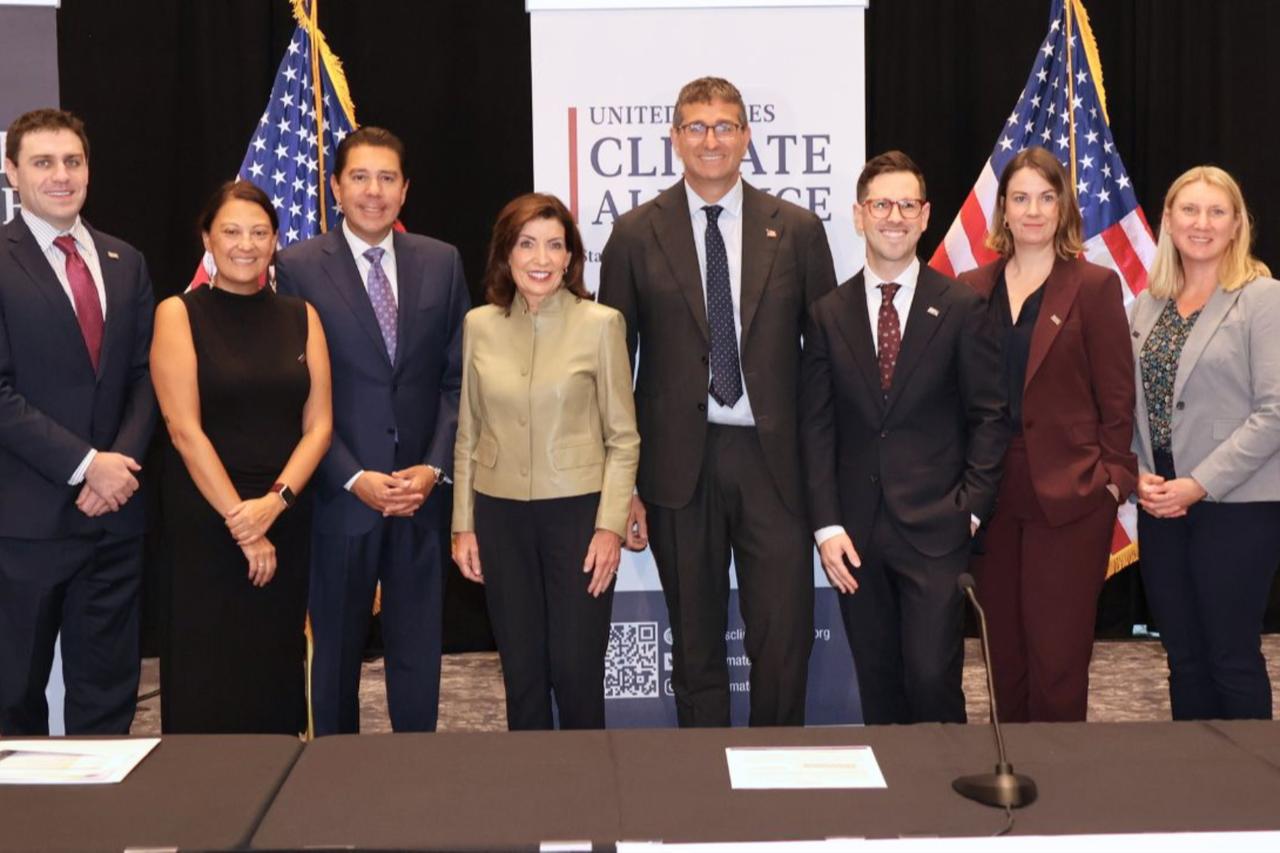
Democratic-leaning states such as California, New York, and Maryland are establishing their own diplomacy networks focused on issues like climate and human rights in response to the federal government’s departure from the liberal order.
Republican or “swing” states, on the other hand, fear that federal tariffs or trade restrictions could damage their local economies. For this reason, they pursue direct deal-making to circumvent federal inertia.
States are able to build entirely profit-oriented relationships by bypassing the “ideological” filters used by the federal government in foreign policy.
Countries in Europe and others like Türkiye are sitting down directly with state governors, mayors, or chambers of commerce to bypass political gridlock in Washington.
Perhaps one of the clearest pieces of evidence for the rise of subnational diplomacy is the United Kingdom’s decision to change strategy after failing to secure a federal-level Free Trade Agreement (FTA) with the United States, opting instead to sign agreements with individual states.
Since 2022, the British government has signed separate “Economic Cooperation and Trade Memoranda of Understanding” with Indiana, North Carolina, South Carolina, Oklahoma, Utah, Washington, Florida, and Texas.
A global power choosing to sit at the table not with the United States, but with U.S. states, is the strongest proof that subnational diplomacy is no longer “complementary” but has become a “core” form of diplomacy.
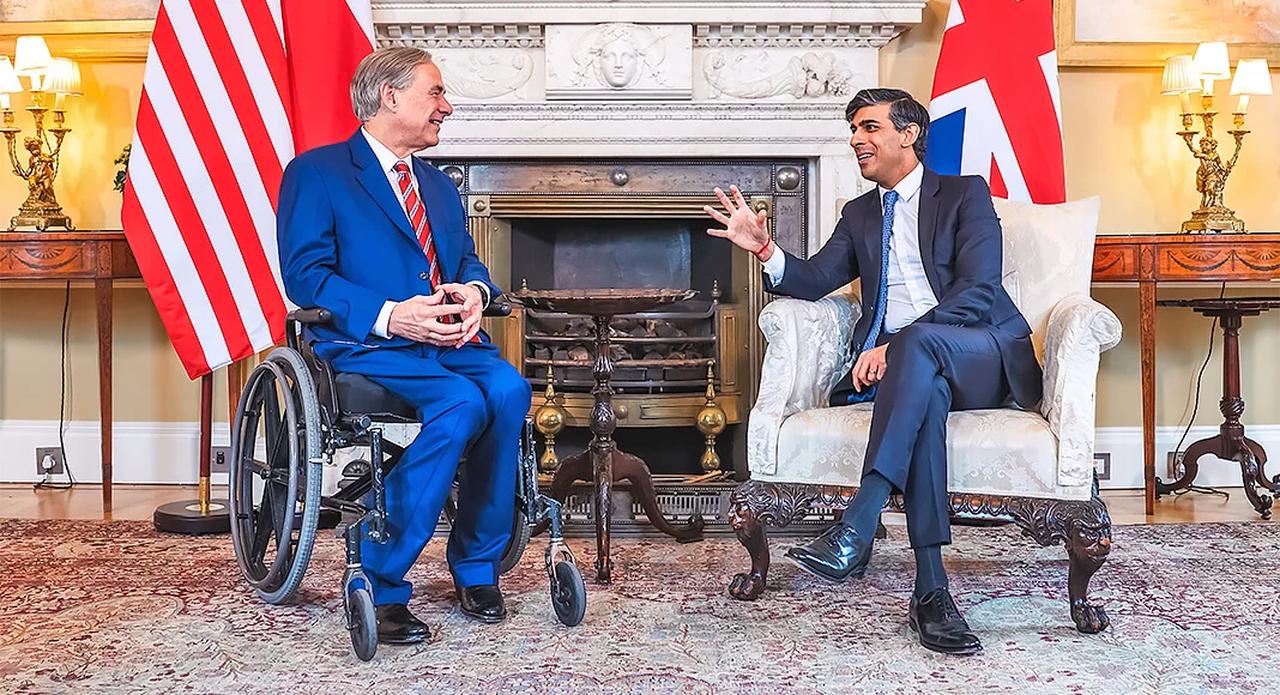
The conservative state of Texas frequently touts the slogan that “if it were a country on its own, it would be the world’s 8th largest economy” in its external relations.
In 2024 and 2025, Texas Governor Greg Abbott personally hosted German federal ministers in Austin. Trade volume between Texas and Germany has exceeded $18.8 billion annually. Texas alone accounts for 10.4 percent of total U.S. exports to Germany.
There are also structural changes that show how state-level diplomacy has become institutionalized.
In 2022, the United States Department of State established a “City and State Diplomacy” unit for the first time.
This move represents an admission that the federal government can no longer prevent states from engaging with the outside world and is instead trying to coordinate these efforts.
As seen in the Virginia example, states now have their own “trade embassies” or overseas representative offices. The Virginia Economic Development Partnership maintains permanent offices in South Korea, Japan, and Europe.
One of the most direct and up-to-date instruments of subnational diplomacy is the State Partnership Program (SPP).
Under this framework, U.S. states pair their National Guard units directly with the armed forces of foreign countries.
Unlike economic or trade-focused engagements, the SPP operates in the security and defense domain. It allows states to build long-term military-to-military relationships that include joint training, operational coordination, and shared security protocols.
This model illustrates how subnational diplomacy has expanded beyond commerce into areas traditionally seen as the exclusive domain of national governments.
A clear example is the partnership between West Virginia and Qatar. Military units from West Virginia work directly with the Qatari armed forces, conducting training programs and implementing bilateral security procedures at the state-to-state level.
Another long-standing case is the relationship between Colorado and Jordan. Colorado has maintained a state-based defense partnership with Jordan for more than two decades, making it one of the most established examples of sustained subnational military cooperation.
The biggest advantage of conducting these talks at the state level is speed and the lack of cumbersome bureaucracy.
An agreement in Washington may languish awaiting congressional approval for years.
By contrast, a memorandum of understanding between Virginia and a Turkish company can translate into commercial activity the very next day.
A critical detail is that, during the Trump era, if the federal government were to pursue pressure policies against any country, these state-based agreements could function as a strategic “commercial lifeline.”
For these reasons, many capitals now feel the need to engage directly with major states such as Texas or California and organize “tours” to their cities.


 Set as preferred source
 Set as preferred source


 7 min read