Newsletters





Türkiye’s neighborhood is on fire. Flanked by unpredictable leaders to the north and south who are intent on regional escalation, the country watches as the current international order stands by, seemingly unwilling to restore order.
On Feb. 9, during a live broadcast on CNN Türk, Foreign Minister Hakan Fidan was asked a direct question regarding Türkiye’s nuclear policy. His response was a pause of seven seconds followed by a measured smile, an exchange that commentators interpreted as a deliberate exercise in strategic ambiguity.
As reflected in the transcript of the broadcast, the exchange suggests that Ankara intends to manage ultimate-deterrence signaling with greater discipline and less public specificity. The regional resonance of this non-verbal cue was immediate.
Israeli outlets, including the daily Maariv, interpreted the silence as a deliberate strategy to keep capabilities secret, while Greek media such as Kathimerini framed it as a strategic vacuum fueling pessimistic security scenarios for Athens. The responses suggest that the signal succeeded in its primary objective: deterrence through imagination.
By not providing a standard denial, the Turkish state compelled regional audiences to price in worst-case scenarios in their own strategic calculations. Ultimately, this development is not about the announcement of a weapons program; it is about the emergence of strategic uncertainty in a world where traditional certainty has weakened.
Türkiye is adapting its posture to the rapid erosion of international guardrails and the decay of established security frameworks. Ankara’s decision not to foreclose strategic options related to ultimate deterrence represents a rational response to a world in transition. It is a calculated move to reintroduce ambiguity as a bargaining tool, signaling that in an era of systemic instability, few sovereign options remain off the table.
The timing of this strategic signaling is inextricably linked to a seismic shift in the global deterrence architecture. On Feb. 5, the New START treaty expired without a successor, marking the first time in half a century that the two largest nuclear arsenals operate without a legally binding and verifiable bilateral ceiling. This vacuum has generated a profound security chill, particularly for middle powers that once relied on superpower-led arms control to mitigate regional volatilities.
In the absence of verifiable constraints, the international system is drifting toward a neo-realist self-help model. Türkiye is adapting to a landscape where traditional great-power assurance mechanisms have weakened. This credibility gap in global guarantees is further exposed by the upcoming 2026 NPT Review Conference, which highlights the growing tension between disarmament promises and current realities.
Ankara’s current posture is a systemic consequence of this institutional erosion; it represents a rational adaptation to a world where old guardrails have weakened, leaving strategic hedging as a necessary instrument of national sovereignty.
Türkiye operates within a nuclear ring of escalating regional risks. To the north, Russia has increasingly normalized tactical nuclear rhetoric; to the south, Israel maintains its opaque status; to the east, Iran’s nuclear trajectory has tightened the margin for error and sharpened regional threat perceptions. While Ankara enjoys a strong conventional edge through its extensive UAV ecosystems, this edge faces a definitive strategic ceiling.
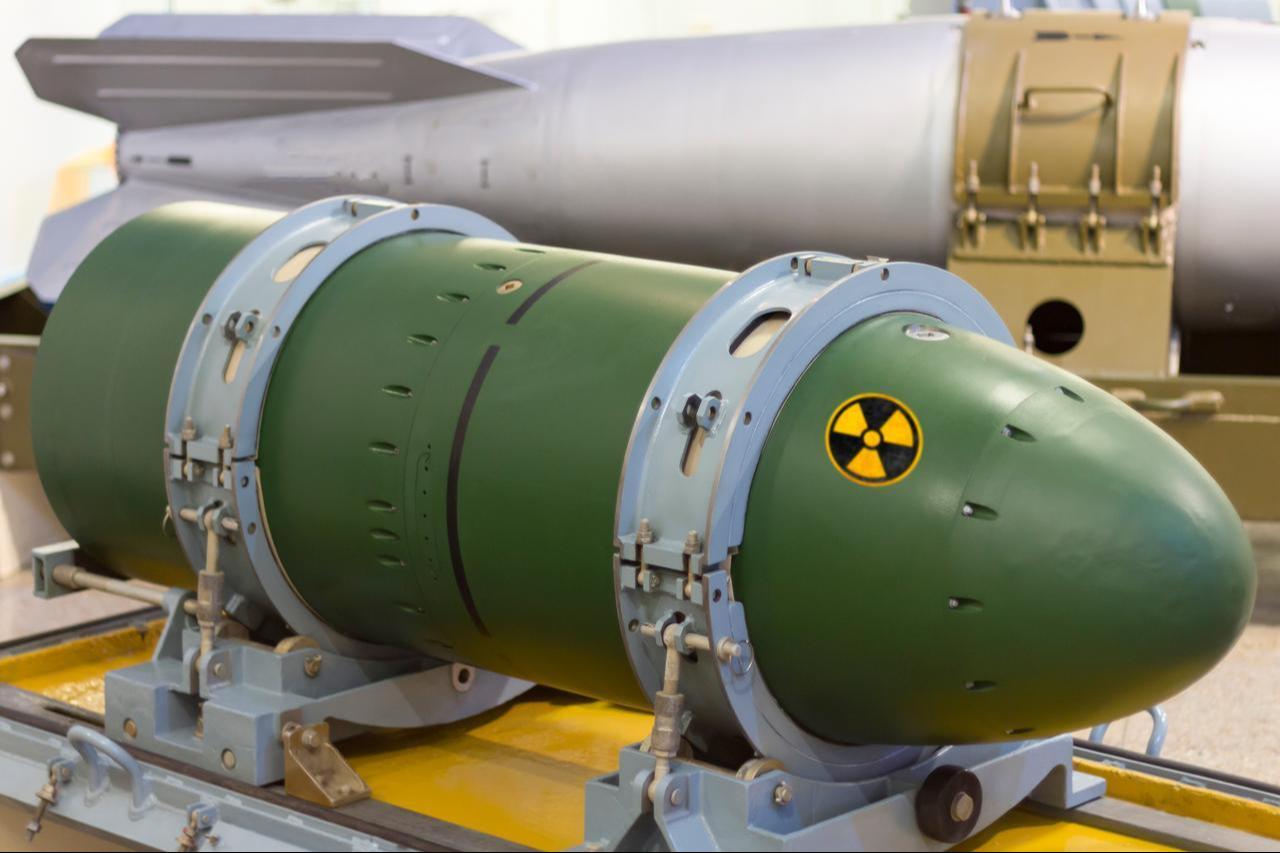
Conventional superiority offers no shield against nuclear coercion. A state may dominate a tactical theater, yet it remains existentially vulnerable if it lacks a credible response to ultimate security threats. Consequently, the reliance on NATO’s extended deterrence is undergoing a quiet recalibration. The presence of B61 gravity bombs at Incirlik Air Base is increasingly treated as an incomplete insurance policy in a multipolar landscape. These weapons remain under U.S. control and do not constitute a Turkish nuclear capability. Their significance lies precisely in the opposite: they underscore the limits of external guarantees and the political conditionality embedded in extended deterrence.

The logic of Kenneth Waltz provides an explanatory framework for why states seek ultimate security guarantees. Waltz posits that strategic latency or deterrent capability, when held by rational actors, can foster regional stability by establishing a balance of terror where the costs of aggression are undeniably prohibitive.
This suggests that the presence of an ultimate deterrent may actually lower the probability of major conventional conflicts by discouraging miscalculation. However, Scott Sagan’s organizational theory presents a critical counterpoint. He warns that the spread of such capabilities increases the risk of unauthorized military behavior or accidents due to failures in hierarchy and oversight.
Ankara is navigating these theoretical tensions through the lens of its institutional capacity. Unlike regimes with fragile domestic hierarchies, Türkiye possesses a century-long state tradition, established civilian oversight mechanisms, and highly professionalized security institutions.
Its demonstrated preference for controlled escalation and cautious crisis management offers a strong argument that, if ever confronted with such strategic choices, Ankara would likely behave as a cautious, risk-managed actor. By signaling this institutional reliability, Türkiye aims to ensure that any ambiguity regarding its ultimate security guarantees is perceived as a calculated pillar of a new regional equilibrium.
This strategic recalibration is not without significant material and political friction. Ankara is acutely aware that openly transitioning toward a formal nuclear program would invite debilitating financial sanctions and diplomatic isolation.
Ankara is also wary of being compared to Iran. There is a concern that rivals might use this strategic silence to brand Türkiye as a rogue nuclear seeker, a label that would carry a heavy diplomatic price. This is why, despite the ambiguity, the state stays strictly within international rules. By focusing only on civilian energy, Ankara ensures it isn't seen as a rule-breaker, even as it lets the world wonder about its potential.
The state is prioritizing strategic hedging. This approach focuses on maximizing technological latency and building a domestic human capital ecosystem while minimizing immediate diplomatic exposure. The objective is to secure a threshold capacity that produces a deterrent effect without triggering the punitive costs associated with a definitive breakout.
Furthermore, Türkiye faces a complex dependency paradox within its civilian energy sector. The Akkuyu nuclear power plant, governed by a Build-Own-Operate model, remains under the technological and operational control of Russia’s Rosatom. This arrangement creates an asymmetric reliance on Moscow that complicates the pursuit of strategic autonomy.
Achieving long-term self-sufficiency requires sustained investments in domestic expertise and diversified civilian partnerships aimed at developing deeper civilian nuclear know-how while remaining strictly within international safeguards. This is a decadeslong endeavor intended to transform a foreign-operated energy project into a sovereign civilian capability, if ever the geopolitical environment necessitated such a shift.
Finally, the risk of a regional proliferation domino effect, potentially involving states like Saudi Arabia or Egypt, remains a constant variable in Ankara’s calculus. Türkiye’s intent is not to act as a catalyst for a regional arms race. Rather, the state is signaling that it cannot afford to be among the few regional powers lacking a strategic blocking capability in an increasingly nuclearized Middle East. This posture is a defensive adaptation to help ensure that regional power remains balanced in an era of waning international security guarantees.
In 2026, absolute certainty in security guarantees is a luxury Türkiye can no longer afford. The rules-based order is eroding faster than it is being replaced, forcing middle powers to prioritize self-preservation over institutional promises. The case for Türkiye’s nuclear ambiguity is not the announcement of a weapon; it is the announcement of a strategic option. This posture serves as an additional layer in Türkiye’s evolving strategic autonomy, representing a necessary response to a world where the old guardrails have weakened to the point that middle powers can no longer treat them as reliable.


 Set as preferred source
 Set as preferred source


 7 min read