Newsletters




Japan has emerged as one of the countries with a “low-risk security environment” within the international system in the post-World War II era. Owing to its inward-looking security framework, it succeeded in establishing low crime rates and a strong culture of social discipline.
However, in recent years, the concentration of migrant communities, particularly in the cities of Kawaguchi and Warabi within Saitama Prefecture, indicates that this balanced structure is facing a new and unprecedented challenge.
The most critical aspect of this challenge is that these migration movements intersect with organized crime networks to some extent, and this intersection has, over time, evolved into a security issue affecting public order.
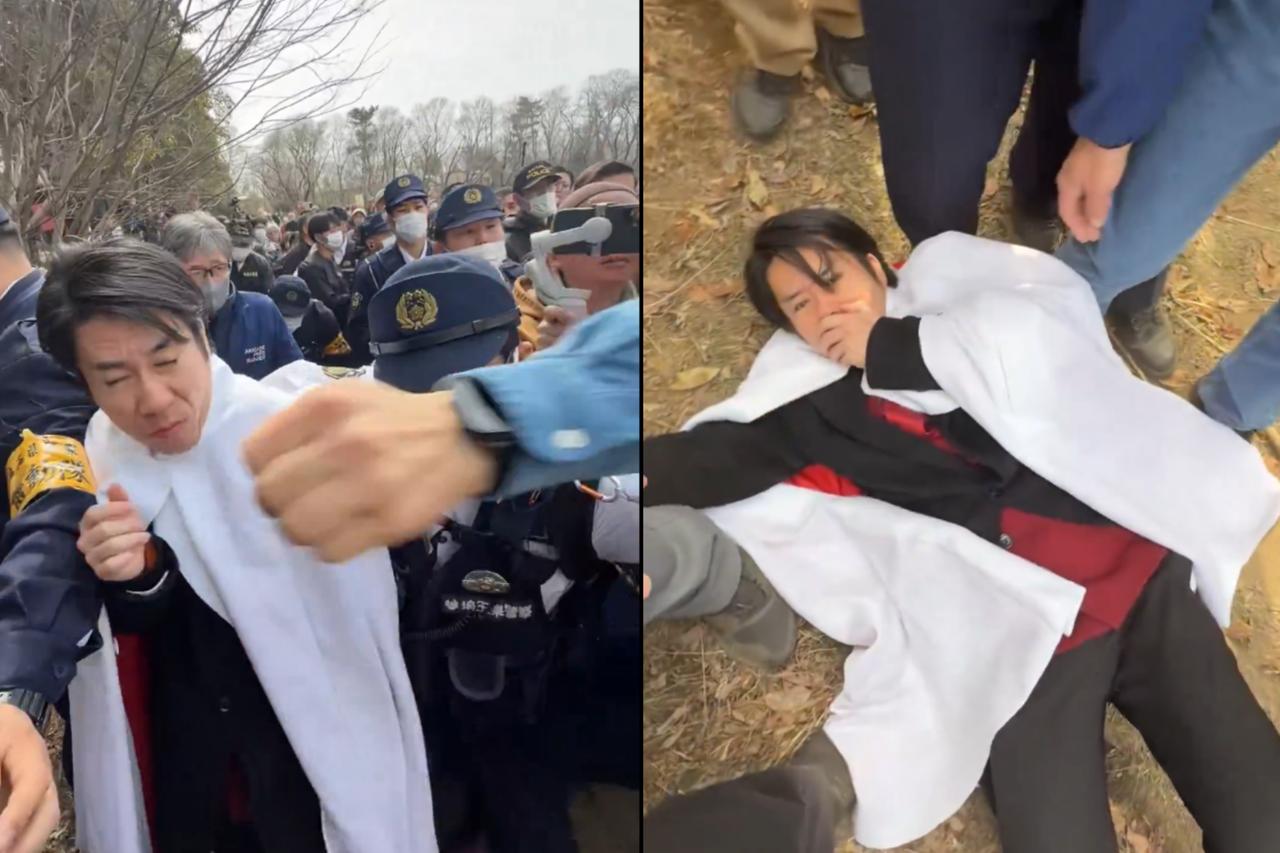
The physical attack on the Toda City Councillor, Yusuke Kawai, during the Nowruz celebrations held in Saitama on March 22, 2026, demonstrated that the situation had escalated into a crisis with serious implications.
In this context, developments in Japan should be assessed as a multi-layered risk area shaped by the intersection of diaspora, organisational dynamics and transnational security.
The Kurdish migration to Japan began in the 1990s, with groups arriving from certain regions of Türkiye, justifying asylum by denigrating Türkiye. Initially, it was a limited-scale phenomenon with a relatively low visibility.
However, with time, this wave of migration has undergone a transformation, particularly due to the exploitation and abuse of the asylum system for economic purposes.
The resulting situation has eroded public trust in migrants within Japanese society. It has also led to the questioning of the social-order model founded on the principles of discipline, predictability and an adherence to rules.
This transformation is becoming particularly pronounced in settlements such as Kawaguchi and Warabi, where the Kurdish population is concentrated. In these areas, violations reflected in daily life are assessed not as isolated incidents, but as a deeply entrenched systemic issue.
Noise, disorderly use of public spaces, non-compliance with waste-management regulations and traffic offences are some of the main problems that directly affect the local residents’ quality of life.
In addition, other serious issues such as theft, informal economic activities and the irregular use of public services cause societal disruption. Tensions building up at the community level can, at times, escalate directly into violent incidents.
An incident in 2023 involving approximately 100 people outside a health center in Kawaguchi demonstrated that local unrest could reach a collective and difficult-to-control scale. Such developments indicate that the security dynamics are beginning to diverge at the local level, even in a country like Japan, which is known for its low crime rates.
Beyond the day-to-day violations, factors such as driving without a license, the involvement of minors in criminal activity, and the occasional resistance shown to obeying laws are straining the enforcement capacity of local authorities. This situation is fueling debates regarding the effectiveness of public authority in certain areas and reinforcing the perception that its control has weakened.
The central government, through regulations introduced in 2024, has aimed to strengthen control mechanisms, particularly by facilitating the deportation of individuals whose asylum applications have been rejected.
However, trends on the ground demonstrate that a legal framework alone is insufficient; other factors are also at play, such as legal status, oversight capacity, the effectiveness of local authorities in implementing measures, and the extent to which security forces are able to adapt to new social dynamics
This situation calls for a structural transformation in Japan, one in which considerations of public order and internal security take precedence over a traditional migration-management issue.
Should the current trends continue, the likelihood of deepening social divisions in certain communities and the gradual erosion of public authority will become increasingly apparent.
The most critical aspect of the debate in Japan is the fact that the PKK’s structure within the diaspora is becoming increasingly visible, organized and multi-layered.
While positioning themselves as civil organizations that ostensibly engage in cultural and social activities, structures such as the Japan Kurdish Cultural Association (JKCA), the association recognised by Türkiye as being linked to the PKK, and subject to sanctions accordingly -- may function in the field in terms of organizational propaganda, ideological production and mobilization.
Activities carried out through such structures demonstrate that the PKK’s presence in Japan extends beyond the individual level and is based on a specific organizational framework.
Nowruz celebrations have become one of the areas where this structure is most visible. The open display of posters of the organization’s imprisoned leader, Abdullah Ocalan and PKK/YPG symbols at the celebrations held in Saitama reveals that these events are not confined to cultural celebrations; rather, they have become platforms where organizational visibility is deliberately heightened.
While these incidents have caused growing unease among the Japanese people, the most concrete manifestation of this framework was the recent physical attack on Mr. Yusuke that took place during the Nowruz event held at Saitama Akigase Park
The fact that Mr. Yusuke was directly targeted and subjected to an assault at the event venue clearly demonstrates that organizations with links to extremist groups are capable of asserting their presence through the use of physical force.
Footage of the incident has further intensified the debate regarding the nature of the attack and the perceived delay in intervention by the security forces.
While this incident stands out as an example of political violence of a kind not seen in Japan for some time, the approach of the local authorities and security units towards such organizations has also come under scrutiny.
Indeed, the fact that the public space for the event was allocated by the local authority and that police intervention was limited suggests that the current security approach failed to adequately anticipate any potential risks.
Hesitations at the institutional level are also noteworthy, mainly due to Japan’s narrow, UN-focused definition of terrorism, gaps in local legislation, and cultural lobbying activities carried out by pro-PKK groups. The Japan Public Security Intelligence Agency (PSIA) initially excluded the PKK from its list of terrorist organizations, updated in 2023, or reduced its visibility.
However, following Türkiye’s determined diplomatic efforts, the Japanese authorities termed this a technical error and re-included the organization in the updated version of the list.
This situation has clearly highlighted the uncertainty Tokyo faces in identifying such hybrid and diaspora-based threats. Furthermore, although Japan recognizes the PKK as a terrorist organization subject to asset freezing since 2002, there is a marked discrepancy between this legal framework and its implementation on the ground.
In particular, the fact that activities carried out through association-building, public events and fundraising campaigns continue unabated points to one of the most concrete indicators of this discrepancy.
Evidence that fundraising activities under the guise of “donations” and “aid campaigns” are channelled to structures linked to the organization suggests that Japan has become an alternative financing hub.
This situation demonstrates that the fight against terrorism cannot be confined to physical security; it necessitates a multi-dimensional approach through financial networks and transnational connections.
It is also evident that these incidents have impacted international counter-terrorism cooperation. Findings indicating that the recent attack in Saitama was organized by Vakkas Colak, a PKK terrorist wanted in Türkiye, demonstrate the transnational nature of these networks and their capacity for coordination.
In parallel, the fact that authorities in Saitama Prefecture have brought deportation proceedings against individuals assessed to have links to the organization suggests that a tougher security approach may be adopted at the local level.
The resulting picture reveals more than a one-dimensional terrorist threat in the traditional sense; it rather points to a hybrid security challenge that combines the capacity for propaganda, financing, mobilization and, where necessary, the use of violence.
If current trends continue, the likelihood of these structures becoming institutionalized and expanding their sphere of influence is growing.
Consequently, it seems increasingly inevitable that Tokyo will have to rethink its counter-terrorism strategy vis-à-vis diaspora organizations and transnational networks.


 Set as preferred source
 Set as preferred source



 7 min read