Newsletters


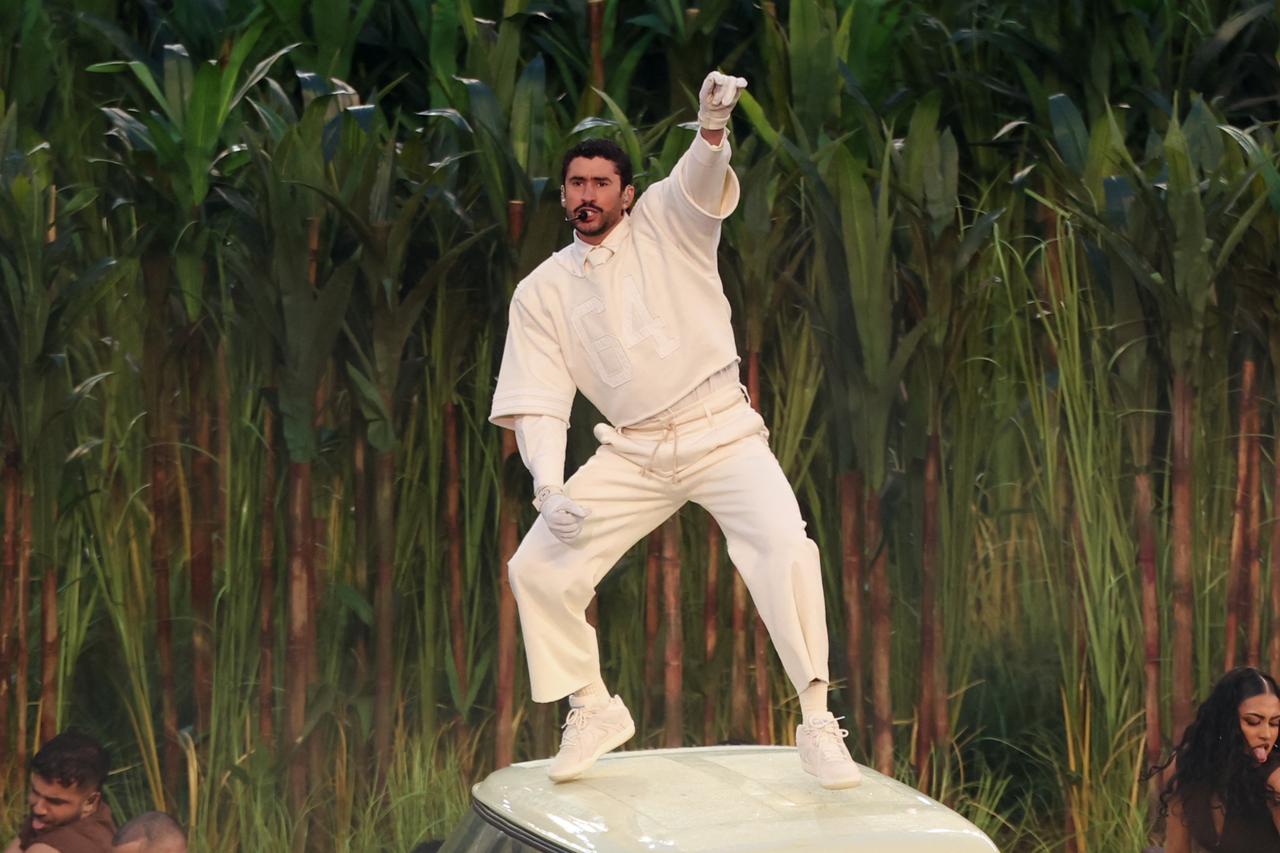


U.S. President Donald Trump is definitely unhappy with Bad Bunny's recent performance, but could a halftime show taint the American dream and pose a threat to the United States' national identity?
During the Super Bowl LX halftime show on Feb. 8, the Puerto Rican artist Bad Bunny became the first solo performer to deliver a fully Spanish-language set, celebrating Latino culture on one of the most-watched stages in the United States.
In the days leading up to the performance, news outlets anticipated how the White House and the broader Republican wing would respond.
After the show, Trump took to Truth Social to say that Bad Bunny's set was "absolutely terrible, one of the worst, EVER!" adding that it was "an affront to the Greatness of America."
"The American Dream" and "national identity" are both concepts up for dismantling in their own right. Is the American dream only reserved for United States citizens? Why is it called American, after the continent, if it is supposed to cater to people from a certain background and color?
It is also interesting how a music performance representing the approximately 68 million Latinos (who now make up about 20% of the U.S. population, according to the most recent U.S. Census Bureau estimates) could be seen as a unifying move during times of polarization yet is being labeled by President Trump as “a slap in the face” that “nobody understands a word of.”
Spanish is the second most spoken language in the United States, making it a long-standing component of American public life rather than an external intrusion.
The reaction outside conservative political circles was markedly different. Cuban-American singer Camila Cabello celebrated the moment, writing, “Long live our beautiful Latin culture!”
On a similar note, rapper Cardi B said she was “proud of everything that he’s been standing up for,” framing the performance as cultural affirmation rather than provocation.
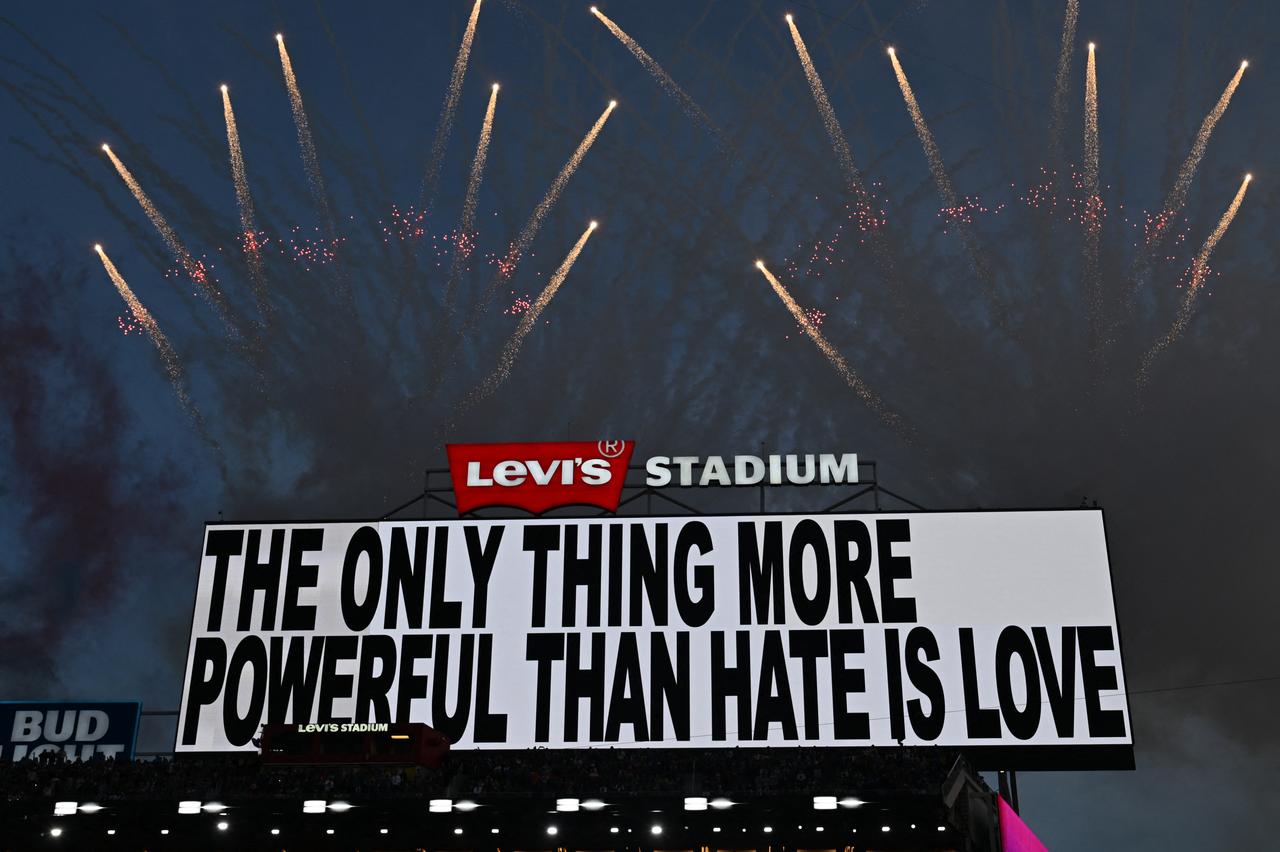
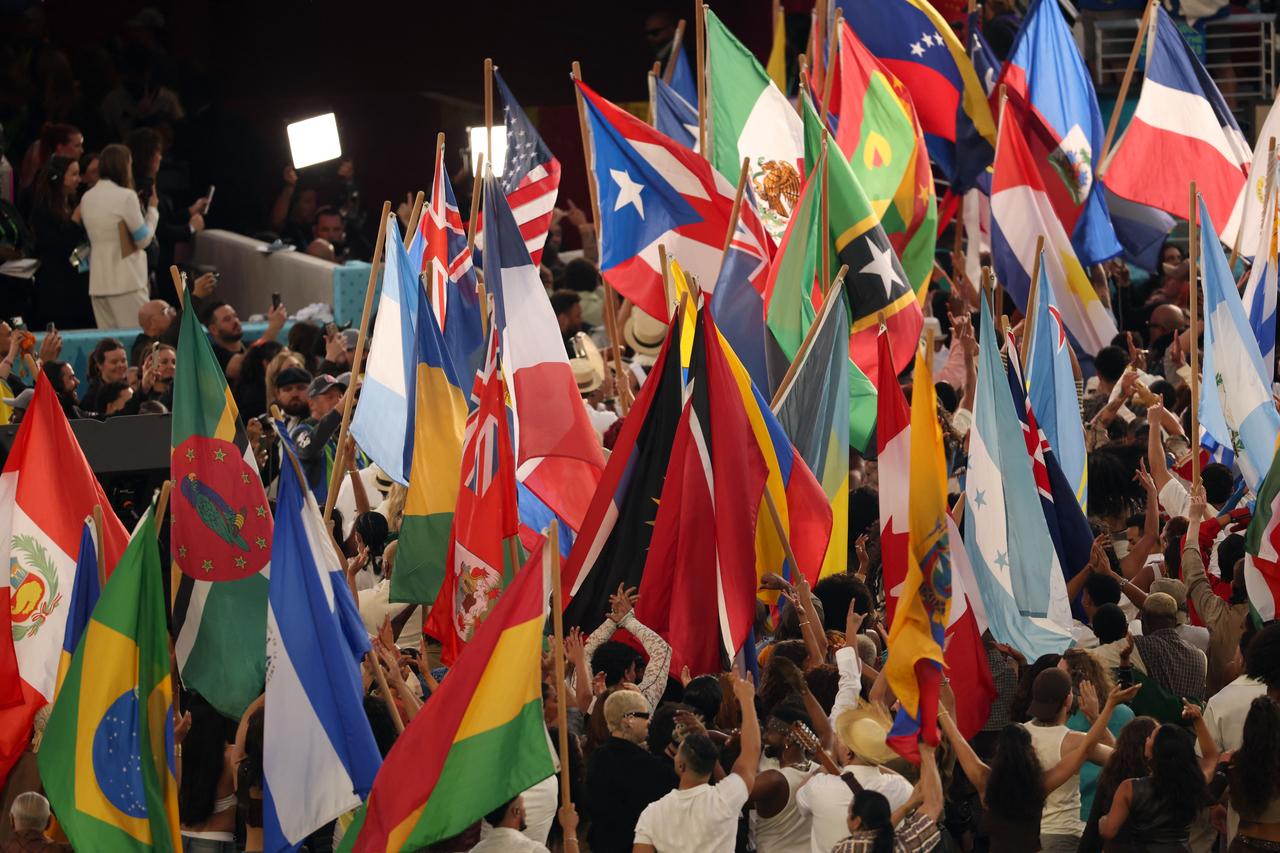
While Bad Bunny was performing in the massive arena, with carefully chosen props representing all people living on the American continents, the big billboard read, "The only thing more powerful than hate is love."

The United States has often been described as a "melting pot," which is a sociological concept referring to a heterogeneous society turning homogenous as different elements melt together into a whole with a common culture.
While this concept may look ideal from afar, as it signals the unifying of people under a single identity, in practice, this has proven challenging over the years.
In addition, the melting of cultural and ethnic elements would ideally require finding a common culture where everyone can see a piece of their own history and culture represented.
This has unfortunately not been possible in the United States, and the targeting of certain communities throughout the years proves that the melting pot is a euphemism for cultural expectations and assimilation.
Demographic projections from the U.S. Census Bureau indicate that no single racial or ethnic group is expected to constitute a majority in the coming decades, further complicating traditional narratives of a singular national identity.
The reaction to Bad Bunny's performance by Trump and other figures could be interpreted as an unease caused by the feeling of being taken over.
That unease surfaced explicitly in the language of citizenship and belonging with boxer and influencer Jake Paul’s post, urging viewers to “Turn off this halftime,” calling Bad Bunny “a fake American citizen.” However, his brother Logan publicly disagreed, responding, “Puerto Ricans are Americans & I’m happy they were given the opportunity to showcase the talent that comes from the island.”
The important distinction here could be that Bad Bunny's performance did not include weapons, threats, legal subordination, or any other systemic elements that actively impact US citizens' lives.
It was a music performance, although the meticulous work that went into the stage production, choreographies, and artistic installations makes it unfair to call it simply a music performance.
The first generation of immigrants, not only from South America but also from other regions, held on tightly to their American identity.
This could be interpreted as a deep belief that belonging to the country would ensure that they lived a harmonious life and truly became part of the melting pot to create something bigger altogether.
Younger generations have become more aware of systemic racism and understand that giving up their history, culture and even language does not grant them immunity but instead leaves them struggling to understand who they are and where they belong.
Belonging is a highly important concept, as building a life and investing in a future in a country where you feel like an unwanted visitor is rather pointless.
Higher addiction rates in many marginalized communities are not a coincidence or proof that they are “genetically” inferior. Such concepts have long been refuted as racist and discriminatory.
While Donald Trump cannot be solely blamed for this uprising, his support and enforcement of ICE, repeated ridiculing of South American countries, political discourse, and active operations have exacerbated the situation.
Illegal immigration and the broader discourse are not subjects of this article. The subject of this article is the reaction that a Super Bowl performance has caused in a country where millions’ first language is not English.
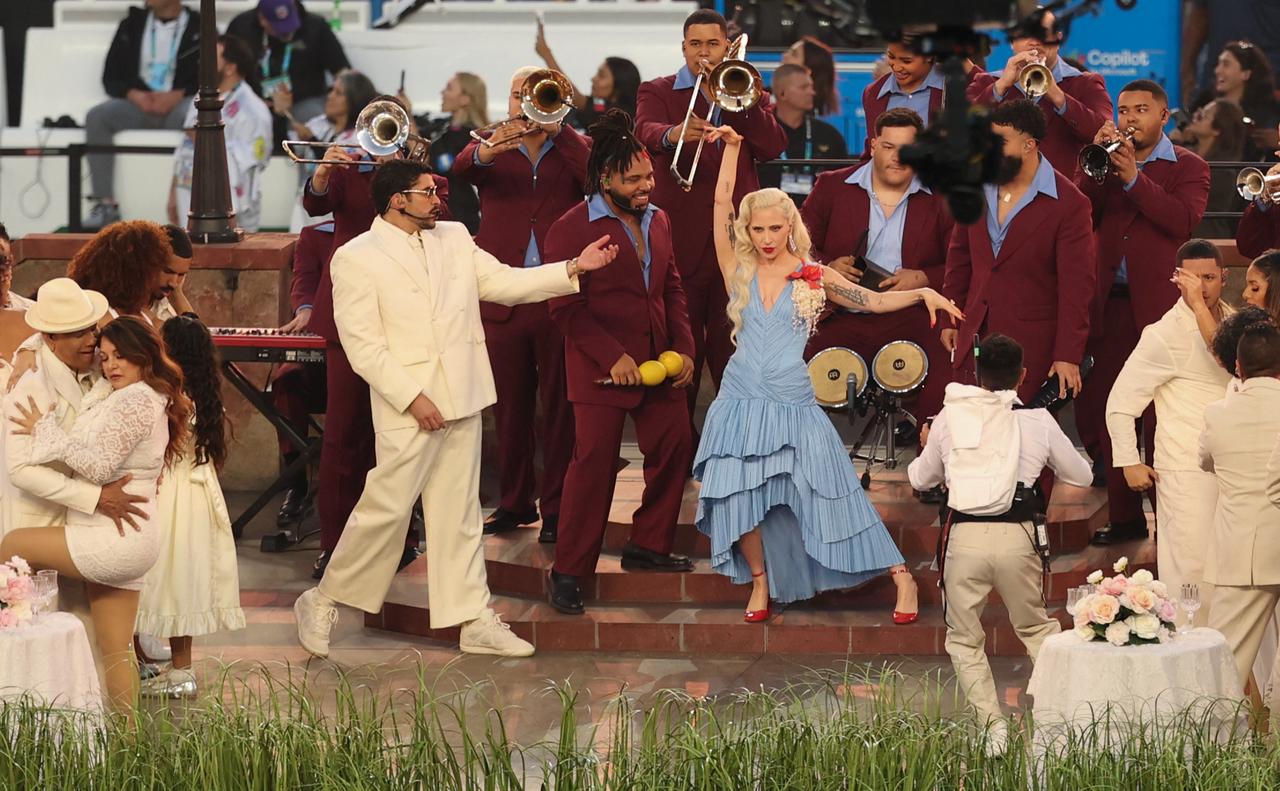
The intensity of the backlash suggests that the discomfort was not aesthetic but existential.
A halftime show did not introduce a new demographic reality to the United States. Latinos have long been part of the country’s economic, cultural, and political fabric.
Spanish has been spoken on the continent long before the United States existed as a nation-state.
What changed was not presence but visibility.
Latino consumers represent one of the fastest-growing economic groups in the country, contributing trillions of dollars annually to the U.S. economy, underscoring that this community is not peripheral but structurally embedded in national life.
When a historically marginalized community occupies one of the most watched stages in the country and does so unapologetically in its own language, it disrupts a hierarchy of cultural dominance that many have mistaken for neutrality.
Representation often feels threatening to those who have never had to think of themselves as represented. For decades, English-speaking white cultural norms have operated as the unmarked default in American media.
A challenge to that default, even a temporary one, can create the impression that something has been taken away.
The language of being “slapped in the face” or not understanding “a word” reflects more than confusion. It reflects a belief that national platforms should mirror a singular cultural standard.
Reality television personality Jill Zarin articulated that discomfort directly in a now-deleted video, calling the show “not appropriate to have in Spanish” and suggesting it looked like “a political statement” because there were “literally no white people in the entire thing.”
Perhaps representation feels like a threat to national identity only when that identity has been constructed as narrow, fixed and exclusionary from the outset.
Art cannot single-handedly reshape a nation, yet it can create moments in which overlooked histories are brought into perspective.
When a stage carries the message that “the only thing more powerful than hate is love,” it is not offering a slogan but an invitation to imagine belonging as something that grows with difference.


 Set as preferred source
 Set as preferred source


 4 min read