Newsletters




This article was originally written for Türkiye Today’s weekly newsletter, Saturday's Wrap-up, in its Feb. 7, 2025, issue. Please make sure you subscribe to the newsletter by clicking here.
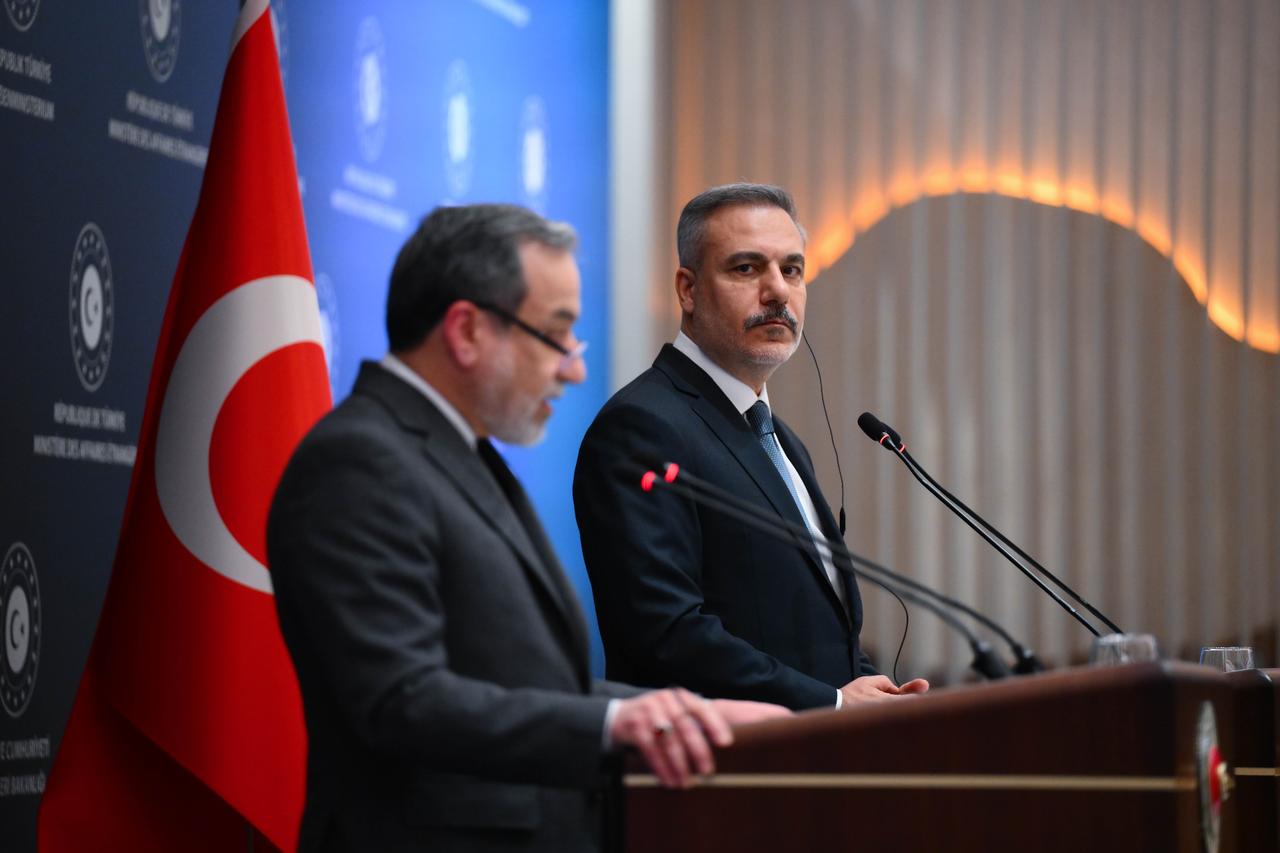
On Friday, the anticipated Iran–U.S. talks underwent a sudden change in venue. Originally expected to take place in Istanbul, the negotiations moved to Oman’s capital instead after a last-minute request from Tehran.
Ankara had signalled its willingness to host the talks. Working with neighboring countries, Turkish diplomats attempted to keep dialogue alive to prevent further external intervention at a tense moment, as Washington and Tel Aviv once again began openly floating military options in recent weeks. So why didn’t it happen?
According to diplomats and regional experts, the answer begins with scope.
Washington’s expectations are expansive. The U.S. wants not only a rollback of Iran’s nuclear program, but also limits on ballistic missiles and an end to Tehran’s financing of regional proxies like Houthis or Hezbollah. This is a win for Netanyahu as he systematically worked in the last months to put the “ballistic missile” issue on Washington’s agenda. Iran, under pressure at home and abroad, wants negotiations narrowed strictly to nuclear issues and sanctions relief like in the good old days.
The proposed Istanbul framework did not fit Iran’s thinking. From Tehran’s perspective, talks in Istanbul carried the risk of mission creep. Once the door opened, the agenda could widen. Muscat, by contrast, offers control, which is something Iran values deeply. However, the answer to whether a simple nuclear deal would truly remove the prospect of military action against Iran remains highly ambiguous.
Iran still resists direct, face-to-face negotiations with the United States without a third-party intermediary. In that sense, the Muscat model is familiar and tested. Two delegations, same hotel, separate rooms. Oman only carries the messages.
Adding to Iran’s discomfort were reports in pro-government Turkish media suggesting President Recep Tayyip Erdogan might open or even chair the talks. For Tehran, that would have transformed a technical negotiation into a high-visibility diplomatic stage, one that visibly elevated Türkiye.
That was a non-starter for the Iranian side.
From the Caucasus to Syria, Türkiye and Iran are rivals as much as neighbors. A successful round of talks in Istanbul would have handed Ankara a major diplomatic win at a time when Tehran feels strategically cornered. Iran refuses to be seen as a nation whose fate is decided by regional powers; it is determined to be at the table, not on the menu.
Oman does not trigger the same anxiety. Muscat’s mediation role is longstanding, quiet, and non-threatening. It stays outside sectarian blocs, has never taken an overtly hostile posture toward Iran, and has hosted similar talks before, including the early backchannel contacts that led to the 2015 nuclear deal.
Visibility matters too. Istanbul attracts cameras, while Muscat repels them.
Finally, there is the matter of psychology.
At a moment when Iran is portrayed as isolated and reactive, Tehran uses the venue shift to signal control.
Türkiye remains firmly opposed to any military escalation against Iran. A regional war would risk migration waves, energy shocks, and security vacuums along Türkiye’s borders. Instability would hit Ankara directly.
But diplomacy, as this episode shows, has limits. Türkiye can help and offer a venue, but it cannot force a diplomatic resolution.
And while Ankara still believes that a weak Iran is manageable and a failed Iran is catastrophic, Tehran is not yet ready to let Türkiye shape the terms of its survival.
For now, Muscat remains the quiet-conduit for back-channel diplomacy, even as the clock continues to tick against the Iranian regime.


 Set as preferred source
 Set as preferred source



 4 min read